


Camping on wet ground demands careful planning to keep you and your gear dry. Start by setting up your tent under trees for shelter and using a ground tarp for added moisture protection. Stash your gear in stuff sacks and elevate bags off the tent floor. Employ a large tarp for rain cover, ensuring it drains away water effectively. With these strategies, you’ll enhance your comfort and safety; there are even more tips to explore for a successful trip.
Importance of Keeping Your Tent Dry

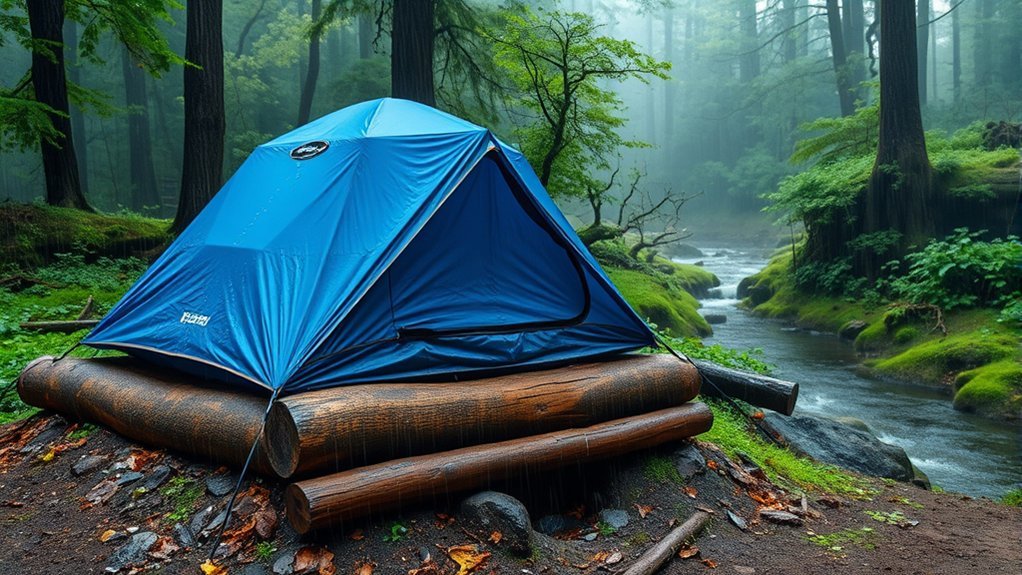
When you’re camping, keeping your tent dry is essential not just for comfort, but for safety. A wet tent can turn your cozy refuge into a damp nightmare, soaking your gear and sleeping bags. This moisture management is vital; it’s hard to dry out a compressed sleeping bag when humidity spikes, leaving you shivering at night.
Imagine waking up in a tent filled with condensation—unpleasant, isn’t it? That’s why tent maintenance matters. A dry tent setup not only protects your belongings but also greatly enhances your overall camping experience. You’ll avoid discomfort and reduce the risk of hypothermia, allowing you to embrace the great outdoors fully.
Tent Setup Strategy for Rainy Conditions
To guarantee a successful camping experience in rainy conditions, it’s vital to adopt a strategic tent setup that minimizes your exposure to the elements. Start by finding a campsite nestled beneath a thick canopy of trees for natural protection. Quickly lay out the interior of your tent on the ground and have the rainfly ready to cover it as you use effective tent pole techniques for a swift setup. Selecting a spot with good drainage is important; steer clear of low areas to prevent water pooling around your tent. Don’t forget a ground tarp underneath for that extra barrier against moisture. Once your tent is up, stake it securely to withstand wind gusts and confirm it’s leak-free by checking the rainfly thoroughly. With these strategies, you can embrace the beauty of nature without letting the rain dampen your spirit.
Essential Gear Protection Techniques
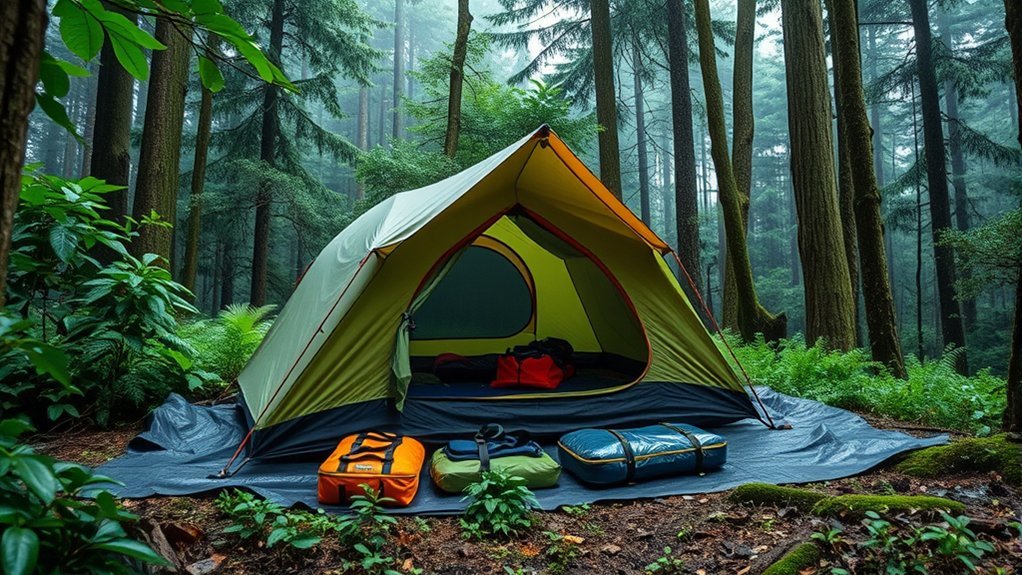
When you’re camping on wet ground, protecting your gear is essential for a comfortable experience. Using stuff sacks keeps your clothing and sleeping bags dry, while selecting high-quality waterproof gear minimizes moisture absorption. Don’t forget to elevate your gear; storing it off the tent floor can make all the difference in keeping it dry and ready for use.
Use Stuff Sacks
Packing your gear with stuff sacks is a game-changer when camping on wet ground. These waterproof barriers keep your clothing and sleeping bags dry, shielding them from moisture infiltration. By organizing gear in stuff sacks, you’ll access dry items quickly when the rain hits.
| Stuff Sack Advantages | Organizing Gear |
|---|---|
| Keeps items dry | Easy access to essentials |
| Prevents moisture spread | Reduces clutter |
| Elevates gear off the ground | Quick packing and unpacking |
High-quality stuff sacks made from waterproof materials greatly reduce the risk of moisture absorption. If you store damp items outside your tent in a designated sack, you’ll protect the rest of your gear, ensuring a drier sleeping environment. Embrace the liberation of staying dry!
Waterproof Gear Selection
Choosing the right waterproof gear is essential for a successful camping experience on wet ground. Invest in high-quality rain jackets and pants made from waterproof materials that minimize moisture absorption, keeping you dry even in the heaviest downpours. Don’t forget about gear durability; opting for well-constructed items guarantees they withstand the elements over time. Utilize stuff sacks to keep your clothing and sleeping bags safe from any moisture that might seep into your tent. To maintain a dry interior environment, store damp items outside. Elevate your sleeping bags and gear using lofts or hanging lines, making sure they avoid direct contact with the ground. Regularly check your gear’s water resistance, replacing aging rain flies to stay protected.
Elevated Gear Storage
To guarantee your gear stays dry during wet camping conditions, elevating it off the tent floor is essential. Use mesh bags or hanging organizers to keep your sleeping bags and clothing high and dry, greatly reducing moisture risks. Pair this with a waterproof ground tarp beneath your tent, ensuring it doesn’t extend too far beyond the edges to prevent water pooling. For ultimate moisture control, stash important items like electronics in a small waterproof container, keeping them safe and accessible. During breaks in the rain, regularly check and reorganize your elevated gear storage to thwart any accidental dampness. With proper gear organization, you can embrace the freedom of the outdoors, even when the weather turns wet.
Post-Setup Considerations for a Dry Tent
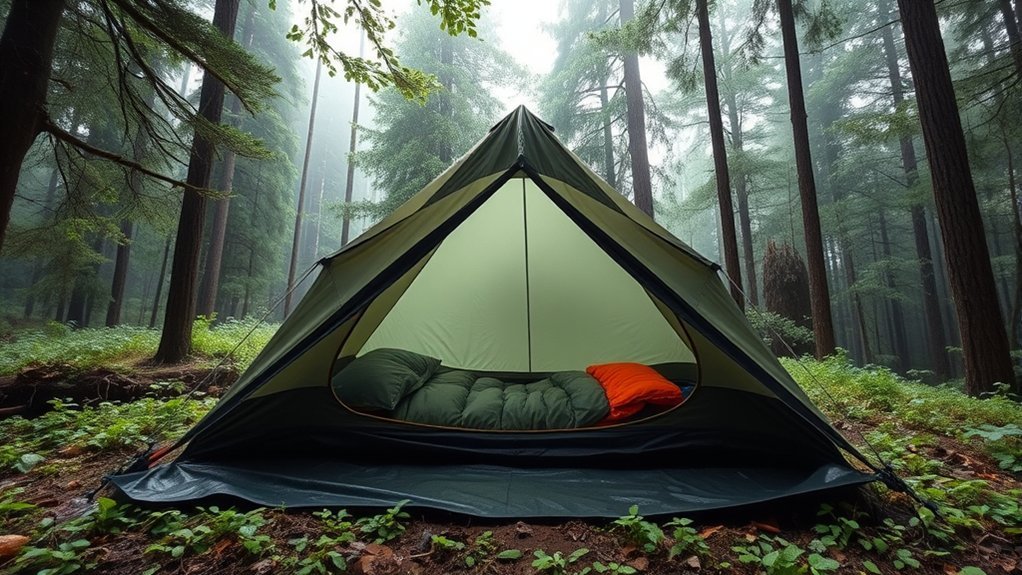
Once your tent is up, it’s time to guarantee it stays dry inside. Start by checking for leaks in both the tent and rainfly—any moisture getting in can ruin your camping experience. Don’t forget to ventilate your tent; keeping air flowing helps prevent condensation and keeps the space comfortable.
Secure Tent Ventilation
While setting up your tent in wet conditions presents its challenges, ensuring proper ventilation afterward is essential for maintaining a dry interior. To achieve this, embrace effective ventilation techniques that promote air circulation. Here are some tips to keep your tent cozy and moisture-free:
- Keep vents open, especially at the top, to release damp air.
- Utilize built-in mesh panels or windows for airflow while keeping insects at bay.
- Avoid blocking ventilation openings with gear or clothing.
- Regularly check and adjust vent positions as weather changes.
- Create a cross-breeze by opening opposite vents when possible.
Check for Leaks
After ensuring your tent has proper ventilation, it’s time to turn your attention to potential leaks that could compromise your dry sanctuary. Start with a thorough leak inspection, examining seams and corners for any visible damage. Don’t just rely on a visual check; spray water on your tent and rainfly to reveal any weak spots that need sealing. If you find any leaks or worn areas, grab some seam sealant to enhance waterproofing and prevent moisture from sneaking in. Keep an eye on the weather forecast during your trip, and make sure your tent is staked and sealed properly. Finally, monitor the interior for condensation, ventilating when possible to keep your camping experience liberating and dry.
Effective Tarp Usage for Rain Protection
When camping in wet conditions, a well-placed tarp can be your best ally in keeping your tent dry. Choosing the right tarp types and maintaining it properly can make all the difference. Here’s how to maximize your tarp’s effectiveness:
- Use a tarp larger than your tent for extra coverage.
- Position it to extend just over the tent edges—avoid overextending to prevent water pooling underneath.
- Set it at an angle to allow water runoff, minimizing the risk of leaks.
- Secure the tarp with poles or stakes to maintain a taut structure, reducing sagging that could collect water.
- Regularly inspect your tarp for wear and damage, especially after multiple trips, to guarantee it remains protective.
Trenching Techniques to Divert Water
To keep your tent dry on wet ground, mastering trenching techniques is essential. By creating a well-placed trench around your tent, you can effectively redirect water flow and prevent unwanted puddles. Utilizing the right tools not only speeds up the process but also guarantees your trench is deep and stable enough to keep water at bay.
Effective Trenching Methods
As rain begins to fall, creating a trench around your tent becomes essential for keeping your camping experience comfortable and dry. This trench acts as a moat, diverting water flow and preventing unwanted pooling under your shelter. Here are some effective trenching techniques to keep in mind:
- Use quality trenching tools for efficiency.
- Shape the trench to guide water away from the tent.
- Dig deep enough to redirect flow without compromising stability.
- Pay attention to downhill slopes, as they can increase water accumulation.
- Practice your trenching skills before you head out to enhance your preparedness.
Tools for Trenching Success
Effective trenching relies on the right tools to secure success in diverting water away from your tent. Equip yourself with quality trenching tools like a spade or a trenching shovel, which will allow you to carve out a deep, wide trench with ease. Focus on digging techniques that guarantee your trench acts like a moat, positioned at least a foot away from your tent to prevent water seepage. Remember, a well-placed trench can handle significant runoff, especially in sloped areas where water naturally flows. Many campers overlook this vital step, but mastering trenching can elevate your camping experience, keeping you dry and liberated from the worries of water accumulation. Embrace the freedom of a well-drained campsite!
Preventing Water Accumulation
When rain clouds gather, having a solid plan to prevent water accumulation around your tent can make all the difference. Trenching creates a barrier that diverts water flow away from your sleeping area. To effectively manage water runoff, especially on slopes, consider these tips:
- Dig a trench of suitable trench depth to handle heavy rainfall.
- Verify the trench is wide enough for ideal water diversion.
- Use the dirt from trenching to build dike reinforcement around your tent.
- Position the trench downhill to redirect water flow.
- Regularly check and maintain your trench for maximum effectiveness.
Recommended Tools for Camping in Wet Conditions
To guarantee a comfortable camping experience in wet conditions, you’ll want to equip yourself with some essential tools that can help manage moisture effectively. First, invest in durable shovel options; a solid shovel is crucial for trenching around your tent, diverting water flow, and preventing soggy interiors. Compact camping tools are a must for easy transport without compromising strength. A high-quality tarp can act as a protective barrier against splashes, ensuring your tent stays dry when positioned correctly. Don’t forget to pack a reliable rain cover for your backpack, shielding it from moisture and keeping your gear safe. Additionally, waterproof stuff sacks are key for protecting your clothing and sleeping bags from dampness. By properly utilizing these tools, you’ll create a more enjoyable camping experience, empowering yourself to embrace the wild without the worry of wetness.
Tips for Maintaining Tent Ventilation
After you’ve equipped yourself with the right tools for camping in wet conditions, it’s time to focus on keeping your tent comfortable and dry. Proper ventilation is key to preventing condensation and ensuring a pleasant atmosphere inside your tent. Here are some effective ventilation techniques:
- Utilize mesh panels or vents in your tent design for ideal airflow.
- Open windows or flaps on the rainfly, ensuring they’re positioned to keep rain out.
- Elevate your sleeping bags and gear off the tent floor to enhance air circulation.
- Regularly monitor humidity levels inside the tent to adjust ventilation accordingly.
- Create airflow solutions by strategically placing gear to allow movement of air.
Best Practices for Gear Storage Inside the Tent
Properly storing your gear inside the tent can make all the difference between a cozy night and a damp disaster. Start by keeping any damp items outside to prevent moisture from spreading into your sleeping area. Use stuff sacks for clothing and sleeping bags; these not only organize your gear but also provide waterproof protection. Elevate your bags off the tent floor by placing them on a small tarp or in designated pockets, minimizing exposure to moisture. Before bringing gear inside, shake off any water and lay down a ground tarp for added moisture control. While it’s best to pack most gear inside to shield it from rain, store wet items in exterior pockets to limit moisture accumulation where you sleep. With these gear organization tips, you can create a dry, inviting space that enhances your camping experience, even on the wettest nights.
Learning From Camping Experiences and Mistakes
Camping often teaches valuable lessons, especially when faced with wet conditions. Each trip can reveal new insights, and learning from camping blunders can lead to a more enjoyable experience. Here are some key takeaways to help you navigate wet ground:
Camping in wet conditions offers valuable lessons that enhance future outdoor experiences and help avoid common pitfalls.
- Observe others’ tarp placements for effective rain protection.
- Practice trenching techniques to divert water flow away from your tent.
- Always use a ground tarp—it’s your first line of defense against moisture.
- Keep damp gear outside to reduce humidity inside your tent.
- Test your gear in different weather scenarios to identify weaknesses.
Frequently Asked Questions
What Should I Wear While Camping on Wet Ground?
Wear waterproof clothing to shield yourself from the rain and moisture-wicking layers underneath to keep you dry. This combo lets you enjoy the outdoors comfortably, embracing the adventure without worrying about getting soaked.
How Do I Choose a Campsite on Wet Terrain?
When choosing a campsite on wet terrain, look for higher elevation spots where water drains away. Observe drainage patterns to avoid low areas that collect puddles, ensuring you stay dry and comfortable during your adventure.
Can I Use a Regular Tarp for My Tent?
You can use a regular tarp for your tent, but check its durability first. Consider tarp alternatives like heavier-duty options or waterproof materials to guarantee you stay dry during your outdoor adventures. Happy camping!
How Do I Dry My Tent After Rain?
To dry your tent after rain, shake off excess water, then set it up in a sunny spot. Use towels for stubborn areas and make certain proper tent maintenance by allowing it to air out completely.
What Food Should I Bring for Wet Camping Conditions?
When you’re battling the elements, pack a treasure trove of non-perishable snacks like jerky and granola bars. Don’t forget sturdy cooking equipment; you’ll want to whip up something warm and comforting amidst the wet chaos!
Conclusion
So, you thought camping in the rain would be a rejuvenating escape? Instead, you’re dodging puddles and wrestling with a soggy tent. But fear not! By employing these tips, you can turn your wet adventure into a dry triumph. Embrace the irony of staying dry while surrounded by dampness, and you’ll find that camping, even on wet ground, can be a surprisingly enjoyable experience. After all, who knew staying dry could be such an adventure?