


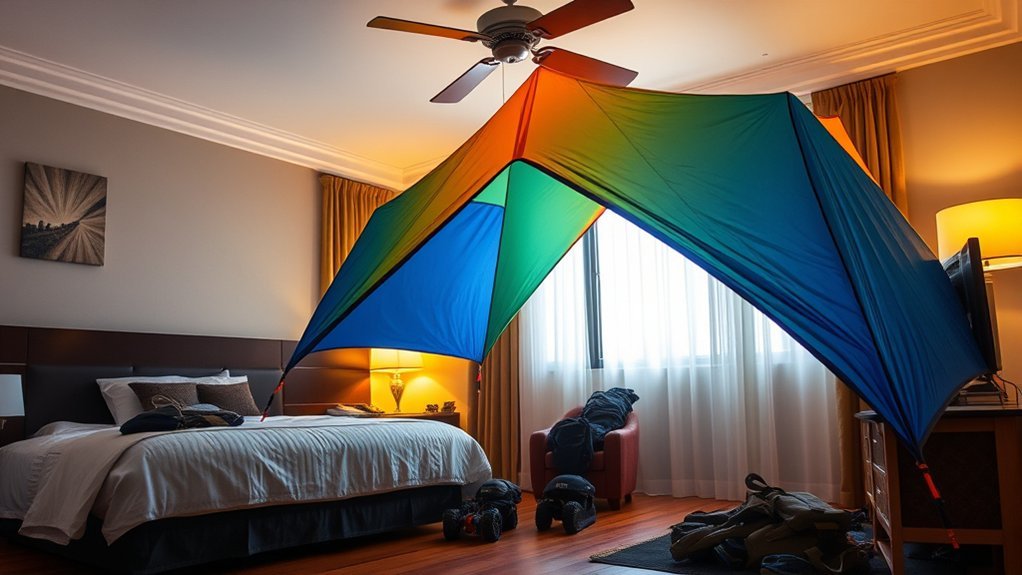
To dry your tent in a hotel room, start by shaking off excess water and wiping surfaces with a travel towel. Find a well-ventilated spot, using towel rods or luggage racks to hang it without blocking doors. Keep windows open for airflow, and consider using a fan to target damp areas. Don’t forget to check hidden corners for trapped moisture. With these tips, your tent will be ready for storage soon—there’s more to discover about maintaining your gear!
Preparing Your Tent for Drying

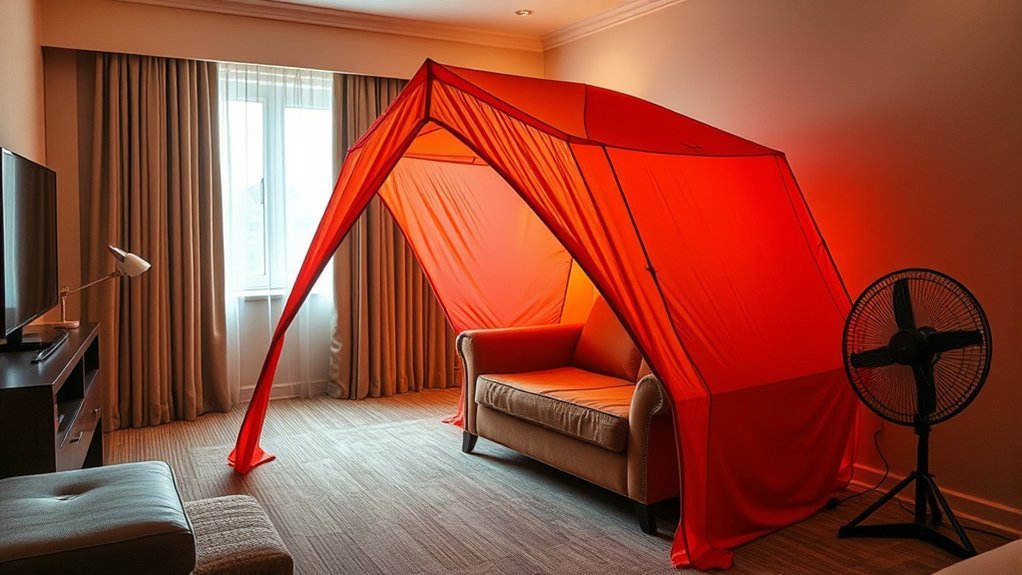
Before you start drying your tent, make sure it’s free of excess water, as this step is essential to an efficient drying process. Shake your tent vigorously to dislodge any trapped moisture, then grab a travel towel to wipe down surfaces. This quick prep can save you from the hassle of mildew later.
Next, find a well-ventilated spot in your hotel room—near a window or on a balcony works wonders. Open all doors, windows, and vents to let fresh air circulate freely, enhancing your drying techniques. If you have access to a fan, use it to boost airflow around the tent.
Finally, don’t forget to check hidden corners and folds for moisture, ensuring every inch is dry before packing it away. Practicing proper tent maintenance while traveling makes your adventures more enjoyable and carefree.
Finding Suitable Hanging Locations
When you’re out on the road and need to dry your tent, finding the right hanging location can make all the difference. Look for sturdy fixtures like towel rods, shower curtain rods, or coat hooks in the bathroom; these can help maximize airflow. You can also get creative by utilizing the door frame—drape the tent over the top, guaranteeing it doesn’t block the door’s functionality, while allowing both sides to catch the breeze. If you have a luggage rack, spread the tent out there for an elevated surface that promotes air circulation underneath. Additionally, consider hanging the tent near a window or balcony door to benefit from natural light and fresh air. If space allows, drape it over the bed or furniture, keeping it loose enough to prevent trapping moisture in folds. Finding these suitable hanging locations guarantees a quicker drying process, setting you free for your next adventure!
Ensuring Proper Air Circulation
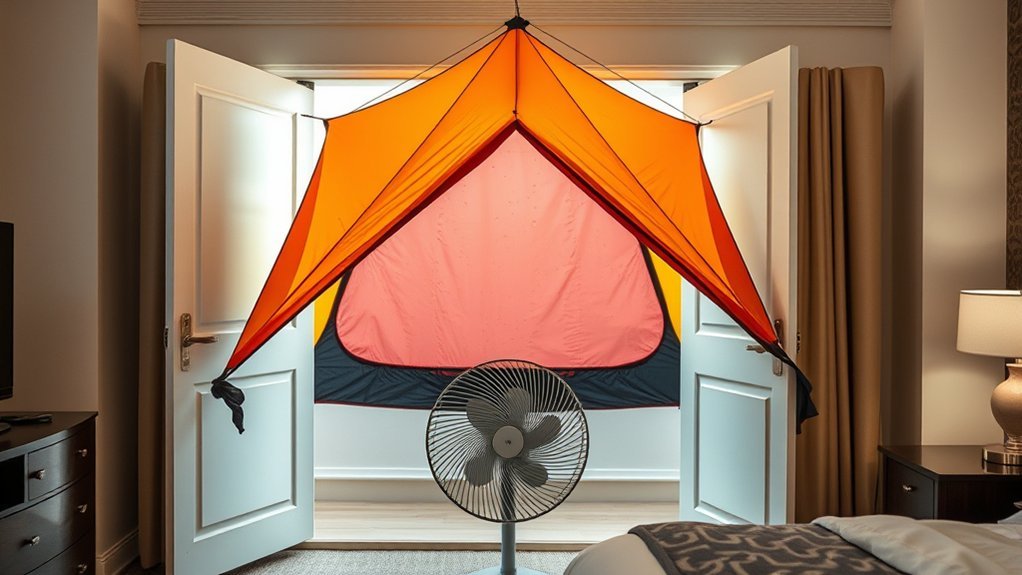
To dry your tent effectively, ensuring proper air circulation is essential for preventing mold and odors. Start by leaving all doors and windows open; this promotes airflow and reduces humidity levels, crucial for tent materials. Hang your tent in a spacious area, like over a shower rod or on multiple hangers, allowing air to flow freely around every surface. If space permits, consider placing it on a broad surface, such as a table or bed, and turn it inside out periodically to maximize exposure to air. If you’ve got a well-ventilated bathroom or an air conditioning unit available, set your tent up there to take advantage of the extra airflow. By employing these drying techniques, you’ll accelerate the drying process, ensuring your tent is fresh and ready for your next adventure.
Utilizing Fans for Efficient Drying
Using a fan can dramatically enhance your tent drying process, as it promotes air circulation and helps evaporate trapped moisture. Position your fan close to the tent, directing it towards the damp areas for ideal drying. If you can, open windows to create cross-ventilation, allowing fresh air to flow in and assist your fan’s efforts.
| Fan Type | Airflow Direction | Best Use |
|---|---|---|
| Oscillating | Left to Right | Even coverage |
| Box Fan | Straight Ahead | Targeted drying |
| Ceiling Fan | Downward | Overall air movement |
Remember to avoid placing your tent on carpeting to prevent moisture from seeping back in. Regularly check corners and seams for moisture retention, using focused airflow to tackle those stubborn spots. With the right setup, your tent will be dry and ready for your next adventure!
Checking for Trapped Moisture
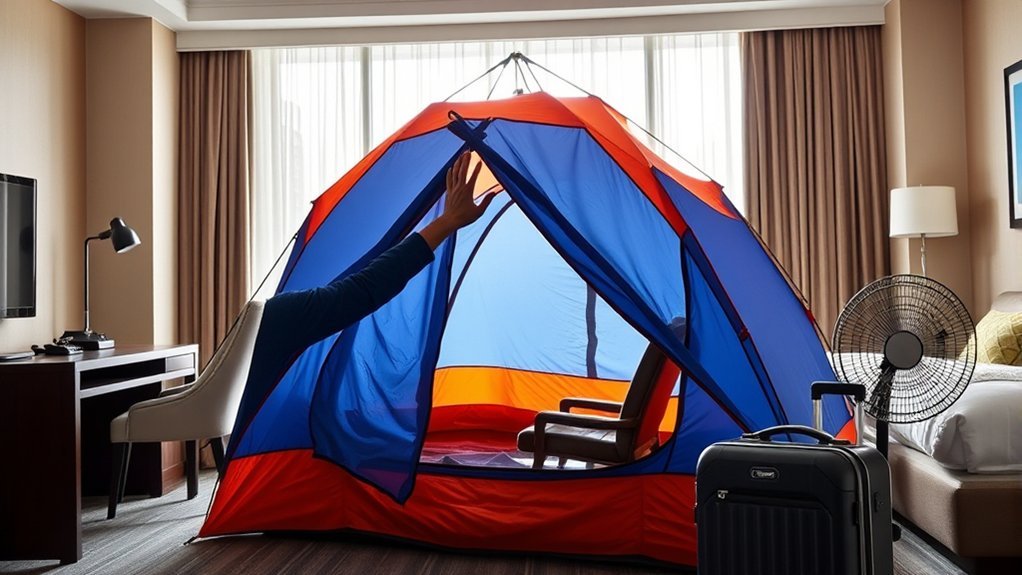
As you wrap up your tent drying process, it’s crucial to meticulously check for trapped moisture that can linger in hidden spots. This hidden dampness can lead to unpleasant surprises later on, so give your tent a thorough inspection.
- Feel the corners and seams for coolness, which may indicate moisture.
- Examine absorbent components like the groundsheet and inner pockets for any signs of dampness.
- Use a towel or microfiber cloth to wipe down surfaces, making sure no residual water remains.
Periodically squeeze the fabric to locate any damp areas that might need extra attention. After this detailed check, leave your tent open in a well-ventilated space, allowing airflow to prevent mold and mildew from developing. By diligently addressing trapped moisture, you guarantee your next adventure is free from worries about a damp tent.
Additional Tips for Quick Drying
When you find yourself needing to dry your tent quickly while on the road, there are several effective strategies to contemplate. First, utilize the bathroom’s ventilation by hanging your tent on the shower rod or draping it over the bathtub. This allows air circulation to speed up drying. If space permits, spread the tent out on the bed or another large surface, fully opened to maximize exposure to air and light. Enhance airflow with a fan or the hotel’s air conditioning system, which can drastically reduce drying time. Before hanging it up, wipe down the tent with a travel towel or microfiber cloth to eliminate excess moisture. Finally, keep the hotel room windows open, if the weather allows, to encourage cross-ventilation. These drying techniques will guarantee your tent care routine remains efficient, making your travels more liberating and enjoyable.
Storing Your Tent After Drying
Once your tent is fully dry, storing it correctly is vital to prevent mold and mildew. You’ll want to fold it loosely and place it in a breathable storage bag to guarantee airflow. Keep it in a dry, airy spot, away from dampness, to maintain its condition for your next adventure.
Ideal Storage Conditions
To keep your tent in prime condition after drying, it is vital to create ideal storage conditions that prevent mold and mildew. Start by ensuring the tent is completely dry, as even minor dampness can lead to deterioration. Choose a dry, airy environment that allows for ample airflow, enhancing moisture prevention.
- Fold your tent loosely or place it in a large laundry sack to maintain its shape.
- Keep the carry sack open to promote air circulation.
- Regularly inspect your tent for any signs of moisture or damage.
These simple yet essential steps in tent care will help preserve your tent’s waterproof capabilities and structural integrity, ensuring it’s ready for your next adventure.
Preventing Mildew Growth
After ensuring your tent is completely dry and stored properly, the next step is preventing mildew growth while it’s packed away. Start by using a breathable storage sack or fold the tent loosely to allow airflow. This simple moisture management technique keeps your tent fresh and reduces the risk of mildew. Avoid stashing it in damp environments, like poorly ventilated hotel rooms, as this invites mold to thrive. Before packing, check for hidden moisture, especially in corners and seams. For added mildew prevention, consider tossing in silica gel packets into your storage bag; they’ll absorb any lingering moisture. By taking these steps, you’ll maintain your tent in prime condition, ready for your next adventure.
Frequently Asked Questions
Can I Use a Hairdryer to Dry My Tent?
You can use a hairdryer to dry your tent, but take precautions. Keep it on a low setting, maintain distance, and use effective techniques to avoid damaging the fabric. Drying it quickly can prevent mold.
How Long Does It Usually Take to Dry a Tent?
Tent drying duration varies; it usually takes one to four hours depending on techniques. Use airflow and absorbent materials for quicker results. Patience pays off, so enjoy the process while your gear rejuvenates.
Is It Safe to Dry a Tent Indoors?
It’s generally safe to dry a tent indoors, but watch for moisture. If it’s too humid, you risk mold and tent mildew. Guarantee good airflow to keep your space fresh and your gear intact.
What if My Tent Smells Musty After Drying?
If your tent smells musty after drying, don’t panic. Fresh air and sunlight can banish that odor. Regular tent maintenance prevents this issue, so keep your gear clean and dry for your next adventure.
Can I Fold My Tent While It’s Still Slightly Damp?
You shouldn’t fold your tent while it’s still damp. Moisture can lead to mildew and musty odors. Prioritize tent care by ensuring it’s completely dry to prevent any moisture-related issues during your travels.
Conclusion
In just a few simple steps, you can transform your damp tent into a dry, ready-to-use shelter, even in a hotel room. Imagine the relief of unfolding a fresh, dry tent instead of a musty one—doesn’t that sound great? By following these tips and ensuring proper air circulation, you’ll be all set for your next adventure. Remember, a well-cared-for tent will last longer and keep you comfortable on all your journeys!