


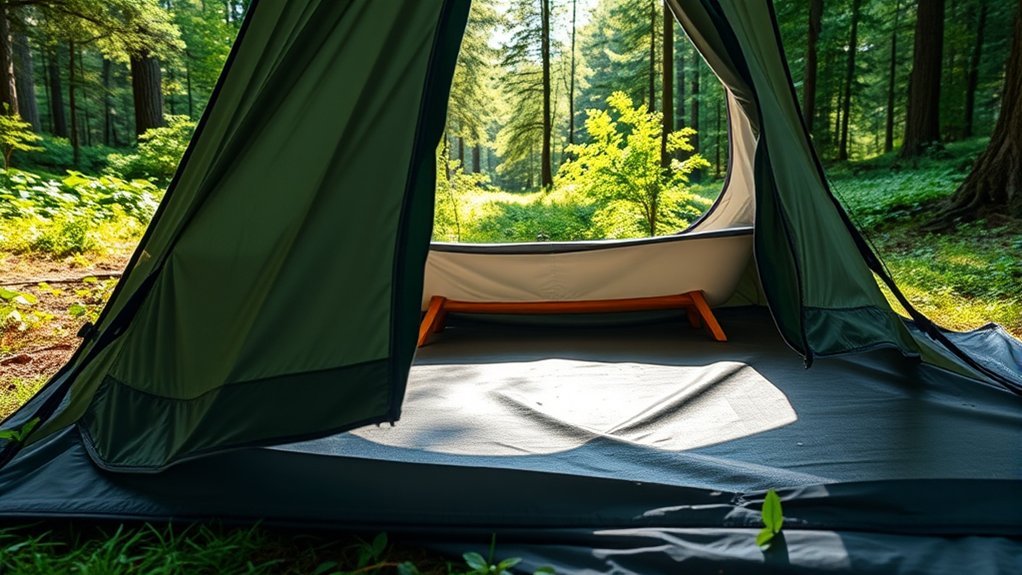
A bathtub floor on a tent raises the edges of the floor 5 to 15 inches, creating a barrier against water ingress. This design minimizes seam exposure to ground moisture and reduces leak risks. It enhances waterproofing by using durable, thicker materials and helps keep the interior cleaner and drier. While it offers great protection, it might add weight to your setup. There’s much more to contemplate regarding materials and tent types, so keep exploring!
What Is a Bathtub Floor?

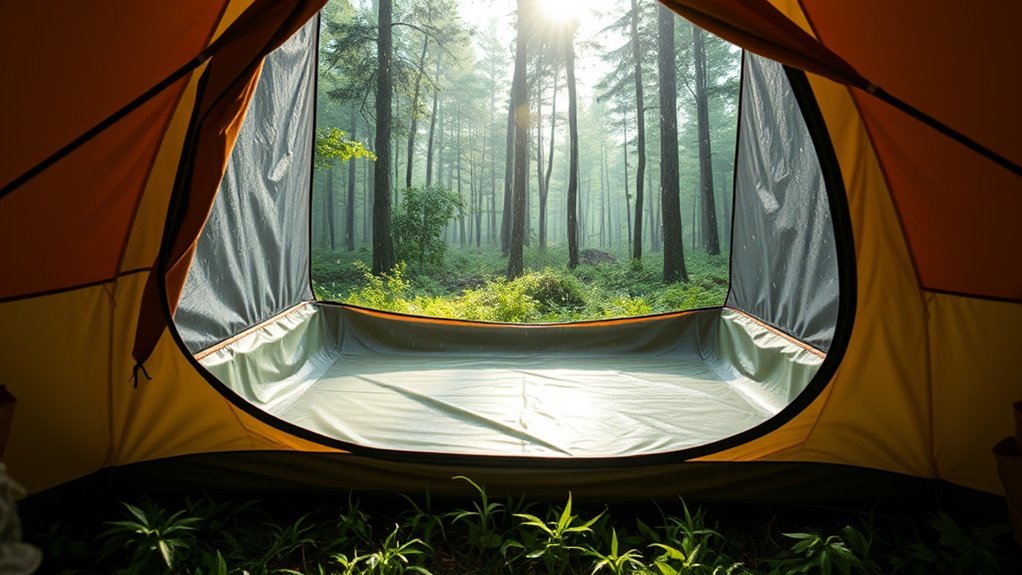
A bathtub floor is an innovative design feature found in many tents, enhancing their waterproof capabilities. This tent design extends 5 to 15 inches up the sides of the walls, creating a tub-like shape that effectively minimizes water ingress. By positioning seams above ground level, you reduce the risk of leaks during heavy rain or flooding, ensuring your camping comfort remains intact. Common materials for bathtub floors include polyester and polyethylene, with higher-end options utilizing thicker polyester for increased durability and waterproofing.
Additionally, bathtub floors keep the interior cleaner and drier, preventing dirt, debris, and water from splashing inside during adverse weather conditions. While they provide significant advantages, it’s worth noting that they can add weight to your tent, which may be a consideration for ultralight backpackers seeking freedom in their outdoor adventures. Ultimately, a bathtub floor enhances both protection and comfort for your camping experience.
How Does a Bathtub Floor Enhance Waterproofing?
While camping in wet conditions, having a bathtub floor greatly enhances waterproofing by creating a raised barrier that effectively minimizes water ingress. This innovative tent design elevates the walls by 5 to 15 inches, markedly reducing the risk of water entering during heavy rain or flooding. The construction of bathtub floors uses durable materials like thicker polyester or polyethylene, providing superior waterproof technology compared to standard tent floors.
Additionally, the minimized seams at the base lessen the potential for leaks, while proper seam taping reinforces this waterproofing, even in standing water scenarios. The raised edges also prevent back-splashing from rain or puddles, keeping the interior drier and cleaner. By incorporating a bathtub floor into your tent, you’re investing in a design that prioritizes your comfort and protection, allowing you to embrace the freedom of the outdoors without the worry of water intrusion.
Benefits of a Bathtub Floor in Tents
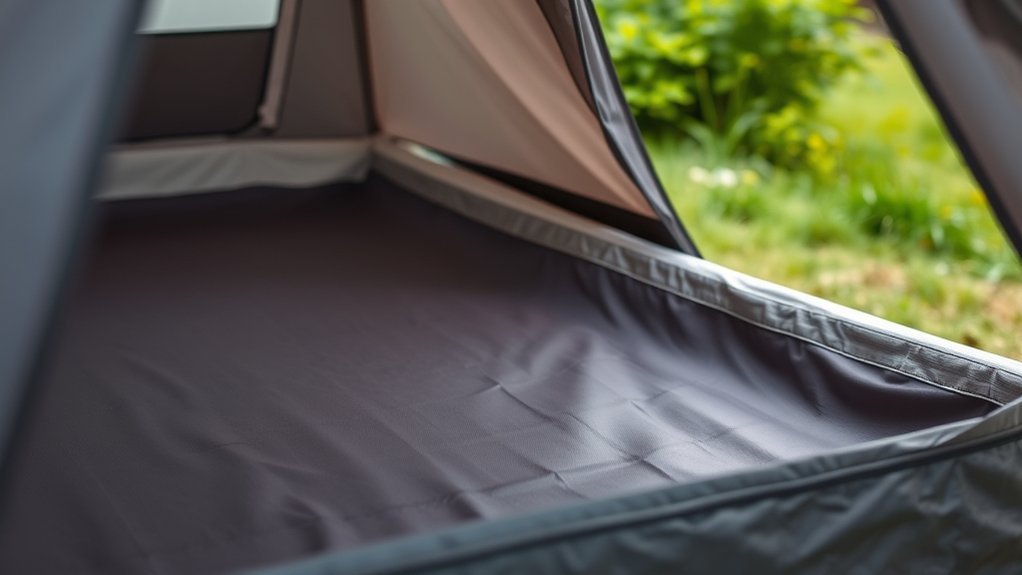
A bathtub floor in your tent offers enhanced waterproofing protection by extending the material up the sides, considerably reducing water ingress during heavy rain. This design keeps your tent interior cleaner and drier by minimizing ground splashes and preventing dirt from entering. With a properly elevated bathtub floor, you can enjoy a more comfortable camping experience, free from the hassle of water pooling.
Enhanced Waterproofing Protection
Bathtub floors in tents serve as an essential barrier against water ingress, greatly enhancing waterproofing protection. The innovative bathtub design provides several waterproof features that keep you dry and comfortable while camping:
- Heightened Barrier: Extending 5 to 15 inches up the sides minimizes leak points at seams, preventing water from entering during heavy rain or flooding.
- Durable Materials: Constructed from thicker polyester or polyethylene, these floors are built for longevity and superior waterproofing capabilities.
- Splash Protection: The design effectively reduces water back-splashing, maintaining a cleaner and drier tent interior in muddy conditions.
Increased Interior Cleanliness
Camping often means dealing with dirt and moisture, but the design of a bathtub floor greatly enhances interior cleanliness. By elevating the tent’s interior by 5 to 15 inches, it creates a barrier that helps keep dirt and moisture at bay, markedly improving your interior hygiene. With seams positioned above ground level, the risk of debris entering through potential leak points is minimized. The raised sides contain spills or dirt, making it easier for you to wipe down the interior after a long day outdoors. This design not only helps prevent unsightly messes but also contributes to a more hygienic camping environment, enhancing your overall camping comfort and allowing you to fully enjoy your outdoor experience.
Reduced Water Ingress Risk
When inclement weather strikes, the design of a bathtub floor greatly reduces the risk of water ingress in your tent. This innovative feature elevates the tent material, enhancing its ability to withstand heavy rain and flooding. Here are three key benefits:
- Height Advantage: Raising the floor 5 to 15 inches minimizes water pooling and deters leaks during extreme weather.
- Enhanced Seam Integrity: Fewer seams at the bottom reduce potential entry points for water, bolstering overall waterproofing.
- Back-Splash Prevention: The design effectively blocks back-splashing, keeping your interior drier and cleaner.
With materials like thicker polyester or polyethylene, a bathtub floor guarantees durability and reliable protection against ground moisture, making your tent a fortress against the elements.
Potential Drawbacks of Bathtub Floors
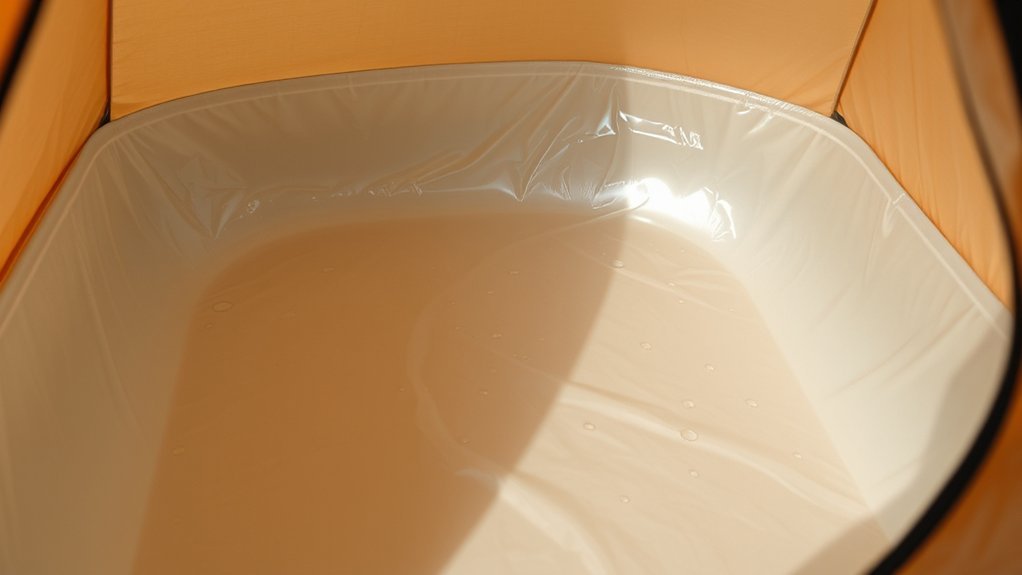
While bathtub floors offer benefits, they also come with potential drawbacks you should consider. The added weight from sturdier materials could hinder your ultralight packing goals, and raised entrances might create tripping hazards. Additionally, the extra seams in some designs can complicate waterproofing, increasing the risk of leaks during heavy rain.
Weight Considerations
Although bathtub floors offer excellent waterproofing and protection, they can considerably increase the overall weight of your tent. This added weight may not suit ultralight backpackers who prioritize minimizing pack weight. Consider the following factors:
- Material Impact: Heavier materials, like polyethylene, can greatly boost your tent’s weight.
- Weight Distribution: The bathtub design may alter weight distribution, affecting stability and setup.
- Packing Strategies: Heavier tents require more strategic packing to manage overall load effectively.
For campers seeking lightweight gear, the trade-off in weight versus waterproofing is essential. Carefully evaluate your needs to guarantee your choice aligns with your adventure goals, balancing protection while maintaining mobility.
Tripping Hazards
Many campers appreciate the waterproofing benefits of bathtub floors, but these designs can introduce tripping hazards at the tent entrance. The raised edges of bathtub floors may pose risks, especially in low-light conditions or for individuals with mobility challenges. While some designs offer minimal height, they may not greatly reduce tripping potential when entering or exiting the tent. To enhance tripping prevention, consider tents with drop-down entrance designs or zippered openings that create a flatter change. These features can help decrease the likelihood of tripping while still providing the advantages of a bathtub floor. Additionally, using extra lighting or reflective markers near the entrance can further improve safety and awareness, ensuring a more liberating camping experience.
Limited Waterproofing Guarantees
Bathtub floors provide significant waterproofing benefits, but they come with limitations that can impact your camping experience. Despite their advantages, you should be aware of the following limited waterproofing strategies:
- Seam Vulnerability: Water can seep through seams connecting the floor and walls if they’re not properly sealed.
- Height Issues: An insufficient height may lead to leaks during heavy rain, especially with budget polyethylene materials.
- Ground Conditions: Uneven terrain can cause water pooling at the base, increasing flooding risks inside your tent.
To maximize your bathtub floor’s effectiveness, follow seam maintenance tips and guarantee your tent is pitched on higher ground to minimize flooding. Understanding these aspects will help you prepare better and enjoy your outdoor adventures.
Materials Used for Bathtub Floors
When selecting a tent, you’ll find that the materials used for bathtub floors play an essential role in your camping experience. A materials comparison reveals that polyethylene and polyester dominate the market, with higher-end tents featuring thicker polyester for enhanced durability and waterproofing. Polyethylene, being heavier, is common in budget and family tents, while lightweight backpacking options typically use polyester. Premium tents might even incorporate Dyneema, a rare material known for its exceptional waterproofing and durability.
| Material | Weight |
|---|---|
| Polyethylene | Heaviest |
| Polyester | Lightweight |
| Dyneema | Ultra-light |
| Thickness | Greater than walls |
The thickness of bathtub floor materials is generally greater than that of tent walls, ensuring resistance to punctures. Ultimately, your choice of materials considerably influences both the tent’s weight and waterproofing capabilities, impacting your overall camping experience.
Types of Tents Featuring Bathtub Floors
Tents featuring bathtub floors come in various styles tailored to specific camping needs. Understanding the different tent categories helps you choose the right one for your adventures. Here are three main types:
- Family Camping Tents: These typically use durable polyethylene flooring materials for enhanced waterproofing, perfect for protecting against ground moisture during family outings.
- Backpacking Tents: Designed for the minimalist, these tents often feature lightweight polyester bathtub floors, balancing weight with waterproofing efficiency for your outdoor escapades.
- High-End Tents: Although less common due to cost, some tents utilize Dyneema flooring materials for superior waterproofing while remaining lightweight, catering to serious adventurers.
Additionally, winter camping tents may include reinforced seams, ensuring they withstand heavy snow loads and prevent water ingress. With raised edges, bathtub floors excel in wet climates, keeping your interior drier during heavy rains.
Frequently Asked Questions
Can I Use a Tent With a Bathtub Floor on Sand?
Yes, you can use a tent with a bathtub floor on sand. The right tent materials will help prevent moisture from seeping in, making it suitable for sand camping while keeping you dry and comfortable.
How Do I Clean a Bathtub Floor in a Tent?
Cleaning a bathtub floor in your tent is a cinch. Use tent cleaning techniques like mild soap and water, then rinse thoroughly. Regular bathtub floor maintenance keeps your space fresh, ensuring you avoid unnecessary headaches on your adventures.
Are Bathtub Floors Suitable for Winter Camping?
Yes, bathtub floors are suitable for winter camping. They provide bathtub benefits like enhanced insulation against cold ground temperatures, keeping you warmer. Confirm proper setup to maximize their effectiveness in harsh winter conditions for a comfortable experience.
Do Bathtub Floors Affect Tent Weight?
Yes, bathtub floors do affect tent weight. These floors often use heavier, durable materials, increasing overall tent weight. When choosing a tent, consider the balance between bathtub weight and the desired protection against water and elements.
Can I Repair a Damaged Bathtub Floor?
Yes, you can repair a damaged bathtub floor using tent waterproofing techniques. For effective bathtub floor maintenance, apply a waterproof patch kit or sealant, ensuring a strong, leak-proof barrier for your outdoor adventures.
Conclusion
In conclusion, a bathtub floor is an essential feature in tents, elevating your waterproofing game by keeping water out effectively. Did you know that tents with bathtub floors can reduce the likelihood of water seeping in by as much as 90% during heavy rain? This means you can enjoy your outdoor adventures without worrying about soggy gear or uncomfortable conditions. So, when choosing your next tent, consider one with a bathtub floor for enhanced protection and comfort.