


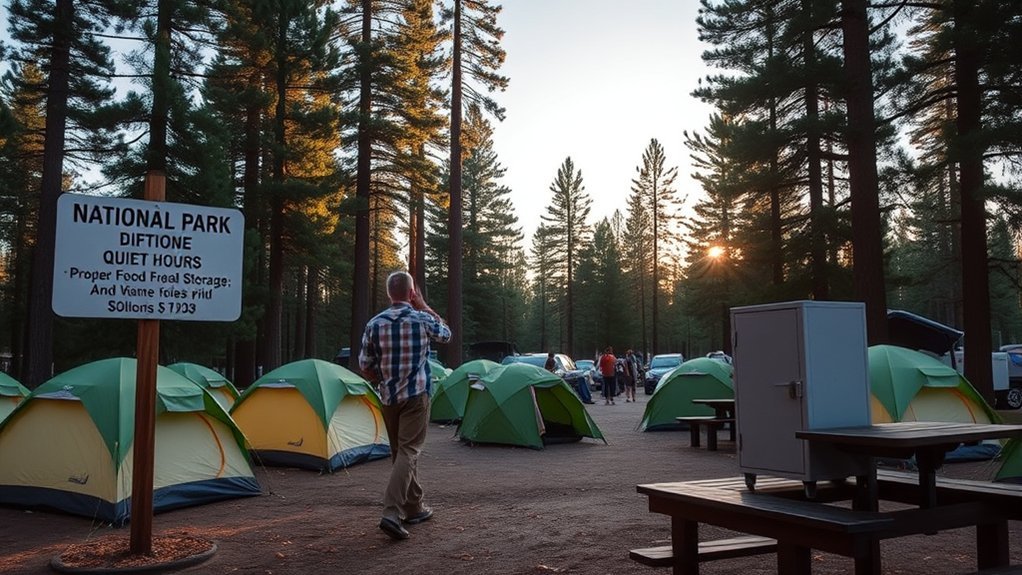
National park campgrounds have strict rules for quiet hours and food storage. Quiet hours run from 10 PM to 6 AM, ensuring a tranquil environment and protecting wildlife. You must keep food, garbage, and cooking gear secured to prevent dangerous wildlife encounters. Unattended or improperly stored food can lead to fines or impoundment. Make sure to follow these regulations for a safe and enjoyable camping trip. There’s even more to discover about compliance and conservation practices.
Importance of Quiet Hours

Quiet hours in national park campgrounds play an essential role in ensuring a peaceful camping experience for everyone. Typically enforced from 10:00 PM to 6:00 AM, these hours require you to minimize noise, creating a serene environment that allows campers to connect with nature. Respecting these designated quiet periods is vital, as they not only enhance your experience but also protect the wildlife that thrives in these areas.
Children under 16 must return to their campsites by 10:00 PM, helping maintain tranquility. During quiet hours, avoid using noise-producing equipment like generators, which can disturb fellow campers. Remember, repeated noise complaints can lead to eviction without a refund. By adhering to quiet hours, you show respect for nature and fellow campers, fostering a communal atmosphere where everyone can enjoy the beauty of the outdoors. Embrace this opportunity to unwind and truly experience the wonders of the natural world.
Quiet Hours Enforcement
Quiet hours in the campground run from 10:00 PM to 6:00 AM, requiring you to keep noise to a minimum. If violations occur, security personnel monitor the area and may take action, including eviction for repeated complaints. Remember, you’re responsible for your visitors’ behavior during these hours, so guarantee everyone complies to maintain a peaceful environment.
Quiet Hours Timing
To guarantee a peaceful camping experience, national park campgrounds enforce designated quiet hours from 10:00 PM to 6:00 AM. During this time, noise must be kept to a minimum, allowing everyone to enjoy the tranquility of nature. Children under 16 need to return to their campsites by 10:00 PM, helping maintain a calm atmosphere. If you’re planning nighttime activities, be mindful of campfire etiquette and keep conversations low. Security personnel actively uphold these quiet hours, and any noise complaints can lead to eviction. Arriving after hours? You’ll have to wait until quiet hours end to set up your campsite. Respecting these times guarantees everyone can relax and appreciate the serenity that national parks offer.
Consequences of Violations
Failing to adhere to quiet hours can lead to serious consequences, as national parks take noise disturbances seriously. Quiet hours run from 10:00 PM to 6:00 AM, and any noise complaints can trigger penalty measures. If you’re hosting visitors, remember you’re responsible for their behavior—any disturbances they cause can result in penalties for you. Repeated complaints can escalate quickly, potentially leading to eviction from the park. Security personnel actively monitor compliance, and if you’re ejected for violating quiet hours, you won’t receive a refund. To guarantee a peaceful experience for everyone, it’s essential to respect these regulations. Embrace the tranquility of nature by keeping noise to a minimum during designated hours.
Enforcement by Security
National park security plays an important role in enforcing quiet hours, which run from 10:00 PM to 6:00 AM. Their security presence guarantees that noise is minimized, allowing everyone to enjoy a peaceful night under the stars. If you or your guests create repeated disturbances, you risk eviction from the park. It’s crucial to remember that children under 16 must return to their campsites by 10:00 PM to comply with regulations. Security actively engages in noise monitoring, responding quickly to complaints. For assistance during quiet hours, look for the emergency contact information posted on the office door. Registered campers are responsible for their visitors, ensuring they also follow the quiet hour rules. Respecting these guidelines enhances everyone’s experience.
Designated Quiet Hours
Quiet hours in national park campgrounds, typically enforced from 10:00 PM to 6:00 AM, are vital for ensuring a peaceful environment for all campers. During these hours, it’s important to minimize noise, allowing everyone to enjoy the tranquility of nature. Children under 16 must return to their campsites by 10:00 PM to comply with this policy. Security personnel actively enforce these rules, and repeated noise complaints can lead to eviction without a refund.
To enhance your camping experience, practice good campfire etiquette by keeping conversations quiet and turning off any noise-producing equipment. Avoid nighttime activities that could disturb others, such as loud music or late arrivals. By respecting these designated quiet hours, you contribute to a harmonious atmosphere where everyone can relax and recharge, fully embracing the liberating spirit of the great outdoors.
Food Storage Regulations
To guarantee a safe and enjoyable camping experience, understanding food storage regulations is essential. Proper food storage techniques not only protect your supplies but also minimize wildlife attraction. Here are key points to remember:
Understanding food storage regulations is crucial for a safe camping experience and to protect wildlife.
- Seal all food, garbage, and cooking equipment in your vehicle or a solid camping unit when not in use.
- In designated areas, suspend food at least 10 feet above the ground and 4 feet horizontally from objects.
- Utilize food storage lockers provided by campgrounds like Balsam Mountain and Cades Cove for added security.
Neglecting these rules can lead to your food being impounded by campground staff, ensuring compliance and safety for all. Remember, violating food storage restrictions may result in fines, underscoring the importance of adhering to these regulations for both your safety and the protection of wildlife. Enjoy your adventure while respecting nature!
Securing Food and Cooking Equipment
When camping in national parks, safeguarding your food and cooking equipment is essential to prevent attracting wildlife. Proper food safety practices not only protect you but also preserve the natural environment. Always seal all food and cooking gear in your vehicle or a solid camping unit when not in use. If the park provides designated food storage lockers, take advantage of them for added security.
When hanging food, store it at least 10 feet above ground and 4 feet horizontally from tree branches to enhance wildlife prevention. Remember, unattended or improperly stored food may be impounded by campground staff, and violating food storage regulations can lead to fines. Adhering to these guidelines guarantees both your safety and compliance with park rules, allowing you to enjoy the wilderness without worry. Prioritize securing your food, and you’ll help keep the parks clean and safe for everyone.
Impact of Improper Food Storage
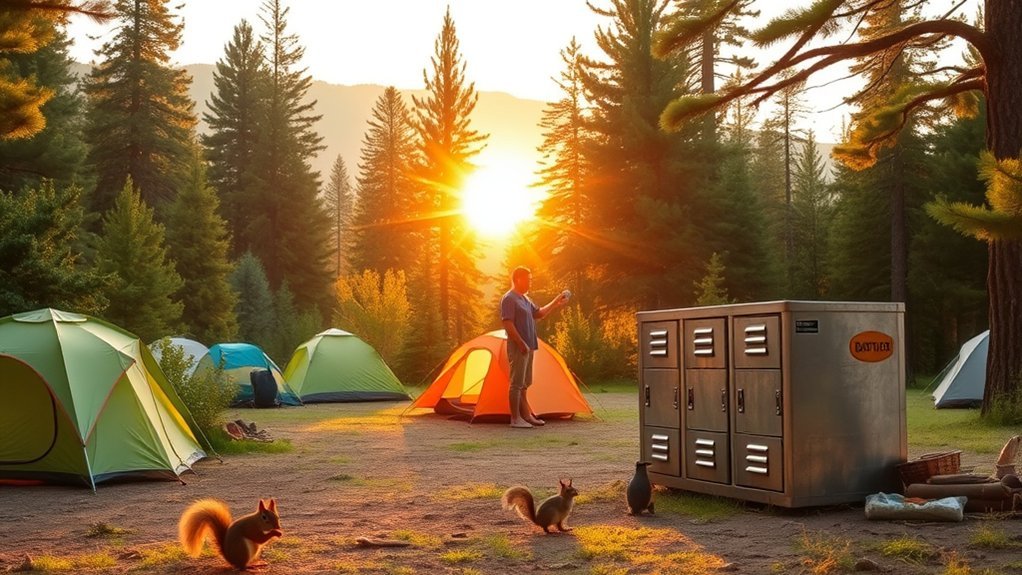
Improper food storage can have serious consequences in campgrounds, as it often leads to unwanted wildlife encounters. Bears and other animals are drawn to easily accessible food sources, putting both your safety and theirs at risk. To guarantee food safety and protect the natural environment, follow these guidelines:
- Seal food and garbage: Always store food, cooking equipment, and garbage in your vehicle or a solid camping unit when not in use.
- Use designated storage: If designated areas aren’t available, suspend all food at least 10 feet above the ground and 4 feet horizontally from objects.
- Follow regulations: Ignoring food storage rules can lead to fines and the impoundment of your food, resulting in financial loss and inconvenience.
Adhering to these practices not only safeguards your camping experience but also maintains the delicate balance of wildlife in national parks.
Wildlife Safety
When camping in national parks, securing your food is essential to prevent wildlife encounters. Always store food and cooking gear in your vehicle or a sturdy camping unit and follow proper protocols to minimize attracting animals. Remember, improper storage can lead to fines and compromise your safety, so stay aware and responsible.
Secure Food Storage
To guarantee both your safety and the protection of wildlife, it is crucial to store all food, garbage, and cooking equipment properly while camping in national parks. Improper food storage can attract wildlife, posing risks for both you and the animals. Here are key guidelines to follow:
- Store food and garbage in sealed vehicles or solid camping units when not in use.
- If designated food storage areas aren’t available, suspend food at least 10 feet above ground and 4 feet horizontally from objects.
- Utilize food storage lockers available at campgrounds like Balsam Mountain and Cades Cove.
Wildlife Encounter Protocols
Proper food storage is your first line of defense against unwanted wildlife encounters while camping in national parks. Securely store food, garbage, and cooking equipment in vehicles or solid camping units when not in use to deter wildlife. If you do encounter wildlife, stay calm. Don’t approach or feed the animal; instead, back away slowly while keeping it in sight. This helps you assess its behavior and maintain safety. Report any aggressive wildlife behavior to park authorities immediately, ensuring the safety of all campers. Remember, following these safety measures not only protects you but also preserves the natural wildlife. Stay vigilant, respect their space, and enjoy the beauty of the park responsibly.
Attracting Animals Awareness
Attracting wildlife to your campsite can lead to dangerous encounters, so being aware of how your actions impact animal behavior is essential. Proper food storage is key to minimizing risks associated with food attractants. Here’s what you need to know:
- Seal food and garbage in vehicles or hard-sided camping units when not in use to deter animals.
- If designated storage areas aren’t available, suspend food at least 10 feet above ground and 4 feet horizontally from objects.
- Unattended or improperly stored food may be impounded by campground staff, and violating these regulations can result in fines.
Consequences of Violating Rules
When you ignore campground rules, especially those related to noise and food storage, you face serious consequences that can ruin your visit. Disturbing the peace during quiet hours from 10:00 PM to 6:00 AM may lead to immediate ejection from the park, with no refunds issued for repeat noise complaints. On the other hand, improper food storage—like leaving food unattended or not sealed—can result in your food being impounded and potential fines. Such negligence not only jeopardizes your trip but can also attract wildlife, increasing the risk of dangerous encounters. Compliance with food storage regulations is mandatory, and park officials are strict about enforcing these rules. Prioritizing quiet hours and proper food storage isn’t just about following rules; it’s about ensuring a safe and enjoyable experience for you and fellow campers. Don’t let violations spoil your adventure in the great outdoors.
Tips for Compliance
To guarantee a hassle-free camping experience, stick to quiet hours from 10:00 PM to 6:00 AM by keeping noise levels down. Make sure kids under 16 are back at your campsite by 10:00 PM to comply with regulations. Properly store food and cooking gear in your vehicle or securely suspended to avoid attracting wildlife and facing penalties.
Quiet Hours Enforcement
While enjoying the serene environment of national park campgrounds, it’s vital to respect quiet hours, which typically run from 10:00 PM to 6:00 AM. These hours are fundamental for maintaining peace and guaranteeing everyone can relax. To comply and avoid quiet hours violations, consider these tips:
- Minimize Noise: Keep conversations and music to a whisper. Turn off noise-producing equipment.
- Curfew for Kids: Make certain children under 16 return to your campsite by 10:00 PM.
- Understand Enforcement: Familiarize yourself with noise complaint procedures, as repeated complaints may lead to eviction.
Respecting these guidelines enhances your experience and helps foster a harmonious atmosphere for all campers.
Proper Food Storage
Respecting quiet hours enhances your camping experience, but safety also hinges on proper food storage. To guarantee wildlife awareness, always seal food, garbage, and cooking equipment in your vehicle or solid camping unit when not in use. If designated storage areas aren’t provided, suspend food at least 10 feet above ground and 4 feet horizontally from any objects. Campgrounds like Balsam Mountain, Big Creek, and Cades Cove offer food storage lockers for your convenience. Remember, unattended or improperly stored food can be impounded by campground staff, and violators face fines. Proper food preparation and storage not only protect wildlife but also keep your camping experience safe and enjoyable. Stay compliant to embrace the freedom of nature responsibly.
Additional Resources for Campers
Have you thought about what additional resources can enhance your camping experience in national parks? Utilizing the right tools can help you adhere to camping etiquette and demonstrate respectful behavior to fellow campers. Here are three resources to contemplate:
- Park Ranger Guidance: Don’t hesitate to ask park rangers for tips on local wildlife, safe food storage, and campground regulations. Their expertise can enrich your experience.
- Mobile Apps: Download camping apps that offer maps, weather updates, and best practices for food storage and quiet hours. These digital resources can keep you informed and safe.
- Local Camping Groups: Join local or online camping communities. Engaging with experienced campers can provide valuable insights and foster a sense of camaraderie.
Frequently Asked Questions
Can I Play Music During Quiet Hours if It’s Low Volume?
You shouldn’t play music during quiet hours, even at low volume. Practicing good music etiquette helps maintain campground harmony, ensuring everyone enjoys their experience. Respecting others fosters a more liberating, pleasant atmosphere for all.
Are Campfires Allowed During Quiet Hours?
Campfires aren’t allowed during quiet hours, as noise considerations and campfire etiquette matter. Did you know that 80% of campers prioritize peace? To enjoy nature fully, keep your fire activity within designated hours.
What Should I Do if a Neighbor Is Noisy After 10 PM?
If a neighbor’s noisy after 10 pm, politely address them about your noise complaints. Remind them of campsite etiquette, fostering a respectful environment. If necessary, involve campground staff to resolve ongoing disturbances effectively.
Can I Store Food in My Tent?
You shouldn’t store food in your tent. It poses food safety risks and attracts wildlife encounters, putting you and your gear in danger. Use designated storage areas or bear-proof containers to keep everything secure.
Are There Penalties for Repeated Violations of Campground Rules?
Yes, repeated violations can lead to penalty enforcement. You’ll face consequences like fines or eviction from the campground. It’s essential to follow rules to enjoy your experience without unnecessary disruptions or penalties.
Conclusion
By following the campground rules, you not only guarantee a peaceful experience for everyone but also protect wildlife and your food. Remember, it’s not just about keeping the noise down after sunset; it’s about securing your snacks like a pro. Violating these rules can lead to unpleasant consequences, so being mindful helps everyone enjoy the great outdoors. Stay informed and respect the guidelines, and you’ll have a memorable camping trip without any hiccups.