



To tension your rainfly properly for wind and rain, make certain your tent is staked down and the rainfly aligns securely with attachment points. Use durable guy lines and adjustable tensioners, keeping the line angle between 30 to 45 degrees. Gradually pull to achieve ideal tension, checking connections and adjusting regularly as weather changes. Make sure the rainfly extends beyond the tent edges to prevent leaks. For more in-depth tips on setup and storm preparedness, keep going.
Understanding the Importance of Tensioning a Rainfly

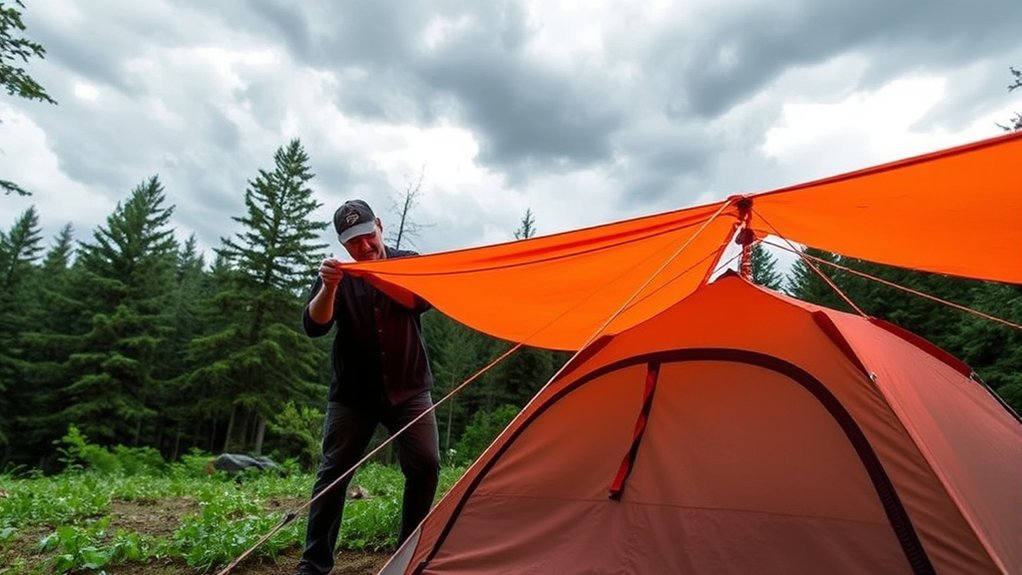
When you set up your tent, understanding the importance of tensioning a rainfly is crucial to guarantee effective protection against the elements. Proper tensioning prevents water pooling, which can lead to leaks and damage during heavy rain. By utilizing suitable rainfly materials, like polyester or nylon, you can enhance durability and waterproofing. Employing effective tensioning techniques, such as using tensioners or guylines, allows the rainfly to shed wind more efficiently, minimizing flapping that causes wear. Adequate tension keeps the rainfly elevated above the tent, promoting airflow and reducing condensation buildup inside. Regularly checking and adjusting the tension ensures peak performance in changing weather conditions, maintaining your shelter’s integrity. Ultimately, mastering these techniques liberates you from stress, allowing you to fully embrace the great outdoors, knowing your tent is secure against nature’s challenges.
Essential Tools and Materials Needed
To effectively tension your rainfly, you’ll need a few essential tools and materials. Start with durable tent line tensioners to adjust and maintain the necessary tautness. Additionally, having sturdy tent stakes and adjustable guy lines will enhance stability, especially in adverse weather conditions.
Tent Line Tensioners
Tent line tensioners are essential tools for ensuring your rainfly remains taut and effective against the elements. Proper setup involves creating a loop with the tent line and securing it around a post or stake to prevent sagging. Regularly adjusting the tension using these tensioners accommodates changes in weather, enhancing your rainfly’s performance. Here’s a quick overview of tensioner materials and techniques:
| Tensioner Type | Material | Use Case |
|---|---|---|
| Cam Buckle | Nylon | Quick adjustments |
| Rope Tensioner | Aluminum | Lightweight setups |
| Spring Tensioner | Steel | High-wind conditions |
| Adjustable Knot | Paracord | Versatile tensioning |
| Loop Tensioner | Plastic | Easy to use for beginners |
Practice with these tensioning techniques to boost your confidence before your next adventure.
Durable Tent Stakes
A reliable set of durable tent stakes is essential for securing your rainfly and ensuring your shelter withstands adverse weather conditions. To achieve the best results, consider the following:
- Stake Materials: Opt for aluminum or steel stakes, as they provide superior strength and resistance to bending compared to plastic alternatives.
- Stake Length: Choose stakes that are 6-10 inches long, ensuring proper anchoring in various ground types, especially hard or rocky soil.
- Specialized Designs: Look for V-shaped or Y-shaped stakes, which offer enhanced holding power in challenging weather conditions.
Always carry extra stakes to replace any that are lost or damaged, ensuring your rainfly remains securely anchored during storms. Your shelter’s stability depends on these essential tools.
Adjustable Guy Lines
Adjustable guy lines are essential for effectively securing your rainfly, providing the flexibility to make quick tension adjustments as weather conditions change. Opt for high-quality guy line materials like nylon or polyester, which offer durability and abrasion resistance. These materials guarantee your lines withstand harsh elements while maintaining peak tension. Equipped with tensioners, adjustable guy lines help keep your rainfly taut, preventing water pooling during rain. Additionally, consider lines with reflective features; they enhance visibility at night, reducing tripping hazards. Regularly check and adjust your guy lines to maintain stability and adapt to shifting winds. By using adjustable guy lines, you empower yourself to combat the unpredictable nature of outdoor conditions confidently.
Preparing the Tent and Rainfly Setup
Before laying the rainfly over your tent, make certain the tent body is properly staked down to establish a stable foundation. This guarantees a solid base for rainfly alignment and optimizes your setup. Follow these steps for effective preparation:
- Check Tent Orientation: Position your tent facing away from prevailing winds to minimize exposure to harsh weather.
- Lay the Rainfly: Align the rainfly with the tent’s main structure. Ensure it covers the entire tent to prevent water pooling.
- Identify Attachment Points: Locate the attachment points on both the rainfly and tent. These will guide where to connect the tension lines, enhancing stability.
Once set, employ tensioners to keep the rainfly taut, which prevents wind uplift and facilitates rain runoff. Remember to periodically check and adjust the tension during inclement weather to maintain proper coverage and minimize the risk of water ingress.
Attaching the Rainfly to the Tent
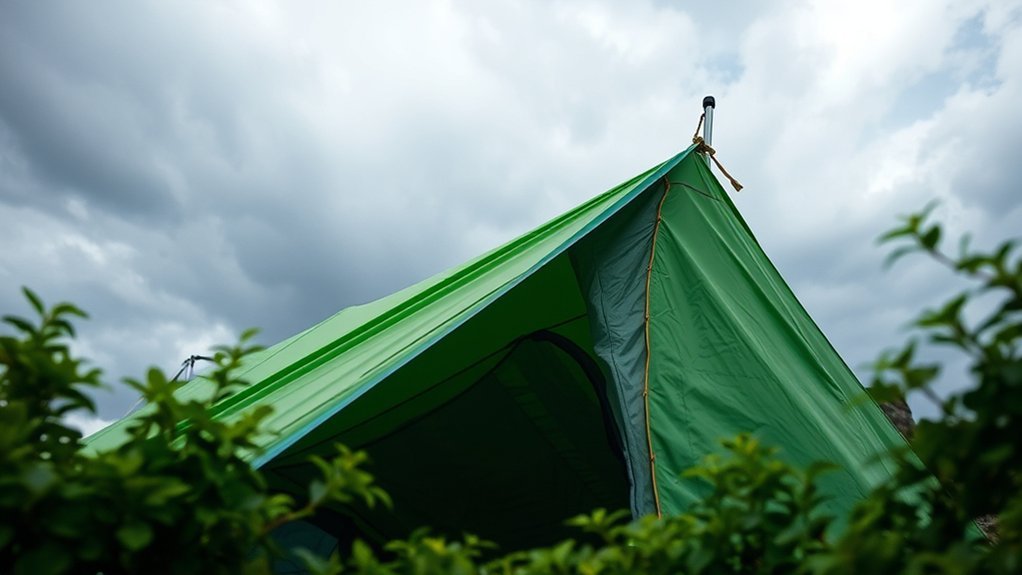
With the tent and rainfly properly prepared, it’s time to attach the rainfly securely to the tent. Start by locating the attachment points on both the tent and the rainfly, confirming you have the correct orientation for a snug fit. Utilize the provided hooks or clips to connect the rainfly to the tent, fastening all points evenly to maintain balanced tension. Verify the rainfly’s lower edges extend beyond the tent to effectively shed rainwater and minimize pooling.
Once attached, adjust the tensioners on the rainfly lines, keeping the fabric taut to prevent flapping in the wind and reduce the risk of water ingress. Pay attention to the rainfly materials; they should be durable enough to withstand harsh conditions. Finally, double-check all connections and tension before inclement weather hits. A well-secured rainfly provides stability and essential protection against wind and rain.
Positioning the Tensioners Correctly
Positioning the tensioners correctly is essential for achieving ideal rainfly performance and stability. For effective tension adjustment, follow these important steps:
- Knot Orientation: Position the tensioners on the rainfly lines so that the knot faces your tent. This setup minimizes tangling and simplifies adjustments.
- Sturdy Anchoring: Confirm the tent line creates a small loop wrapped around a sturdy post or stake. This maintains stability against wind and rain.
- Best Angle: Adjust the angle of the line for best leverage. This maximizes tension and enhances the rainfly’s stability.
Regularly check the tension after your setup practice; changing weather conditions can affect tautness. By familiarizing yourself with the tensioners before your trip, you’ll guarantee a quicker, more effective setup, allowing you to focus on enjoying your outdoor experience, free from worry about the elements.
Creating Loops in the Guylines
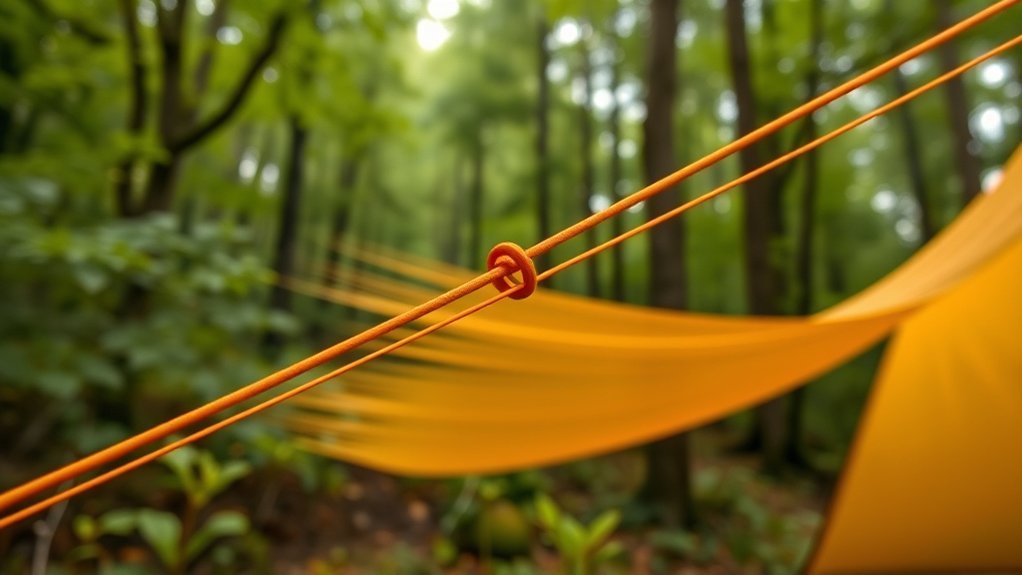
When creating loops in the guylines, size is essential; make sure they’re large enough to fit securely around stakes or posts without slipping. Position these loops at the end of the guylines for flexibility, allowing for easy adjustments during setup. Regularly inspect your loops for any signs of wear, as compromised loops can jeopardize your tent’s stability in adverse weather.
Loop Size Matters
Creating the right size loops in your guylines is essential for guaranteeing proper tension on your rainfly. Here’s what you need to take into account regarding loop size for ideal performance:
- Diameter: Aim for a loop size of 6-8 inches. This size allows the loop to fit around tent posts or stakes without excessive friction.
- Adjustment: Larger loops facilitate tension adjustments, reducing the risk of slippage during windy or rainy conditions.
- Mechanism Compatibility: Confirm your loop accommodates the tensioner’s mechanism, promoting smooth operation while tightening.
Regularly check and adjust the loop size during setup to maintain ideal tension and support for the rainfly. With the right loop size, you enhance friction reduction and promote stability, liberating your camping experience from the worries of adverse weather.
Proper Loop Placement
How can you guarantee your guylines are set up for best performance? Proper loop placement is essential for effective tension adjustment. Create loops that fit securely around anchor points like tent stakes while avoiding kinks or twists. Positioning is key; make certain loops allow easy tensioning without tangling.
| Loop Size | Positioning Tips | Maintenance |
|---|---|---|
| Large | Facilitate leverage | Regularly inspect |
| Secure | Optimize angles | Adjust for conditions |
| Accessible | Promote stability | Check for twists |
Securing the Guylines to Stakes
To guarantee your rainfly remains taut and stable, start by selecting sturdy stakes that are at least 6-8 inches long, as they provide the necessary strength to withstand strong winds. Focus on these key steps for securing your guylines:
- Positioning: Angle the guylines at 45 degrees from the rainfly to the stake. This ideal angle enhances stability and minimizes stress on the guylines material.
- Tensioning: Employ tensioners on each guylines to keep them taut. This prevents sagging, which can cause water pooling on the rainfly, affecting its performance.
- Stake Placement: Drive the stakes into the ground at an angle away from the rainfly. This technique increases stake longevity against wind forces.
Regularly check and adjust the guylines tension as weather conditions change. This guarantees your rainfly remains secure and effective, empowering your outdoor experience against the elements.
Gradually Pulling for Optimal Tension
To achieve ideal tension on your rainfly, start by ensuring the line’s angle is correct as you pull. Gradually adjust the tension in increments, allowing you to find the perfect balance without risking damage. Keep an eye on changing weather conditions, as these may require you to readjust the tension to maintain effectiveness.
Correct Line Angle
Maintaining a correct line angle between 30 to 45 degrees from the ground is essential for achieving ideal tension on your rainfly. This angle provides the necessary leverage for effective tension adjustment while ensuring stability against wind and rain. Follow these steps for optimal results:
- Gradually pull the line to increase tension without exceeding the limits of your tensioner or line material.
- Adjust the line angle as needed to enhance leverage, making it easier to tighten the line without excessive force.
- Periodically check the tension and angle, especially in changing weather conditions, to maintain a taut line that protects your rainfly’s waterproof integrity.
Incremental Tension Adjustment
When you’re adjusting the tension on your rainfly, starting with gentle pulls is essential to avoid damaging the fabric. Use incremental adjustments to create an initial tension, ensuring it’s not too tight. This method allows for ideal tension distribution, vital for maintaining the integrity of your rainfly. As you gradually apply pressure, regularly check the tautness. It should be tight enough to prevent sagging but not overly stretched. Effective use of the tensioner helps stabilize the rainfly against wind and rain, so focus on even pressure. Remember, revisiting your tension settings periodically enhances performance and protection, allowing you to remain liberated in nature, confident your shelter will withstand the elements.
Monitor Weather Changes
How can you guarantee your rainfly remains secure as weather conditions shift? By closely monitoring weather patterns and wind forecasts, you can make timely adjustments to your rainfly tension. Follow these steps:
- Regularly Check Weather Updates: Stay informed about potential wind and rain changes that could impact your setup.
- Gradually Adjust Tension: As conditions worsen, pull the tent lines gently to keep the rainfly taut, preventing water pooling and flapping.
- Mind the Line Angles: Slight adjustments to the angles can enhance leverage and improve tension during windy spells.
Always check the tension frequently, especially before storms. Remember to release some tension during calm periods to avoid snapping lines under sudden gusts.
Regularly Checking and Adjusting Tension
To guarantee your rainfly remains effective, regularly checking and adjusting its tension is essential, especially after significant weather changes. Implement tension techniques systematically, inspecting each line and tensioner in succession. Look for signs of wear or damage during these checks, as compromised equipment can jeopardize stability.
Adjustment frequency should increase after heavy rain, as accumulated water can lead to sagging. When checking, slightly adjust the angle of the lines to maximize leverage and maintain ideal tension. Periodically re-tighten the lines as necessary, especially in high winds, to keep the rainfly taut. Remember, a well-tensioned rainfly not only protects you from the elements but also enhances your overall experience outdoors. By prioritizing these checks, you guarantee your setup remains reliable, empowering you to enjoy the freedom of nature without concern.
Best Practices for Storm Preparedness
While preparing for a storm, it is crucial to guarantee your rainfly is both taut and securely attached to your tent. Proper tensioning minimizes flapping and potential damage during high winds, safeguarding your shelter. Here are some best practices to follow:
Ensure your rainfly is taut and securely attached to protect your tent from storm damage.
- Choose the Right Rainfly Materials: Opt for durable, waterproof fabrics that can withstand harsh conditions, ensuring longevity and effectiveness.
- Utilize Tensioners: Adjust the tension of your rainfly with tensioners on the guy lines. This keeps the rainfly tight enough to deflect rainwater while allowing flexibility against wind gusts.
- Monitor Weather Forecasting: Stay informed on weather patterns and adjust your rainfly’s tension accordingly. Regularly check and modify it during stormy conditions to maintain its protective integrity.
Frequently Asked Questions
What Materials Are Best for Guylines and Stakes?
For ideal performance, use nylon guylines for strength, aluminum stakes for durability, and reflective materials for visibility. Lightweight options enhance portability, ensuring you’re ready for any adventure without compromising on stability or safety.
How Tight Should the Rainfly Be Against the Tent?
“Too tight, too loose, you’ll lose.” Maintain rainfly tension so it’s snug against your tent, ensuring ideal tent protection. Aim for a slight gap to allow airflow while keeping water from pooling or seeping through.
Can I Tension a Rainfly Without Stakes?
Yes, you can tension a rainfly without stakes by using rainfly alternatives like heavy rocks or tying it to nearby trees. In emergency setups, make certain the material remains taut to effectively repel wind and rain.
What Weather Conditions Require Extra Tensioning?
You’ll need extra tensioning during heavy winds and torrential rain. These conditions can cause your rainfly to sag or flap, compromising your shelter. Guarantee tight lines and secure attachments to withstand the elements effectively.
How Do I Fix a Torn Rainfly During a Storm?
In emergency repairs, 70% of outdoor enthusiasts face gear damage in storms. For a torn rainfly, use tarp patching kits. Cut a patch, apply adhesive, and secure it firmly to prevent further leaks.
Conclusion
By properly tensioning your rainfly, you’ll guarantee your tent remains dry and stable, even in rough weather. Remember, it’s better to be safe than sorry—taking the time to secure those guylines and adjust tension can make all the difference. Regular checks during your trip can help you stay one step ahead of the elements. With these techniques, you’ll be well-prepared to face whatever Mother Nature throws your way, keeping your camping experience enjoyable and hassle-free.