


To deal with morning frost on your tent, make certain proper ventilation by keeping the door and vents slightly open to let moisture escape. Choose a sunny, elevated spot to set up your tent, avoiding low-lying areas. When frost forms, scrape it off immediately using a cup, collecting it outside. In the morning, use insulation like sleeping pads to stay warm and control cooking steam to minimize condensation. For more effective strategies, continue exploring additional tips.
Understanding Tent Frost Formation

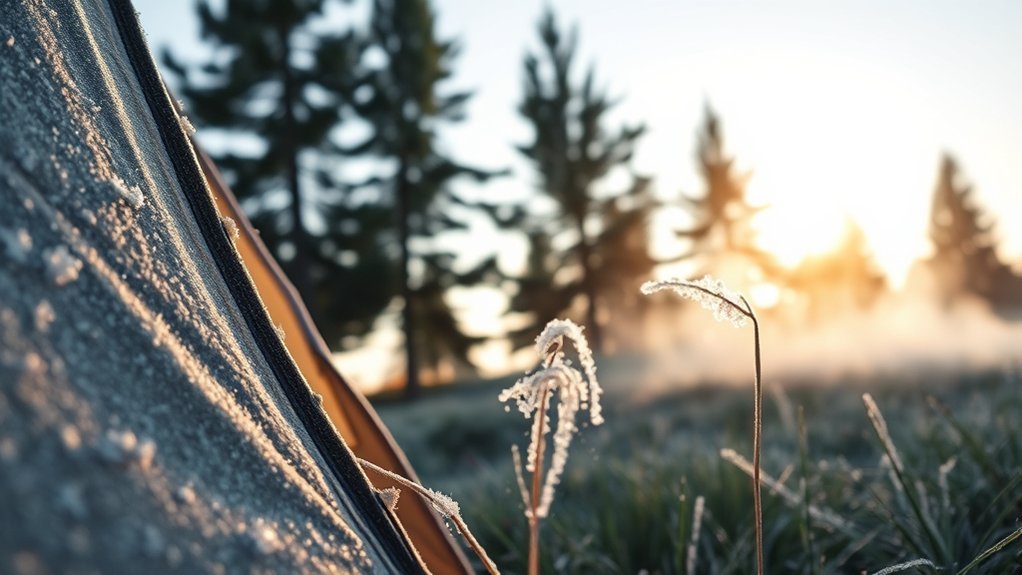
When temperatures drop below the dew point, morning frost forms on your tent as moisture in the air freezes on its surface overnight. This frost formation happens when the air is saturated with humidity, causing water vapor to condense and freeze. If you’re breathing heavily or using your body heat inside the tent, you’re contributing to moisture accumulation. This trapped moisture exacerbates frost formation, particularly in poorly ventilated areas.
As the sun rises and temperatures increase, the frost melts, leading to water dripping inside your tent. This can soak your gear and sleeping bags, ruining your outdoor experience. To minimize this issue, focus on managing ventilation and reducing moisture buildup. Open vents while you sleep, and avoid cooking or drying clothes inside your tent. By taking these steps, you can greatly reduce morning frost and enjoy a drier, more comfortable camping experience.
Importance of Proper Ventilation
Proper ventilation is key to preventing morning frost in your tent. By keeping the door slightly open and using the vents, you allow moisture from your breath and body heat to escape. This simple adjustment can make a big difference in reducing condensation and keeping your gear dry.
Tent Door Opening
A small gap in your tent door—about 30 cm—can make a big difference in how comfortable you feel inside. This opening is essential for tent ventilation, allowing moisture to escape and reducing frost buildup. By maintaining airflow, you minimize condensation from your breath and body heat during cold nights, keeping your tent interior drier. Even when temperatures drop, avoid sealing your tent completely; instead, keep windows and vents slightly open to enhance circulation. This practice is especially important in cheaper tents, where airflow is often limited. Proper ventilation at all times, particularly at night, will help you combat morning frost and guarantee a more enjoyable camping experience. Remember, a little airflow goes a long way in frost prevention!
Utilizing Tent Vents
Maintaining airflow in your tent doesn’t stop at just keeping the door slightly open; utilizing tent vents is equally important. Proper ventilation strategies can notably reduce moisture buildup, which often leads to morning frost on your tent walls and ceiling. By keeping vents unzipped, even slightly, you allow warm air to escape, promoting effective airflow management. This simple action helps decrease condensation levels, making your sleeping area drier and more comfortable. Even in colder conditions, leaving vents open can prevent frost from settling on your gear while still facilitating airflow. Regularly using tent vents, especially in humid environments, guarantees a more pleasant camping experience and helps combat that pesky morning frost. Embrace this approach for a revitalizing escape into nature.
Techniques for Scraping Frost
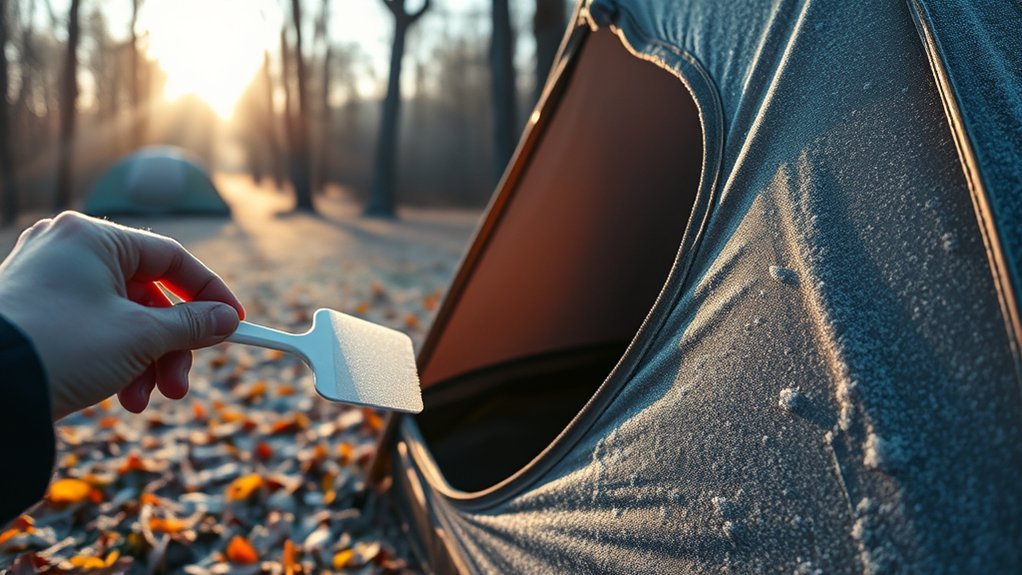
When it comes to scraping frost off your tent, using a camp cup or small container makes the job easier and helps collect the frost for proper disposal. Start scraping from the top and work your way down to keep the frost from falling onto your gear. Timing is key, so wait for the sun to warm the tent a bit before you begin.
Use a Camp Cup
Using a camp cup is an effective technique for scraping frost from the inner walls of your tent. This simple tool not only helps you remove frost but also offers several camp cup benefits:
- Prevents icy buildup from falling onto your sleeping gear.
- Allows for easy disposal of collected frost outside the tent.
- A sturdy edge helps effectively scrape without damaging the fabric.
- Regular use reduces moisture buildup, enhancing overall comfort.
Timing Is Key
To effectively manage morning frost on your tent, timing plays a crucial role. As part of your morning routine, scrape the frost immediately upon waking. This prevents it from thawing and dripping onto your gear, which can lead to unwanted moisture. Use a camp cup or similar tool to collect and remove the frost while it’s still solid. This technique minimizes the mess of water droplets that can form if the frost melts. Dispose of the collected frost outside the tent to keep your living space dry. Quick and efficient frost timing not only enhances your camping experience but also reduces condensation issues throughout the day, helping you fully enjoy your outdoor adventure.
Avoid Gear Contact
While you might be enthusiastic to start your day, addressing morning frost on your tent requires careful attention to avoid gear contact. Implementing effective frost avoidance techniques can save your gear from unnecessary moisture damage. Here are some gear protection methods to take into account:
- Use a camp cup to gently scrape frost and ice from the tent walls, preventing it from falling onto your gear.
- Collect the scraped frost in the cup and dispose of it outside to keep the interior dry.
- Start scraping as soon as you wake up to prevent the frost from freezing harder.
- Employ a small, lightweight scraper or flat plastic piece to remove frost without damaging the tent fabric.
Choosing the Right Tent Location
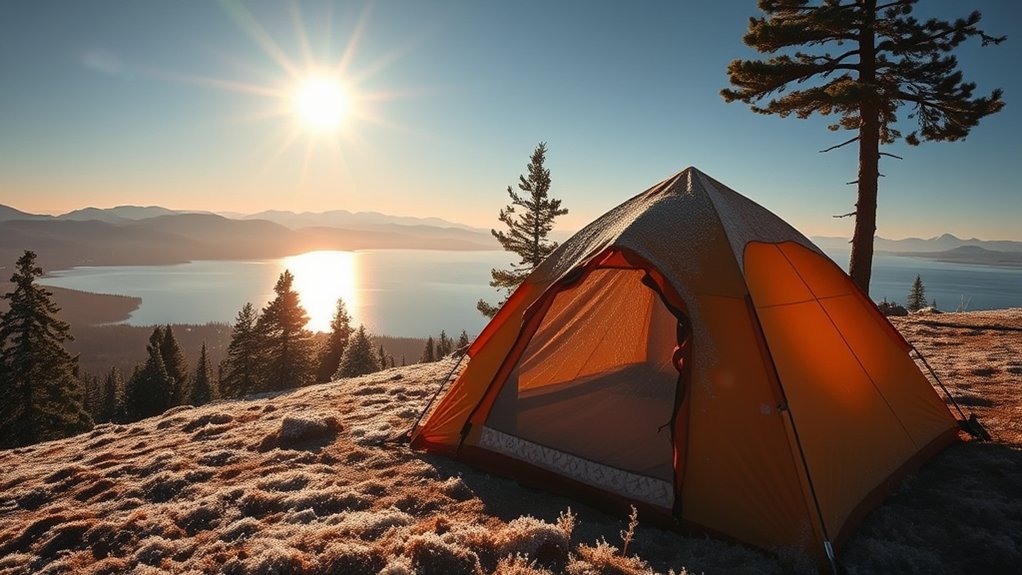
Choosing the right tent location can make a significant difference in how you experience morning frost. Start by selecting a spot that gets ample sunlight exposure in the morning. This will help melt any frost quickly and reduce moisture buildup. Avoid low-lying areas where cold air pools, as these spots tend to accumulate frost. Instead, look for elevated, dry surfaces to set up your tent, minimizing moisture transfer overnight.
Additionally, seek natural windbreaks like trees or bushes. These will promote airflow and help minimize frost formation. Keep your tent away from water sources; proximity to water can increase humidity and contribute to frost issues. By considering these factors in your tent positioning, you can enjoy a more comfortable camping experience and lessen the impact of morning frost.
Alternative Shelter Options
If you’re looking for alternatives to a traditional tent, tarp camping can be an excellent option. This minimalist shelter approach offers numerous benefits, especially in colder conditions. By using a tarp, you maximize airflow, markedly reducing the risk of condensation and frost buildup compared to conventional tents. Here are some advantages of tarp camping:
- Lightweight and easy to pack, perfect for backpacking.
- Provides protection from rain and snow, keeping your gear dry.
- Allows for effective wind and precipitation shielding while maintaining ventilation.
- Reduces moisture accumulation from breath and body heat, leading to a more comfortable experience.
With a well-placed tarp setup, you can enjoy nature without the drawbacks of traditional camping gear. Embrace the freedom of minimalist shelters and experience the outdoors in a fresh, new way!
Cooking Precautions to Minimize Moisture
When cooking in your tent, taking precautions to minimize moisture is essential for maintaining a comfortable environment. Start by avoiding a rolling boil; boiling water generates steam that raises condensation levels considerably. Even moderate boiling can coat your tent and gear with moisture, so balance your cooking techniques. Consider using a windscreen or cooking outside to keep steam buildup in check while guaranteeing your food stays safe and warm.
Covering pots with lids is another effective moisture control method, as it reduces steam escape. Always remember to verify proper ventilation while cooking; this allows excess moisture to escape, lessening the chance of condensation forming on your tent walls. By implementing these strategies, you can enjoy your meals without turning your tent into a damp space, making your camping experience far more enjoyable and comfortable.
Managing Condensation Throughout the Night
To effectively manage condensation throughout the night, it’s important to keep your tent well-ventilated. Here are some nighttime strategies for ideal moisture management:
Keep your tent well-ventilated at night to effectively manage condensation and maintain a comfortable camping experience.
- Keep the tent door slightly open (about 30 cm) to let moisture escape while shielding you from the elements.
- Utilize any available vents by keeping them unzipped to promote airflow and reduce moisture buildup.
- Avoid sealing the tent completely; trapping body heat and breath increases condensation levels.
- If condensation forms, scrape frost and ice from the tent walls immediately upon waking to prevent drips on your gear.
Tips for a Warmer Morning Experience
After managing condensation effectively, you’ll want to guarantee a warmer morning experience in your tent. Start by implementing frost prevention strategies, like ensuring proper ventilation before you sleep. Open vents and keep zippers slightly unzipped to reduce moisture buildup. In the morning, use a camp cup to scrape any frost off the interior walls, collecting it to prevent drips on your gear.
For added warmth, place a ground tarp beneath your sleeping bag to insulate against the cold ground and minimize heat loss. Consider using insulation materials like reflective blankets or sleeping pads, which can help retain body heat as you sleep. If you have the means, you can also warm up your tent by boiling water outside and letting the steam rise inside for a short while—just be cautious to avoid creating too much moisture. Embrace these tips for a cozier start to your day in the great outdoors!
Frequently Asked Questions
Can I Use a Heater Inside My Tent to Prevent Frost?
You can use a heater inside your tent, but prioritize tent safety. Opt for safe heater types, like catalytic or propane, ensuring proper ventilation to prevent carbon monoxide buildup. Stay warm and enjoy your adventure!
What Types of Tents Are Best for Cold Weather Camping?
Did you know insulated tents can retain heat up to 30% better than standard models? For cold weather camping, choose four season tents, designed to withstand harsh conditions and keep you comfortable through the night.
How Can I Prevent Frost on My Sleeping Bag?
To prevent frost on your sleeping bag, guarantee proper insulation and moisture control. Use a waterproof liner, keep your bag off the cold ground, and store it in a dry place during the night.
Is It Safe to Touch the Frozen Tent Fabric?
It’s generally safe to touch frozen tent fabric, but be cautious. Excessive pressure can cause frost damage, compromising your tent’s integrity. Regular tent maintenance helps prevent issues, ensuring your gear stays functional and reliable.
What Time of Night Does Frost Typically Form?
Frost typically forms after the temperature drops below freezing, often around midnight to early morning. You’ll notice it when the air cools and moisture crystallizes, creating that beautiful yet chilly blanket on your tent.
Conclusion
Dealing with morning frost on your tent can be a hassle, but with the right strategies, it’s manageable. Did you know that about 30% of campers experience frost at some point? By focusing on ventilation, choosing the right spot, and using proper scraping techniques, you can start your day warmer and more comfortably. Remember, a little preparation goes a long way in ensuring a pleasant camping experience, even when the temperatures drop overnight.