


When packing your first aid kit for tent camping, include adhesive bandages, antiseptic wipes, and antibiotic cream for cuts and scrapes. Don’t forget an EpiPen for allergies and insect repellent. Pack supplies for burns, like aloe vera gel, and hydration solutions to prevent dehydration. Organize everything in a waterproof bag with labeled compartments for easy access. Keeping your kit maintained and replenished is essential. You’ll find even more essentials and preparation tips ahead.
Essential Items for Your Camping First Aid Kit


When you’re heading out for a camping trip, packing a well-stocked first aid kit is essential for dealing with unexpected injuries. Start with the first aid essentials: adhesive bandages, gauze pads, antiseptic wipes, and antibiotic cream to manage cuts and scrapes effectively. Don’t forget to include items tailored to your group’s medical needs, like an EpiPen for severe allergic reactions or children’s medications such as ibuprofen and antihistamines.
Enhance your kit with tweezers for splinters, scissors for cutting tape, and burn treatment options like Aloe Vera gel. Regularly check your kit for expired items and replenish used supplies to stay prepared for emergencies. If you’re planning an extended trip, pack compression bandages for sprains and strains, along with a first aid manual for quick reference. Being equipped with these essentials can make all the difference in ensuring safety during your adventure.
Common Injuries and How to Treat Them
Packing your first aid kit is just the start; knowing how to handle common camping injuries is just as important. Here’s a quick guide on treatment options to keep you safe and comfortable:
Packing your first aid kit is crucial, but understanding how to treat common camping injuries is essential for your safety and comfort.
- Cut treatment: Use antiseptic wipes and adhesive bandages for cuts and scrapes to prevent infection.
- Burn relief: Apply aloe vera gel or burn dressings for quick relief from campfire or cooking burns.
- Insect bites: Keep antihistamines handy for itching and swelling, and use tweezers to remove ticks safely.
- Dehydration prevention: Stay alert for symptoms like dizziness; hydrate with water or electrolyte solutions to avoid heat exhaustion.
- Wound care: Use butterfly bandages or Steri-Strips to close larger scratches and promote healing.
Specialized Supplies for Specific Needs
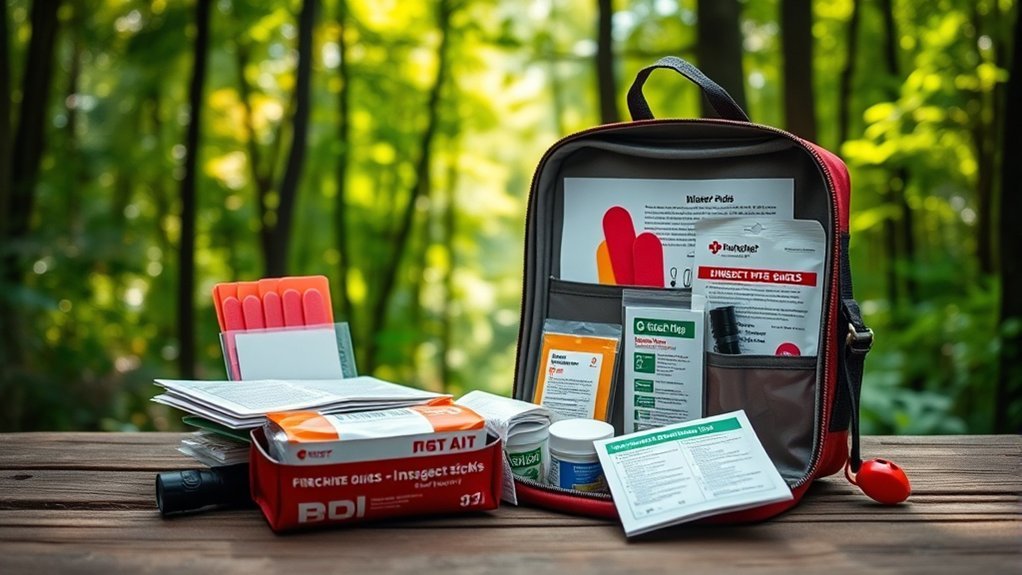
A well-stocked first aid kit is essential for addressing specialized needs while camping. If you or anyone in your group has allergies, don’t forget to pack an EpiPen and antihistamines for effective allergy management. For those venturing into areas buzzing with insects, insect protection is key—bring insect repellent with DEET and a tick removal tool to handle bites quickly.
Families with children should consider adding child-specific medications, like liquid pain relievers and antihistamines, to cater to their unique health needs. Additionally, make certain you have supplies for any personal medications needed for chronic conditions, along with a list of these medications for emergencies.
Lastly, include specialized items such as burn dressings for campers prone to kitchen mishaps. This preparation can make a difference, allowing you to enjoy your adventure with peace of mind.
Packing and Organizing Your First Aid Kit
When packing your first aid kit for tent camping, focus on essential supplies that are lightweight and easy to carry. Organize these items in labeled compartments to guarantee you can quickly access them during emergencies. Additionally, tailor the kit’s contents to meet the specific needs of your group for a safer outdoor experience.
Essential Supplies Checklist
Creating a thorough first aid kit for tent camping involves including essential supplies that address common injuries and health concerns. Here’s a checklist of first aid essentials to guarantee camping safety:
- Adhesive bandages for cuts and scrapes
- Gauze pads and antiseptic wipes for cleaning wounds
- Antibiotic cream to prevent infections
- Tweezers for splinter removal
- Digital thermometer to monitor fevers
Tailor your kit to your group’s specific needs, adding items like an EpiPen for allergies or pediatric medications for kids. Regularly check your kit to keep items fresh and in good condition. Organizing everything in a waterproof, labeled bag helps you quickly access supplies during emergencies, guaranteeing you’re well-prepared for your camping adventure.
Organizing for Quick Access
After gathering your first aid supplies, the next step is organizing them for quick access during your camping trip. Use brightly colored, clearly labeled bags to make your first aid kit easily identifiable. Organize supplies into compartments by type—like bandages, antiseptics, and medications—to ascertain quick retrieval when needed. Including a small first aid manual or quick reference guide within the kit will help you respond effectively to emergencies. Pack everything in a waterproof dry bag to protect against moisture and the elements. Finally, regularly check and restock your first aid kit before each trip to guarantee all items are in good condition and easily accessible. This first aid organization makes a world of difference when time is of the essence.
Tailoring for Specific Trips
Tailoring your first aid kit for tent camping guarantees you’re prepared for the unique challenges of your trip. Consider the trip length, number of campers, and specific camper needs to pack effectively. Here’s what to include:
- Adhesive bandages and gauze pads for cuts and scrapes
- Antiseptic wipes and antibiotic cream for infection prevention
- An EpiPen if anyone has known allergies
- Insect bite relief and hydration solutions for remote areas
- Heat exhaustion treatments if you’re camping in the sun
Regularly check your kit for expired supplies and replenish used items. Organize everything in labeled compartments for quick access during emergencies. A well-tailored first aid kit guarantees you’re ready for anything that comes your way!
Maintenance: Keeping Your Kit Ready for Use
To guarantee your first aid kit is always ready for use, it’s essential to perform regular maintenance checks throughout the year. Schedule a kit inspection at least once annually to verify that all supplies are within their expiration dates and in good condition. After each camping trip, replenish any used items immediately to verify your kit stays stocked for future adventures.
Store your first aid kit in a cool, dry place to prevent degradation, especially for medications and antiseptics. Consider the specific needs of upcoming trips; if you’re camping with more people or in riskier environments, update your kit accordingly. Familiarize yourself with the contents and their uses, promoting confidence and preparedness in emergencies. With these steps, you’ll maintain a dependable first aid kit, empowering you to enjoy your outdoor adventures with peace of mind.
Additional Safety Items to Consider
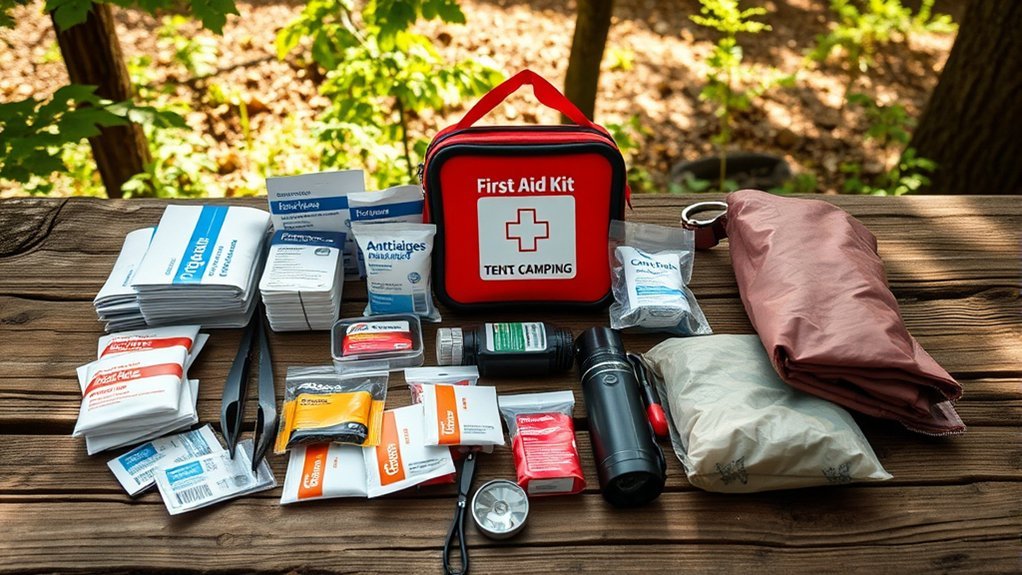
When you’re camping, having reliable communication and navigation tools can be lifesavers. Consider packing an emergency communication device, along with maps or a GPS to help you find your way. Additionally, don’t overlook fire safety equipment to guarantee you can start and maintain a fire safely.
Emergency Communication Devices
Having reliable communication devices is essential for ensuring your safety while tent camping, especially in remote areas. When you’re off the grid, consider packing these emergency communication devices:
- Satellite phones for reliable connectivity where cell service fails.
- Personal locator beacons (PLBs) that can alert rescue services with your location.
- Two-way radios to maintain communication with fellow campers across larger sites.
- A whistle, which is lightweight and can effectively signal for help.
- A fully charged power bank or solar charger to keep your devices operational.
These items not only enhance your safety but also offer peace of mind, allowing you to enjoy your camping adventure with confidence.
Navigation and Mapping Tools
Traversing the wilderness can be tricky, especially in areas without marked trails or cell service, so having the right tools is essential for your safety. Equip yourself with navigation techniques like using a compass, which helps you determine direction and avoid getting lost. A detailed trail map is vital for planning your route, revealing terrain, water sources, and points of interest. While GPS devices enhance accuracy, they should complement traditional methods. Always carry a printed map as a backup in case of electronic failures.
| Tool | Purpose |
|---|---|
| Compass | Determine direction |
| Trail Map | Plan routes and identify resources |
| GPS Device | Real-time positioning and route tracking |
Familiarize yourself with these mapping resources before your trip for enhanced confidence.
Fire Safety Equipment
Fire safety equipment is essential for any camping trip, ensuring you can handle unexpected flare-ups and prevent accidents. Here’s what you should pack:
- Fire extinguisher types: Choose one rated for Class A fires, ideal for wood, paper, and certain plastics.
- Fire blanket usage: Keep one handy to smother small fires and protect yourself or others.
- Waterproof container: Store matches and lighters to keep them functional, even in wet conditions.
- Spark arrestor: Invest in this for your fire pit to prevent embers from escaping and igniting flammable materials.
- Shovel: Always have one available for digging a fire pit or quickly smothering flames with dirt.
These items will empower you to enjoy your camping trip safely and responsibly.
Resources for First Aid Training and Information
How prepared are you for emergencies while camping? To boost your skills, consider obtaining first aid certifications through organizations like the American Red Cross. They offer courses in CPR, AED, and Basic Life Support that are vital for outdoor adventures. Don’t just stop at theory; take part in practical scenarios and hands-on training to build your confidence in managing injuries.
Additionally, the Red Cross First Aid App is a fantastic resource. It provides essential information and instructional videos for handling various camping-related emergencies. For even more support, text “GETFIRST” to 90999 to access a wealth of first aid resources and training materials.
Familiarizing yourself with a first aid manual tailored to outdoor settings can also enhance your preparedness. By investing time in emergency response training, you empower yourself to handle challenges effectively, ensuring a safer camping experience.
Frequently Asked Questions
How Often Should I Check and Replenish My First Aid Kit?
You should check and replenish your first aid kit regularly, ideally every six months. This guarantees proper kit organization, keeping supplies fresh and ready for emergencies, so you can enjoy your adventures with peace of mind.
Can I Use Expired Medications in Emergencies?
You shouldn’t use expired medications in emergencies. Risks include reduced effectiveness and potential harm. Instead, focus on emergency preparedness strategies by regularly checking and replacing your supplies to guarantee you’re always ready for any situation.
What Items Can I Substitute if I’m Low on Space?
If space is tight, consider compact alternatives like adhesive bandages instead of gauze, or a multi-tool for scissors. Essential substitutions like antiseptic wipes can replace liquid antiseptics, ensuring you’re prepared without the bulk.
Are There Specific First Aid Items for Children?
Yes, you should include child-specific items like pediatric dosages, adhesive bandages in fun designs, and kid-friendly ointments. Always follow pediatric guidelines for safety to guarantee your little ones are well cared for in emergencies.
How Can I Securely Store My First Aid Kit While Camping?
To enhance camping safety, securely store your first aid kit in a waterproof container, ideally elevated off the ground. Did you know 70% of outdoor injuries occur away from home? Stay prepared and enjoy your adventure!
Conclusion
In summary, having a well-equipped first aid kit can make all the difference during your camping trip. Did you know that nearly 30% of camping injuries occur from slips, trips, and falls? By packing essential items and knowing how to treat common injuries, you can guarantee a safer outdoor experience. Keep your kit organized, check it regularly, and consider taking a first aid course. Being prepared not only protects you but enhances your overall enjoyment of nature.