


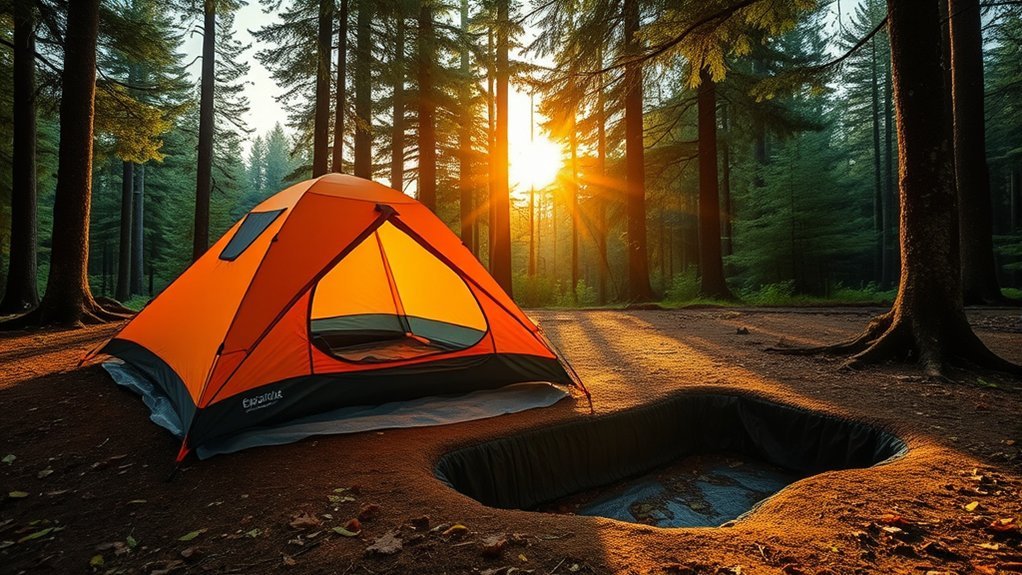
To stop water from pooling under your tent, choose a high, well-drained campsite and avoid low areas where water gathers. Use a properly fitted footprint to create a waterproof barrier beneath your tent. Inspect and maintain your tent’s seams regularly, and set up your tent with the entrance facing downhill. Elevate your sleeping area with a camp bed or cot, and consider additional protective measures like a tarp. There’s more you can do for an ideal camping experience.
Choosing the Right Campsite

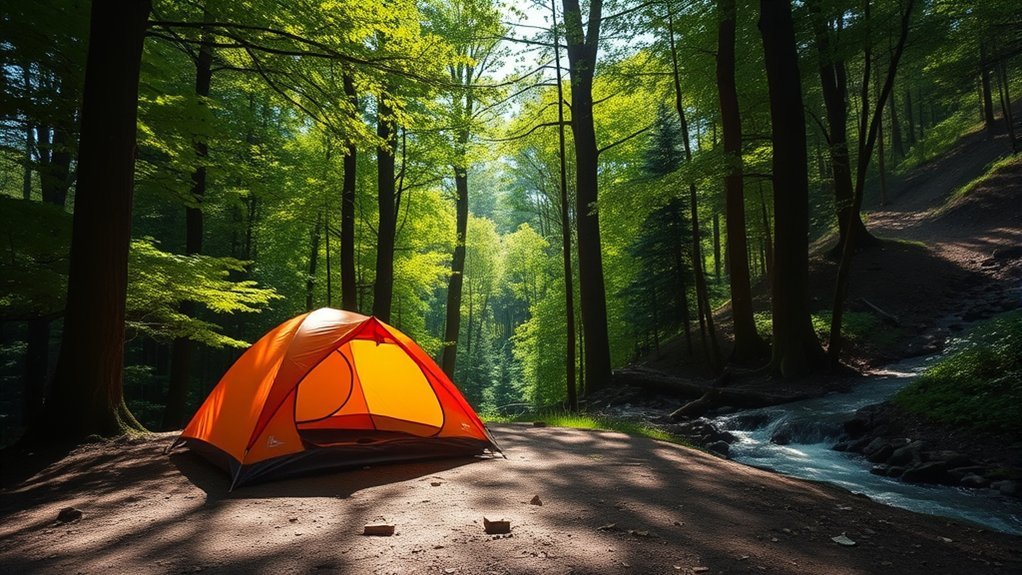
Choosing the right campsite can make all the difference in keeping your tent dry. Start by selecting high ground or elevated sites to reduce the risk of water pooling beneath your tent during rain. Avoid low-lying areas, like valleys or depressions, where water naturally accumulates and can lead to flooding.
Look for well-draining surfaces, such as compact soil or dry grass, which allow water to pass through easily. Pitch your tent on a gentle slope, with the entrance facing downwards. This setup encourages water runoff away from your tent.
Before you settle in, assess ground saturation levels after any rainfall. Setting up on overly saturated ground can lead to unwanted water ingress. By considering campsite elevation and understanding drainage patterns, you’ll create a more enjoyable and liberating camping experience, free from the worry of waking up in a soggy tent.
Importance of a Properly Fitted Footprint
Choosing the right size for your footprint is essential to protect your tent from moisture. If it’s too large, rainwater can pool around it, while a smaller footprint leaves your tent vulnerable. Make sure the seams align properly to maximize protection and keep your camping experience dry.
Proper Size Matters
A properly fitted footprint is essential for keeping water from pooling under your tent. Make sure your footprint has the right dimensions to match your tent floor. Here’s what to take into account:
- Size: Match footprint dimensions closely to avoid channels that funnel water towards your tent.
- Coverage: Extend the footprint a few inches up the sides to block water intrusion during heavy rain.
- Material: Choose a durable tent material for your footprint to protect against wear and tear.
- Tension: Position the footprint tautly to prevent water from getting trapped between layers, reducing seepage risk.
Seam Alignment Importance
Seam alignment plays a crucial role in preventing water from pooling under your tent. A properly fitted footprint should closely match your tent’s dimensions to avoid overlapping, which can create channels for water. If your footprint’s too small, it exposes the tent’s groundsheet to wet conditions, heightening the risk of water ingress. To enhance protection, make certain the footprint extends a few inches up the sidewalls, minimizing water intrusion during rain. Proper alignment not only maintains an effective waterproof barrier but also prevents water from getting trapped between layers. Regularly check your footprint and replace worn-out materials to guarantee continued seam sealing effectiveness. With these steps, you can enjoy your outdoor adventures free from the worry of water pooling beneath your tent.
Managing Water Trapped Between Layers
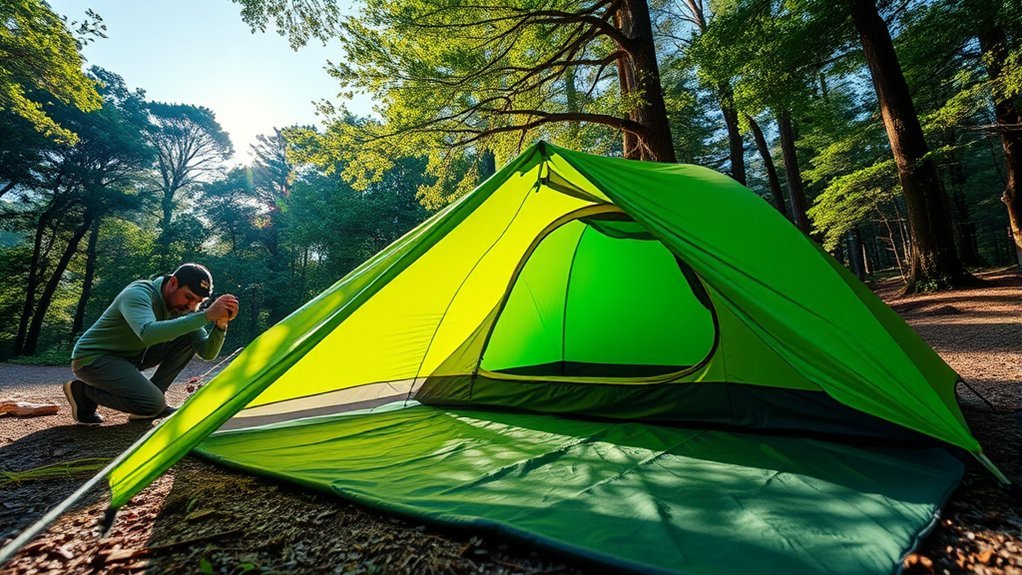
To effectively manage water trapped between layers, you need to focus on proper pitching practices and layer management techniques. Always set up your tent on dry ground and use a fitting footprint to prevent water channels. Stay aware of the weather conditions to anticipate potential issues before they arise.
Layer Management Techniques
Managing water trapped between layers of your tent setup is essential for keeping your camping experience dry and comfortable. To effectively manage layer types and moisture barriers, follow these techniques:
- Secure Groundsheet: Make sure your groundsheet is tightly secured and the right size to prevent overlap, which can create channels for water ingress.
- Choose Location Wisely: Pitch your tent on a slope to direct water away, but monitor the risk of water running between layers.
- Weather Awareness: Stay alert to weather conditions during setup; rain can seep between layers if pressure builds inside your tent.
- Regular Inspections: Check for wear and tear on both the groundsheet and tent materials to maintain effective waterproofing and reduce water accumulation risk.
Proper Pitching Practices
Properly pitching your tent is essential for preventing water from pooling beneath it. Start by ensuring your groundsheet fits well; a loose or ill-fitting groundsheet can create channels for water to seep in. Position your tent on a slight slope with the entrance facing downhill to encourage water runoff. Maintain groundsheet tension; a tight setup minimizes the chance of water collecting between layers. Regularly check your groundsheet and tent floor for wear, as aging materials may lose their waterproof capabilities. Avoid setting up on saturated ground, as high water tables can lead to moisture rising through the groundsheet. By focusing on tent orientation and maintaining proper tension, you’ll keep your space dry and comfortable.
Weather Awareness During Setup
How can you guarantee your tent stays dry during setup? Being aware of the weather is vital. Here are some essential tips for effective weather preparation:
- Check the forecast: Always monitor rain prediction to anticipate moisture conditions.
- Dry groundsheet: Make certain the groundsheet is dry and free of water to prevent moisture from getting trapped.
- Choose wisely: Avoid low spots with high water tables to minimize seepage through the groundsheet.
- Tarp it up: If rain’s on the way, lay down a tarp or footprint for an immediate waterproof barrier.
Avoiding Camping on Slopes or Uneven Ground
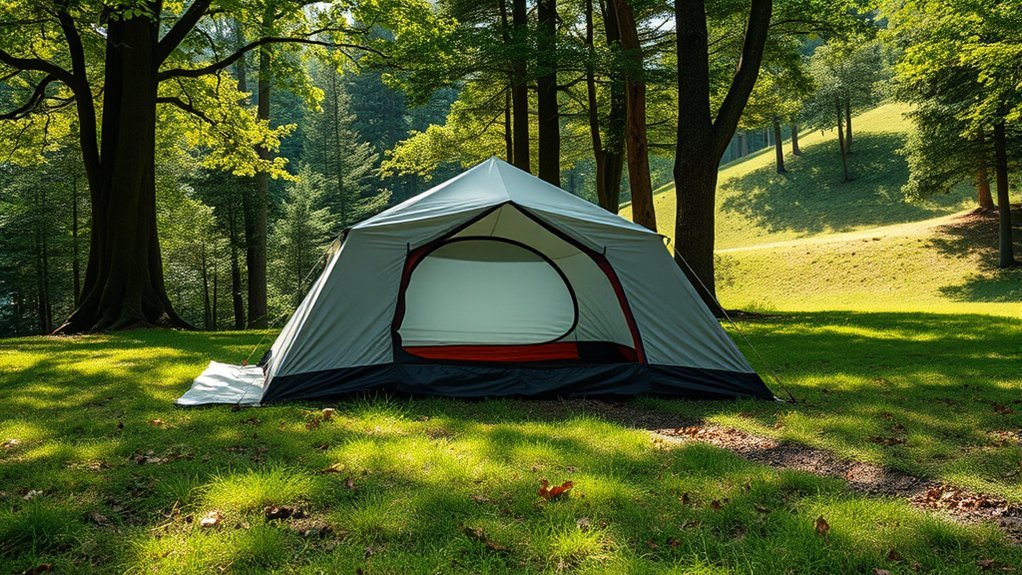
While it might be tempting to set up your tent wherever you find a nice view, camping on slopes or uneven ground can lead to serious water pooling issues. Before you pitch your tent, conduct a slope assessment to identify flat, well-drained areas. Water flows downhill, so choosing a site with minimal slope is essential for preventing pooling and seepage. Keep drainage considerations in mind; for example, position your tent entrance facing downhill to stop water from collecting at the entrance. Also, be aware that the weight of occupants and gear can worsen water accumulation on sloped terrain. Before you set up, check the ground for saturation, especially after rain. Finally, using a fitted footprint groundsheet can provide an extra moisture barrier, even on slightly uneven surfaces. Making these simple choices can help keep your camping experience dry and enjoyable.
Understanding the High Water Table
Understanding the high water table is essential for a successful camping experience. A high water table means the soil is saturated with water, increasing the risk of moisture seeping into your tent. To guarantee a comfortable camping trip, consider these key factors:
- Prolonged Rainfall: Extended periods of rain can elevate the water table, leading to soil saturation.
- Proximity to Water Bodies: Setting up near lakes, rivers, or ponds can raise the chances of encountering a high water table.
- Poor Drainage: Areas with compacted or clay-rich soil may not drain well, resulting in pooling.
- Low-Lying Areas: Avoid pitching your tent in depressions or boggy regions where water naturally collects.
Maintaining Your Tent’s Waterproofing
To keep your tent waterproof and guarantee a dry camping experience, regular maintenance is key. Start by establishing a maintenance schedule that includes applying waterproofing treatments like Nikwax Tent & Gear SolarProof every 12-24 months. This helps maintain your tent’s water resistance and prolongs its lifespan. Before pitching your tent, always verify the groundsheet is completely dry to prevent trapped moisture from seeping through.
Regularly inspect your tent for signs of wear, especially around seams and zippers. Repair or replace damaged areas to enhance waterproofing. Additionally, using a properly fitting footprint groundsheet can provide an extra layer of protection against moisture from the ground, but avoid overlapping it with the tent edges to prevent water pooling. By following these waterproofing techniques, you can maintain your tent effectively, guaranteeing a comfortable and dry camping experience.
Elevating Your Sleeping Area
Maintaining your tent’s waterproofing is just one part of ensuring a dry and comfortable camping experience. Elevating your sleeping area is essential for keeping your sleeping gear safe from moisture. Here are some effective ways to achieve this:
- Use a raised camp bed, cot, or sturdy platform to keep your sleeping gear off the ground.
- Incorporate a waterproof foam sleeping pad for added comfort and as a moisture barrier.
- Create a slight incline in your sleeping area to direct water runoff away from your bedding.
- Keep sleeping bags and personal gear elevated to enhance insulation and reduce the risk of water seeping through the tent floor.
Additional Protective Measures
Implementing additional protective measures can greatly enhance your tent’s defense against water pooling. Start by using a high-quality footprint groundsheet that fits your tent perfectly. This acts as an effective water barrier, stopping moisture from seeping through. Elevate your tent on a slight slope, positioning the entrance downhill, so rainwater naturally flows away. Consider digging a shallow diversion trench around the perimeter; this is a practical drainage solution that guides water away from your setup.
Maintaining tension on the rain fly is essential, as a taut fly sheds water effectively, preventing pooling on top. Regularly inspect and maintain the tent’s seams and waterproofing. Apply treatments as needed to enhance water resistance and prolong your tent’s lifespan. By taking these steps, you’ll create a much more reliable shelter against the elements, ensuring you enjoy your outdoor experience without the worry of water pooling beneath you.
Best Practices for Tent Setup
When setting up your tent, choosing the right location is essential for preventing water pooling. Follow these best practices to guarantee a dry, comfortable camping experience:
- Select high ground: Choose a well-drained site, avoiding low-lying areas where water collects.
- Use a footprint groundsheet: Place a tarp beneath your tent to create a waterproof barrier and prevent moisture from seeping up.
- Tuck the edges: Make sure the edges of the tarp are tucked under the tent to minimize water funneling during heavy rain.
- Properly install the rain fly: Keep it taut and elevated to divert rainwater away and enhance tent ventilation.
Additionally, maintain gear organization inside the tent, allowing for better airflow and reducing moisture buildup. Regularly inspect your tent for wear, applying waterproofing treatments every 12-24 months to keep it in top shape.
Frequently Asked Questions
What Should I Do if It Rains Unexpectedly While Camping?
If it rains unexpectedly, use tent drainage solutions like placing a tarp under your tent. Don’t forget your rain gear essentials—waterproof jackets and boots—so you stay dry while enjoying the wilderness, rain or shine!
Can I Use a Tarp Instead of a Footprint Groundsheet?
Absolutely, you can use a tarp instead of a footprint groundsheet. Tarps offer excellent water resistance and durability, making them a practical alternative. Plus, they’re versatile, allowing you to create shelter or shade when needed.
How Often Should I Reapply Waterproofing Treatments?
You should reapply waterproofing treatments every one to three years, depending on usage and exposure. Regular checks can help maintain treatment longevity, ensuring your gear stays protected and ready for your next adventure.
Is It Safe to Camp Near a River or Stream?
Camping near a river can be exhilarating, but you’ve got to prioritize river safety. Always set up camp at a safe distance, assess potential flooding, and take necessary camping precautions to guarantee a memorable adventure.
What Materials Are Best for a Footprint Groundsheet?
For your footprint groundsheet, consider using durable materials like polyethylene or nylon. These options provide excellent protection, are lightweight, and enhance your tent’s lifespan, ensuring a comfortable camping experience while keeping moisture at bay.
Conclusion
By taking these steps, you can turn your tent into a fortress against the elements. Remember, a well-prepared campsite is like a sturdy ship steering through stormy seas. Choose the right location, maintain your tent’s waterproofing, and elevate your sleeping area to keep water at bay. With these best practices, you’ll guarantee a dry and comfortable camping experience every time. So gear up, set up wisely, and enjoy your adventure without the worry of water pooling beneath you.