


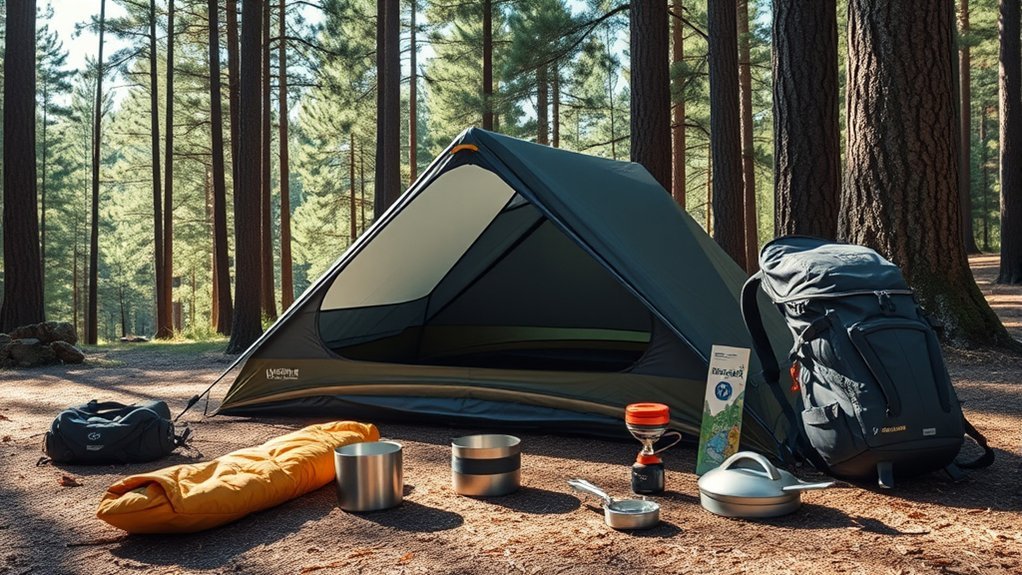
For a successful ultralight backpacking trip, start with a tent under 3 pounds, like a Tarptent. Carry a lightweight sleeping bag rated for 20°F and a pad under 1 pound for comfort. Pack a compact stove and titanium pot for efficient cooking. Don’t forget a Sawyer Squeeze Filter for clean water and a minimalist first aid kit. With these essentials, you’ll enjoy a comfortable experience while keeping your pack light. There’s more gear tips waiting for you!
Essential Gear for Ultralight Backpacking

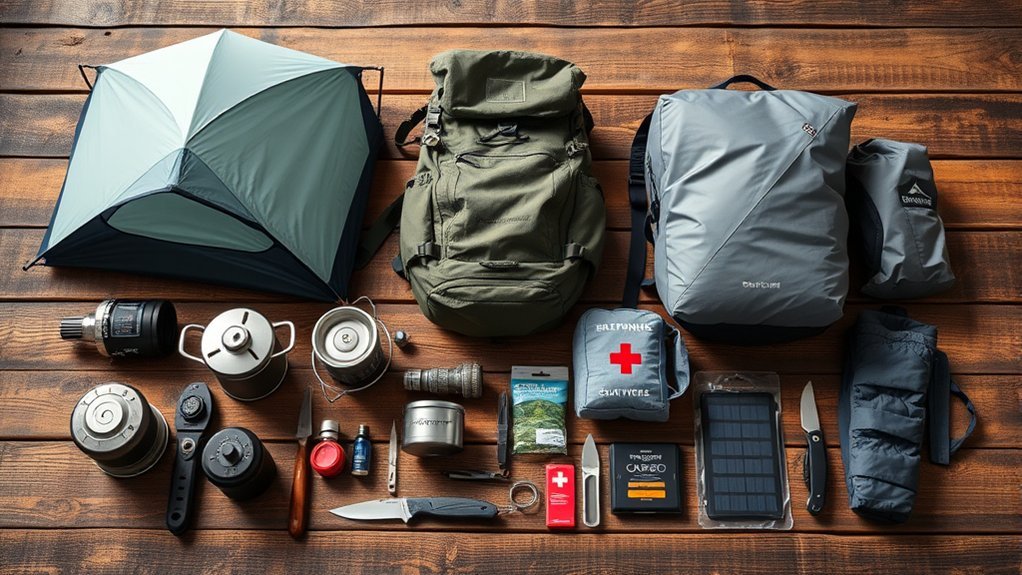
When you’re planning an ultralight backpacking trip, choosing the right gear is essential to guarantee you stay comfortable without being weighed down. Start with a tent that weighs under 3 pounds; brands like Tarptent and Durston Gear offer excellent options, helping you maximize gear versatility. Next, focus on your sleeping system. Opt for a sleeping bag under 2 pounds and a sleeping pad under 1 pound for optimal comfort without excess weight. Down sleeping bags from Feathered Friends or Western Mountaineering provide a superior warmth-to-weight ratio, making them ideal for your adventures. Remember, it’s crucial to prioritize safety and comfort while ensuring that each piece of gear serves multiple functions. This approach not only enhances weight distribution but also keeps your pack light and manageable. By carefully selecting your ultralight gear, you’ll enjoy the freedom of the trail without unnecessary burdens.
Tent and Shelter Options
Choosing the right tent is essential for any backpacking adventure, as it directly impacts your comfort and mobility on the trail. Opt for ultralight tents weighing under 3 pounds, like those from Tarptent and Durston Gear. These tents often feature trekking pole support, reducing pack weight while maximizing functionality.
Choosing an ultralight tent under 3 pounds enhances comfort and mobility for your backpacking adventures.
When selecting your shelter, consider these key tent features:
- Packed size and setup ease: You want something that’s simple to pitch after a long day.
- Minimal zippers and lightweight fabrics: These elements save weight without sacrificing durability.
- Three-season capability: Confirm your tent can handle various weather conditions without unnecessary bulk.
For solo adventurers, explore bivy sacks or minimalist shelters. These options provide basic protection and enhance your mobility, allowing you to embrace the freedom of the trail.
Sleep System Considerations
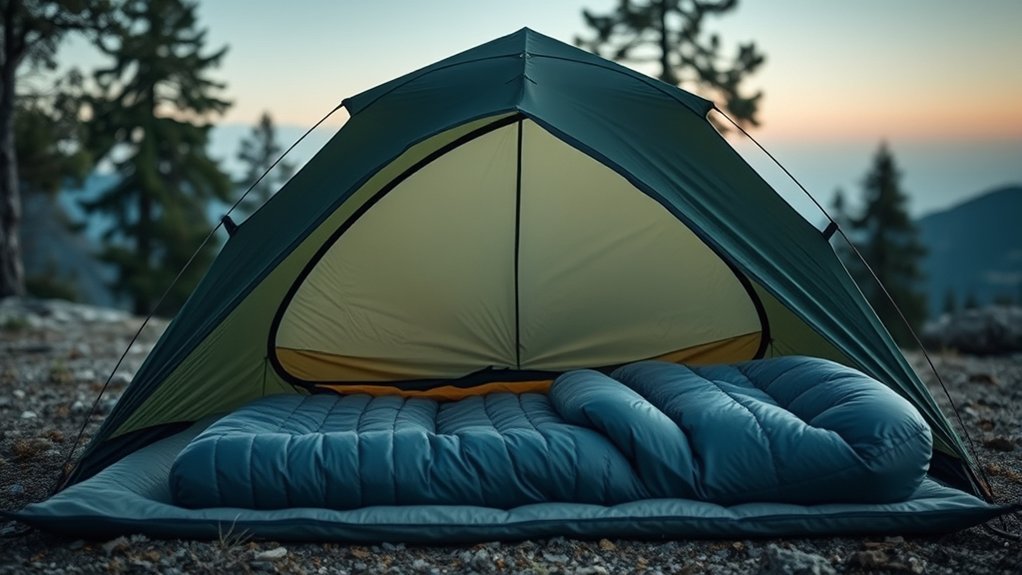
A solid sleep system can make all the difference in your backpacking experience, ensuring you wake up refreshed and ready to tackle the trail. When choosing a sleeping bag, look for essential features like a lightweight design under 2 pounds and a temperature rating around 20°F for three-season use. Down sleeping bags are particularly effective in providing the best warmth-to-weight ratio and can last over a decade with proper care.
Pair your bag with a sleeping pad that weighs less than 1 pound, providing critical insulation and comfort without weighing you down. Opt for multifunctional pad insulation options that can double as a sitting pad or extra insulation layer during chilly nights. Combining a lightweight sleeping bag and pad to achieve a total weight under 3 pounds enhances your pack’s efficiency and keeps your adventure liberating and enjoyable.
Cooking Gear and Food Storage
After ensuring you have a comfortable sleep system, it’s time to focus on your cooking gear and food storage. Prioritizing cooking efficiency and food preservation can elevate your backpacking experience. Here are some essentials to reflect on:
- Compact Stove: A lightweight option like the BRS-3000T (0.88 oz) helps you cook meals quickly without weighing you down.
- Titanium Pot: The TOAKS Titanium 450 ml (2.7 oz) strikes the perfect balance between durability and weight, ideal for boiling water and cooking.
- Spork: A lightweight spork like the Sea to Summit Alpha Light Long (0.39 oz) saves space and makes eating a breeze.
For food storage, look into UltraLite Sacks DCF Bear/Food Bags (2.4 oz) to keep your food safe from wildlife while remaining easy to pack. With these tools, you’ll enjoy meals that fuel your adventures without compromising on weight.
Hydration Solutions and Water Filtration
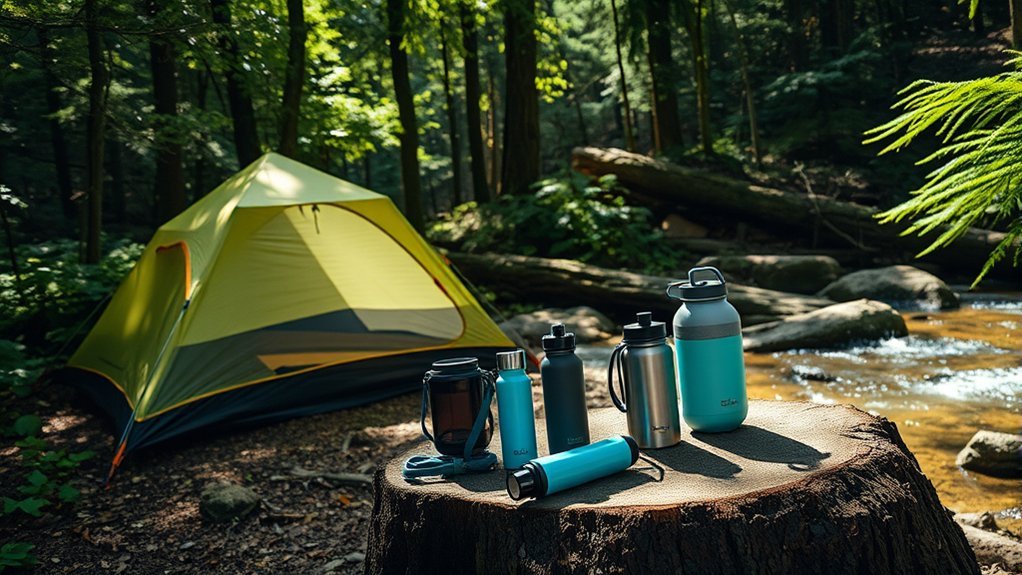
Staying hydrated is essential for any backpacking trip, and having the right hydration solutions and water filtration gear can make all the difference. Here are some effective strategies for water purification and hydration on the trail:
| Solution | Weight |
|---|---|
| Sawyer Squeeze Filter | 3.5 oz |
| Iodine Pills | Lightweight alternative |
| CNOC Vecto 2L Reservoir | 2.5 oz |
| Smartwater Bottle | 1.2 oz |
Planning for water availability along your route is vital. This helps you decide how much water storage and filtration gear to carry, ensuring you stay hydrated. The Sawyer Squeeze filter effectively removes bacteria and protozoa, while iodine pills offer a quick, lightweight solution. Pair these with a CNOC reservoir for easy water collection, and a Smartwater bottle for convenient transportation of clean drinking water. Happy trails!
Personal Care and First Aid Essentials
Maintaining personal hygiene and being prepared for minor injuries are just as important as staying hydrated on your backpacking adventure. A lightweight first aid kit can be a game changer, helping you tackle small injuries without the extra weight. Here’s what to include:
Don’t underestimate the importance of hygiene and a lightweight first aid kit on your backpacking adventure.
- Band-Aids for minor cuts
- Blister pads to protect your feet
- Tenacious tape for quick gear fixes
For personal hygiene, don’t overlook essential items that keep you feeling fresh:
- A toothbrush and toothpaste for that minty clean
- Smelly Proof Storage Bags for packing out used toilet paper
- The Igneous Bottle Cap Bidet for enhanced cleanliness
Consider adding a Kula Cloth, a lightweight drying cloth that’s antimicrobial. These essentials guarantee you stay comfortable and hygienic, allowing you to focus on the beauty of the trail while being prepared for whatever comes your way!
Frequently Asked Questions
How Do I Choose the Right Backpack for Lightweight Camping?
To choose the right backpack for lightweight camping, focus on essential backpack features like adjustable straps and pockets. Opt for a frame type that suits your needs, ensuring comfort and stability during your adventures.
What Clothing Is Best for Lightweight Backpacking Trips?
For lightweight backpacking, choose breathable fabrics and moisture-wicking layers. Prioritize performance pieces like quick-dry shirts and shorts. You’ll stay comfortable, carefree, and ready to explore the great outdoors without the burden of heavy clothes.
How Can I Pack Efficiently to Minimize Weight?
To pack efficiently, use compression bags for clothing, prioritize multi-functional gear, and focus on weight distribution by placing heavier items close to your back. These packing techniques will lighten your load and enhance your freedom on the trail.
Are There Lightweight Options for Emergency Gear?
You wouldn’t believe how lightweight emergency gear can be! Look for options like compact first aid kits, ultra-lightweight emergency blankets, and mini water filters. They’ll keep you prepared without weighing you down. Adventure awaits!
What Should I Consider for Lightweight Camping in Cold Weather?
When camping in cold weather, prioritize insulation layers for ideal heat retention. Choose lightweight, moisture-wicking materials, and don’t forget a compact sleeping bag rated for low temperatures to guarantee warmth without unnecessary bulk. Stay warm, stay free!
Conclusion
As you set off on your next adventure, remember that every ounce counts in your backpack. With lightweight gear cradling your back, picture yourself nestled under a starlit sky, the crisp air filled with the scent of pine. Each essential item you pack not only lightens your load but also enriches your experience in the wild. So, gear up with these ultralight essentials and embrace the freedom of the trail—your unforgettable journey awaits!