


To use guylines effectively for your tent in windy conditions, first, make sure you’ve got sturdy lines, ideally 3.5 to 4 feet long. Stake them at a 45-degree angle for maximum hold. Secure both corners and doors independently to reduce movement and enhance airflow. For tricky terrain, use larger rocks or trees as anchors. This setup not only stabilizes your tent but also improves your overall camping experience. Discover more ways to optimize your tent’s performance.
Understanding the Importance of Guylines

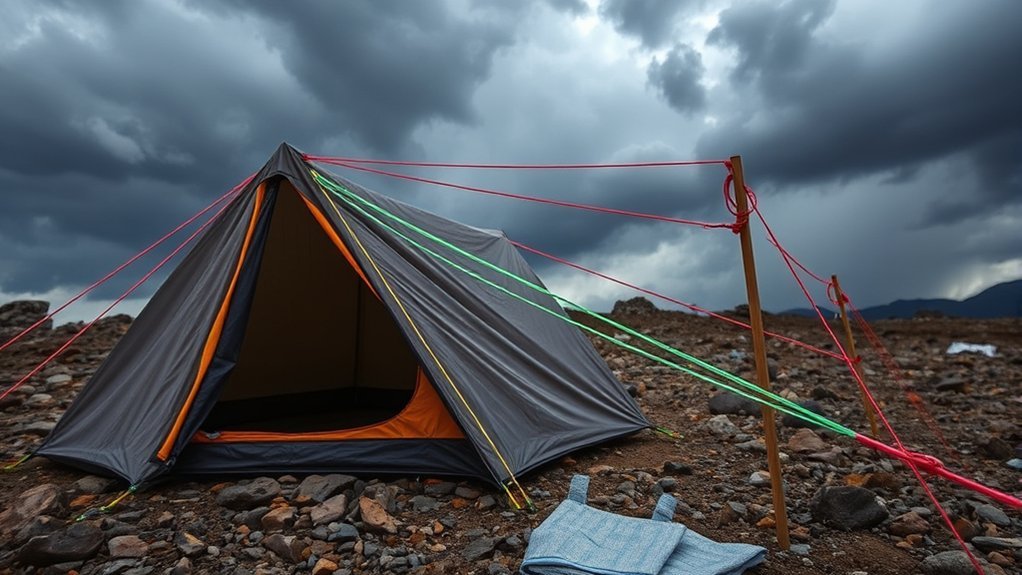
Guylines play an essential role in keeping your tent stable, especially in windy conditions. Over 50% of camping trips face adverse weather, making guy lines critical for a reliable pitch. By securing your tent with proper guy line materials, you create multiple anchor points that enhance wind resistance and provide better storm protection.
You’ll want to stake out both doors independently for maximum stability, allowing your tent to perform well in challenging weather. Customizing your guy lines for ideal length and tension adjustment can greatly improve airflow and reduce tent movement. This guarantees a more comfortable sleeping experience, even when the wind howls outside.
Taking the time to understand and implement effective guy line techniques empowers you to enjoy the great outdoors without worrying about your tent’s stability. So, gear up and embrace the elements confidently by mastering your guylines!
Preparing Your Guylines for Setup
To prepare your guylines for setup, start by selecting the right line length for your needs, ideally around 3.5 to 4 feet for corner lines. Next, position your stakes effectively to maximize their holding force, ensuring they’re anchored away from the ground for better airflow. This setup will help maintain tension and stability against wind.
Select Appropriate Line Length
Choosing the right line length for your guylines is essential for a stable tent setup. Customizing your guylines can make a significant difference in how your tent performs in windy conditions. Here are a few tips to keep in mind:
- Use a spool of strong line, like 50 feet of dyneema, for flexibility.
- Aim for corner guylines to be around 3.5 to 4 feet long.
- Adjust line tension for ideal airflow under the tent.
Longer guylines not only enhance stability against storms but also improve comfort by allowing air circulation. Incorporating adjustable connection techniques, like steel loops with line locks, can further enhance adaptability and guarantee your setup is ready for whatever nature throws your way.
Position Stakes Effectively
Once you’ve selected the appropriate line length, it’s time to position your stakes effectively to prepare your guylines for setup. For ideal wind resistance, stake positioning is essential. Place the stakes at a 45-degree angle away from the tent to maximize holding force and prevent the lines from pulling out during strong winds. Confirm corner lines are about 3.5 to 4 feet long and taut for stability. In challenging terrain, use larger rocks or additional anchors to enhance your stakes’ stability. Always prioritize sturdy, unmovable anchoring points to boost your tent’s performance in adverse weather. Customizing line lengths based on your tent’s attachment points will guarantee ideal tension and support, keeping you secure and liberated in the elements.
Customizing Guy Line Lengths
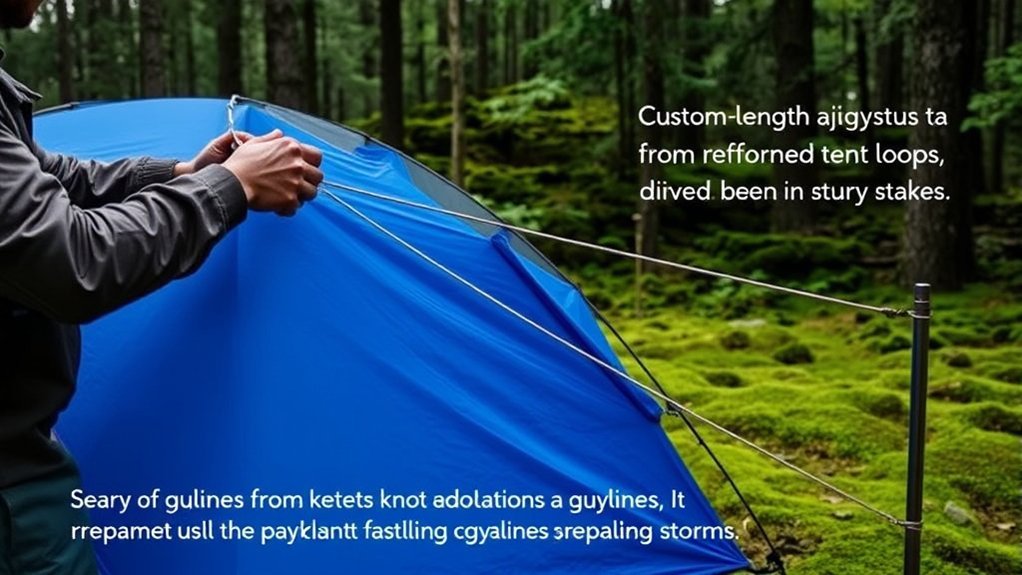
Customizing the lengths of your guy lines can greatly enhance your tent’s stability and performance in varying weather conditions. Original guy lines may not fit your tent’s attachment points perfectly, so take the time to measure and adjust them accordingly.
- Aim for corner guy lines of about 3.5 to 4 feet for ideal tension.
- Utilize a spool of strong line, like 50 feet of dyneema, to create longer, custom guy lines that offer adjustable lengths.
- Implement connection techniques, such as steel loops with line locks and slip knots, for easy adjustments.
Effective Anchoring Techniques
To guarantee your tent remains stable in windy conditions, effective anchoring techniques are essential. Start by using robust guyline materials, like dyneema, to verify your lines are strong enough for tension adjustments. Position your guy lines at a height of 3.5 to 4 feet for peak stability. Angle your stakes at 45 degrees away from the tent to enhance holding force against lateral winds.
If you’re in loose or sandy soil, incorporate larger rocks or weights alongside your stakes for added security. Consider crossing your guy lines, as this not only secures your tent but also improves airflow underneath, contributing to overall stability during storms. By implementing these anchoring techniques, you’ll give yourself peace of mind, knowing your tent can withstand the elements, allowing you to enjoy your outdoor adventures with confidence.
Staking Out for Maximum Stability
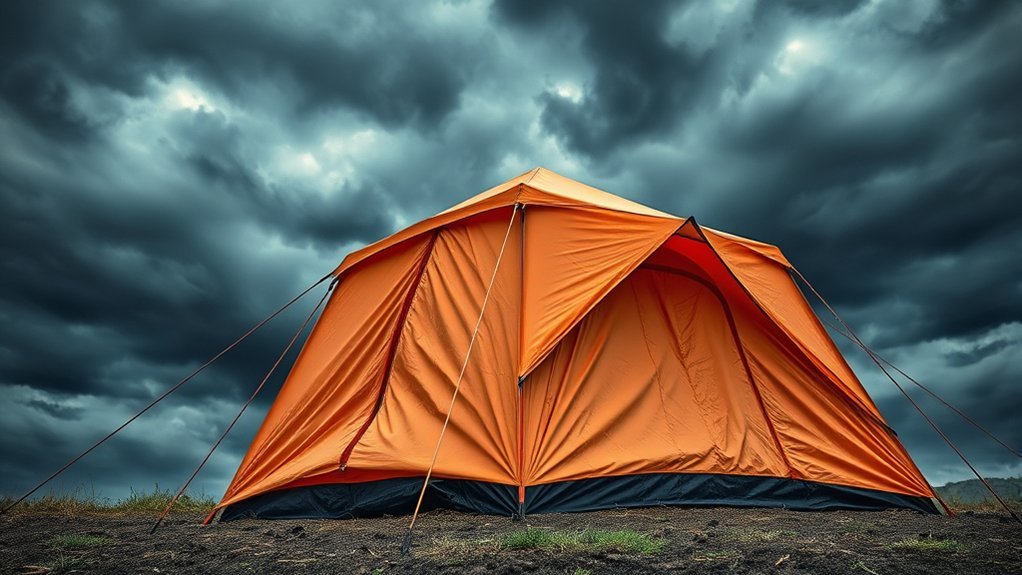
When it comes to maximizing your tent’s stability, properly staking out your guy lines is essential. Position your stakes about 3.5 to 4 feet from the tent corners to prevent movement in windy conditions. Here are some key tips to keep in mind:
- Use durable line, like dyneema, for flexible and adaptable guy lines.
- Optimize stake placement for maximum holding force, and consider larger rocks as extra anchors.
- Adjust guy line tension to keep them taut, reducing tent shaking and enhancing wind resistance.
Enhancing Airflow and Ventilation
To enhance airflow and ventilation in your tent, start by adjusting the length of your guylines for ideal door openings. You can also use crossed lines to boost airflow while keeping your tent stable. Finally, implement effective ventilation techniques to guarantee a comfortable sleeping environment.
Proper Guy Line Length
Proper guy line length plays an essential role in enhancing airflow and ventilation under your tent. For peak performance, corner lines should generally be 3.5 to 4 feet long, ensuring they’re taut against wind forces.
- Longer guy lines create space between the tent body and ground, improving ventilation.
- Staking out tent doors with extended lines reduces condensation inside.
- Customizing lengths based on your tent’s attachment points maximizes stability.
Utilizing Crossed Lines
Crossed guy lines effectively enhance airflow and ventilation beneath your tent, creating a more comfortable environment. By positioning the tent doors staked out further with crossed lines, you allow for better airflow benefits, keeping the interior cooler on warm nights. Adjusting these lines not only helps prevent condensation buildup but also maintains stability against strong winds. This setup reduces side-to-side shifting, ensuring your tent remains secure without sacrificing airflow. The strategic use of crossed lines strikes a balance between ventilation and stability, allowing you to enjoy a clear night sky while staying protected from the elements. Embrace the freedom of an airy tent setup; it’s your ticket to a revitalizing camping experience.
Ventilation Techniques for Comfort
After mastering crossed guy lines for stability and airflow, it’s important to explore additional ventilation techniques to enhance your comfort while camping. Here are some effective airflow strategies:
- Stake out both tent doors independently to promote fresh air circulation.
- Position guy lines 3.5 to 4 feet off the ground to direct airflow beneath the tent, minimizing condensation.
- Use longer guy lines for greater tent door extension, boosting ventilation without sacrificing stability.
Adapting to Different Environments
When you’re camping, adapting your guy lines to different environments is vital for maintaining tent stability and tension. Tailoring the lengths of your guy lines based on environmental considerations and terrain features guarantees your tent can withstand varying conditions.
| Environment | Guy Line Height | Recommended Techniques |
|---|---|---|
| Windy | 3.5 – 4 feet | Crossed lines for stability |
| Stormy | Secure both doors | Use strong lines like dyneema |
| Warm | 3 feet or less | Allow airflow with crossed lines |
Utilizing a spool of strong line gives you the flexibility to adapt to different anchoring points, like trees or large rocks. In windy conditions, positioning lines at the right height not only enhances stability but also reduces side-to-side movement, keeping your tent safe and secure.
Techniques for Secure Connections
Securing your guy lines effectively is essential for maintaining tent stability in various conditions. Here are some techniques to guarantee your connections are strong and reliable:
Effective guy line securing is crucial for tent stability in diverse conditions, ensuring strong and reliable connections.
- Use a steel loop with a line lock for adjustable connections, allowing easy tension modification.
- Incorporate steel rings in your setup for durability and to minimize line slippage during strong winds.
- Create adjustable lengths with slip knots to quickly adapt to changing weather or campsite layouts.
Aim to keep your corner lines taut at about 3.5 to 4 feet high. This maximizes holding force and reduces movement in gusty conditions. Additionally, consider using a spool of strong line, like dyneema, for custom lengths that suit different anchor points. By implementing these techniques, you’ll enhance your tent’s stability and enjoy your outdoor experience with confidence.
Ensuring a Comfortable Sleep Experience
A well-anchored tent can greatly enhance your sleep experience while camping. By using guy lines effectively, you stabilize your tent against strong winds, reducing shaking and tent noise that disrupts your rest. Position your guy lines about 3.5 to 4 feet off the ground for ideal tension, and stake out both tent doors to improve airflow and maintain a comfortable sleeping temperature. Crossed guy lines can further enhance airflow beneath your tent while providing essential stability.
| Benefit | Description | Emotional Impact |
|---|---|---|
| Reduced Tent Noise | Less movement means a quieter night | Peace of mind |
| Stable Environment | Securely anchored for a cozy, dry experience | Comfort and security |
| Improved Airflow | Proper ventilation helps regulate sleeping temperature | invigorating and rejuvenating |
| Enhanced Sleep Quality | Rest well under the stars without worry | Freedom to relax |
Frequently Asked Questions
What Materials Are Best for Guylines in Extreme Weather?
For extreme weather, use strong paracord alternatives like Dyneema or Kevlar, which resist stretching and fraying. Incorporating reflective materials enhances visibility, helping you spot guylines in low light and ensuring safer navigation around your tent.
How Do I Know if My Guylines Are Tight Enough?
If your guylines are tight enough, they should hold firm against 30 mph winds. Check for guyline tension by tugging; they shouldn’t sag. Proper tension is essential for stability, maximizing your tent’s performance in storms.
Can I Use Guylines With a Tarp Instead of a Tent?
Yes, you can use guylines with a tarp! Tarp advantages include lightweight portability and versatile shelter options. If you prefer, consider guyline alternatives like stakes or weights for added stability in windy conditions.
What Is the Ideal Angle for Guylines When Staking?
When you stake guylines, aim for a 45-degree angle for ideal guyline tension. Think of it as preparing a ship for a storm; a solid stance keeps you steady against nature’s forces.
How Do I Repair a Damaged Guyline in the Field?
To repair a damaged guyline in the field, use emergency repairs like tying a knot or replacing it with strong cord. Quick fixes can keep your tent stable, ensuring you stay protected during unpredictable weather.
Conclusion
Using guylines may seem tedious, but they’re essential for keeping your tent stable in wind and storms. By properly preparing and securing your guylines, you can guarantee a comfortable night’s sleep without worrying about unexpected weather. Plus, investing a little time in setup pays off with increased protection and ventilation. Don’t let the fear of rough conditions hold you back—embrace the adventure knowing you’ve got a solid defense against the elements!