



Tent condensation happens when warm, humid air inside your tent meets cooler tent fabric, causing moisture to collect. Your breath, cooking inside, or wet gear all contribute to the humidity. Poor ventilation traps this moisture, which can feel uncomfortable and dampen your experience. By addressing these factors, such as improving airflow and managing wet items, you can greatly reduce condensation. Want to learn how to create a drier, more comfortable camping environment? Keep exploring!
Understanding Tent Condensation


Have you ever woken up in your tent to find the walls dripping with water? That’s condensation at work! It happens when warm, humid air inside your tent meets the cooler tent materials, creating droplets. You might not realize it, but you can generate up to a pint of moisture each night just by breathing. If you’re camping in a damp environment or cooking inside, the weather impact can intensify this issue. Even an empty six-man tent can trap about a pint of condensation from ambient moisture.
Temperature drops at night worsen the situation, causing that warm air to cool rapidly and release water. The key to reducing this is understanding your tent’s materials and how they interact with the weather. Choose breathable fabrics and minimize moisture sources like wet shoes or clothing. Being mindful of these factors can keep you dry and comfy during your adventures.
Causes of Tent Condensation
Understanding the factors that contribute to tent condensation can help you stay dry during your camping trips. Tent materials and their breathability play an essential role, as they can trap warm, humid air inside. When you and your gear produce moisture, it can lead to up to 1 pint of condensation per night! Lack of ventilation is another big culprit, especially when nighttime temperatures drop.
Here’s a quick overview of common causes:
| Cause | Description | Impact on Humidity Levels |
|---|---|---|
| Warm, humid air from occupants | Creates moisture when it meets cooler fabric | Increases condensation |
| Cooking inside the tent | Elevates indoor humidity | Heightened condensation |
| Wet gear stored inside | Adds moisture to the air | Significant increase |
| Poor ventilation | Traps humidity, preventing it from escaping | High condensation risk |
| Sheltered pitching locations | Creates stagnant air | Promotes moisture buildup |
Identifying Tent Leaks vs. Condensation
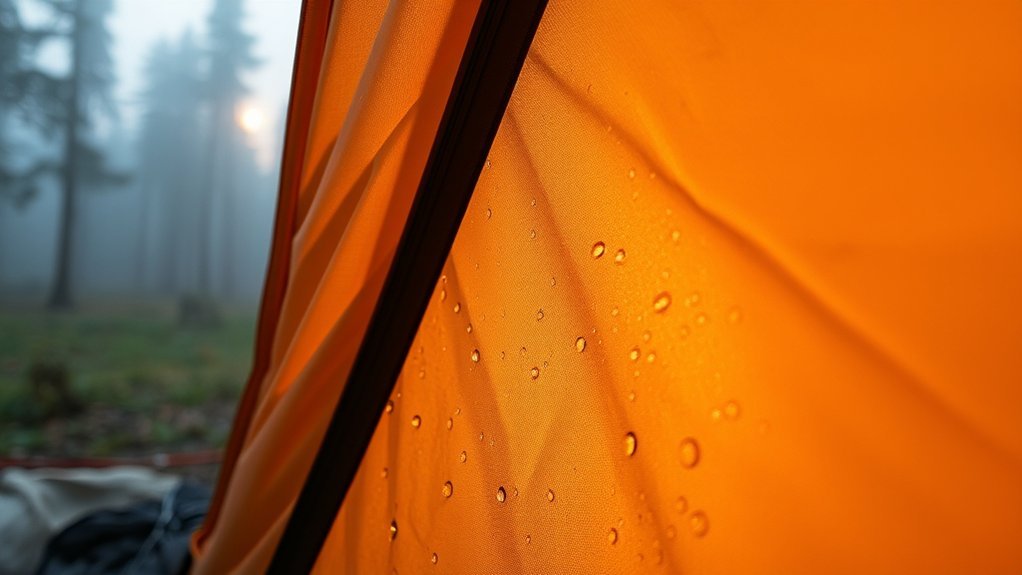
When you find moisture inside your tent, it’s essential to determine whether it’s from condensation or an actual leak. Many campers mistakenly assume leaks are the culprit, but condensation can produce significant water buildup, especially in larger tents. By inspecting your tent for fabric integrity and understanding how to spot the signs of condensation, you can troubleshoot effectively and enjoy a worry-free camping experience.
Common Misconceptions Explained
Why does it seem like there’s more water in your tent than outside? Many campers mistake condensation for leaks, but this isn’t the case. When you breathe, your body releases moisture—up to a liter overnight! This warm air meets cooler tent materials, causing condensation that can pool inside. High-quality tents, like Vango, are built with waterproof materials and sealed seams to keep leaks at bay when pitched correctly. Understanding moisture management is essential; even new tents can experience condensation. So, before you panic about leaks, check your tent’s ventilation and remember: it’s often just the natural result of your presence inside. Regularly inspecting for leaks is still wise, but don’t overlook condensation as a primary culprit.
Leak Inspection Techniques
Determining whether the moisture in your tent is from condensation or a leak is essential for a comfortable camping experience. Here are some leak inspection techniques to help you out:
| Signs of Condensation | Signs of a Leak | Action |
|---|---|---|
| Moisture pooling on surfaces | Drips or streams of water | Check for fabric failures |
| High humidity and temperature changes | Visible wear or damage on seams | Perform seam sealing |
| Consistent moisture overnight | Wet spots inside the tent | Conduct leak detection tests |
Preventing Tent Condensation
To prevent condensation in your tent, focus on improving ventilation, minimizing moisture sources, and optimizing your tent’s positioning. Open vents to create airflow and keep wet items outside to reduce humidity. Also, choose a breezy location for your tent to enhance airflow and keep the interior dry.
Improve Ventilation Strategies
While enjoying the great outdoors, you might find that proper ventilation in your tent is key to preventing condensation. Start by keeping vents and doors open whenever possible to enhance airflow optimization, allowing warm, moist air to escape. Mesh doors are fantastic for promoting air circulation while keeping pesky insects at bay. If rain’s in the forecast, try partially zipping the door and using rain gutters to maintain airflow without letting moisture in. Position vents strategically to guide airflow throughout your tent, considerably reducing humidity buildup. Finally, regularly check your tent’s position in relation to wind direction; this simple adjustment can enhance ventilation and further decrease condensation risks. Embrace these ventilation techniques for a drier camping experience!
Minimize Moisture Sources
Minimizing moisture sources inside your tent can greatly reduce the chances of condensation forming. Start by storing wet items, like shoes and clothes, outside your tent to keep humidity levels down. Avoid cooking inside, as the heat and steam will dramatically increase moisture. Instead, use dry sacks for any wet gear, preventing added moisture accumulation in your space. Pitch your tent in breezy locations to enhance airflow, allowing moisture to dissipate naturally. Finally, don’t forget to implement drying techniques each morning by airing out your tent and its contents. These simple steps will keep your tent dry, allowing you to enjoy the great outdoors without the disruption of condensation. Happy camping!
Optimize Tent Positioning
When you position your tent wisely, you greatly enhance airflow and reduce the chances of condensation forming inside. Focus on your tent orientation by facing it into the wind to improve airflow management. Avoid pitching near still water, as it raises humidity levels. Steer clear of hollows where moisture can settle and create issues. If proximity to water is unavoidable, use mosquito repellent to keep insects at bay without sacrificing ventilation. Regularly check and adjust your tent’s position throughout your stay for best airflow.
| Tent Positioning Tips | Benefits |
|---|---|
| Face into the wind | Enhances airflow |
| Avoid still water | Reduces humidity |
| Stay clear of depressions | Prevents moisture buildup |
| Use repellent near water | Maintains airflow, keeps bugs away |
Ventilation Strategies
To keep condensation at bay in your tent, effective ventilation strategies are essential. Start by keeping your vents and doors open whenever possible; this dramatically enhances airflow and helps reduce moisture buildup. Utilizing mesh doors is a fantastic option, allowing air circulation while keeping pesky insects out. If the rain starts, don’t fret—partially zip the door to maintain some airflow without letting in too much moisture.
Position your vents wisely to direct airflow throughout the tent, maximizing ventilation and lowering humidity levels. You can also install rain gutters on your doors to minimize moisture entry while still enabling ventilation. By embracing these ventilation techniques and focusing on airflow management, you’ll create a drier, more comfortable environment inside your tent. Remember, good ventilation isn’t just about comfort; it’s your ticket to a more enjoyable camping experience!
Managing Existing Condensation

Managing existing condensation in your tent is essential for maintaining a comfortable environment during your camping trip. Start by wiping down the walls with a towel to eliminate any moisture buildup. Remember, wet items only raise humidity levels, so remove them from your tent as soon as possible.
When you take breaks, let your tent bask in the midday sun to help dry it out and reduce moisture before packing it away. Keep your bags and personal items away from the tent walls to prevent contact with any condensation that might seep through the fabric.
Towel management is key here—carrying spare towels allows you to tackle unavoidable moisture effectively, ensuring you stay dry and comfortable. By implementing these moisture control strategies, you can transform your camping experience from damp and uncomfortable to invigorating and liberating.
General Tips for Reducing Condensation
After tackling existing condensation, it’s time to focus on preventing it from forming in the first place. One of the best ways to reduce condensation is by enhancing airflow management. Keep your tent’s vents and doors open, allowing warm, moist air to escape and drier air to flow in. Installing mesh doors is a great option; they provide circulation while keeping pesky insects out, helping to maintain a balanced environment.
Avoid cooking inside your tent, as it adds unnecessary heat and moisture. Storing wet gear outside in dry sacks can also minimize moisture buildup inside. Finally, regularly check and adjust your tent’s positioning. Ensuring ideal ventilation can dramatically mitigate condensation issues. By implementing these practical tips, you’ll create a more comfortable camping experience, free from the burdens of excess moisture. Enjoy the liberation of a dry, cozy tent!
Frequently Asked Questions
Can Condensation Damage My Tent Fabric Over Time?
Yes, condensation can damage your tent fabric over time. Focus on tent maintenance and moisture control to minimize risks. Regularly check for moisture buildup and guarantee proper ventilation to extend your tent’s lifespan and performance.
Is Condensation Worse in Winter Camping?
Yes, condensation can be worse during winter camping due to higher moisture levels inside your tent. Effective moisture management, like proper ventilation and choosing the right site, helps reduce condensation and keeps your camping experience enjoyable.
How Does Humidity Affect Tent Condensation Levels?
Humidity levels directly impact tent condensation. As temperature differences between inside and outside rise, moisture from your breath or gear can condense, creating a damp environment. Keeping humidity low helps maintain a comfortable, dry camping experience.
Can I Use a Dehumidifier Inside My Tent?
Absolutely, you can use a dehumidifier inside your tent! Imagine camping in a humid forest; portable dehumidifier options can help reduce moisture, but guarantee proper tent ventilation to maximize effectiveness and comfort.
What Are the Best Tent Materials to Reduce Condensation?
The best tent materials to reduce condensation are breathable fabrics paired with waterproof coatings. These combinations allow moisture to escape while keeping you dry, ensuring a more comfortable and liberating outdoor experience. Choose wisely for your adventures!
Conclusion
To sum up, understanding tent condensation helps you enjoy your outdoor adventures more comfortably. Did you know that studies show about 90% of campers experience some form of condensation? By implementing effective ventilation strategies and managing moisture inside your tent, you can greatly reduce this issue. Keep your gear dry and your camping experience enjoyable by being proactive. With the right approach, you’ll be ready to tackle the elements and make the most of your time in nature.