


To keep chipmunks away from your camp humanely, maintain a clean campsite and store food in airtight containers. Clear away wood piles and dense vegetation, and use natural deterrents like planted daffodils or garlic around your area. Sealing entry points in your RV with caulk and creating gravel borders can help as well. Utilizing essential oils like peppermint also repels these critters. If you want more effective strategies and tips, there’s much more to explore.
Understanding Chipmunk Behavior

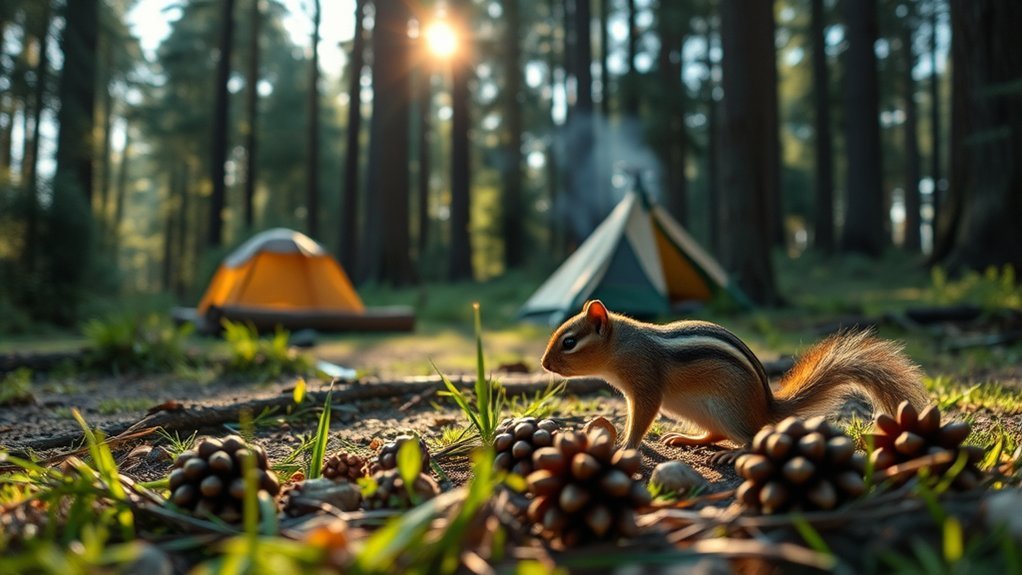
When you understand chipmunk behavior, you’ll be better equipped to keep them away from your campsite. These small, ground-dwelling rodents are most active during autumn, a time when they gather and store food for winter. Their chipmunk habits include foraging for vegetables, nuts, and seeds, which often leads them to campgrounds with accessible food sources. As they dig burrows that can extend up to 30 feet, they may disrupt your campsite and pose risks to tents or gear.
To deter chipmunks, secure food in airtight containers and maintain a clean area free of debris. Recognizing their seasonal behavior will help you anticipate their activity patterns. By addressing their attraction to food and nesting spots, you can create an environment that encourages chipmunks to find their sustenance elsewhere. Understanding these factors empowers you to coexist peacefully with nature while enjoying your outdoor experience.
Identifying Signs of Chipmunks at Camp
Chipmunks often leave behind distinct signs that can help you identify their presence at your campsite. By observing these clues, you can better understand their habitats and foraging behavior, which will aid in keeping them at bay.
Chipmunks leave distinct signs at campsites, helping you recognize their presence and manage them effectively.
- Look for small burrow entrances, usually near logs or rocks.
- Check for scratch marks or digging in your garden, as they may disturb young plants.
- Listen for chirping or scratching sounds, particularly in the early morning or late evening.
Additionally, you might find chewed nuts or leftover food scraps, clear evidence of their scavenging activities. Fallen seeds under bird feeders or picnic tables can also attract them to your camp area. By recognizing these signs, you’ll be more prepared to manage their presence effectively without harm.
Natural Deterrents for Chipmunks
To effectively keep chipmunks away from your campsite, consider using natural deterrents that exploit their aversions. Plant choices like daffodils and garlic are excellent options, as the strong scents repel chipmunks. Additionally, you can spray a mixture of cayenne pepper and water around your camp’s perimeter, creating an unpleasant environment for these critters.
For a more strategic approach, using human hair or predator urine can simulate danger, discouraging chipmunks from venturing too close. You might also place cotton balls soaked in peppermint oil around the campsite, as the scent is known to be a natural repellent.
Finally, incorporating gravel borders around food storage areas can deter chipmunks from digging and accessing potential food sources. By employing these natural repellents, you can create a harmonious camping experience while safeguarding your space from chipmunks.
Sealing Entry Points in Your RV
To keep chipmunks out of your RV, start by inspecting it for cracks, holes, and gaps, especially around vents and doors. Once you identify these entry points, use caulk or expanding spray foam to seal them effectively. Regular maintenance checks will help you catch any new openings before they become a problem.
Inspect RV for Cracks
Before you commence on your next camping adventure, it’s vital to thoroughly inspect your RV for any cracks, holes, or gaps that could allow chipmunks and other pests to gain entry. Effective crack detection is important, especially around vents, drains, and windows.
- Regularly check areas near the chassis and undercarriage for new vulnerabilities.
- Pay attention to wear and tear that may develop over time.
- Maintain a proactive approach to sealing potential entry points.
Use Caulk for Sealing
After inspecting your RV for cracks and vulnerabilities, sealing those entry points with caulk is a smart next step. Using high-quality caulk guarantees a tight fit that keeps chipmunks out. Pay special attention to areas around windows, doors, and where utility lines enter.
| Caulk Types | Best Uses | Sealing Techniques |
|---|---|---|
| Silicone Caulk | Flexible areas, windows | Apply evenly, smooth edges |
| Acrylic Caulk | Interior gaps, low moisture | Paintable, easy to apply |
| Polyurethane Caulk | Exterior, high durability | Requires curing, great for gaps |
Regularly check your caulked areas since weathering can create new entry points. Combine caulking with cleaning and removing food sources for maximum effectiveness.
Regular Maintenance Checks
While enjoying the great outdoors, it’s easy to overlook the importance of regular maintenance checks for your RV, especially when it comes to sealing entry points against chipmunks and other pests. Understanding chipmunk behavior can help you stay one step ahead of these critters.
To effectively seal your RV, remember to:
- Inspect for cracks, holes, and gaps around vents, drains, and entry points.
- Use expanding spray foam or caulk to close identified access points.
- Check outdoor storage compartments to guarantee they’re tightly sealed.
Establish a maintenance schedule to perform routine checks after trips to confirm no new damage has occurred. Staying vigilant will help protect your RV from unwanted visitors and keep your camping experience enjoyable.
Maintaining a Clean Campsite
To keep chipmunks away, it’s essential to maintain a clean campsite. Store all food in airtight containers and regularly clear away any debris, like fallen seeds and crumbs, that could attract them. By minimizing accessible food sources, you’ll greatly reduce the chances of these curious critters visiting your camp.
Secure Food Storage
When you’re camping, keeping chipmunks at bay starts with secure food storage and a clean campsite. To guarantee food safety, store all food in airtight containers to block enticing smells that attract these critters. Additionally, establish your cooking and dining areas at least 100 feet from sleeping zones to deter nighttime visits.
- Promptly clean up crumbs and spills to avoid luring chipmunks.
- Dispose of trash in sealed bins and pack out all waste.
- Keep pet food inside secure containers, as even it can draw in chipmunks.
Following these practices will help maintain a peaceful camping experience, allowing you to enjoy nature without unwanted visitors.
Clear Debris Regularly
Maintaining a clean campsite is essential for keeping chipmunks away, since any food scraps or debris can attract these curious creatures. Implement effective debris removal strategies by regularly clearing food scraps, wrappers, and clutter around your area. Secure garbage in animal-proof containers and dispose of it promptly to minimize food sources. Daily, sweep the surroundings of picnic tables and cooking sites, ensuring no leftover food lures chipmunks in. Additionally, clear away fallen fruits, nuts, or seeds from trees, as they can create a buffet for these rodents. By practicing these campsite cleanliness tips, you’ll foster an environment that discourages chipmunks and enhances your camping experience without harming these playful creatures.
Using LED Lighting to Deter Chipmunks
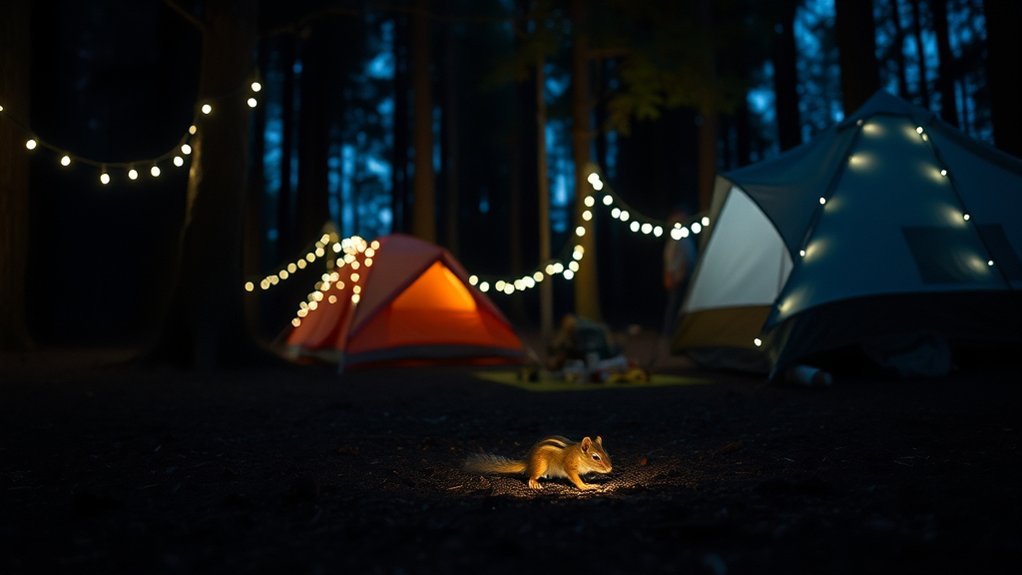
Using LED lighting can effectively create an unwelcoming environment for chipmunks, reducing their presence around your campsite. Installing solar lights around the perimeter not only brightens the area but also deters these nocturnal foragers. To maximize the benefits, consider these strategies:
- Place lights near food storage: This discourages chipmunks from being attracted to potential food sources.
- Use motion sensors: Motion-activated LED lights can startle chipmunks, further keeping them at bay.
- Enhance safety: Bright lighting improves visibility during nighttime activities, ensuring a safer camping experience.
Trapping Chipmunks Humanely
While LED lighting can help deter chipmunks from your campsite, sometimes a more direct approach is necessary. To trap chipmunks humanely, select trap types specifically designed for their size, guaranteeing they’re spacious enough to avoid injury. For bait options, try appealing food items like peanut butter, sunflower seeds, or nuts to effectively attract these little critters.
Position your traps in areas where chipmunks are frequently seen, such as near burrow entrances or under bird feeders, to increase your chances of capture. Remember to check your traps regularly—ideally every few hours—to minimize stress or dehydration for the captured chipmunks. Once you’ve successfully trapped them, release them at least a mile away from your camp in a suitable environment, away from residential areas, to prevent them from finding their way back. This ethical approach guarantees their well-being while keeping your campsite chipmunk-free.
Creating a Chipmunk-Free Zone
Creating a chipmunk-free zone at your campsite requires a proactive approach to eliminate food sources and shelter that attract these critters. By taking steps to deter chipmunks, you can minimize their presence and protect your camping experience.
Establishing a chipmunk-free zone at your campsite is essential for a pleasant outdoor experience.
- Store all food items in airtight containers and clean up spills promptly.
- Surround your campsite with a gravel border or a plant-free zone to deter burrowing.
- Regularly remove wood piles and debris to reduce hiding spots.
Additionally, consider using an L-shaped footer buried several inches into the ground around your tents to prevent tunneling. Planting daffodils or Allium species around the perimeter can also help, as these plants are less appealing to chipmunks. By creating a chipmunk-free zone, you can reduce the chances of these rodents encroaching on your space, allowing for a more enjoyable camping experience without relying on their natural predators.
Repelling Chipmunks With Essential Oils
Have you considered using essential oils to repel chipmunks during your camping trip? These natural solutions can be effective and non-toxic, allowing you to enjoy nature without harming wildlife. Chipmunk scents like peppermint, citrus, and eucalyptus are particularly unappealing to these little creatures. You can create your own essential oil recipes by mixing 25-30 drops of your chosen oils with water in a spray bottle. Spritz this mixture around your campsite to deter chipmunks from invading your space.
Another simple method is to soak cotton balls in peppermint oil and strategically place them around your camp. This creates an aromatic barrier that chipmunks are likely to avoid. Just remember to reapply the oils after rain or heavy dew, as their effectiveness diminishes when diluted. Using essential oils is a humane way to keep your camping experience chipmunk-free while respecting the environment.
Long-Term Prevention Strategies
To keep chipmunks away from your camp long-term, you’ll want to focus on habitat modification, food source management, and effective barriers. Regularly clean up food scraps and secure all edibles in airtight containers to reduce attractants. Additionally, consider installing fencing and creating a clutter-free environment to discourage their presence.
Habitat Modification Techniques
Effective habitat modification techniques can greatly reduce the chances of chipmunks invading your campsite. By focusing on habitat enhancement and vegetation management, you can create an environment that discourages these critters from settling in.
- Clear away wood piles, rock piles, and dense vegetation to eliminate hiding spots and nesting areas.
- Implement a gravel border around the campsite, as this lack of vegetation can deter burrowing.
- Plant chipmunk-resistant plants, like daffodils and Allium species, to form natural barriers.
Additionally, regularly remove fallen seeds, fruits, and nuts to limit their food sources. Remember to store all food, including pet food, in airtight containers. These proactive steps will help maintain a chipmunk-free camping experience.
Food Source Management
While habitat modification techniques lay the groundwork for a chipmunk-free campsite, managing food sources is essential for long-term prevention. Start by storing all food, including pet food and birdseed, in airtight containers to minimize food appeal factors that attract chipmunks. Clean up any spilled food or waste immediately, as chipmunks are drawn to remnants left behind. Avoid leaving food unattended outside, especially at dusk and dawn when chipmunk foraging habits peak. Use secure compost bins to prevent access to decomposing scraps. Regularly inspect your campsite for potential food sources, like fruit trees or berry bushes, and manage them appropriately. These proactive measures will help keep your campsite chipmunk-free and promote a more enjoyable outdoor experience.
Barrier Installation Methods
Implementing barrier installation methods is essential for long-term prevention of chipmunks at your campsite. By using effective barrier types and installation techniques, you can greatly reduce the chances of these critters invading your space. Here are some key strategies to keep in mind:
- Install L-shaped footers around your campsite perimeter, burying them 8 inches deep to deter burrowing.
- Use wire mesh fencing at least 24 inches high, buried a foot underground, to block entry points.
- Create a gravel moat around gardens and food storage areas, making it difficult for chipmunks to dig through.
Frequently Asked Questions
Do Chipmunks Carry Diseases That Can Affect Humans?
Yes, chipmunks can carry diseases like hantavirus, which may affect human health. While the risk is low, it’s wise to avoid direct contact and maintain cleanliness in areas where chipmunks might frequent. Stay informed!
What Time of Year Are Chipmunks Most Active?
Chipmunks are most active during spring and fall, showcasing their natural behavior in foraging and nesting. Their seasonal activity peaks as they prepare for winter, making those times essential for observing their lively antics.
Can Chipmunks Climb Trees or Structures?
Yes, chipmunks can climb trees and structures with impressive agility. Their tree climbing skills allow them to navigate branches effortlessly, showcasing their structural agility. You’ll often see them darting up trunks or across fences.
Are There Specific Foods That Attract Chipmunks?
Yes, specific foods attract chipmunks. They’re drawn to seeds, nuts, and fruits due to their food preferences. Understanding chipmunk behavior helps you avoid leaving these items out, reducing their visits while respecting their natural instincts.
How Do I Know if My Measures Are Working?
You can monitor effectiveness by observing chipmunk activity around your camp. If you notice fewer sightings or disturbances, you’re likely evaluating deterrent success effectively. Adjust strategies as needed for better results without causing harm.
Conclusion
In conclusion, keeping chipmunks away from your camp without harm requires vigilance and proactive measures. By understanding their behavior, sealing entry points, and maintaining a clean environment, you can create an effective deterrent. Remember, “an ounce of prevention is worth a pound of cure.” By implementing these strategies and using natural repellents, you can enjoy your camping experience while respecting wildlife. With a little effort, you can guarantee a chipmunk-free zone for everyone’s enjoyment.