


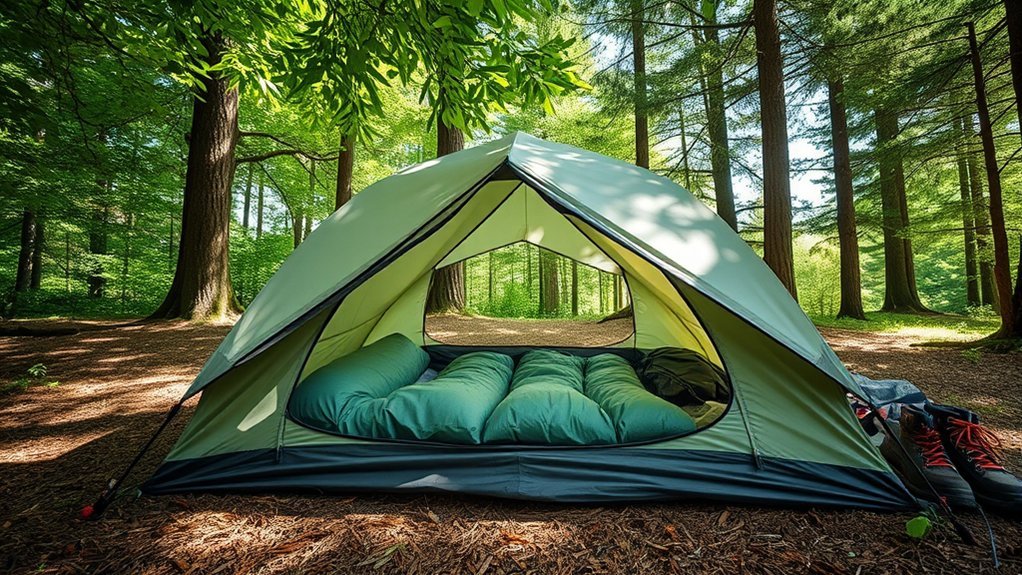
A 2-person tent can technically fit two people, but comfort may be an issue. With only 20-35 square feet of floor space, it can feel tight, especially when gear is added. You’ll likely struggle with limited movement and storage, impacting your overall experience. Opting for a tent rated for three people can enhance comfort and personal space. Curious about ways to maximize your tent experience? There are plenty of tips to explore for better camping comfort.
Understanding Tent Capacity Ratings


When you’re selecting a tent, it’s crucial to understand capacity ratings, as these numbers can sometimes mislead you. Tent size isn’t just about how many people can fit; it also affects your comfort. A standard 2-person tent offers about 20-35 square feet of floor space, which can feel cramped, especially when you factor in sleeping bags and gear.
If you’re considering occupancy expectations, remember that a 2-person tent may be better suited for solo campers or couples wanting a cozy experience. The average per person space in such a tent is around 20 square feet, limiting movement and storage. For ideal comfort, aim for a tent rated for one more person than the actual number of campers. This guarantees you have enough room to breathe and enjoy your adventure without feeling confined. Your camping experience should feel liberating, not restrictive. Choose wisely!
Space Requirements for Two People
For two people, a standard 2-person tent can present some challenges regarding space. With an average floor space of 20-35 square feet, you might find it cramped, especially when factoring in gear. While two regular-sized sleeping bags can fit, moving around becomes tricky without effective space management. You’ll likely need to store gear outside, which can compromise couple comfort during your trip.
If you’re planning to share a tent, consider a model rated for one extra person. This extra space can make a significant difference, allowing for a more enjoyable experience. A tent measuring around 7.5 x 4 feet can feel restrictive for two adults, so prioritize comfort and functionality. By understanding these space requirements, you can enhance your camping adventure, ensuring both you and your partner can enjoy the great outdoors without feeling squeezed.
The Impact of Gear Storage
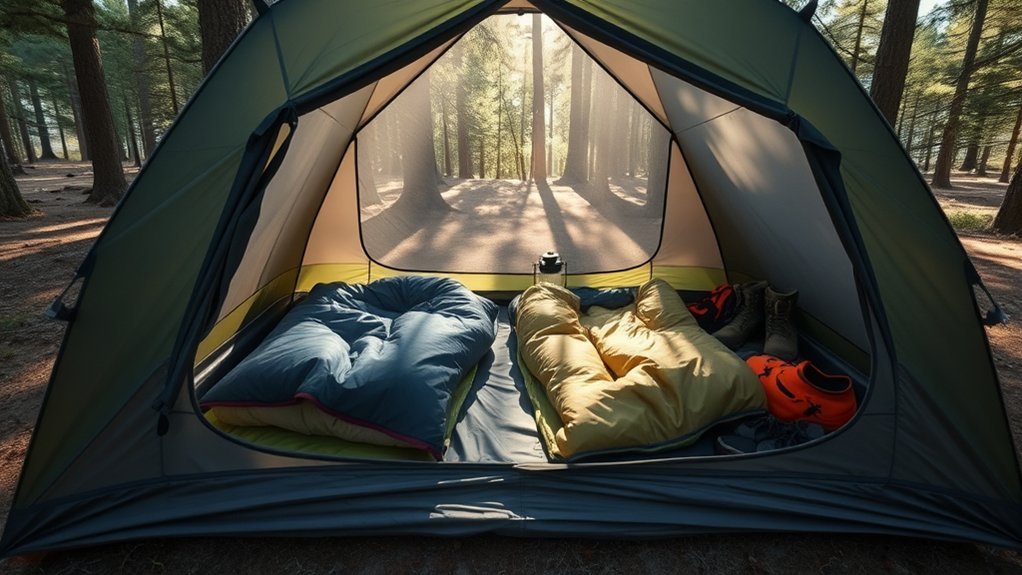
Sharing a tent with another person means juggling not just sleeping space but also gear storage, which can greatly impact your camping experience. In a 2-person tent, the average floor space is only 20-35 square feet, often leaving little room for your personal items. Effective gear organization is essential. Consider implementing storage techniques like using compression sacks and strategic packing strategies to create efficient layouts. Tent accessories, such as gear lofts or pockets, can maximize vertical space, aiding in space management. If you’re feeling cramped, comfort adjustments might include choosing a tent rated for one extra person, allowing better accommodation for your outdoor essentials. Storing gear outside the tent is often necessary, but be mindful of weather conditions. Ultimately, thoughtful tent configuration and efficient storage can transform your camping experience, making it more enjoyable and liberating.
Comfort vs. Capacity: What to Expect
While a 2-person tent can accommodate two adults, it often sacrifices comfort for capacity. If you’re considering one, here’s what to expect regarding tent comfort and space efficiency:
- Cramped Space: With only 20-35 square feet, you might feel squeezed when sharing with another person, especially with gear.
- Ideal for Solo Use: A 2-person tent is perfect for solo campers or couples comfortable with close quarters.
- Limited Movement: The average floor capacity of 20 square feet per person means there’s little room to move around or store gear.
- Consider Extra Room: If comfort’s a priority, opt for a tent rated for at least three people to enhance your camping experience.
Ultimately, while a 2-person tent can fit two, it’s often a better choice for one plus gear. Prioritize your comfort to enjoy your outdoor adventures fully!
Measuring Tent Dimensions

Understanding the dimensions of your tent is key to ensuring a comfortable camping experience. When you’re considering tent measurements, remember that a standard 2-person tent typically measures around 7.5 x 4 feet, offering 20 to 35 square feet of floor space. This can feel cramped, especially when sharing with another person.
| Tent Measurement | Description |
|---|---|
| Floor Space | 20 to 35 square feet |
| Typical Dimensions | 7.5 x 4 feet |
| Per Person Capacity | About 20 square feet |
These tent shapes may allow for two sleeping bags, but they’re often best for solo campers or couples who enjoy close quarters. If you seek more comfort, consider a canvas option that provides extra space and durability. Be mindful of these factors to truly embrace the freedom of the outdoors!
Alternative Tent Options for Couples
When you’re camping as a couple, what tent options can enhance your experience? Consider these alternatives to a standard 2-person tent for improved camping comfort:
- Canvas Tents: Offering up to 51 square feet, they provide ample space and durability, making them ideal for longer trips.
- Cabin Tents: With vertical walls and standing room, they enhance your overall experience by allowing more free movement and comfort.
- 3-Person Tents: These allow for extra space for gear and personal items, making it less crowded compared to a 2-person setup.
- Tents with Vestibules: The vestibule benefits include additional gear storage outside the sleeping area, maximizing space efficiency.
Tips for Choosing the Right Tent Size
How can you ascertain your tent fits your needs perfectly? Start by selecting a tent rated for one more person than you need. For example, if you’re camping with a partner, opt for a 3-person tent. This extra space guarantees comfort, especially in tight 2-person models where sleeping bags may leave little room for gear. Check the tent features, like floor space and height; a standard 2-person tent typically has about 20-35 square feet, which can feel cramped. Consider the dimensions of your sleeping bags too—side-by-side arrangements can work, but you’ll lose precious space for gear. Also, pay attention to the tent’s height; many dome styles lack full standing room, which can limit your movement. Always review specifications for comfort capacity, as usable space varies between brands. Prioritize these factors to enhance your camping comfort and enjoy a more liberating outdoor experience.
Manufacturer Ratings vs. Real-Life Experience
When you check manufacturer ratings for 2-person tents, you might find them overly optimistic. In real-life situations, these tents often lack the space for two people and their gear, making them better suited for solo campers. To guarantee comfort, consider that a 3-person tent may offer a more realistic option for two people.
Rating Optimism Discrepancies
While manufacturer ratings for 2-person tents often suggest they can comfortably fit two sleeping bags, real-world experiences tell a different story. You might encounter some rating optimism and capacity misconceptions that can lead to disappointment. Here are key considerations:
- Average floor space ranges from 20-35 square feet—tight for two adults.
- Ideal usage usually allows one person ample space, making it cramped for two.
- A common guideline recommends adding one person to guarantee comfort.
- Typically, a 2-person tent suits solo campers or couples willing to share close quarters.
Understanding these nuances helps you choose wisely, guaranteeing your camping experience remains enjoyable rather than claustrophobic.
Real-Life Space Assessment
Although manufacturers often tout their 2-person tents as suitable for two campers, real-life experiences reveal a different story. With only 20-35 square feet of floor space, many find it cramped, particularly when considering gear organization. Tent comparisons show that for couples or friends, sharing this space can lead to uncomfortable sleeping styles and limited movement. Personal preferences for personal space and gear storage often clash with the reality of tight quarters. Many campers suggest opting for a tent rated for one extra person to accommodate both camping habits and couple dynamics. Ultimately, understanding space perceptions is vital to guarantee a comfortable camping experience that meets your needs and preferences.
Making the Most of Your Tent Space
To maximize your tent space, focus on optimizing the layout, storing gear efficiently, and considering sleeping arrangements. By organizing your gear outside the sleeping area, you can create a more comfortable environment inside. If you’re camping with two, you might find a slightly larger tent enhances your overall experience.
Tent Layout Optimization
When optimizing your tent layout, maximizing space is essential for comfort and functionality. Here are four practical tips for tent organization and space efficiency:
- Sleeping Pad Placement: Position sleeping pads side by side to free up floor space for your gear.
- Gear Arrangement: Use lightweight, compact gear stored outside or in the vestibule to enhance your living area.
- Vertical Storage: Hang items from tent loops or utilize gear lofts to keep the floor clear, promoting better clutter management.
- Gear Access: Strategically place gear near the entrance for easy access while keeping the main sleeping area organized.
Gear Storage Solutions
Efficient gear storage is essential for maximizing space in your tent, especially during multi-day adventures. To enhance gear organization, consider lightweight and compressible gear that easily fits under sleeping bags or hangs from tent loops. Utilize external pockets and tent accessories to keep essential items accessible without cluttering your space. Installing gear lofts or using wall pockets can offer additional storage for smaller items, keeping them off the floor and within easy reach. Don’t forget about your tent footprint; it not only protects the tent floor but also provides a clean area outside for gear storage. By implementing these storage solutions, you’ll enjoy better space maximization and a tidier tent environment, making your camping experience more liberating.
Sleeping Arrangements Considerations
After organizing your gear for ideal storage, it’s time to focus on sleeping arrangements to maximize your tent space. Here are some practical tips to enhance your camping experience:
- Tent Orientation: Position your tent to optimize ventilation and minimize heat loss.
- Sleeping Pad Width: Consider the width of your sleeping pads; two standard pads need at least 5.5 feet of tent width.
- Couple Dynamics: Communicate about personal space and comfort levels to avoid privacy concerns during the night.
- Mattress Thickness: Select sleeping bags and pads that balance comfort and temperature control, ensuring you both stay cozy.
Frequently Asked Questions
What Materials Affect the Comfort of a 2-Person Tent?
Tent fabric and ventilation options greatly affect your comfort. Choosing breathable materials prevents condensation, while proper airflow keeps you cool. Look for tents with mesh panels and durable fabrics to enhance your overall camping experience.
How Do Weather Conditions Impact Tent Space Requirements?
Weather impacts your tent space needs greatly. In harsh conditions, you’ll crave more room for gear and comfort. Windy or rainy camping conditions demand extra space, so consider a larger tent for a cozy, secure experience.
Can Pets Fit Comfortably in a 2-Person Tent With Us?
Your pet can fit comfortably in a 2-person tent if you optimize the tent layout. Consider your pet’s space needs and adjust accordingly, ensuring everyone has enough room to relax without feeling cramped.
What Accessories Can Enhance Comfort in a Small Tent?
To elevate your cozy escape, choose compact sleeping bags and inflatable camp pillows. These essentials maximize comfort without crowding your space, letting you enjoy nature’s embrace while still feeling right at home.
How Do I Choose a Sleeping Pad for a Tight Space?
Choose a sleeping pad with space-saving features like compactness or self-inflating options. Look for types like ultralight or foam pads that fit snugly in tight spaces, ensuring comfort without sacrificing valuable room in your tent.
Conclusion
In the world of camping, remember that “good things come in small packages.” A 2-person tent can fit two people, but it’s essential to take into account your comfort and gear storage needs. While the tent might accommodate you both, it can feel cramped with gear inside. Always weigh manufacturer ratings against your own experiences to find the best fit. Ultimately, prioritize comfort and space to guarantee your outdoor adventures are enjoyable and restful.