


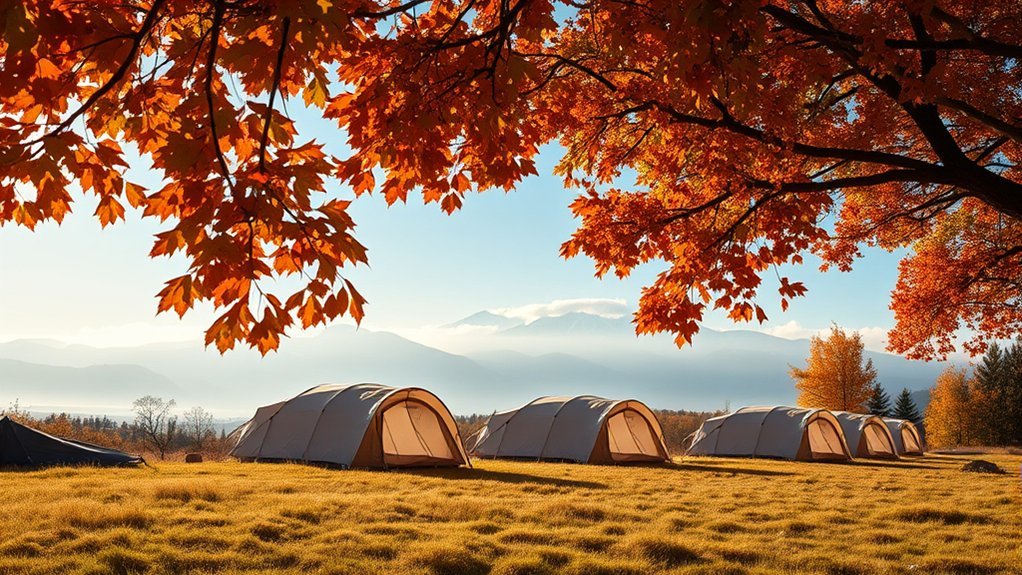
Tunnel tents offer spacious interiors and lightweight designs ideal for camping trips. They excel in calm to moderate weather, with good ventilation and water-shedding capabilities. However, their setup can be complex and they’re less stable in high winds, which could lead to discomfort. Proper pitching is essential to prevent sagging and leaks. If you’re considering a tunnel tent, knowing which features matter can enhance your outdoor experience. Discover more about maximizing your camping adventures.
Overview of Tunnel Tents

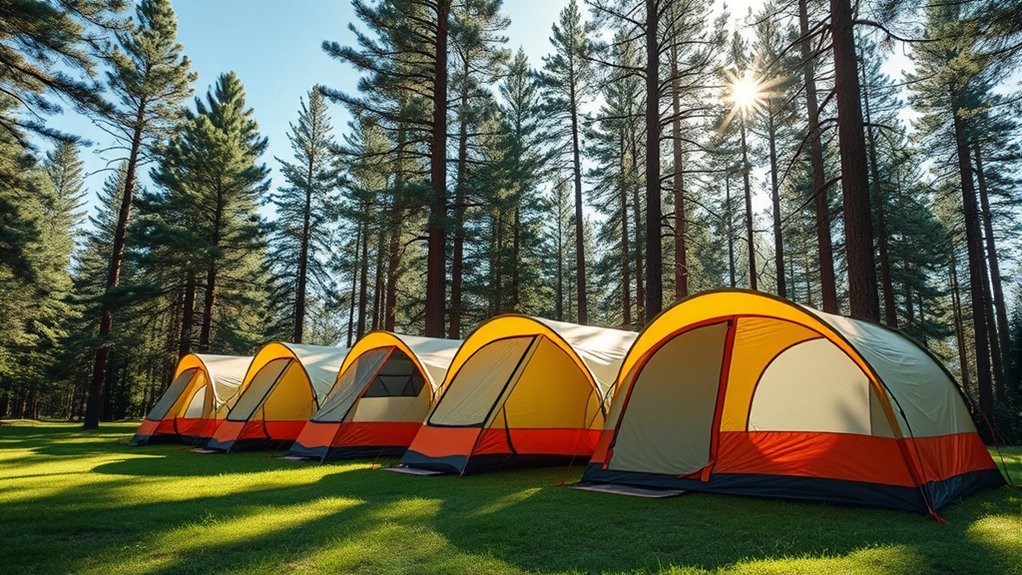
Tunnel tents are a popular choice among campers for their unique design and functional benefits. Their arch-shaped poles create a longer, narrower profile that maximizes interior space and headroom, making them ideal for various camping styles. You’ll find tunnel tents in sizes that accommodate anywhere from 2 to 8 campers, perfect for solo adventurers, couples, families, or larger groups.
One notable design feature is the included vestibule area, which enhances usability for storing gear or giving pets a cozy spot to sleep. Weighing less than traditional dome tents, tunnel tents are lightweight and easy to transport, making them a fantastic option for backpackers. However, proper pitching is essential for stability in windy conditions, as their design helps shed water and moisture effectively, ensuring comfort during rainy weather. This combination of attributes makes tunnel tents a versatile choice for any camping enthusiast seeking liberation in the great outdoors.
Advantages of Tunnel Tents
When it comes to camping, the advantages of choosing a tunnel tent are hard to overlook. One of the most notable features is the spacious interior, which allows you to stand and move around comfortably. This design maximizes headroom throughout the tent, enhancing your overall camping experience. In addition, tunnel tents typically have a lightweight design, making them perfect for backpacking trips where every ounce counts.
Their rounded shape effectively sheds water and moisture, ensuring you stay dry during rainy conditions. Many models also include a vestibule area, providing extra storage for gear or a cozy spot for pets outside the main sleeping area. Moreover, good ventilation options, with openings at both ends, greatly reduce condensation, keeping the inside fresh. With these combined advantages, tunnel tents cater to your need for comfort and practicality, allowing you to focus on enjoying the great outdoors.
Disadvantages of Tunnel Tents
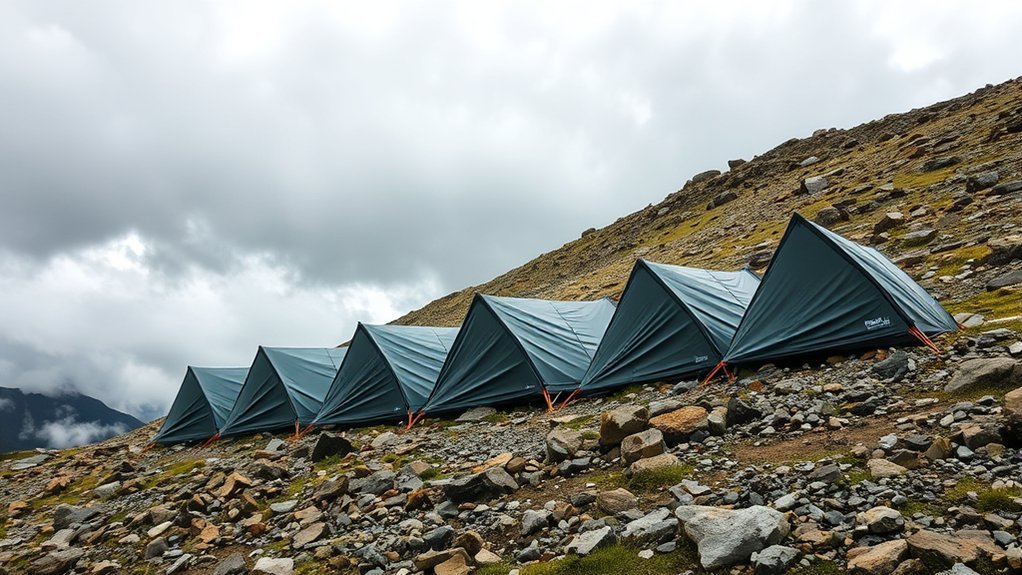
While tunnel tents offer significant advantages, they also come with a set of drawbacks that potential users should consider. One major issue is the setup challenges; with multiple poles and guy ropes, novices may find them intimidating. Additionally, they can struggle with weather stability in windy conditions unless pitched correctly, risking damage or discomfort during storms. If not properly erected, these tents may sag, causing poor water runoff and potential leaks during rain.
| Disadvantage | Description |
|---|---|
| Setup Complexity | Requires multiple poles and guy lines, increasing setup time. |
| Wind Sensitivity | Less stable in high winds, risking damage and discomfort. |
| Visibility | The design is less unobtrusive, unsuitable for stealth camping. |
These factors may make tunnel tents less appealing for quick or spontaneous camping trips.
Best Conditions for Using Tunnel Tents
For those considering a tunnel tent, understanding the best conditions for its use can greatly enhance your camping experience. These tents thrive in calm to moderate weather conditions, providing stability and comfort. If you anticipate high winds, make certain you secure your tent properly with guy lines. Tunnel tents are perfect for multi-day camping trips, offering ample living space and storage—ideal for family or group camping scenarios accommodating 2 to 8 campers. Their spacious interior fosters a social atmosphere. In rainy conditions, their arch-shaped roof effectively sheds water, keeping the interior dry and comfortable. Additionally, during summer camping, the openings at both ends promote excellent ventilation, preventing stuffiness. Prioritizing these weather considerations will help you maximize both comfort and enjoyment on your outdoor adventures.
Tips for Choosing the Right Tunnel Tent
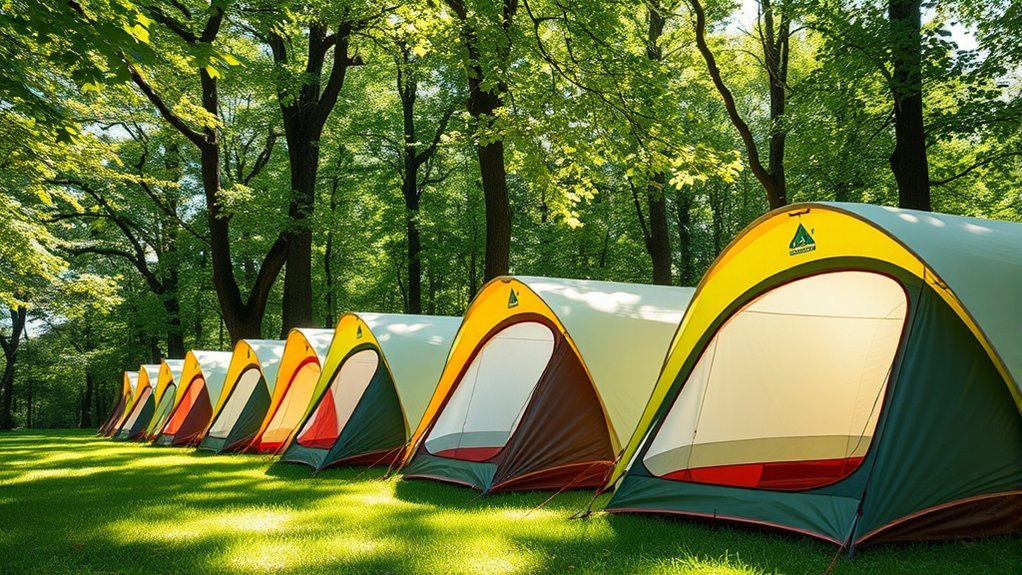
Choosing the right tunnel tent can greatly impact your camping experience, particularly in various weather conditions. Start by looking for essential tent features like a built-in porch or vestibule. This not only enhances headroom but also provides extra space for gear storage, keeping your living area organized.
Prioritize tents with a sewn-in groundsheet for quicker setup and superior protection against moisture and pests. A seasonal rating of at least 3- or 4-seasons is vital for improved stability and weather resistance, especially in harsher environments.
Evaluate the weight and packability as bulkier models can hinder transport during longer trips. For comfort, make sure the tent includes multiple ventilation openings to help regulate airflow. Finally, consider setup tips: choose a design that allows for easy pitching, so you can quickly settle in and start enjoying your adventure.
Frequently Asked Questions
How Do I Clean and Maintain a Tunnel Tent?
To clean your tunnel tent, use mild soap and water, avoiding harsh chemicals. For maintenance tips, regularly check for damage, store it dry, and guarantee proper ventilation to prevent mold. Treat your tent with care, and it’ll last longer.
Can Tunnel Tents Accommodate More Than Two People?
Yes, tunnel tents can accommodate more than two people, offering significant tunnel tent capacity. For family camping, look for larger models that provide ample space for sleeping arrangements and gear storage, ensuring comfort during your adventures.
What Materials Are Tunnel Tents Typically Made From?
Tunnel tents typically use polyester or nylon, offering excellent durability factors and weather resistance. Imagine pitching a tent that withstands rain and wind, giving you the freedom to explore nature without fear of the elements.
How Do I Pack a Tunnel Tent Efficiently?
To pack your tunnel tent efficiently, follow these packing tips: first, clean and dry the tent before folding. Organize components like poles and stakes in separate bags, ensuring everything fits snugly in your backpack for easy transport.
Are Tunnel Tents Suitable for Winter Camping?
Yes, tunnel tents can thrive in winter camping. Their streamlined design provides snow stability, while winter insulation keeps you warm. Make sure you choose a model with reinforced materials to withstand harsh conditions and maintain your cozy haven.
Conclusion
In the world of camping, tunnel tents stand as a steadfast bridge between comfort and functionality. While they offer ample space and stability, they do come with some trade-offs. By understanding their advantages and disadvantages, you can choose the right conditions for your adventure. So, whether you’re braving the elements or lounging under the stars, selecting the right tunnel tent can transform your experience from a simple outing into a memorable journey in the great outdoors.