


Choosing the right tent size is essential for comfort and utility. Always select a tent rated for at least two more people than your group to guarantee everyone has enough space. Aim for 20-30 square feet per person, allowing additional room for gear. Consider your layout based on seating arrangements and necessary pathways. Also, think about the tent shape, as dome and cabin styles offer different benefits. Keep exploring to discover more tips on optimizing your tent choice.
Understanding Tent Sizes and Capacities

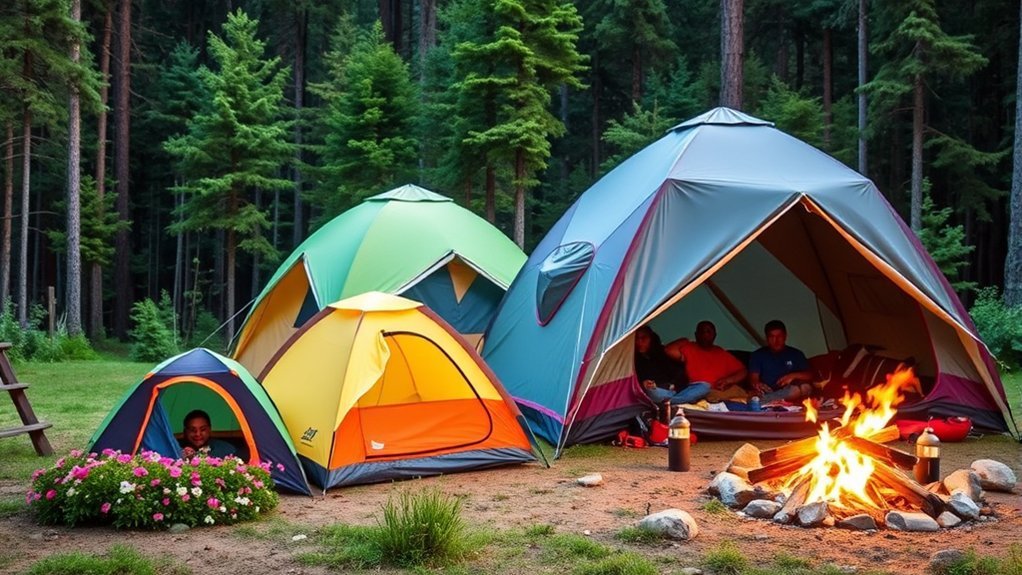
When selecting a tent, understanding sizes and capacities is essential for guaranteeing a comfortable camping experience. Tent capacity ratings typically indicate the number of people a tent can accommodate, like 1-person or 4-person tents. However, it’s wise to choose a tent rated for at least two more people than your actual group size. This guarantees extra space for gear and personal comfort.
Allocate 20-30 square feet per person for sleeping arrangements, with a more spacious setup requiring 30-40 square feet. For instance, a 4-person tent, averaging 60-70 square feet, is better suited for 2-3 people for comfort. Also, consider tent shape; dome tents are compact and lightweight, while cabin tents offer more vertical space and room for movement. By factoring in these elements, you can select a tent that aligns with your needs and enhances your sense of liberation in the great outdoors.
Factors Influencing Tent Size Selection
Selecting the right tent size involves several key factors beyond just guest count. While a general guideline suggests 20 square feet per person for comfortable sleeping arrangements, you also need to account for additional space. Consider your seating arrangements: theater seating maximizes capacity but requires less space, while banquet seating demands more room for tables and movement.
Don’t forget about guest comfort—ensuring pathways for catering and service access is essential. If you’re planning for larger gatherings, like 300+ guests, substantial tent sizes, such as a 40×100 tent, become necessary to accommodate seating, food, and entertainment.
Lastly, evaluate the surface type where the tent will be set up. Stability is important, and any obstacles at the venue can impact your tent’s placement. By considering these factors, you can select the perfect tent size for a successful event.
How to Accurately Measure Tent Dimensions
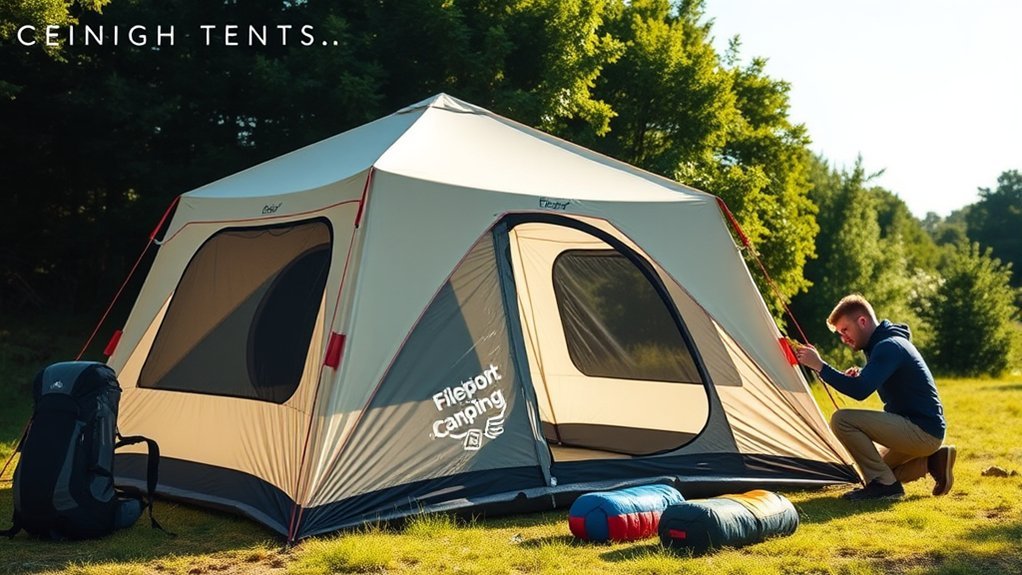
Accurately measuring tent dimensions is essential for guaranteeing your event runs smoothly and comfortably. Start by determining the tent shape, as this affects your layout. Use measurement techniques to find the length and width, then multiply these figures to calculate the total square footage. Don’t forget to assess peak height and headroom to make sure everyone can move freely, especially taller guests.
Consider additional storage areas and vestibules when planning your layout to enhance functionality. Creating a mock-up of the tent layout can be particularly useful; it helps visualize the space and strategize guest seating and movement pathways effectively. By paying attention to these details, you’ll create an inviting atmosphere that accommodates your guests’ needs while maximizing the tent’s potential. These careful measurements will ultimately lead to a more enjoyable experience for everyone involved.
Tips for Choosing the Ideal Tent Size
Choosing the right tent size is crucial for creating a comfortable environment at your event. Start by considering your ideal capacity; it’s often best to select a tent that accommodates two more people than the rated capacity. Aim for approximately 20-30 square feet per person to guarantee ample space for sleeping arrangements and gear storage. Evaluate your tent layout based on the type of seating you need—if you’re going for theater-style seating, you’ll maximize guest capacity, while banquet seating will require more room per person. For larger gatherings, like 200 guests, a 40×40 tent works well for cocktail setups, whereas a 40×60 tent is perfect for sit-down dinners. Finally, don’t forget to allocate additional space for catering services, entertainment areas, and pathways, as these considerations are crucial for enhancing guest comfort and allowing for easy movement within the tent.
Making the Final Decision for the Perfect Tent
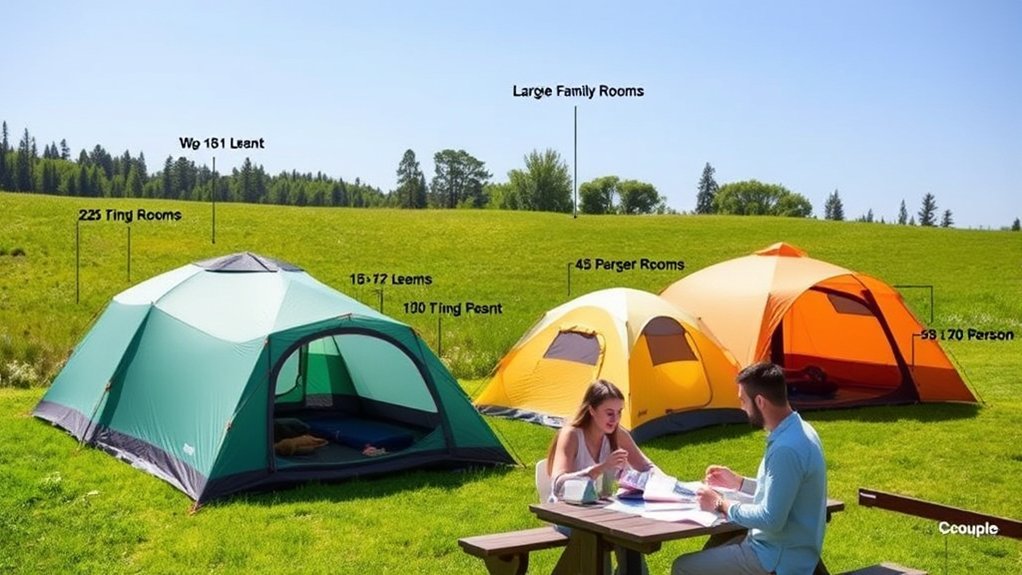
After you’ve evaluated your options and narrowed down your tent size, it’s time to make the final decision that best fits your needs. Consider these key factors:
- Tent Capacity: Opt for a capacity two less than the rated size for comfort, such as a 4-person tent for 2 campers.
- Sleeping Arrangements: Air mattresses take up more space, so factor that into your size choice.
- Multiple Tents: For larger groups, consider smaller tents for enhanced privacy and flexible arrangements.
- Tent Height and Layout: Choose between cabin-style tents for standing room and dome tents for a compact design.
Lastly, reflect on the tent materials and ascertain it’s suitable for your planned weather conditions. A three-season tent works for most situations, while colder climates may need specialized insulation features. Make your decision with these considerations in mind for a comfortable camping experience.
Frequently Asked Questions
What Are the Best Tent Brands for Larger Groups?
For big group tents, you’ll want to evaluate top tent brands like Coleman, REI, and Big Agnes. They offer spacious options with durability and comfort, ensuring your larger gatherings are enjoyable and hassle-free.
Can I Fit a Dog Inside My Tent Comfortably?
Your dog can fit comfortably inside your tent, especially if you plan for pet camping essentials. Imagine your furry friend curled up beside you, enjoying cozy warmth during your outdoor adventure. Prioritize dog tent comfort for ultimate relaxation.
How Do Weather Conditions Affect Tent Size Choice?
Weather conditions affect your tent size choice considerably. For rain protection, choose a taut, larger tent that sheds water effectively. For wind resistance, opt for a lower-profile design to minimize wind impact and enhance stability.
Are There Specific Tents for Different Terrains?
You wouldn’t want a lightweight tent on rocky terrain, right? For stability, choose tents with terrain suitability and enhanced durability, ensuring you conquer mountains or beaches without turning into a soggy mess of fabric and regret!
What Additional Gear Should I Consider When Selecting Tent Size?
When selecting tent size, consider your sleeping arrangements and gear storage needs. Make certain the tent accommodates sleeping bags, mats, and personal items, allowing for comfort and easy access while maximizing available space for movement.
Conclusion
So, whether you’re planning a cozy weekend getaway or hosting a festival that could rival a small town, picking the right tent size is essential. After all, cramming 20 people into a two-person tent might make for a great reality show, but it won’t do much for your comfort. Remember, the perfect tent isn’t just about fitting bodies; it’s about creating a space where you can avoid claustrophobia—and perhaps some regrettable life choices. Choose wisely!