


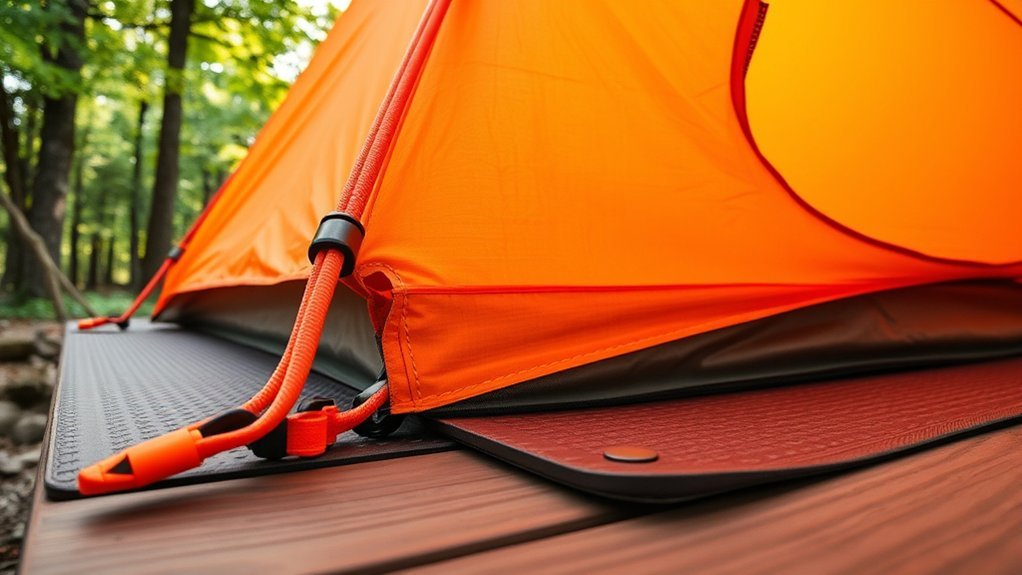
To stop your tent floor from slipping on a platform, choose a level site and use non-slip materials like anti-slip rug tape or rubber mesh underneath. Secure corners with deep stakes or weights and utilize a lightweight groundsheet for better friction. Implement weight distribution by placing heavier gear at the edges, and maintain proper ventilation to reduce moisture buildup. Regular inspections of the tent will guarantee its stability. Discover additional effective techniques for a more secure setup ahead.
Understand the Importance of Tent Stability

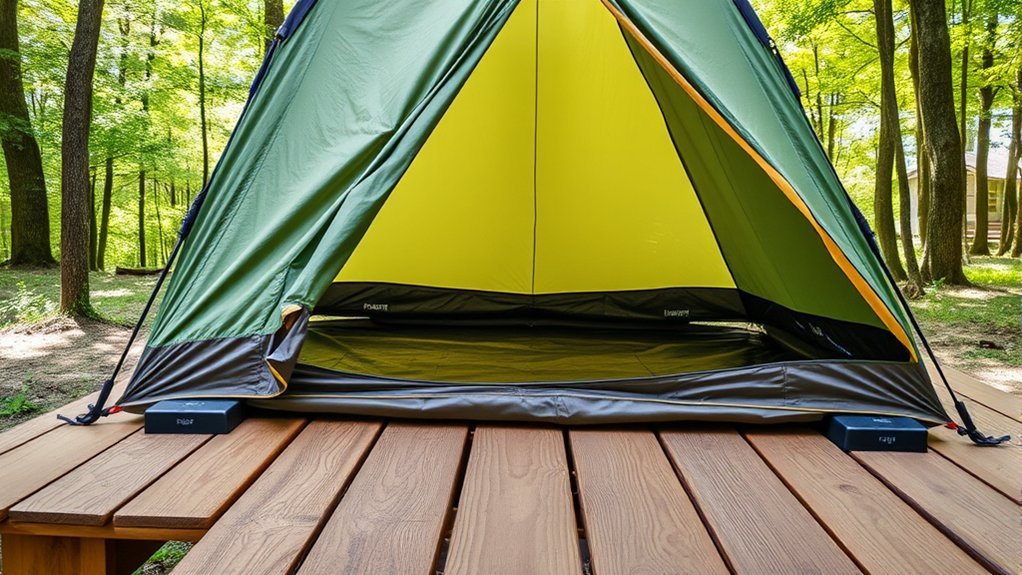
When you’re camping, ensuring your tent is stable is essential for a good night’s sleep and safety. A slipping tent floor can disrupt your rest and increase the risk of falls or injuries. The friction between your tent materials and the ground plays a significant role; smooth surfaces, like wood or plastic, reduce grip and stability. To enhance your tent’s stability, distribute your camping gear wisely. Concentrating heavier items near the center helps secure the tent floor.
Utilizing a groundsheet or tent footprint adds an extra layer of friction while protecting your tent floor from wear. Regular maintenance and cleaning are important too; dirt and debris can diminish grip and compromise stability. By prioritizing these factors, you maintain a secure and comfortable camping environment, allowing you to fully enjoy your outdoor experience while embracing the freedom of nature.
Choose the Right Tent Site
When you choose a tent site, focus on finding a flat and level surface to minimize the risk of slipping. Make certain to clear the area of debris and obstacles that could compromise the tent’s stability. This attention to detail will enhance your overall camping experience and guarantee a secure setup.
Level Ground Selection
Selecting a tent site on level ground is essential for preventing slipping and ensuring stability. Look for flat areas where the surface texture is uniform, free from rocks, tree roots, and debris. Setting up on uneven ground can lead to an unstable tent angle, worsening movement and discomfort. Avoid areas near slopes or depressions where rainwater might pool, as this can compromise your tent’s integrity. Take the time to clear away sticks, pebbles, and acorns; this not only protects the tent floor but also enhances your overall experience. If you encounter small bumps, level them out to greatly improve stability. A well-chosen site is your first step toward a secure, enjoyable camping experience.
Avoid Debris and Obstacles
To guarantee your tent remains stable and secure, avoid setting it up in areas cluttered with debris and obstacles. Prioritize debris removal and maintain obstacle awareness to create a solid foundation. Here’s what to look for:
- Flat, even surface – Choose a level area to minimize shifting.
- Sharp objects – Clear away any rocks, tree roots, or items that could puncture the tent floor.
- Natural drainage – Identify drainage paths to prevent rain pooling, which can destabilize your setup.
- Clean the site – Remove pebbles, sticks, and acorns to confirm a stable, clean surface.
Use Non-Slip Materials Underneath
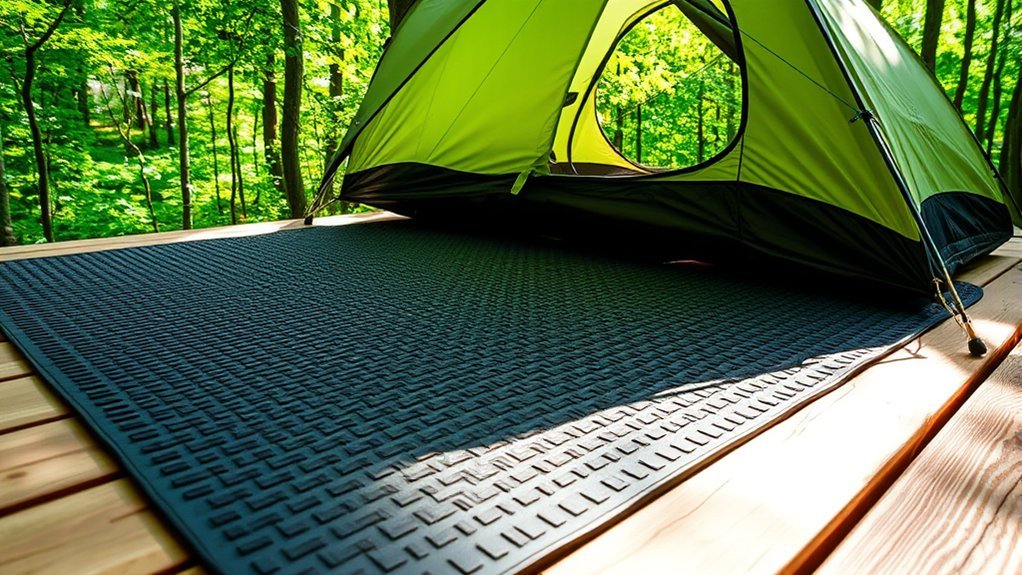
Using non-slip materials underneath your tent floor can greatly enhance stability and prevent unwanted movement during your outdoor activities. Consider various non-slip options like anti-slip rug tape, which you can strategically place to improve grip enhancement on the platform. Non-slip mats designed for car dashboards or rubber mesh materials from retailers like IKEA can also provide effective traction without adding significant weight.
You might also apply a thin layer of silicone seam sealant in small dots on the tent floor, increasing friction and anchoring your setup. Closed cell foam pads or lightweight non-slip underlays can further improve stability while offering insulation from the ground.
Don’t forget to regularly inspect and replace these materials, as they can wear down and lose effectiveness over time. By incorporating these non-slip materials, you’ll create a safer and more enjoyable environment for your outdoor adventures.
Secure Tent Corners Effectively
Although securing tent corners effectively is essential for stability, it often gets overlooked in the setup process. To guarantee your tent stays put, follow these practical steps:
Securing tent corners is crucial for stability yet often neglected; follow these steps to ensure your tent stays put.
- Use tent stakes: Drive them deep into the ground or platform for maximum stability.
- Employ tie-down straps: Attach them to tent corners and anchor to sturdy objects to prevent movement.
- Add corner weights: Use sandbags or rocks to hold down corners, especially on flat platforms where stakes may not suffice.
- Utilize adhesive non-slip mats: Place these under tent corners on smooth surfaces to increase friction and reduce slippage.
Regularly check and adjust the tension of the tent corners throughout your stay, particularly in windy conditions. By implementing these strategies, you’ll enhance your tent’s stability, allowing for a more liberating outdoor experience.
Utilize a Groundsheet or Tent Footprint
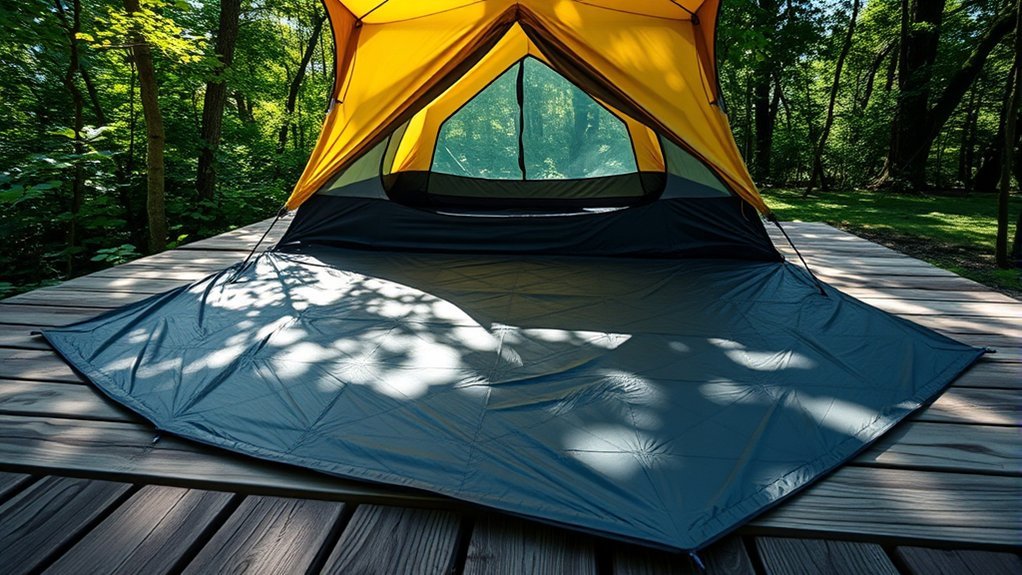
Securing tent corners lays the foundation for stability, but adding a groundsheet or tent footprint enhances that stability further. A groundsheet acts as a protective layer between your tent floor and the platform, greatly reducing slippage and providing added grip. It’s essential to select the right groundsheet materials, which are available in various sizes to match your tent’s dimensions and the platform’s surface.
Using a tent footprint also helps prevent moisture and condensation from seeping in, enhancing your comfort during camping. Additionally, it protects your tent floor from sharp objects or rough surfaces, minimizing damage and punctures. To maximize these tent footprint benefits, make sure you maintain and clean your groundsheet regularly. This simple step can extend its lifespan, guaranteeing continued effectiveness in preventing slippage. By integrating a groundsheet, you create a stable, comfortable environment that allows you to enjoy your camping experience fully.
Implement Weight Distribution Techniques
Weight distribution plays an essential role in preventing your tent floor from slipping on various surfaces. By ensuring even weight placement, you can greatly enhance stability. Here are four effective techniques to implement:
- Anchor Heavier Gear: Position heavier items, like gear and supplies, at the corners or edges of the tent to create a solid base.
- Layer for Friction: Use a lightweight groundsheet or tarp beneath your tent to increase friction and minimize slippage on smooth platforms.
- Inflatable & Foam Pads: Consider utilizing inflatable pads with superior grip or closed-cell foam pads for extra support and reduced movement when weight is applied.
- Regular Adjustments: Consistently check and adjust your gear arrangement, ensuring heavier items remain strategically placed to maintain floor stability throughout the night.
Maintain Proper Tent Ventilation
To prevent slippage on your tent floor, maintaining proper ventilation is essential. Good airflow reduces condensation buildup, keeping the interior dry and enhancing your overall comfort. Make it a habit to open vents and doors during dry weather to improve airflow and minimize moisture levels.
Importance of Airflow
While you may not think about it often, maintaining proper ventilation in your tent is essential for preventing slippage on a platform. Here’s how good airflow helps:
- Moisture Reduction: It decreases humidity levels, preventing the tent floor from weakening its grip on the platform.
- Minimized Condensation: With adequate airflow, you reduce the chance of wet conditions that can lead to slippage.
- Mold and Mildew Prevention: Proper ventilation limits the growth of unwanted pathogens, maintaining the integrity of your tent floor.
- Enhanced Comfort: Regularly adjusting vents and doors allows for better air circulation, ensuring your tent remains stable and secure.
Preventing Condensation Buildup
Proper ventilation is essential for preventing condensation buildup inside your tent, especially in cooler conditions where moisture can easily accumulate. To achieve effective humidity control, always open vents or doors to promote air circulation. This reduces moisture levels, preventing condensation on surfaces. Using a groundsheet is beneficial, but it won’t suffice without proper airflow. Keep the interior organized and dry by storing wet gear outside or in designated areas; this considerably aids moisture management. Additionally, regularly check and adjust your ventilation options based on weather conditions. Close vents during rain but guarantee airflow when it’s dry. By maintaining these practices, you create a balanced environment that enhances your camping experience and keeps condensation at bay.
Enhancing Overall Comfort
Maintaining adequate ventilation in your tent not only prevents condensation but also greatly enhances your overall comfort during your camping trip. Proper airflow contributes to improved sleep quality and effective temperature control, essential for a restful night. Here are four practical tips to guarantee ideal ventilation:
- Utilize Openings: Fully unzip doors and vents to promote cross-ventilation.
- Mesh Panels: Choose a tent with mesh panels for airflow while keeping insects out.
- Airing Out: Regularly air out your tent during the day by unzipping windows to let fresh air circulate.
- Monitor Moisture: Keep an eye on humidity levels to prevent mold and mildew growth, protecting your gear and maintaining a comfortable environment.
With these steps, you’ll enjoy a more liberating camping experience.
Regularly Inspect and Clean the Tent
To guarantee your tent floor remains stable and secure, it’s essential to regularly inspect and clean it after each camping trip. Start with a thorough floor inspection, looking for signs of wear, holes, or tears that could lead to slipping or instability. Pay special attention to high-wear areas, like near entrances and where gear is placed frequently. Next, clean the floor using a soft brush or damp cloth to eliminate dirt and debris that may affect grip. Always verify the tent floor is moisture-free, as dampness can exacerbate slippage on platforms. After cleaning, store your tent properly—avoid placing heavy objects on top to prevent creases or damage that compromise grip. By prioritizing tent maintenance through regular inspections and cleaning, you enhance stability and verify a more enjoyable camping experience.
Experiment With Adhesive Solutions
While experimenting with adhesive solutions can greatly improve the stability of your tent, choosing the right products is crucial for effectiveness. Here are some adhesive types you can try:
- Non-slip rug tape: Apply this to the bottom of your tent floor for enhanced grip on the platform.
- Strong double-sided adhesive tape: This option secures the tent floor directly to the platform, providing a stable base.
- Velcro tape: Use this by applying three stripes on the tent floor to anchor it while allowing for easy removal.
- Surface preparation: Always clean the platform before tape application to guarantee ideal adhesion.
Regularly check the condition of your adhesive solutions during camping trips, as they may wear off and require reapplication. Taking these steps will help you maintain a secure and stable tent setup.
Frequently Asked Questions
Can I Use Carpet Instead of Specialized Non-Slip Materials?
Yes, you can use carpet instead of specialized non-slip materials, but consider carpet durability and maintenance. Verify the carpet’s grip is adequate for your needs, and be prepared for regular upkeep to maintain safety.
How Do I Know if My Platform Is Too Slippery?
You’ll know your platform’s too slippery if tents wobble, or you notice frequent movements. Check the materials used; smooth surfaces lack grip. Enhance tent stability by selecting textured or specialized materials for better traction.
Is It Safe to Camp on a Wooden Platform?
Yes, it’s safe to camp on a wooden platform. Platforms provide advantages like stability and elevation, enhancing camping safety. Guarantee proper maintenance and check for hazards to maximize your camping experience and freedom in nature.
What Are the Best Weights to Use for Securing Corners?
For securing corners, sandbags offer flexibility while water jugs provide stability. You’ll find both effective, but choose based on your setup. Experiment with weights to guarantee your tent stays grounded during windy conditions.
Can Wind Affect the Stability of My Tent on a Platform?
Yes, wind can greatly affect your tent stability. Strong gusts may create pressure imbalances, leading to movement or collapse. Secure your tent properly and consider windbreaks to enhance stability and withstand harsh conditions effectively.
Conclusion
By taking these steps, you can create a stable oasis amidst nature’s chaos. Picture your tent standing firm, anchored against the wind, its corners securely fastened, and a non-slip barrier beneath it. As you step inside, the ground feels solid, allowing you to relax and enjoy the evening under the stars without worry. With proper preparation and attention to detail, your platform tent experience can be both safe and enjoyable, transforming your outdoor adventure into a true escape.