


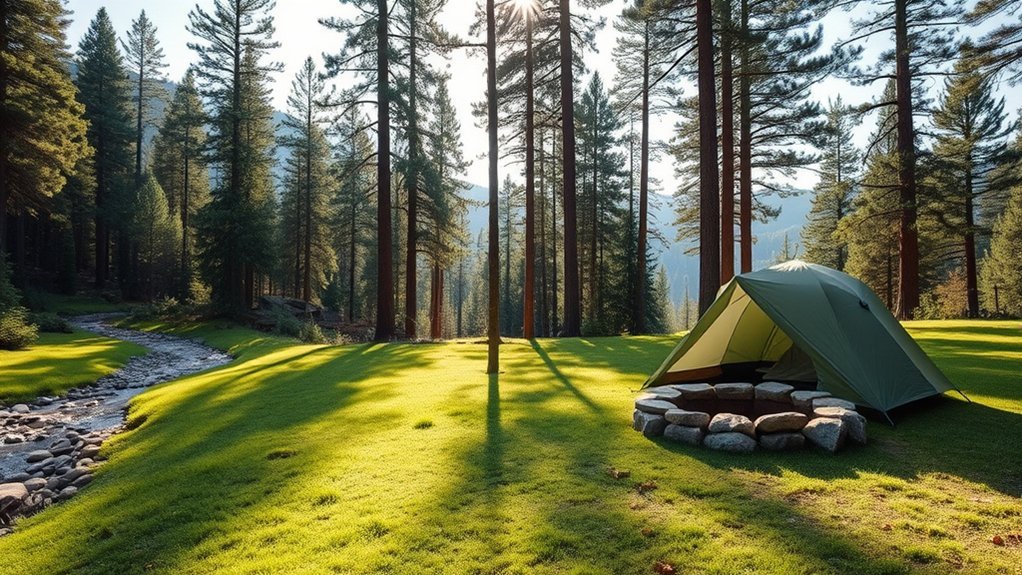
When choosing a campsite for tent camping, prioritize safety and comfort by evaluating the terrain and environment. Look for level, dry ground free of sharp objects and avoid low-lying areas prone to flooding. Stay at least 200 feet from water sources to minimize wildlife encounters. Seek natural windbreaks like trees for added shelter and check for overhead hazards. By following these tips, you’ll enhance your camping experience and get ready to discover even more essential site selection strategies.
Understanding the Basics of Tent Camping

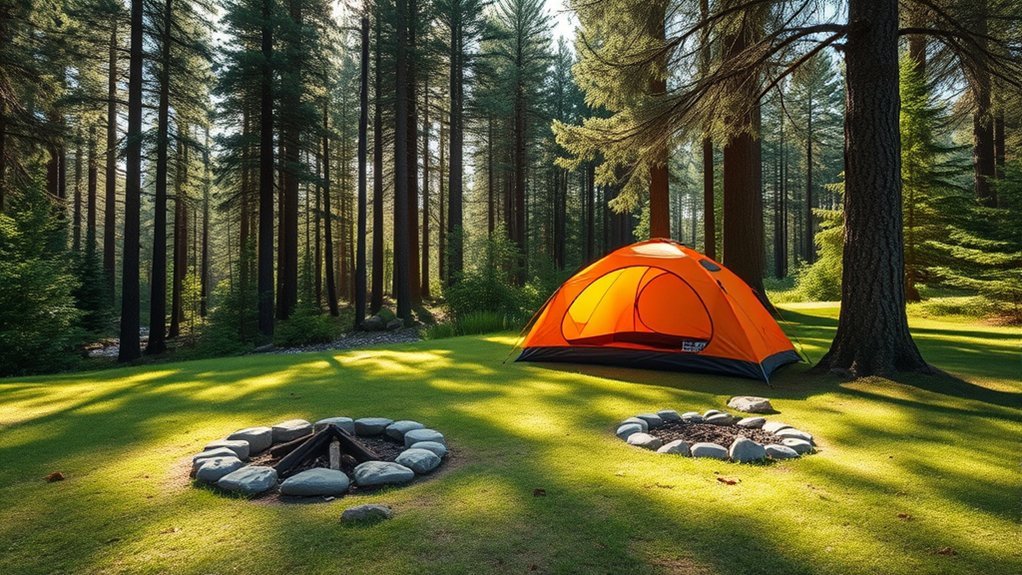
When you venture into tent camping, choosing the right campsite is essential for a memorable experience. First off, make certain to look for level ground; this guarantees a comfortable night’s sleep. Aim for a spot at least 200 feet from water sources to reduce the risk of flooding and wildlife encounters. Natural windbreaks, like trees, can provide shelter from the elements.
For tent camping essentials, a ground tarp is a must, as it protects your tent from moisture and extends its life. Additionally, select a camping surface that’s flat and free from sharp objects; grass or packed earth are ideal. Always secure your food to keep wildlife at bay and follow Leave No Trace principles to minimize your impact. Finally, research local regulations for camping spots in national or state parks to guarantee a worry-free adventure. With these camping gear recommendations, you’re well on your way to a successful trip!
Different Types of Campgrounds
When planning your tent camping adventure, understanding the different types of campgrounds can help you choose the best fit for your needs. Public campgrounds offer essential amenities and are perfect for families, while private campgrounds often provide extra perks like pools and recreational activities. Knowing what each type has to offer will make your camping experience more enjoyable and tailored to your preferences.
Public Campgrounds Overview
Public campgrounds offer a fantastic way to immerse yourself in nature while enjoying essential amenities that enhance your camping experience. Typically found within national or state parks, these campgrounds provide restrooms, fire pits, and picnic tables, making your stay comfortable. You’ll find various campsite options, including tent sites, RV sites, and group areas, catering to different preferences. Many public campgrounds are conveniently located near lakes, rivers, and hiking trails, giving you easy access to outdoor activities. During peak seasons, be sure to check the reservation policies, as securing a spot in advance is vital. With affordable fees or even free options on public lands, public campgrounds are a budget-friendly choice for nature lovers seeking liberation in the great outdoors.
Private Campgrounds Benefits
Although you might think of public campgrounds as your only option, private campgrounds offer a wealth of benefits that can enhance your camping experience. With a variety of private campground amenities, you’ll find comfort in facilities like showers and Wi-Fi. Many also host organized events, such as guided hikes and communal bonfires, building a sense of community among fellow campers.
| Benefits | Examples | Ideal For |
|---|---|---|
| Enhanced Comfort | Cabins, Wi-Fi | Families, Convenience |
| Organized Activities | Fishing excursions | Social Campers |
| Advanced Reservations | Secured spots | Peak Season Travelers |
Private campgrounds often cater to specific interests, ensuring a memorable and tailored adventure.
What to Look for in a Tent Site
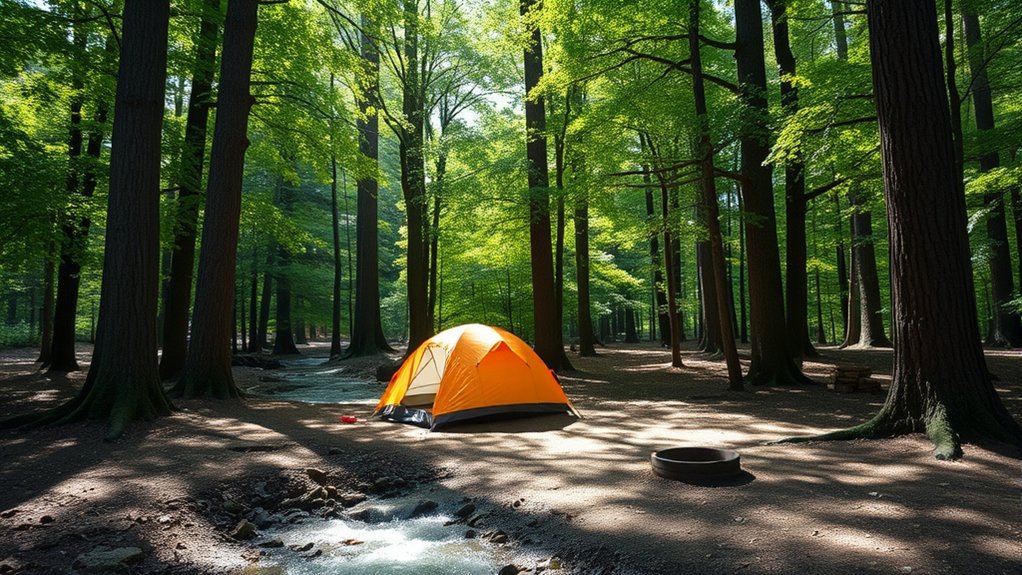
When choosing a tent site, it’s essential to take into account the ground surface quality, ensuring it’s level and dry for a comfortable night’s sleep. You also want to be aware of any overhead hazards like dead branches that could pose risks. Finally, keep your distance from water sources to prevent flooding and reduce pesky insects.
Ground Surface Quality
Finding the right ground surface for your tent can make all the difference in your camping experience. Look for flat and level areas to guarantee a comfortable sleep; uneven ground can lead to rolling and disrupted rest. Avoid rocky or root-covered spots, as these can damage your tent floor and create discomfort. Instead, aim for soft yet firm ground, like well-packed dirt or grass, which offers stability and good drainage, reducing water pooling during rain. Stay clear of low spots prone to flooding, checking for damp soil or erosion. To enhance comfort, consider using a ground tarp or footprint beneath your tent, providing moisture protection and a barrier against sharp objects. Happy camping!
Overhead Hazards Awareness
After securing a solid ground surface for your tent, the next step is to assess the overhead hazards that could impact your safety and comfort. Look out for dead trees or branches, commonly known as “widow makers,” that may fall unexpectedly. If you’re camping in mountainous areas, steer clear of spots prone to falling rocks or avalanches. Also, keep your distance from natural features like beehives and animal dens, which can attract unwanted pests or stings. Inspect the area for signs of activity, such as wasp nests or ant hills, to avoid surprises. Finally, position your tent away from tree canopies to prevent water pooling and debris during heavy rain. These safety precautions will help create a worry-free camping experience.
Proximity to Water
Choosing a campsite near water can enhance your camping experience, but it’s essential to strike the right balance. Aim to set up your tent at least 200 feet from lakes, rivers, and streams to guarantee water source safety and protect local wildlife habitats. Here’s what to take into account:
| Factor | Recommendation | Reason |
|---|---|---|
| Distance from Water | At least 200 feet | Prevent flooding & wildlife encounters |
| Natural Barriers | Trees or bushes | Minimize insect attraction |
| Terrain | Avoid low-lying areas | Prevent water collection |
| Recreational Access | Choose access points wisely | Enjoy activities while staying safe |
Terrain Considerations
When you’re setting up camp, the terrain plays a crucial role in your comfort and safety. Look for flat and level surfaces to pitch your tent; uneven ground can cause discomfort and might even damage your tent fabric. Steer clear of rocky or root-covered areas, as they can disrupt your sleep and increase the risk of puncturing your tent. Aim for soft yet firm ground, like hard-packed dirt or grass, to guarantee stability during your stay.
Also, avoid low spots where water can collect; this will help you maintain a dry sleeping environment and steer clear of flooding. Before you commit to a spot, check for signs of previous flooding, like damp soil or washed-out areas, to protect yourself from potential hazards. By considering these terrain types in your camping landscapes, you’ll enhance both your comfort and safety in the great outdoors.
Safety and Environmental Concerns
Setting up your campsite isn’t just about finding the right terrain; safety and environmental considerations are equally important. Prioritize wildlife awareness by keeping a safe distance of at least 200 feet from water sources, which helps protect local habitats and minimizes insect attraction. Familiarize yourself with the wildlife in the area and secure food storage to avoid dangerous encounters.
To guarantee environmental preservation, follow Leave No Trace principles. Here’s a quick reference table:
| Action | Purpose | Benefit |
|---|---|---|
| Maintain distance | Protect habitats | Minimize insect attraction |
| Secure food storage | Prevent wildlife encounters | Keep you safe |
| Stick to durable surfaces | Preserve natural areas | Reduce environmental impact |
| Inspect for wildlife signs | Assess hazards | Make informed decisions |
Additional Considerations
While selecting a campsite, it’s essential to keep additional considerations in mind to guarantee a safe and enjoyable experience. First, always check for overhead hazards like dead trees and loose branches; these can pose serious risks during your stay. Next, consider wildlife—choose locations away from animal dens and insect hotspots to minimize encounters. Assess ground conditions by opting for flat, dry areas free of sharp objects and past flooding signs to secure a comfortable setup.
Be mindful of weather patterns; select a site with natural windbreaks and suitable sun exposure based on the season to enhance comfort. Additionally, adapt your site selection when camping in diverse environments—avoid risky areas like dry washes in deserts or exposed ridgelines in mountains. Finally, remember campsite etiquette by minimizing your environmental impact, respecting nature, and leaving no trace to preserve these beautiful spaces for future adventurers. Happy camping!
Find the Perfect Tent Site at Lamb City Campground!
Finding the perfect tent site at Lamb City Campground can greatly enhance your camping experience, so how do you guarantee you’ve chosen wisely? Follow these tips for ideal tent placement while ensuring wildlife protection:
- Choose Level Ground: Pitch your tent on a flat area to avoid rolling during the night and enhance comfort.
- Distance from Water: Stay at least 200 feet away from water sources to protect local wildlife habitats and keep pesky insects at bay.
- Natural Windbreaks: Look for trees or bushes nearby to shield your tent from strong winds and rain.
- Inspect for Hazards: Be mindful of dead branches overhead and nearby animal dens that could pose risks.
Frequently Asked Questions
What Should I Pack for a Comfortable Camping Experience?
For a comfortable camping experience, pack quality sleeping gear like a cozy sleeping bag and sleeping pad, along with essential personal items such as toiletries, a flashlight, and extra clothing. Comfort’s key to enjoying nature!
How Can I Prevent Insect Bites While Camping?
Preventing insect bites while camping is like wearing armor against a swarm. Use insect repellent options like DEET or natural deterrents such as essential oils. Keep your campsite clean and wear protective clothing to stay bite-free.
What Are the Best Times of Year for Camping?
Spring camping offers vibrant blooms and mild weather, while fall camping showcases stunning foliage and crisp air. Both seasons invite you to explore nature’s beauty, so embrace the adventure and enjoy the unique experiences each time brings!
How Do I Set up My Tent Correctly?
To set up your tent correctly, prioritize proper placement. Perfect your ground preparation by clearing debris, then position your tent with the entrance facing away from wind. Secure stakes, ensuring stability and shelter from storms.
What Cooking Gear Is Essential for Tent Camping?
You’ll need portable stoves for efficient cooking techniques, along with pots, pans, utensils, and a cooler for food storage. Don’t forget a lightweight cutting board and biodegradable soap for easy cleanup while enjoying nature’s beauty!
Conclusion
Choosing the right campsite for your tent is like finding the perfect anchor in a stormy sea—it keeps you grounded and safe. By considering terrain, safety, and comfort, you can create a memorable outdoor experience. Remember, a well-chosen site not only protects you from the elements but also enhances your connection with nature. So, as you begin your next adventure, let your campsite be your sanctuary, where every star above reminds you of the beauty around you.