


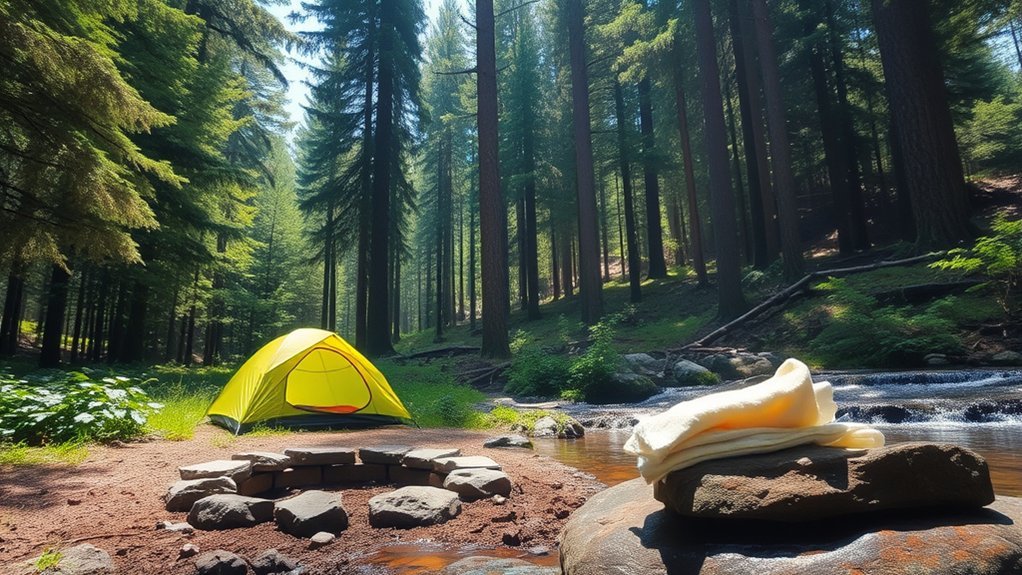
When tent camping, plan ahead by checking weather and securing permits. Choose durable surfaces for your campsite to minimize impact, and always pack out your trash and leftover food. Respect wildlife by observing from a distance and securing food in bear-proof containers. Keep campfires small and only use established fire rings, making sure to extinguish them completely. By following these tips, you can enjoy nature responsibly and discover even more ways to protect the environment along the way.
Plan Ahead and Prepare

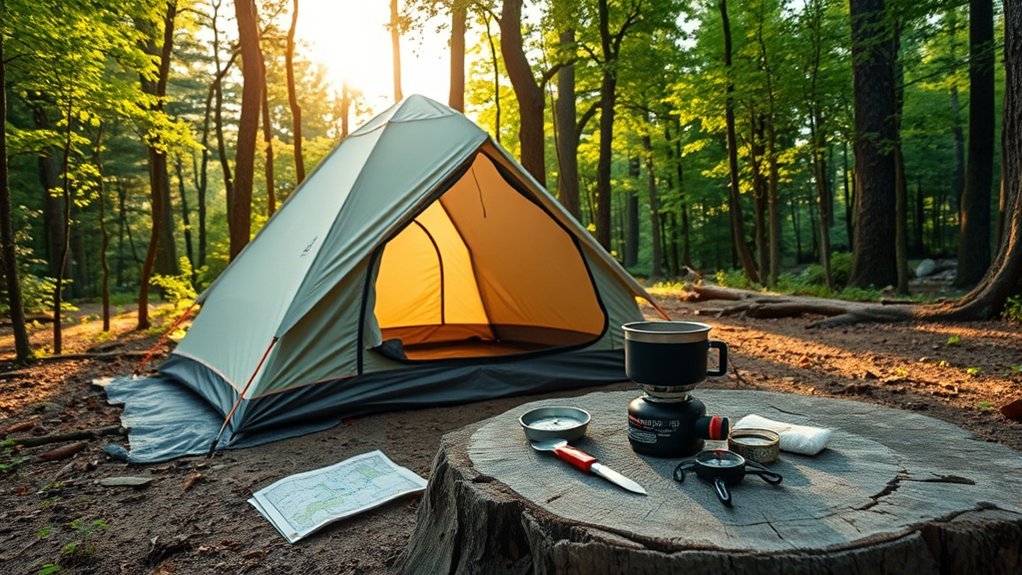
When you’re planning a camping trip, taking the time to prepare can make all the difference between a mediocre outing and an unforgettable adventure. Start by researching the weather conditions at your destination; knowing what to expect helps you pack the right gear, from tents to sleeping bags. Don’t forget to check the terrain and any regulations, as this can dramatically affect your experience.
Obtain necessary permits or reservations well in advance to avoid any hiccups. Emergency preparedness is essential, so develop a contingency plan, including extra food, water, and a detailed map. Make sure you have a first aid kit tailored to your specific needs. Finally, consider scheduling your trip during off-peak times; this not only reduces your environmental impact but also enhances your experience by steering clear of crowded areas. With proper planning, you’ll liberate yourself to fully enjoy the wonders of nature.
Travel and Camp on Durable Surfaces
When you’re camping, always aim to set up your tent on established campsites or durable surfaces like gravel and dry grass. This helps protect fragile vegetation and keeps the area intact for future visitors. Plus, remember to camp at least 200 feet away from lakes and streams to safeguard these essential ecosystems.
Choose Established Campsites
Choosing established campsites is essential for minimizing your impact on the environment while enjoying the great outdoors. When it comes to campsite selection, always opt for locations that have been previously used. This practice helps prevent the creation of new disturbances in undisturbed areas, preserving fragile ecosystems. Camp at least 200 feet away from lakes and streams to protect riparian zones and guarantee wildlife can access water sources. By sticking to established trails and campsites, you reduce trail braiding and erosion, maintaining the integrity of the natural landscape. Prioritize durable surfaces like rock, gravel, or dry grass for your tent, as this further minimizes your environmental impact and promotes sustainability in popular areas.
Protect Fragile Vegetation
To protect fragile vegetation while camping, it’s essential to prioritize durable surfaces for both travel and tent placement. Always camp at least 200 feet away from lakes, streams, and trails. This distance not only supports plant protection but also allows wildlife access routes. Stick to established trails and campsites to minimize soil erosion and prevent damage to delicate ecosystems. Choose surfaces like rock, gravel, or dry grasses to avoid trampling fragile plants. In undisturbed areas, disperse your use by selecting out-of-the-way sites instead of creating new ones, which can lead to habitat degradation. Spread out tents and kitchen areas to minimize concentrated wear, allowing the environment to recover and thrive. By following these tips, you contribute to ecosystem preservation and enjoy nature responsibly.
Stay Away From Water
Camping in natural settings is a wonderful way to connect with the outdoors, but it’s important to remember that staying away from water sources is essential for both your experience and the environment. Always pitch your tent at least 200 feet from lakes and streams to protect fragile riparian areas and avoid water contamination. By choosing durable surfaces like gravel, sand, or dry grass, you minimize soil degradation and help preserve the ecosystem. This practice not only safeguards wildlife habitats but also enhances your camping experience by creating a serene environment. Remember, camping away from water sources allows wildlife to thrive without disturbance, ensuring both riparian protection and a more enjoyable adventure for you. Embrace these principles for a liberating outdoor experience!
Dispose of Waste Properly
When you’re out in nature, properly disposing of waste is essential for maintaining a clean environment and protecting wildlife. Effective waste management starts with packing out all trash, leftover food, and personal items. This prevents attracting animals and guarantees a pristine landscape. When restroom facilities aren’t available, bury human waste 6-8 inches deep and at least 200 feet from water sources to minimize contamination. Always use restroom facilities when possible, and remember to pack out toilet paper and hygiene products, as they don’t break down easily in the wild.
Dispose of dishwater by scattering it at least 200 feet away from water sources to protect aquatic ecosystems. Finally, be mindful of food storage practices. Keep all food and scented items secured to avoid enticing wildlife, which can lead to dangerous encounters. By following these sanitation practices, you contribute to a healthier environment for everyone.
Leave What You Find
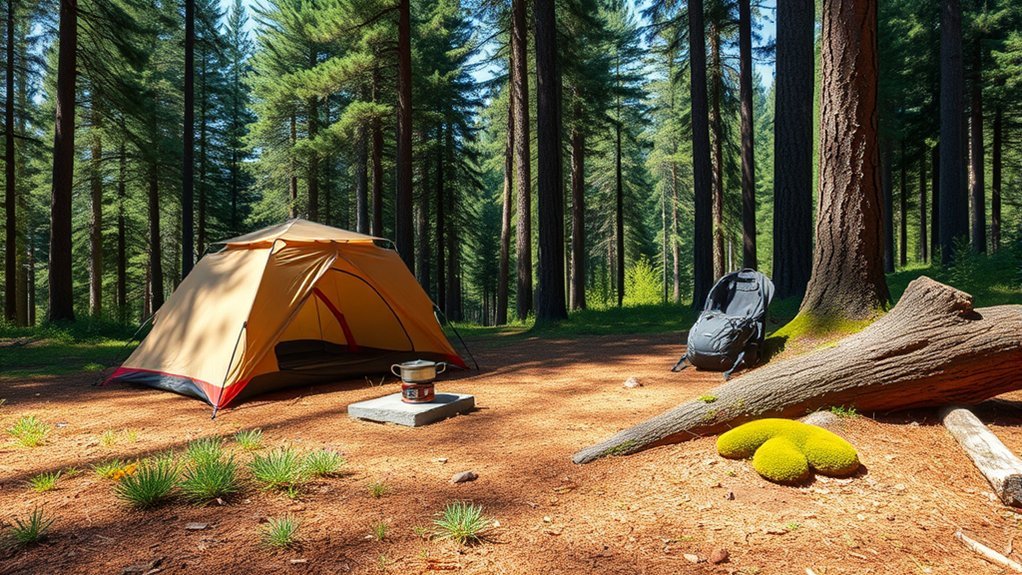
Leaving what you find in nature not only preserves the beauty of the environment but also protects its delicate ecosystems. When you’re out camping, remember to leave natural features like rocks, plants, and fossils in their original spots. This helps maintain ecosystem integrity and keeps the area looking pristine for future visitors. Avoid disturbing historical or archaeological sites; removing artifacts can harm cultural heritage and disrupt local history.
To guarantee you don’t introduce non-native species, never bring in soil, plants, or seeds that could affect local flora and fauna. Take only photographs and leave only footprints, keeping the landscape unchanged. If you spot litter left by others, pack it out with you. By doing this, you contribute to historical preservation and inspire others to respect the environment. Your actions can empower others to cherish and protect the natural world we all love.
Minimize Campfire Impacts
Protecting the natural environment goes hand in hand with how you manage campfires. Start by using established fire rings; this keeps the fire contained and minimizes damage to the surrounding area. Keep your campfires small and manageable, using only dead and downed wood for fuel. This approach not only supports campfire safety but also lessens your environmental footprint. Before you leave, always douse the flames thoroughly with water, stirring the ashes until they’re cool to the touch.
Don’t forget to check local regulations for fire bans, especially during dry seasons when risks are heightened. Clear the area around your fire pit of flammable materials to prevent accidents. By practicing responsible firewood sourcing and adhering to these tips, you can enjoy the warmth of a campfire while ensuring the beauty of nature remains intact for future adventurers.
Respect Wildlife
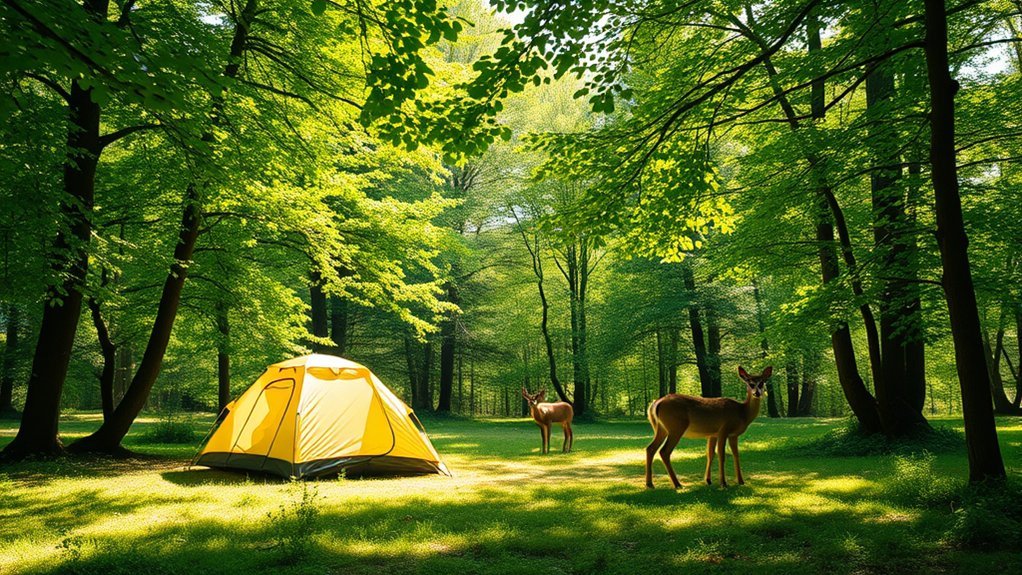
When camping in the wild, it’s essential to observe wildlife from a distance to keep both you and the animals safe. Make sure to store your food securely in bear-proof containers or hang it high to avoid attracting curious critters. By respecting their space and habits, you’ll help maintain a healthy ecosystem for everyone.
Observe From a Distance
Understanding the importance of observing wildlife from a distance not only enhances your camping experience but also protects the animals and their habitats. Ethical viewing is essential for wildlife observation; using binoculars or cameras allows you to enjoy nature without causing stress to the creatures you admire. Maintain at least a 100-yard distance from large mammals like bears and moose, respecting their space and ensuring your safety. Remember, feeding wildlife can create dependency on human food, disrupting their natural foraging habits. By securing your food properly—using bear-proof containers or hanging methods—you help prevent unwanted encounters. Embrace the beauty of the wild while ensuring that both you and the animals thrive in harmony. Respectful observation is key to responsible camping.
Secure Food Storage
To enjoy a worry-free camping experience, it’s crucial to secure your food properly, as doing so helps respect local wildlife and their natural behaviors. Always store food and scented items in bear-proof containers or hang them from a tree at least 10 feet off the ground and 4 feet away from the trunk. This prevents attracting curious critters. Use resealable bags or airtight containers to keep food odors contained and minimize wildlife encounters. Remember to cook and eat at least 200 feet away from your sleeping area to avoid surprises at night. Most importantly, never feed wildlife; it disrupts their natural foraging and can lead to dangerous situations. Keep your campsite clean, and you’ll enjoy a safer, more liberating experience!
Frequently Asked Questions
What Are the Best Practices for Choosing a Campsite?
When choosing a campsite location, consider its environmental impact. Look for flat, durable surfaces away from water sources and wildlife habitats. Avoid fragile areas and leave no trace, ensuring nature thrives for future adventurers.
How Can I Minimize Noise While Camping?
You don’t have to sacrifice fun for peace! Practice campfire etiquette by keeping voices low and engaging in quiet activities like stargazing or reading. It’ll enhance your experience while respecting fellow campers’ need for tranquility.
What Should I Do if I Encounter Wildlife?
If you encounter wildlife, stay calm and observe animal behavior from a distance. Don’t approach or feed them. Back away slowly, making noise to alert them, and guarantee your food’s secured to avoid attracting them further.
How Can I Protect My Food From Animals?
Store your food in bear-proof containers, hanging it high in a tree, away from your tent. Picture a serene night, knowing your snacks are safe, keeping pesky animal encounters at bay while you sleep soundly.
Are There Specific Tools for Leave No Trace Camping?
Yes, you can use eco-friendly tools like biodegradable soap, reusable containers, and a portable camp stove. Quality camping gear, such as a compact trash bag, helps you minimize waste and enjoy nature responsibly.
Conclusion
As you pack up your gear, remember that every choice you make is a drop in the larger ocean of nature. By planning ahead and respecting the wild, you’re not just a visitor—you’re a guardian. Each footprint you leave can either trample or nurture the delicate balance of the environment. So, camp with intention, tread lightly, and let your actions echo through the trees. Together, we can guarantee that the beauty of our planet remains for generations to come.