


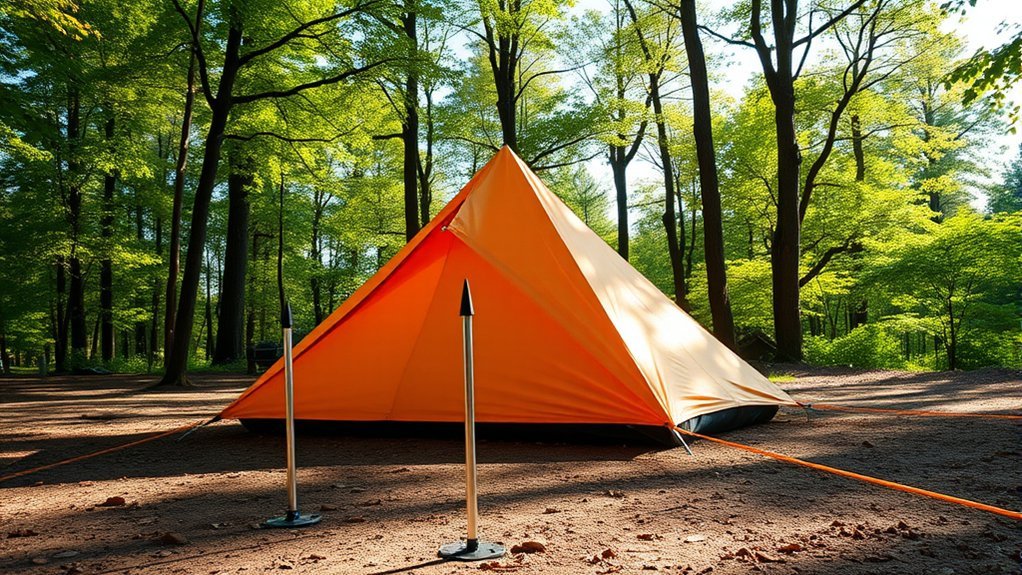
The number of stakes you need for your tent setup varies based on the tent type and size. For two-person tents, you’ll typically need 4 to 6 stakes. Three-person tents require 6 to 8 stakes, while four-person tents may need 8 to 10, especially in windy conditions. Non-freestanding tents need at least 6 to 8 stakes for stability. Weather conditions can increase these needs, so it’s wise to plan accordingly. There’s more to take into account for ideal setup.
Understanding Tent Types and Their Stake Requirements

When you’re setting up a tent, it’s crucial to understand that different types require varying numbers of stakes for stability. Freestanding tents usually need fewer stakes, relying more on their structure. In contrast, non-freestanding tents depend heavily on proper staking techniques. These tents require critical stakes to support their design, and missing a few can lead to collapse.
MSR tents come equipped with sufficient stakes for normal conditions, but if you’re facing volatile weather, consider bringing extra stakes for enhanced security. For peak performance, align your stakes with the tent materials’ seams to distribute tension evenly, boosting stability and preventing damage. If you’re camping on loose or sandy soils, upgrading to Y stakes can greatly improve holding power, making your tent setup more secure. Understanding these differences guarantees a successful camping experience, empowering you to enjoy nature without worry.
Standard Stake Count for Common Tent Sizes
When setting up your tent, knowing the standard stake count for its size is essential for stability. For instance, a two-person tent typically needs 4 to 6 stakes, while larger options like four-person tents may require 8 to 10. Keep in mind that adverse weather can increase your stake needs, especially for non-freestanding tents, so it’s smart to plan accordingly.
Tent Size Recommendations
Choosing the right number of stakes for your tent is essential for ensuring stability and comfort during your camping trip. For a standard two-person tent, you’ll need about 4 to 6 stakes, while a three-person model generally requires 6 to 8 stakes to accommodate extra guy lines. If you’re using a larger four-person tent, expect to use 8 to 10 stakes, especially when facing windy conditions. Non-freestanding tents demand at least 6 to 8 stakes to keep the structure intact. Always consider your tent dimensions and camping preferences, and remember to bring extra stakes for unexpected weather changes. Proper anchoring can make all the difference in your outdoor experience, so prepare accordingly!
Weather Conditions Impact
Understanding how weather conditions affect your tent setup can greatly impact your camping experience. For standard 2-person tents, you’ll need a minimum of 4 stakes, while larger 4-person tents typically require at least 6 stakes for stability. In windy or stormy weather, consider using additional stakes—doubling the standard count—to enhance security. Employ wind resistance techniques by angling each stake at about 45 degrees for maximum holding power. If you’re using a non-freestanding tent, prepare for more challenging conditions with 8 to 10 stakes to maintain structural integrity. Always consult your tent’s manufacturer guidelines, as stake requirements can vary based on design and intended use, ensuring you’re ready with storm preparation strategies for any adventure.
Non-Freestanding Tent Needs
Non-freestanding tents, requiring careful setup, typically need at least four stakes for a basic structure. If you’ve got a larger tent, aim for six or more to guarantee stability and tension. Remember, the benefits of non-freestanding tents often include lighter weight and easier packing, so don’t skimp on securing them properly. Prioritize critical stakes that support your tent’s integrity; without them, you risk collapse. In windy conditions, consider using rocks on essential stakes to boost holding power. Always align stakes with tent seams to distribute tension evenly. For best results, choose durable stake materials like aluminum or steel that withstand outdoor challenges. Your tent’s performance relies on these details, so set up wisely!
Importance of Additional Stakes in Volatile Weather
When unpredictable weather hits, having extra stakes for your tent can make all the difference in maintaining stability. In volatile conditions, these additional stakes provide essential anchoring points, enhancing your tent’s resistance against strong winds and heavy rain.
Extra stakes for your tent are crucial for stability in unpredictable weather, enhancing resistance against strong winds and heavy rain.
Consider the following benefits of using extra stakes:
- Increased stability: More anchoring points help keep your tent grounded.
- Tension distribution: Extra guy lines reduce the risk of pole breaks or tears.
- Rainfly security: Properly securing the rainfly minimizes pressure on the pole structure.
- Support for non-freestanding tents: Additional stakes help prevent collapse during adverse conditions.
Upgrading to y stakes can further improve holding power, making them a smart choice for your storm preparedness. Don’t take chances—ensure your setup is robust enough to withstand whatever nature throws at you. Your comfort and safety depend on it!
Non-Freestanding Tent Considerations
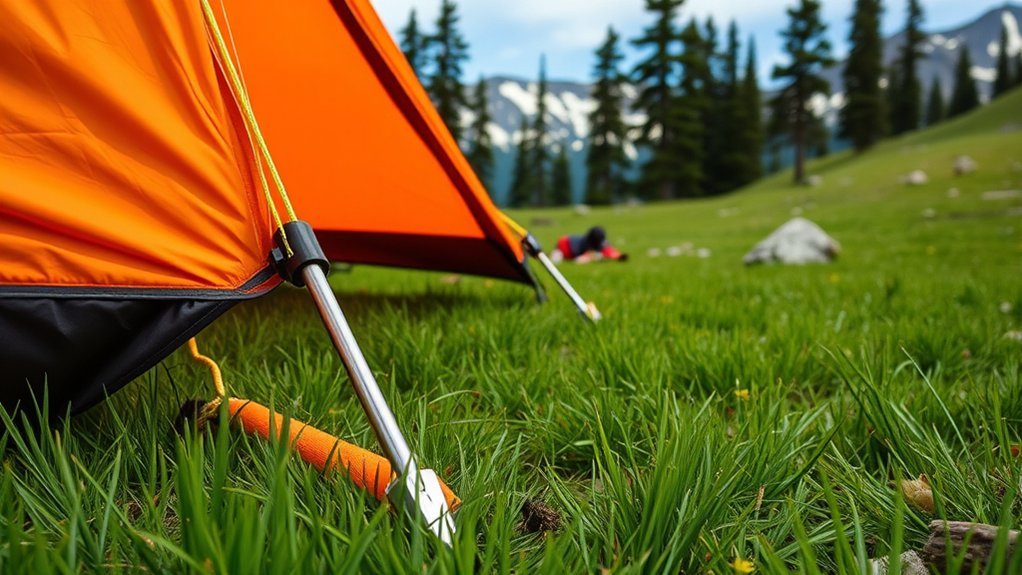
For a stable camping experience, paying close attention to the stakes of your non-freestanding tent is necessary. These tents rely heavily on important stakes to maintain their structure, so proper anchoring is key for both stake safety and your overall comfort. Identify which stakes are essential; pulling them out can lead to a collapse, compromising your shelter.
When setting up, make sure all important stakes are correctly aligned and tensioned. This prevents potential failures during use, allowing you to enjoy a secure environment. To enhance holding power, consider placing rocks on these significant stakes, especially in adverse weather. Regular tent maintenance is critical; routinely check the stakes and their placements to make certain they remain secure throughout your camping trip. By focusing on these factors, you can create a safe and stable camping experience that allows you to embrace the great outdoors with confidence.
Proper Staking Techniques for Maximum Stability
To guarantee your tent remains stable, you need to use the right staking tools and techniques. Drive stakes into the ground at a perpendicular angle for maximum holding power, and align them with the tent seams to distribute tension evenly. By focusing on these essential points, you’ll greatly reduce the risk of your tent collapsing.
Essential Staking Tools
Proper staking techniques are essential for ensuring your tent remains stable and secure, especially in challenging weather conditions. To achieve maximum holding power and stability, consider the following essential staking tools and methods:
- Hammer or Mallet: Using a rock or mallet drives stakes efficiently into the ground.
- Y Stakes: Upgrade to Y stakes for improved holding power in loose or sandy soil.
- Alignment: Align stakes with tent seams to distribute tension evenly across the shelter.
- Critical Stakes: Pay special attention to stakes in non-freestanding tents, as their failure can lead to a complete collapse.
Correct Stake Angling
When securing your tent, the angle at which you drive the stakes plays an essential role in guaranteeing stability. For maximum holding power, drive your stakes perpendicularly into the ground. This creates a strong soil wedge that enhances stability. Aligning your stakes with the tent seams guarantees even tension distribution, reducing the risk of collapse during adverse weather. Use a mallet or a rock for secure anchoring and avoid pulling too hard on one stake, as this can disrupt other stake placements. If you’re staking a non-freestanding tent, focus on critical stakes and consider placing rocks on them for extra stability. Remember, proper angle adjustment is key to a successful tent setup.
Tension Distribution Techniques
Effective tension distribution is essential for the stability of your tent, especially in challenging weather conditions. To achieve ideal tension management, follow these techniques for proper stake placement:
- Align stakes with tent seams to guarantee even tension distribution and prevent weak spots.
- Start by placing two stakes in opposing corners to create a solid foundation.
- Pound stakes into the ground perpendicularly to enhance resistance and holding power.
- Adjust the tension on all stakes after installation for a tight fit, maintaining structural integrity during adverse conditions.
For non-freestanding tents, focus on critical stakes supporting the structure and use rocks for added stability. Master these techniques, and you’ll enjoy a more secure and reliable camping experience.
The Role of Guy Lines in Tent Setup
Guy lines play an essential role in securing your tent against the elements, particularly in windy conditions. Their importance cannot be overstated; they maintain your tent’s structural integrity, preventing potential damage during storms. When you properly secure the rainfly with guy lines, you reduce excess pressure on the tent poles, making sure everything stays intact.
For enhanced stability, consider adding extra guy lines. This extra support is important in various environments, helping your tent remain anchored even during harsh weather. Remember, stakes and guy lines serve different purposes, so having the right combination is essential for a successful camping experience.
Using a Stake Hammer can also improve how effectively you install stakes and maintain tension on your guy lines. This simple tool helps guarantee your tent stays secure and stable, allowing you to enjoy your outdoor adventures with confidence. So, don’t underestimate the guy line importance in your setup!
Upgrading Your Stakes for Better Performance
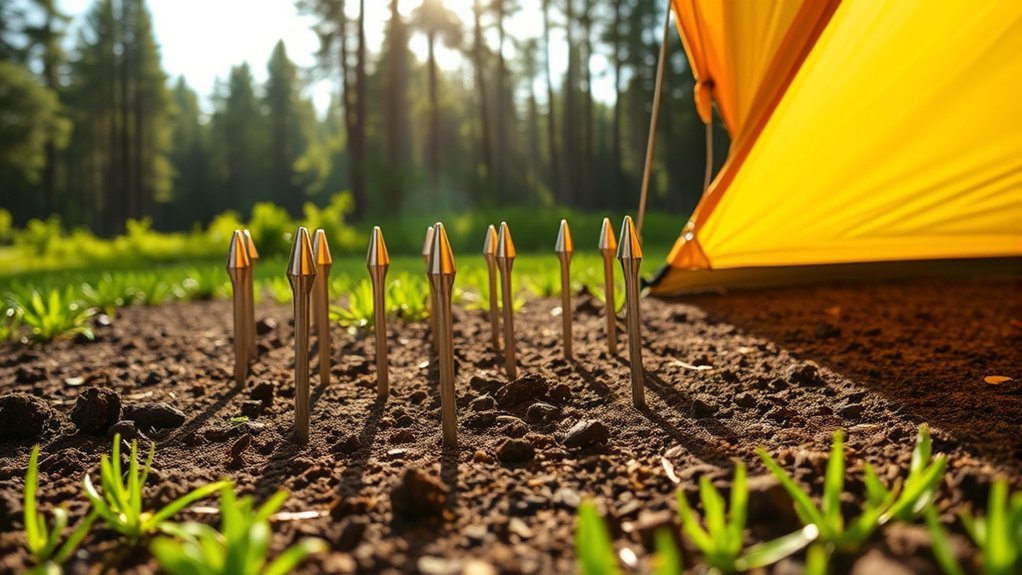
Upgrading your stakes can make a significant difference in how well your tent performs in various conditions. By choosing the right materials and lengths, you can enhance stability and guarantee your tent stays secure, regardless of the environment.
Upgrading your tent stakes enhances stability and ensures security in any outdoor condition.
- Consider y stakes for improved holding power in soft or loose soil.
- Opt for lightweight aluminum or titanium stakes, balancing durability with minimal bulk.
- Select longer stakes for deeper penetration in sandy or loose terrains, reducing pull-out risks.
- Invest in specialized stakes designed for snow or rocky ground to prevent tent collapse.
Always carry a few extra stakes for additional guy lines or replacements. With the right upgrades, you’ll enjoy a more reliable and stable tent setup, freeing you to focus on your outdoor adventure without worrying about your shelter.
Common Mistakes to Avoid When Staking Your Tent
Even with upgraded stakes, improper installation can undermine your tent’s stability. One common mistake is failing to use a mallet or rock for driving stakes. Without proper force, the stakes won’t hold securely, reducing their effectiveness in challenging weather. Additionally, angling stakes incorrectly can compromise their resistance to wind, making them less reliable.
Ensure you align stakes with tent seams to maintain even tension management; misalignment can lead to sagging and structural weaknesses. Avoid over-pulling on one stake, as this can disrupt the placement and tension of others, creating an unstable setup. Finally, don’t ignore critical stakes in non-freestanding tents; these are essential for keeping your tent anchored. By steering clear of these pitfalls, you’ll enhance your tent setup and enjoy a more stable outdoor experience.
Accessory Options for Enhanced Tent Stability
To guarantee your tent stays stable in unpredictable weather, you should consider enhancing your setup with essential accessories. Upgrading to y stakes can considerably improve holding power, while adding extra guy lines will bolster the rainfly’s support. These practical upgrades can make a big difference in your camping experience, keeping your tent secure when it matters most.
Essential Tent Accessories
When it comes to ensuring your tent stands strong against the elements, the right accessories can make all the difference. Investing in essential tent accessories enhances stability and performance, allowing you to enjoy your outdoor experience without worry. Consider these items:
- Y Stakes: Ideal for loose or sandy soil, providing superior holding power.
- Extra Guy Lines: Vital for securing the rainfly, preventing stress on poles during storms.
- Tent-Specific Stakes: MSR offers stakes designed for various environments, ensuring durability.
- Stake Hammer: A must-have for effective installation, maximizing stake holding power.
Upgrading Stabilization Options
Upgrading your tent’s stabilization options can drastically improve its performance in harsh weather conditions. Consider investing in MSR’s y stakes, which offer superior holding power for various stake material options. Tailoring your stakes to the camping terrain considerations, like sandy or rocky ground, guarantees you’re prepared for anything nature throws your way. Additionally, adding extra guy lines to secure the rainfly maintains your tent’s structural integrity during storms. Don’t forget the Stake Hammer, which makes driving stakes deep into the ground easier, maximizing their holding capacity. Proper anchoring with the right accessories not only prevents tent tears or pole breaks but also enhances your overall camping experience, granting you the peace of mind you deserve.
Customer Support for Tent Setup Inquiries
If you have questions about setting up your tent, MSR’s customer support is ready to help. They’re committed to providing you with the best tent support and customer guidance you need for a successful camping experience. Whether you’re unsure about the number of stakes required or need help with staking techniques, their team is just a message away.
- Submit requests for missing components or tent accessories.
- Get tailored advice based on your tent model.
- Learn proper staking techniques to guarantee stability.
- Share your feedback to enhance support services.
MSR encourages you to reach out with any inquiries regarding tent stability and anchoring requirements. They value your experience and endeavor to improve their support continually, guaranteeing your camping adventures are enjoyable and worry-free. Don’t hesitate to contact them—your adventure awaits!
Frequently Asked Questions
Can I Use Regular Stakes for My Tent Setup?
You can use regular stakes for your tent setup, but guarantee they provide sufficient tent stability. If you’re in rocky terrain, consider stake alternatives like heavier-duty anchors or weights for better support and security.
How Deep Should I Drive My Stakes Into the Ground?
Drive your stakes deep, digging down about six to eight inches, depending on ground conditions. Firmly securing your tent guarantees stability, so adjust for softer soil or rocky settings to assure a great outdoor experience.
What Materials Are Best for Tent Stakes?
For tent stakes, aluminum stakes are lightweight and durable, making them ideal. Composite materials offer flexibility and resistance to bending, ensuring stability. Choose based on your camping conditions for a reliable setup that liberates your outdoor experience.
Can I Stake a Tent on Rocky Ground?
When the ground surface is rocky, you can’t always stake your tent securely. Consider tent alternatives, like using boulders or heavy objects to anchor it down. It’ll save you a headache and guarantee stability.
How Do I Know if My Stakes Are Secure?
You can check your stakes’ security by tugging on them. If they resist and maintain tent stability, you’re good. Adapt to ground conditions; adjust stakes or add more if you feel any movement.
Conclusion
In conclusion, securing your shelter starts with the right stakes. Selecting sufficient stakes guarantees stability and safety, especially in stormy situations. Don’t skimp on your setup; consider extra stakes for that added peace of mind. By practicing proper placement and choosing quality materials, you’ll bolster your tent against the elements. So, prepare wisely and pitch perfectly—your camping experience will be a breeze with the right gear and guidance. Happy camping!