


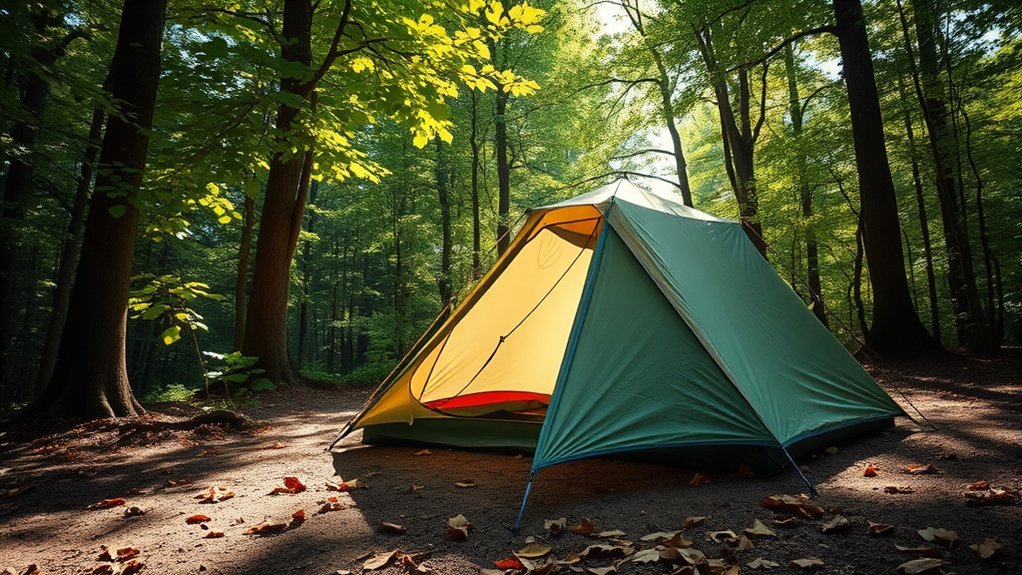
A tent footprint should tuck in beneath your tent. This helps prevent water pooling and directs runoff away from your shelter. If it sticks out, excess material can create a “bucket” effect, risking leaks. A snug fit keeps debris from damaging your tent floor and guarantees better moisture management. Remember to tuck those edges under and set up on a slight slope for maximum protection. Want to know more about tent footprint setup? Let’s explore further!
Understanding the Purpose of a Tent Footprint

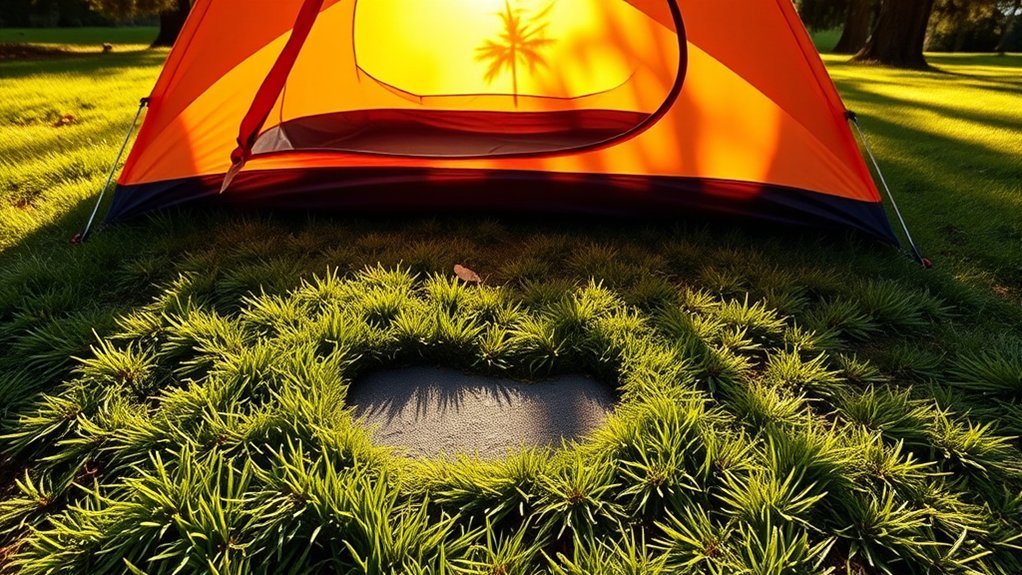
When you head out on your next camping adventure, understanding the purpose of a tent footprint can make all the difference in your experience. A tent footprint acts as a protective barrier, shielding your tent floor from sharp debris like rocks and sticks, which can greatly improve its longevity. Additionally, it helps keep your tent dry by preventing moisture from seeping in from the ground—essential during wet conditions.
Typically made from durable materials such as plastic tarps or Tyvek sheeting, tent footprints may also feature grommets for easy attachment. Choosing the right size is key; while some campers prefer a smaller footprint to direct water runoff, others opt for larger ones for added coverage. Positioning is crucial too—excess material sticking out can lead to water pooling, so it’s best to tuck the footprint in. With these tips, you’ll maximize your tent’s protection and enjoy your camping experience even more!
The Importance of Size and Coverage
Choosing the right size for your tent footprint is essential for ideal protection and comfort during your camping trips. A footprint that’s slightly smaller than the tent floor helps prevent water pooling, directing runoff away from your tent walls. Larger footprints can trap water, creating “artificial lakes” that may seep moisture into your tent.
| Footprint Size | Best Terrain | Footprint Material |
|---|---|---|
| Small | Rocky areas | Lightweight nylon |
| Medium | Mixed terrain | Durable polyester |
| Large | Muddy conditions | Waterproof fabric |
Opting for the right size variation based on terrain and weather conditions enhances your camping experience. Smaller footprints keep your tent cleaner by minimizing dirt and debris, while proper setup—tucked under the edges—improves water management. Prioritize size and coverage to elevate your outdoor adventures!
Managing Water Runoff Effectively

To manage water runoff effectively, you need to guarantee your tent footprint is sized correctly and positioned wisely. A smaller footprint is ideal; it allows water to flow away from the tent walls, preventing puddles from forming underneath. If your footprint extends too far beyond the tent edges, it can create a “bucket” effect, trapping rainwater and risking leaks. Tuck any excess material under the tent to minimize runoff exposure and reduce pooling.
Employing drainage techniques, like setting up your footprint with a slight slope, can help direct water away from your tent. This simple adjustment enhances comfort during wet conditions. Remember, keeping your footprint within the tent’s perimeter is essential; it prevents funneling rainwater directly underneath and mitigates moisture issues. By mastering these water diversion strategies, you’ll guarantee your tent remains a dry haven amidst nature’s elements.
Personal Preferences and User Experiences
Personal preferences regarding tent footprint size can greatly influence your camping experience. User anecdotes reveal a range of experiences that highlight why size matters:
- Water Management: Many prefer a smaller footprint that tucks in, preventing water pooling and improving runoff.
- Extra Coverage: Others opt for a larger size, providing additional protection from mud and debris.
- Terrain Considerations: Some campers choose to go without a footprint, relying on tent durability and careful site selection, especially in rocky areas.
- Weight and Comfort: Feedback from the camping community often emphasizes that your choice depends on personal priorities, like minimizing pack weight versus maximizing comfort.
Ultimately, adapting your footprint size based on weather and terrain can enhance your camping experience, allowing you to find your perfect balance. Pay attention to these user preferences and experiences as you prepare for your next adventure!
Tips for Proper Footprint Setup and Maintenance
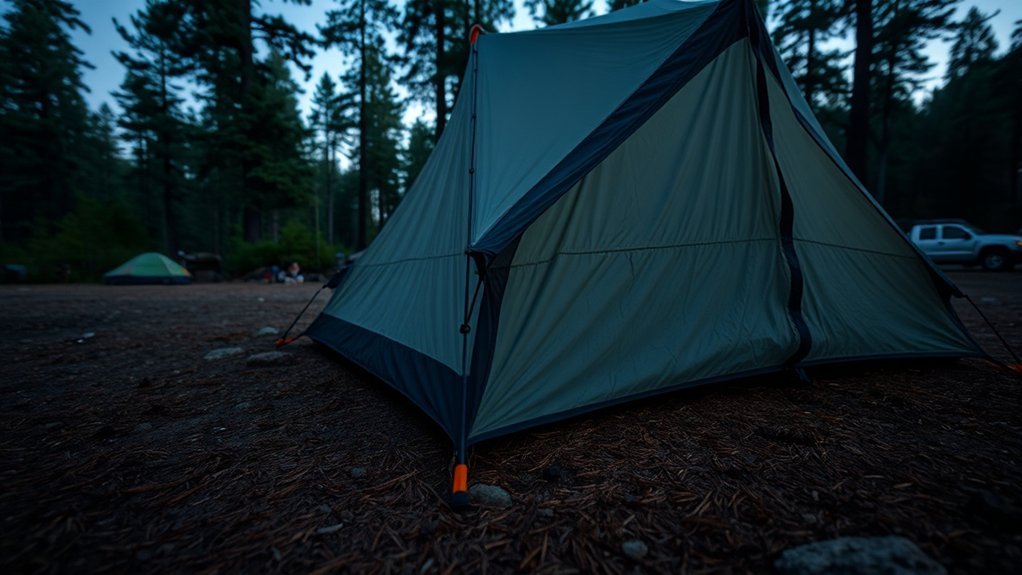
While setting up your tent footprint may seem straightforward, paying attention to a few key details can make a significant difference in your camping experience. First, confirm your footprint fits comfortably under the tent, avoiding any excess that might extend outward. If you’ve got extra material, tuck it under the tent to prevent water pooling and that pesky “bucket” effect that traps moisture. Use footprint materials with eyelet loops and secure them with tent poles for added stability—especially on windy days. Regularly check the space between your tent and footprint for debris buildup, as this can damage your tent floor over time. Finally, clean and dry your footprint after each use. This simple maintenance keeps it effective in protecting against ground hazards and moisture, regardless of the footprint shapes you choose. Following these tips will enhance your camping adventures and help you connect more deeply with the great outdoors.
Frequently Asked Questions
Can I Use a Tarp Instead of a Tent Footprint?
Yes, you can use a tarp instead of a tent footprint. Tarps offer durability and weather resistance, but they can be heavier and less compact. Weigh the advantages and disadvantages before making your decision.
How Do I Choose the Right Footprint Material?
Choosing the right footprint material is vital for your adventure. Consider durability; options like nylon and polyester withstand wear. A lightweight, waterproof choice can protect your tent, ensuring you roam freely in nature’s embrace.
What if My Footprint Is Slightly Larger Than My Tent?
If your footprint’s slightly larger, it can provide extra protection from moisture and debris, but it may catch wind and create instability. Weigh the footprint advantages against potential disadvantages to decide what’s best for your camping experience.
Do I Need a Footprint for Every Camping Trip?
You don’t need a footprint for every trip, but it’s a camping essential that offers protection and longevity for your tent. Its benefits can make your adventure smoother, like a shield against nature’s whims.
How Do I Clean and Maintain My Tent Footprint?
To clean your footprint, shake off debris, hand-wash with mild soap, and air dry. For maintenance, store it loosely, avoid prolonged sun exposure, and check for tears regularly. These tips keep your footprint in great shape!
Conclusion
Choosing the right size for your tent footprint is like finding the perfect pair of shoes—too big and you trip over yourself, too small and you risk discomfort. When you tuck it in, you shield against water and debris, creating a cozy sanctuary. Let it stick out a little, and you invite nature’s elements in. Remember, the right setup transforms your camping experience from a struggle against the wild to a harmonious dance with it. So, find your balance!