


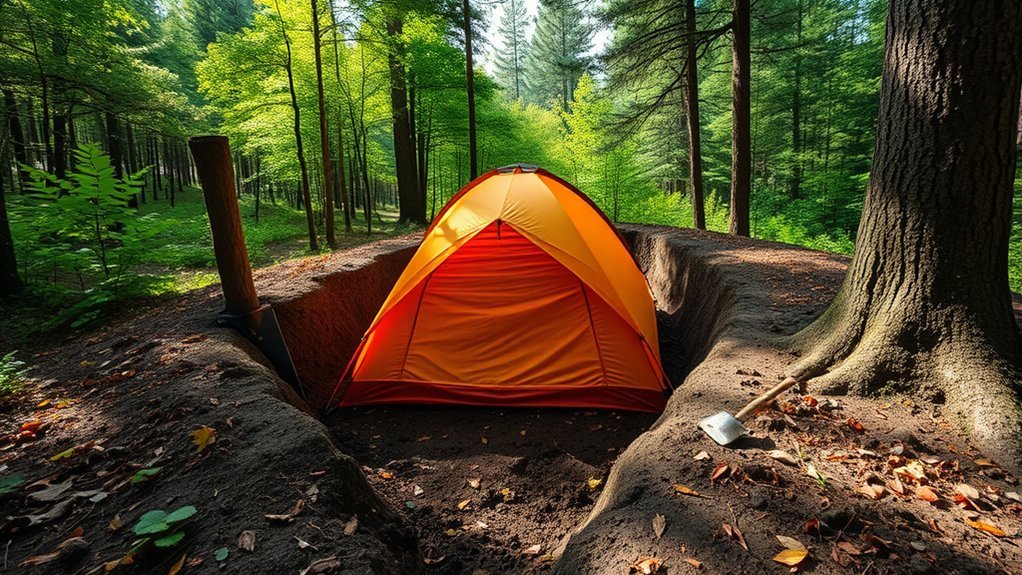
Trenching around your tent can be an effective way to manage rainwater and keep your sleeping area dry. However, it’s crucial to check local regulations, as some areas may restrict trenching. Aim for shallow trenches at a 20° angle to guide water away from your tent without causing permanent landscape changes. Always consider the environmental impact and avoid digging near roots or habitats. For more insights on proper trenching techniques, you might want to explore further.
The Importance of Trenching for Tent Setup

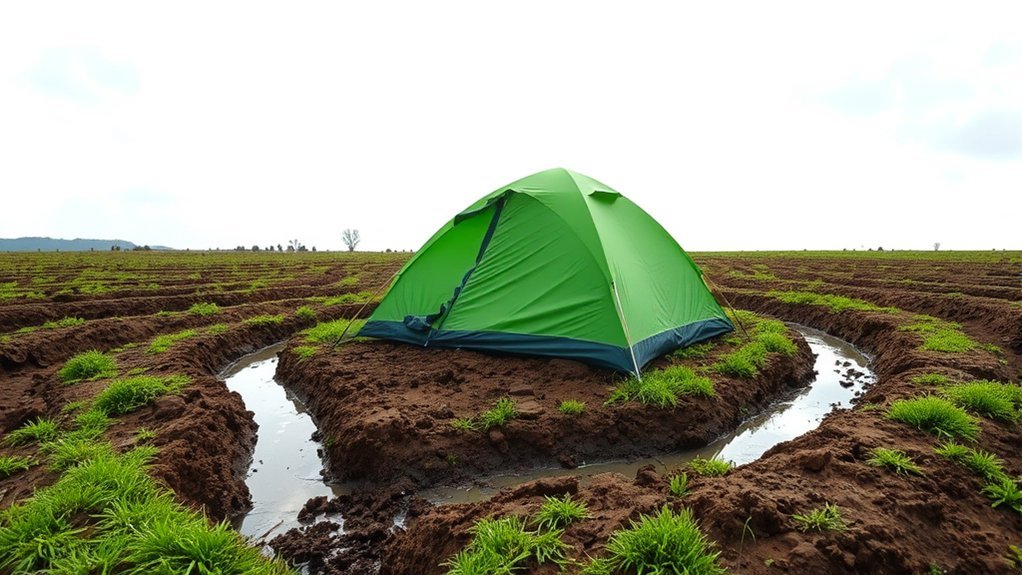
When you set up a tent, trenching around it is essential, especially if rain is in the forecast. Proper water management can make or break your camping experience. By creating a small trench at a 20° angle, you can effectively guide rainwater away from your tent’s base, reducing the risk of leaks and ensuring a drier sleeping area.
Keep the trench shallow and positioned away from the tent to minimize digging effort while still enhancing drainage. This simple technique not only protects your gear but also greatly boosts your camping comfort in wet conditions. Remember, temporary trenches are easy to fill in after your trip, leaving no lasting impact on the environment. By directing water flow to safe drainage areas, you can enjoy your time outdoors without the worry of soggy spots. Embracing these practices allows you to connect with nature while prioritizing your comfort.
Understanding How to Properly Trench
To effectively trench around your tent, it’s important to focus on the technique and execution. Proper trenching can keep you dry and comfortable during your camping experience. Here are three key points to remember:
Effective trenching around your tent enhances comfort and dryness during camping. Focus on technique for the best results.
- Trench Depth: Keep your trench shallow, ideally no deeper than a few inches. This minimizes soil displacement and environmental impact.
- Angle and Direction: Dig your trench at a 20° angle, ensuring it directs water away from the tent and spills into a safe drainage area.
- Dirt Placement: Place the displaced dirt away from the trench to avoid blocking water flow, preventing future hazards for campers.
Techniques for Effective Trenching
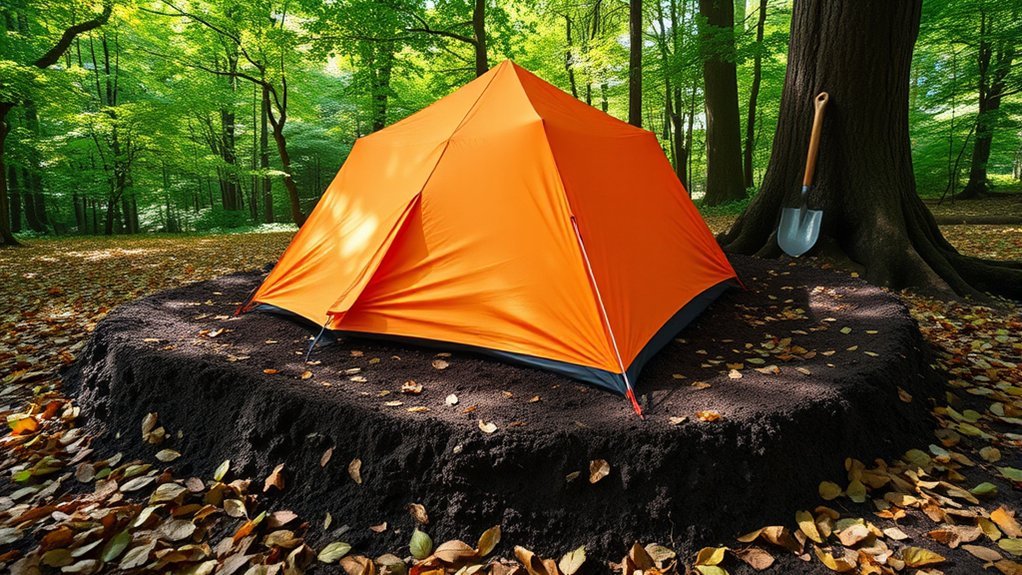
Effective trenching techniques can greatly enhance your camping experience by preventing water accumulation around your tent. Start by digging a trench at a 20° angle, which effectively guides water away from the base. A shallow trench is easier to manage and less likely to block drainage, especially when dirt is placed away from the trench.
| Technique | Description | Benefits |
|---|---|---|
| Angle Adjustment | Maintain a 20° angle for ideal drainage. | Reduces water pooling |
| Trench Depth | Keep it shallow to ease digging effort. | Minimizes environmental impact |
| Use Natural Terrain | Leverage landscape for better water flow. | Enhances trench effectiveness |
| Temporary Solutions | Quick to create and fill in afterward. | Ideal for short-term camping |
Always consider local regulations regarding trenching, as some areas may restrict modifications to protect the environment.
Temporary vs. Permanent Trenching Practices
While considering your options for water management around your tent, it’s vital to understand the differences between temporary and permanent trenching practices. Here’s what you should know:
- Temporary solutions are ideal for immediate needs, allowing for quick filling after use, minimizing long-term environmental impact.
- Permanent trenching requires meticulous planning to avoid soil displacement and future hazards for campers, aligning with natural drainage patterns.
- Monitoring local regulations is important, as some areas may restrict trenching, regardless of whether it’s temporary or permanent.
Choosing between these practices can have long-term implications. Temporary trenches offer flexibility in response to immediate weather changes, while permanent trenches can alter the landscape markedly, leading to erosion or unintended water flow issues. By carefully weighing your options, you can create an effective water management strategy that meets your needs without compromising the integrity of the environment.
Environmental Considerations and Safety Tips
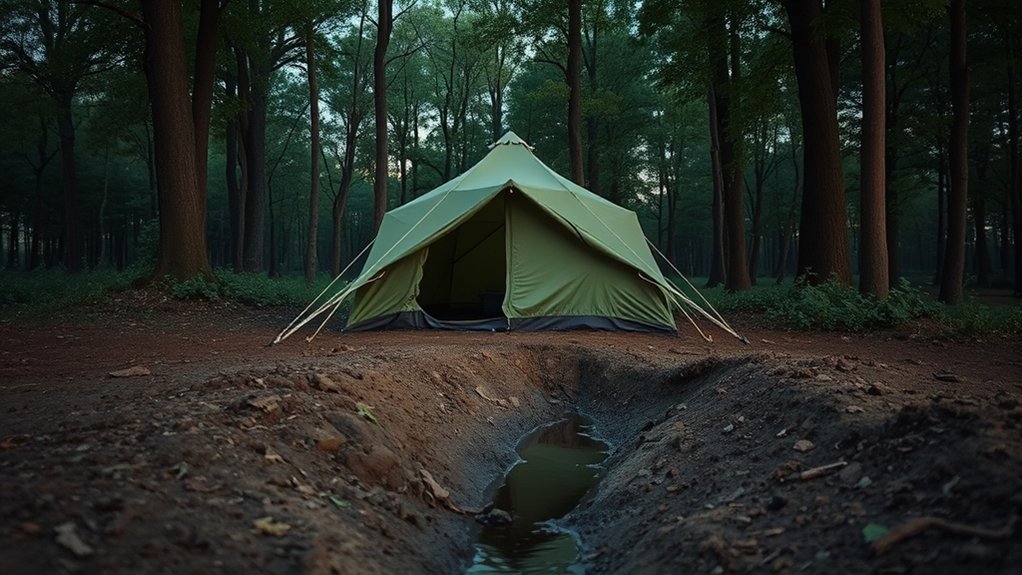
What should you consider to protect the environment and secure your safety while trenching around your tent? First, recognize that trenching can leave lasting scars on the landscape, so aim for minimal digging. Use natural features for water management to reduce erosion and limit your environmental impact. Always check local regulations before making any modifications; some campsites may restrict trenching practices.
Stay informed about weather conditions before you set up camp—this can help you decide if trenching is necessary. Additionally, be cautious of potential hazards; avoid digging near tree roots or wildlife habitats to safeguard your safety and preserve the ecosystem. By following these safety precautions, you can enjoy your camping experience while being responsible to the environment. Remember, every small action counts in maintaining the beauty of nature for future adventurers.
Frequently Asked Questions
Can I Trench if Camping in a National Park?
You can’t trench while camping in a national park. Most camping regulations and national park policies prohibit such actions, as they can damage the environment. Always check specific park guidelines before setting up your campsite.
What Tools Are Best for Digging Trenches?
When digging trenches, use a spade shovel for precision or a trenching shovel for depth. Employ proper trenching techniques, ensuring safety and efficiency while respecting regulations and the environment to enhance your camping experience.
How Deep Should Trenches Be Around a Tent?
While a shallow trench may seem less risky, a depth of 6 to 12 inches enhances your tent’s stability. Guarantee proper drainage without compromising safety; a well-planned trench supports your camping experience and protects against water.
Will Trenching Attract Wildlife to My Campsite?
Trenching can attract wildlife to your campsite due to exposed food or debris. To guarantee campsite safety, keep your area clean and avoid leaving food scraps, reducing the likelihood of unwanted animal visitors.
Can Trenching Damage the Tent’s Ground Sheet?
Yes, trenching can damage your tent’s ground sheet, especially if the soil shifts or erodes. To guarantee ground sheet durability, consider alternative tent protection methods, like using a footprint or tarps to safeguard against moisture and wear.
Conclusion
In summary, trenching around your tent can be effective, but it’s essential to approach it with care. While it may seem harmless, improper techniques can lead to environmental damage and safety hazards. Coincidentally, you might find that a well-trenched area not only enhances your tent’s stability but also protects the surrounding ecosystem. Always weigh the benefits against potential risks, and make sure you follow local regulations. With the right precautions, you can enjoy a secure and responsible camping experience.