


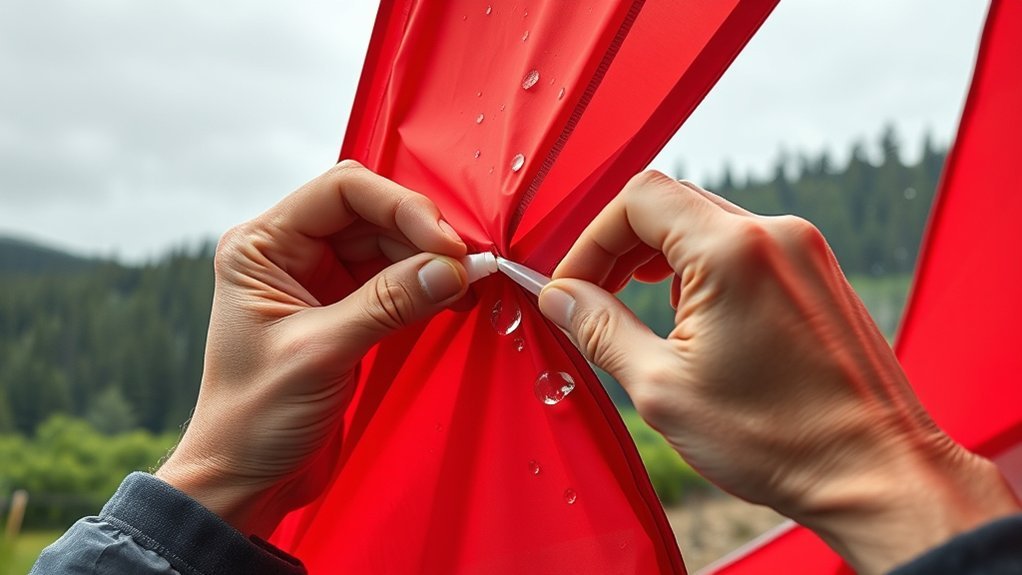
If your tent seams are leaking, act quickly to prevent further damage. Start by inspecting the seams for tape deterioration or flaking. Use Seam Grip for repairs, applying it thoroughly to both sides of the stitching with a small paintbrush. Make certain seams are taut for proper adhesion and let it cure for at least 48 hours. Regular maintenance and proper storage can prolong your tent’s life and guarantee robust performance. Discover more tips on enhancing your tent’s waterproofing.
Common Causes of Tent Seam Leakage

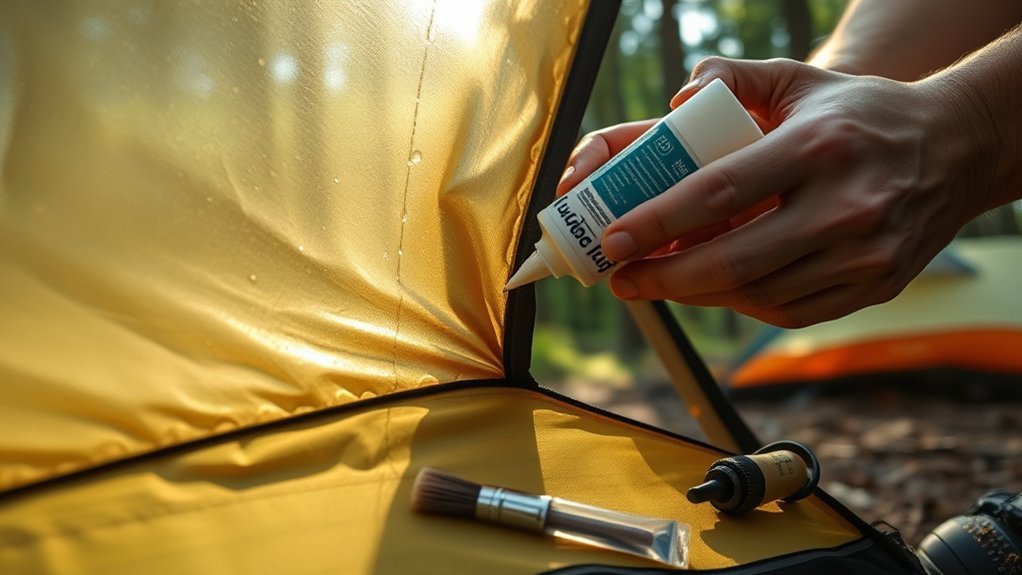
When you set up an older tent, you might notice that seam leakage is a common issue, especially if the seam tape has deteriorated or flaked off. This deterioration often arises from improper storage, particularly in high heat, which accelerates the failure of seam tape and compromises waterproofing. Accumulating flaking tape not only affects the tent’s integrity but also creates a messy interior, diminishing your camping experience.
To effectively tackle seam leakage, focus on external repairs. Seams not properly sealed on the outside are more susceptible to leaks, making external fixes essential. Maintaining taut seams enables better application of waterproofing products like Seam Grip, vital for preventing water infiltration. Regular tent maintenance, including inspecting and re-taping seams, can prolong your tent’s lifespan and enhance its performance. By understanding these common causes, you can take proactive steps to keep your tent dry and enjoyable for your adventures.
Recommended Repair Products
To effectively repair leaking tent seams, consider using Seam Grip with WP waterproofing, a top choice among outdoor enthusiasts. This product’s sealing properties are unmatched, providing essential waterproofing benefits that keep you dry during your adventures. You can find Seam Grip at local outdoor co-ops or online, usually at reasonable prices.
When using Seam Grip, keep these tips in mind for the best results:
- Use a small paintbrush for even coverage on both sides of the stitching.
- One tube typically covers the seams of a two-person tent; larger tents may need multiple tubes.
- Properly cured seams not only enhance waterproofing but also extend your tent’s overall lifespan.
Step-by-Step Application Process
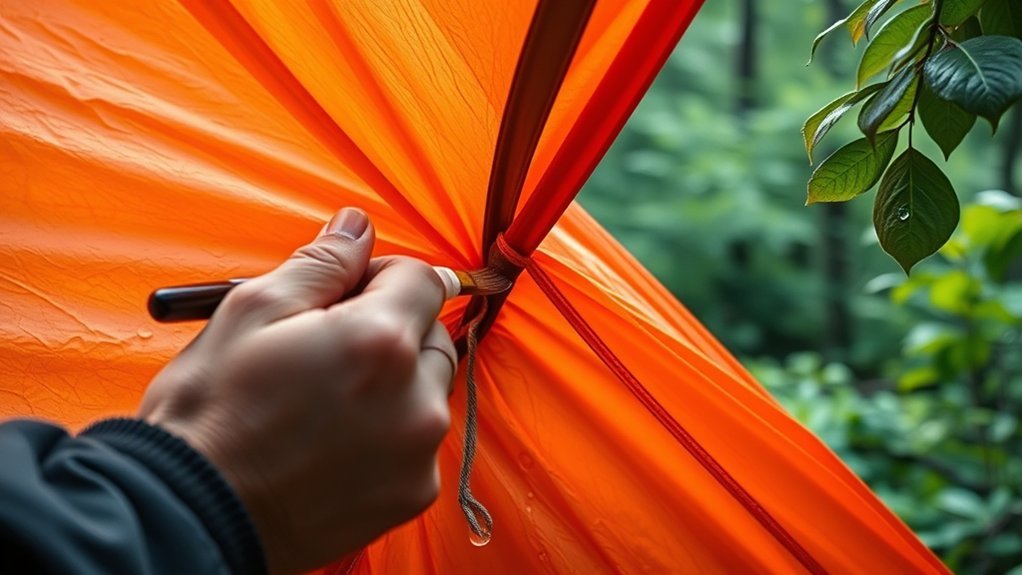
Before you start applying Seam Grip, make certain your tent is properly prepared with seams taut, which facilitates better adhesion. Using a small paintbrush, carefully apply the Seam Grip to both sides of the stitching along the seam. Focus on getting it under the flap for added protection. Aim for complete coverage, ensuring every inch is sealed; one tube of Seam Grip typically suffices for a two-person tent, while larger tents might need more.
After the seam grip application, allow it to dry for at least 48 hours. This curing period is essential for achieving ideal sealing and preventing any tackiness that could compromise your repair. Once cured, expect a shinier appearance on the sealed seams, indicating effective waterproofing techniques and enhanced rain protection. This process not only revitalizes your tent but empowers your outdoor experience, keeping you dry and liberated in the elements.
Importance of Curing Time
Curing time is essential for ensuring that the seam grip bonds effectively with the tent fabric, as rushing this process can leave the seam tacky and prone to leaks. Prioritizing this step maximizes the curing benefits, guaranteeing a secure and watertight seal.
Curing time is vital for a strong seam bond; rushing can lead to leaks and compromised waterproofing.
Consider these key points about adhesion importance:
- Optimal Drying Time: Allow 48 hours post-application for the best results.
- Visual Indicators: A properly cured seam appears shinier, signaling effective waterproofing.
- Leak Prevention: Rushing the process compromises the seal’s integrity, risking leaks during use.
Tips for Prolonging Tent Life
While you may be keen to hit the trails, taking steps to prolong your tent’s life guarantees it remains a reliable shelter for many adventures. Here are some essential tips to keep your tent in top shape:
| Action | Description |
|---|---|
| Tent Storage | Store your tent in a cool, dry place to prevent damage. |
| Cleaning Tips | Clean with mild soap and water after each trip. |
| Seam Maintenance | Regularly inspect seam tape for wear and tear. |
| Seam Sealing | Use Seam Grip to reinforce seams against water ingress. |
| Ground Protection | Utilize a footprint or tarp to shield the tent floor. |
Following these guidelines will help you maintain your tent’s integrity, ensuring it serves you well on all your outdoor escapades. With proper care, you’ll enjoy many adventures without worrying about leaks or deterioration.
Frequently Asked Questions
Can I Use Seam Grip on Other Outdoor Gear?
Yes, you can use Seam Grip for backpack repairs and tarp maintenance. Its strong adhesive bonds well with various materials, guaranteeing a durable fix. Just make sure surfaces are clean and dry for best results.
How Do I Know if My Tent Seams Need Repair?
Inspect your tent regularly for signs of wear, including frayed edges or visible gaps. Conduct leak detection tests with water; if moisture seeps through, prioritize seam maintenance to guarantee your tent remains waterproof and reliable.
Is Seam Grip Safe for All Tent Materials?
Seam Grip isn’t universally safe for all tent materials; it works best with polyurethane and silicone fabrics, but can damage others like canvas or polyester. Always test on a small area first to verify compatibility.
Can I Apply Seam Grip in Cold Weather?
You can apply Seam Grip in cold weather, but verify temperatures are above 50°F for effective adhesion. Cold weather considerations may affect curing time, so plan accordingly to achieve ideal results for your tent’s seams.
How Long Does Seam Grip Last After Application?
Seam Grip typically lasts several years, but its durability hinges on application tips like surface preparation and environmental conditions. Properly applied, you can trust it to hold up against moisture and wear effectively.
Conclusion
In conclusion, don’t let a leaky tent dampen your outdoor adventures. Remember, “an ounce of prevention is worth a pound of cure.” By understanding common causes of seam leakage and using the right repair products, you can effectively seal those leaks. Follow the step-by-step application process and allow adequate curing time for the best results. Regular maintenance and care will prolong your tent’s life, ensuring you’re ready for your next journey under the stars.