


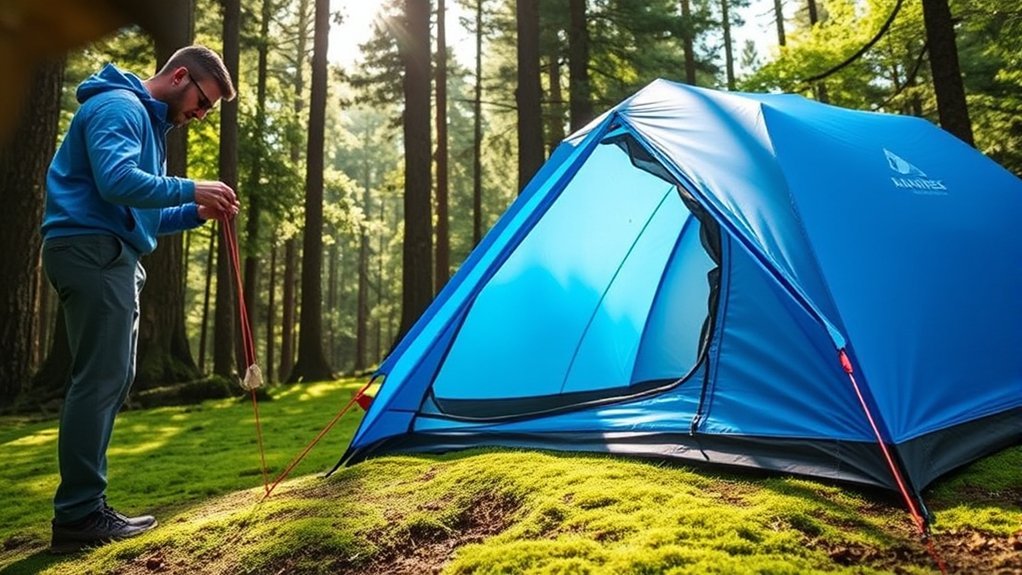
To add guylines to your tent for better wind stability, start with low-stretch cord (often polyester or purpose-made guyline). Attach each guyline to a guyout point on the rainfly. For the best support, use points that sit directly over a tent pole. Run the line outward, stake it down, then tension it with a built-in tensioner or an adjustable knot. Re-check tension after rain or big temperature changes so the fly doesn’t sag.
Key takeaways
- Attach guylines to rainfly guyout points that sit over poles for the biggest stability gain.
- Pull the line straight out from the pole and, when possible, route it at a right angle to the tent wall/panel.
- Use an adjustable method (tensioner or taut-line hitch) and re-tension after the fly gets wet.
- Choose anchors that match the ground (soil, sand, snow) and make lines visible at night.
Understanding the Purpose of Guylines

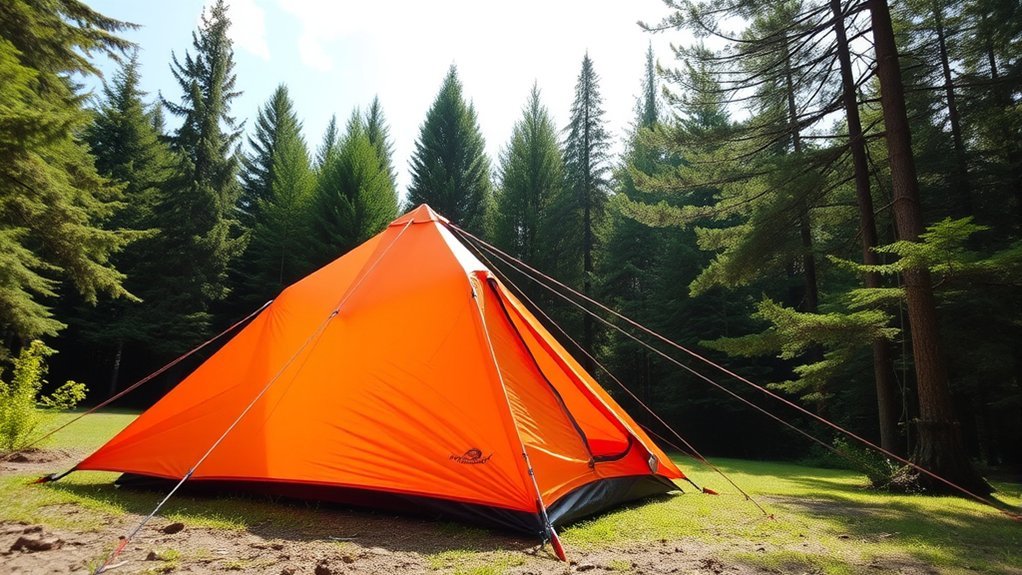
Guylines help your tent stay stable when the wind picks up. Used well, they support the rainfly, reduce flapping, and help keep the fly off the tent body.
How to Properly Connect Guylines
To connect guylines well, focus on three things: the right attachment point, the right direction, and reliable tension.
Selecting Appropriate Anchors
Pick anchors based on the ground conditions you’re camping on. In firm soil, standard stakes usually work. In sand or snow, wider “sand/snow” stakes or deadman anchors (burying a bag, stick, or stake) tend to hold better. If staking isn’t possible, you can often use natural features like rocks or sturdy tree roots as anchor points.
Ensuring Proper Tension
- Attach the fixed end of the guyline to the rainfly’s guyout loop.
- Pull the line straight out from the pole under that point. That’s where it helps most.
- If you can, set the line at a right angle to the tent wall/panel for better leverage.
- Stake the line down far enough away that you can tension it without over-stressing seams.
Choosing the Right Anchors for Guylines
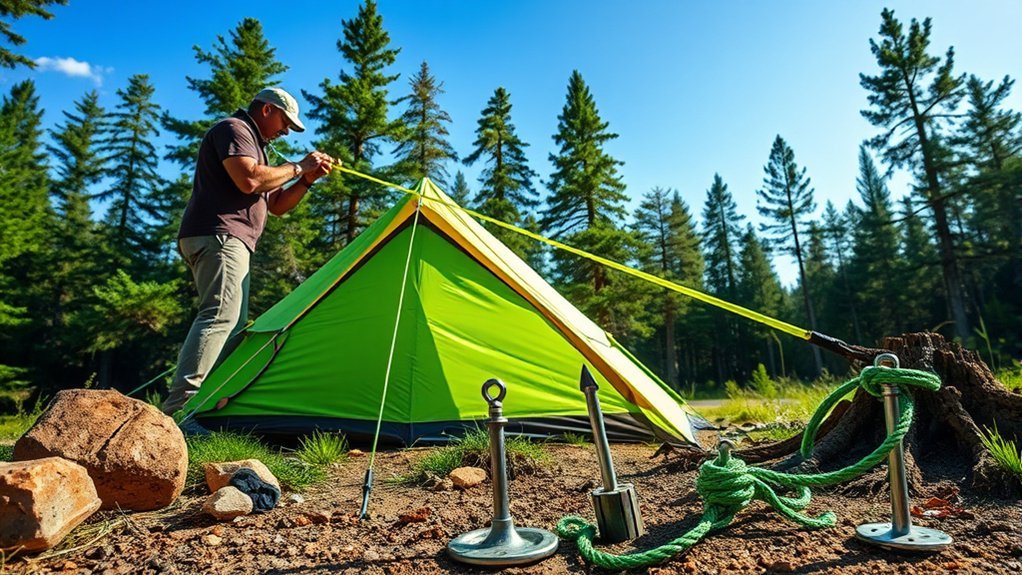
Selecting the right anchors is essential for keeping guylines secure. Set the stake far enough out that the line meets the ground at a wide angle. A common starting point is about 45° from the ground. Adjust based on terrain, wind direction, and space.
| Anchor Type | Ideal Conditions | Notes |
|---|---|---|
| Steel stakes | Hard, compact ground | Strong, but heavier to carry. |
| Aluminum stakes | Mixed terrain | Good balance of weight and strength. |
| Sand/snow stakes | Loose sand or snow | Wider profile improves holding power. |
| Deadman anchors | Very soft sand/snow | Bury a stick, bag, or stake as an anchor. |
| Natural features | Rocky ground | Wrap the line around a rock or root when staking isn’t possible. |
Techniques for Tensioning Guylines
If your tent includes built-in line tensioners, use them—they’re fast and repeatable. If you don’t have tensioners (or you need more range), two classic options are:
- Taut-line hitch: An adjustable hitch that slides when unloaded, then grips when the line is under tension.
- Trucker’s hitch: A tightening system that gives extra pulling power, useful when you need to really tighten a line at the stake.
Re-check and adjust guylines periodically. After rain, many rainflies loosen a bit when damp. A quick re-tension can stop flapping and sagging.
The Benefits of Using the Taut-Line Hitch Knot

The taut-line hitch is popular for tent guylines because it lets you tighten or loosen the line by sliding the knot, then it holds firmly once loaded. If your cord is slick, adding an extra wrap can help it grip better. Practice tying it at home so you can do fast adjustments in wind or rain.
Tips for Packing Down Camp Efficiently
When you pack up, undo adjustable knots and tensioners before pulling stakes to reduce tangles. Many campers leave guylines attached to the rainfly, then coil each line and secure it with a small band or pouch. Pack all stakes together so they don’t go missing.
Enhancing Visibility of Guylines
Guylines can be easy to trip over in low light. To reduce accidents, use reflective cord or bright colors, and consider adding small flags or glow-in-the-dark tape near high-traffic areas. Keep lines taut—sagging lines are harder to see and easier to catch with a foot.
Resources for Further Learning and Practice
If you want to learn more, these two references cover the core skills clearly:
- REI Expert Advice: How to Set Up a Tent (includes guyline guidance)
- NetKnots: Tautline Hitch instructions
For best results, do one or two practice setups at home. Then spray the fly with water and re-tension—this mimics overnight rain.
Frequently Asked Questions
Can I use guylines with any type of tent?
Most tents have guyout points and can use guylines. If your tent doesn’t, avoid improvising attachment points on fragile fabric; instead, follow the manufacturer’s guidance or add support by staking out the rainfly edges.
How do I choose the right length for guylines?
In general, longer is more flexible: it lets you reach better anchor spots, route around rocks, or use a trekking pole as a “guy” prop. If your lines are too short, consider carrying a few extra meters of cord as backup.
What materials are best for guylines?
Look for cord that holds tension well (low stretch), resists abrasion, and is easy to see. Purpose-made reflective guyline is a common choice. Avoid very stretchy cord if you expect rain or sustained wind.
How can I reduce tangling of guylines during storage?
Coil each line separately and secure it with a band, then store all lines in a small pouch. Keeping guylines attached to the fly can also speed up setup—just make sure they’re neatly bundled.
Are there alternatives to stakes for anchoring guylines?
Yes. You can wrap guylines around rocks, roots, or sturdy shrubs, or build a deadman anchor in sand or snow. Whatever you use, make sure it won’t move under steady pull.
Conclusion
Adding guylines is one of the fastest ways to steady a tent in wind. Use the right points, pull in the right direction, and tension the lines. Check visibility and re-tension as needed.