



To tie a taut-line hitch for adjustable tent lines, start by wrapping the rope around an object. Then, wrap the working end over the standing end and through the loop you created. Make another wrap in the same direction and form a loop, pulling the working end back through. Tighten it down, ensuring it can slide with tension. This knot keeps your lines secure and stable in changing conditions. Learn more about its applications and adjustments next.
Understanding the Purpose of the Taut-Line Hitch


The taut-line hitch is your go-to knot for maintaining adjustable tension in ropes, especially when you’re outdoors. This knot’s purpose is straightforward: it allows you to secure tent lines and tarps while easily adjusting tension as conditions change. Whether it’s windy or calm, the taut-line hitch locks in place under tension, ensuring stability and preventing slippage.
With its knot history rooted in practicality, this versatile knot has various knot variations that cater to different requirements, making it an essential skill for anyone who seeks liberation in nature. You can quickly slide the knot along the line for tightening or loosening, adapting to your campsite’s needs in no time. By mastering the taut-line hitch, you enhance your outdoor experience, knowing your shelter remains taut and secure, ready to face the elements. It’s a knot that empowers your adventures, giving you the freedom to focus on what matters most.
Step-by-Step Knot-Tying Process
Mastering the taut-line hitch requires a clear understanding of its tying process. Begin by bringing the line around the object you’re securing, ensuring a secure initial wrap. Next, wrap the working end around the standing end toward the object, creating a foundational structure for your knot. Insert the working end into the space formed between the working and standing ends to start shaping the knot. For added stability, make an additional wrap around the standing end in the same direction. Now, create a loop by bringing the line over to the side away from the object, then feed the working end back into this loop. This method, rooted in a rich knot history, offers you an effective alternative to other knots. With practice, you’ll find the taut-line hitch both liberating and reliable for securing your gear.
Completing the Taut-Line Hitch
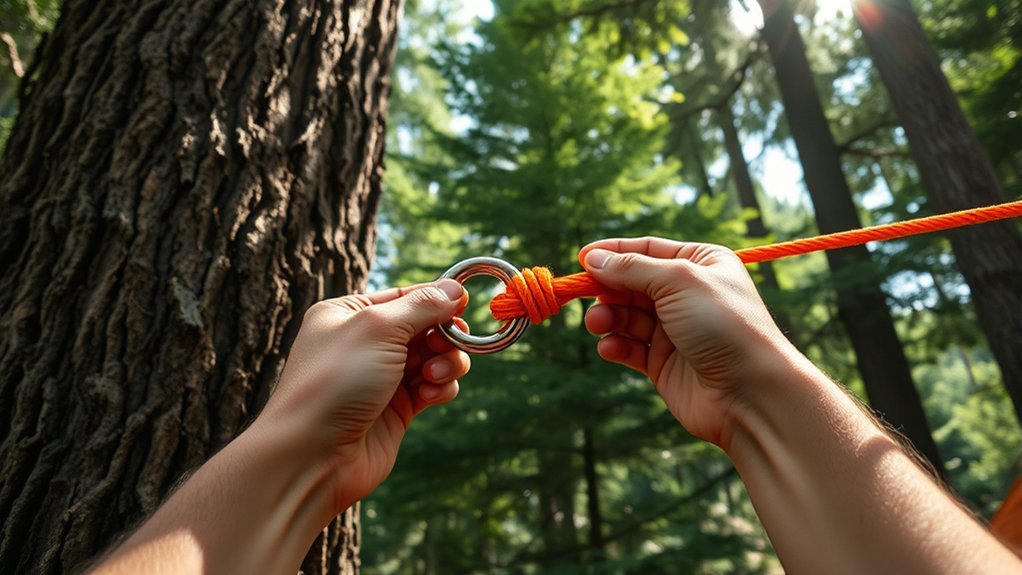
Completing the taut-line hitch involves a few key steps to guarantee it functions properly. First, feed the working end of the line back through the loop you created earlier, making sure it’s positioned correctly for ideal functionality. After that, pull the knot tight to secure its grip on the standing line. A common mistake is not checking whether the knot slides easily along the line when not under tension while locking in place when tension is applied. For maximum effectiveness, position the knot away from the object it’s tied to, which allows for easier adjustments. Finally, don’t skip safety precautions—test the knot’s hold before applying full tension to the lines. This guarantees it won’t slip when you need it most, giving you peace of mind as you enjoy your outdoor adventure.
Functionality Under Tension
When you apply tension to a taut-line hitch, it locks securely in place, ensuring stability even under significant load. This knot’s design allows you to adjust the tension easily without having to untie it, making it practical for various situations. Whether you’re setting up a tent or securing a load, you’ll appreciate how it handles dynamic conditions with reliability.
Knot Stability Under Load
The taut-line hitch is designed to maintain its grip under tension, ensuring that your setup remains secure. This knot excels in knot performance, effectively adapting to load dynamics. When you apply tension, the additional wrap around the standing end enhances the knot’s locking mechanism, preventing slippage and maintaining the desired tightness. It grips firmly even in dynamic conditions, making it an ideal choice for guying out a tarp or tent. You’ll find that it allows for adjustments without compromising stability. Whether you’re facing variable weather or shifting terrain, the taut-line hitch keeps your setup reliable, offering you the freedom to enjoy the great outdoors without worrying about your gear.
Easy Tension Adjustment
After ensuring stability under load with the taut-line hitch, you’ll appreciate its ease of tension adjustment. This knot locks in place under tension, allowing for quick modifications without re-tying. Whether you’re facing changing weather or shifting ground conditions, its outdoor versatility shines through.
| Feature | Benefit |
|---|---|
| Quick adjustments | Adapt to changing conditions easily |
| Secure hold | Reliable tension management |
| Easy to slide | Maintain desired tautness |
With just a simple slide of the knot, you can increase or decrease tension, ensuring your setup remains secure and stable. Embrace the freedom that comes with mastering this essential knot!
How to Adjust Tension Effectively

Adjusting the tension on your taut-line hitch is simple and effective. To tighten, just slide the knot toward the object, while loosening it requires moving the knot in the opposite direction. Quick adjustments like these let you maintain the right tension without the hassle of untying the knot.
Tightening the Knot
When you need to tighten a taut-line hitch, simply slide the knot toward the object to increase tension effectively. This adjustment not only enhances knot security but also guarantees ideal tension maintenance. Remember, the knot’s design allows for fluid adjustments, perfect for dynamic outdoor conditions.
- Regularly check the hitch to confirm it’s holding the desired tension.
- Confirm the knot is securely locked to prevent slippage under load.
- For quick adjustments, slide the knot toward the object to tighten.
Loosening Techniques
To effectively loosen the tension on a taut-line hitch, simply slide the knot in the opposite direction of the desired tension increase. This action allows the line to extend freely. Remember to hold the standing line firmly while making adjustments to prevent unwanted slack. If you find the knot difficult to adjust, check its formation; a well-tied taut-line hitch should glide smoothly. Regular inspections are essential, as environmental factors may require frequent tension adjustments for ideal performance.
| Action | Note |
|---|---|
| Slide knot backward | Loosen tension |
| Pull standing end | Helps knot slide |
| Hold standing line firmly | Prevents unwanted slack |
| Inspect knot regularly | Guarantees smooth adjustments |
| Recheck formation | Guarantees efficient knot maintenance |
Quick Adjustments Methods
After mastering loosening techniques, you can easily make quick adjustments to the tension of your taut-line hitch. Effective tension management guarantees your tent or tarp stays stable, especially in changing conditions. Here are some adjustment techniques to remember:
- Tightening: Slide the knot toward the anchor point to create a longer doubled line, enhancing grip.
- Loosening: Move the knot in the opposite direction for swift adjustments, no need to untie.
- Regular Checks: Periodically inspect the knot’s position to maintain peak tension throughout your use.
With these methods, you’ll achieve reliable hold and adaptability, giving you the freedom to enjoy your outdoor experience without worry.
Practical Applications in Outdoor Settings
The taut-line hitch is a game changer for outdoor enthusiasts looking to secure their gear effectively. When you’re out camping, this knot’s ability to maintain tension is essential for keeping your tent lines taut against changing weather. It’s particularly useful for guying out tarps and tents, ensuring stability and preventing sagging in windy conditions.
With the taut-line hitch, you can easily adjust your lines to tighten or loosen as needed, making it an efficient choice for dynamic camping scenarios. This adaptability also extends to securing canopies, awnings, or any temporary shelter, enhancing your outdoor safety. You won’t have to worry about your camping gear shifting or collapsing during the night.
Frequently Asked Questions
Can I Use Any Type of Rope for the Taut-Line Hitch?
You can use various rope materials for a taut-line hitch, but make certain they’re strong enough for your needs. The knot strength depends on the rope type, so choose wisely for peak performance and reliability.
Is the Taut-Line Hitch Suitable for Climbing or Safety Applications?
The taut-line hitch isn’t ideal for climbing safety due to its knot reliability. Picture yourself on a climb—trusting a secure knot is essential, so opt for stronger, more dependable knots like the figure-eight.
How Does Weather Affect the Taut-Line Hitch’s Performance?
Weather conditions can markedly impact your taut-line hitch’s knot integrity. Rain or high winds may loosen the knot, while extreme heat can cause rope materials to degrade, compromising its performance. Always check and adjust accordingly.
Can the Taut-Line Hitch Slip Under Heavy Loads?
Yes, the taut-line hitch can slip under heavy loads if it’s not secured properly. For ideal hitch security, make sure you’re managing the load effectively, so you can enjoy your outdoor adventures without worry.
What Are the Best Practices for Maintaining My Rope?
To maintain your rope, use gentle cleaning techniques like mild soap and water, then rinse thoroughly. Store it in a cool, dry place, avoiding knots, to keep it tangle-free and extend its lifespan.
Conclusion
Now that you know how to tie a taut-line hitch, you can keep your tent lines secure and adjustable, just like a pro! Remember, this knot’s not just for camping; it’s handy for any outdoor adventure where you need flexibility. Whether you’re pitching a tent or tying down gear, mastering this knot will save you a lot of hassle. So grab your rope, and get ready to hit the trail like it’s the roaring twenties!