


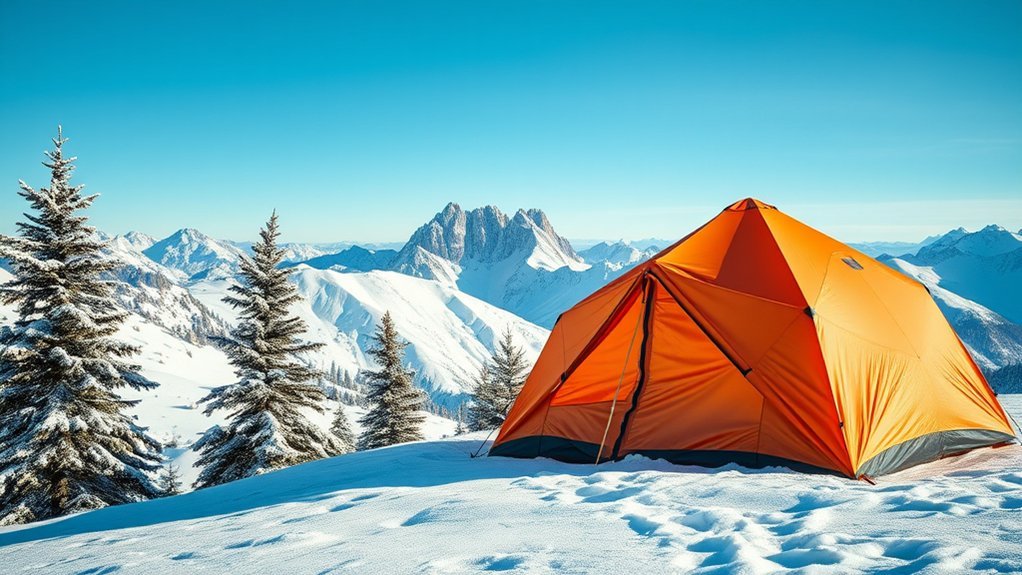
A 4-season tent is designed to endure extreme weather, making it ideal for winter campers and mountaineers facing heavy snow and strong winds. These tents feature durable materials, excellent insulation, and a stable dome shape to retain warmth and prevent snow ingress. If you’re planning winter adventures or need reliable shelter in harsh conditions, a 4-season tent is essential. Stay tuned for more insights on how to choose the right tent for your specific needs.
Understanding the Features of 4-Season Tents

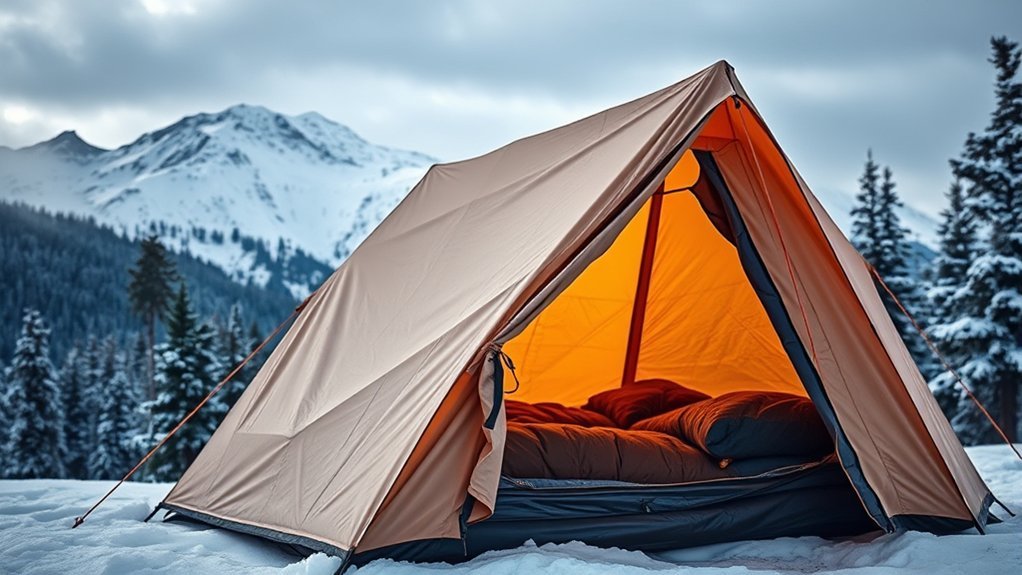
When you’re venturing into harsh weather conditions, understanding the features of 4-season tents is fundamental for your safety and comfort. These tents utilize durable tent materials, such as thicker fabrics, designed to withstand extreme environments. Their dome shapes and flysheets that touch the ground effectively prevent snow ingress and enhance stability against high winds. Insulation techniques play a pivotal role, as 4-season tents can retain heat, often being up to 30 degrees warmer than the surrounding air due to minimized ventilation. This is critical for winter camping and high-altitude scenarios. Features like double-wall designs and improved ventilation options help manage condensation while maintaining breathability. By incorporating these elements, 4-season tents offer a reliable shelter for campers facing heavy snowfall and extreme cold, ensuring a secure and comfortable experience in adverse weather. Understanding these features empowers you to choose the right gear for your adventures.
Key Considerations for Choosing a 4-Season Tent
Choosing a 4-season tent requires careful consideration of various features to guarantee it meets your specific needs during extreme conditions. Prioritize tent materials that offer high wind resistance and durability, like ripstop nylon or polyester, which can withstand harsh elements. Look for double-wall construction to enhance insulation types and maintain warmth. A flysheet that touches the ground is essential to prevent snow ingress and improve insulation against cold winds.
Consider the tent’s weight and packability, as most 4-season tents range from 2 to 4 pounds; balancing sturdiness with transport ease is vital for extended trips. Additionally, assess ventilation options in the design to effectively manage heat retention and minimize condensation. Finally, be cautious of misleading labels; always review specifications to confirm you’re choosing a true 4-season tent that delivers reliable winter performance.
Real-World Applications and User Experiences
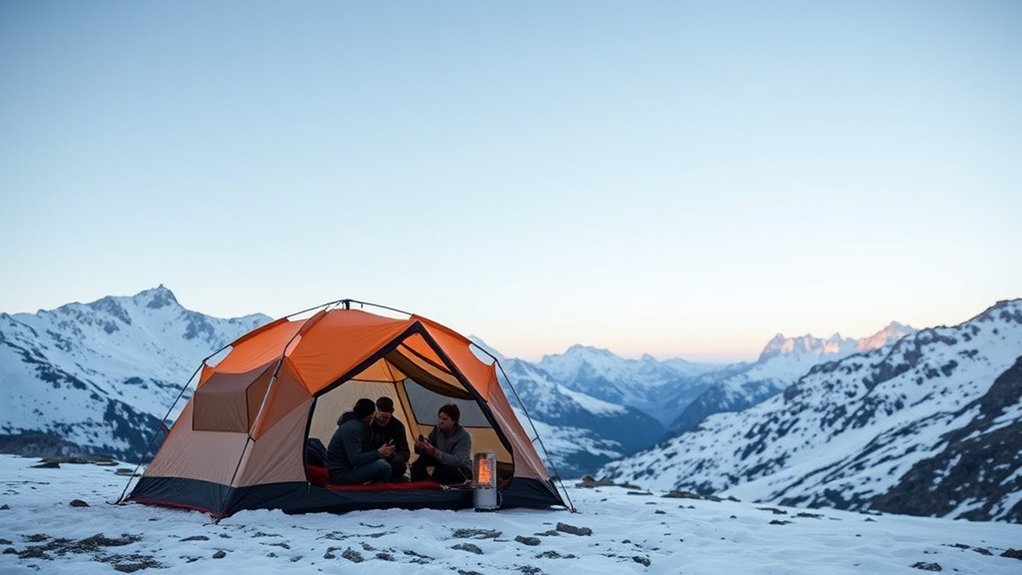
4-season tents excel in extreme weather, and many users have firsthand accounts that underscore their significance in various situations. When you’re cold weather camping, you need a tent that offers unmatched durability and insulation. Users report that 4-season tents can be up to 30 degrees warmer than the outside temperature, thanks to their reduced ventilation and robust design.
During a November Colorado hunt, a user experienced a 3-season tent failure in heavy rain, highlighting the necessity of dependable shelter. Real-world experiences show that 4-season tents provide superior storm protection, ensuring you stay dry and warm, which is vital for a restful night. Campers frequently emphasize that investing in a high-quality 4-season tent dramatically enhances their outdoor adventures, offering safety and comfort during extended trips in harsh environments. For those who seek liberation in nature, a 4-season tent is an essential ally.
Comparing 4-Season Tents to 3-Season Options
While many campers seek lightweight options for their adventures, understanding the differences between 4-season and 3-season tents is vital for making an informed decision. Here’s what you need to know about weight differences and weather durability:
- Fabric and Structure: 4-season tents use thicker fabrics and a dome shape for better stability and heat retention, unlike the lighter, more breathable 3-season designs that prioritize ventilation.
- Temperature Control: In harsh conditions, 4-season tents can be about 30 degrees warmer than the outside, while 3-season tents may struggle to keep warmth.
- Ventilation: 3-season tents excel in airflow due to mesh components, but this can expose you to cold during winter, making 4-season tents a superior choice for extreme weather.
Choosing the right tent is important; guarantee you’re not misled by misleading labels on 3-season tents when planning your winter excursions.
Evaluating Your Camping Needs and Conditions
How do you determine the right tent for your specific camping needs? Start by evaluating your expected weather conditions and the duration of your trips. If you’re heading into areas with heavy snowfall or strong winds, a 4-season tent’s durability and insulation can be a game-changer. These tents are specifically designed for harsh environments, offering better stability and warmth retention compared to 3-season options.
| Criteria | 3-Season Tent | 4-Season Tent |
|---|---|---|
| Tent Durability | Moderate | High |
| Insulation | Basic | Advanced |
| Weather Resistance | Light rain and mild winds | Heavy snow and strong winds |
| Ideal Use | Spring to fall camping | Winter camping and mountaineering |
Investing in a 4-season tent is essential for serious winter campers seeking safety and comfort against the elements.
Frequently Asked Questions
Can I Use a 4-Season Tent in Summer?
Yes, you can use a 4-season tent in summer, but be mindful of ventilation concerns. Proper temperature management is essential to avoid overheating, so make certain you open vents and choose a cooler location for setup.
How Much Heavier Are 4-Season Tents Compared to 3-Season Tents?
4-season tents typically weigh 1 to 3 pounds more than 3-season tents. When considering packing, factor in the extra weight and stability for harsher conditions, ensuring your gear aligns with your adventure’s demands and freedom.
Do 4-Season Tents Require Special Setup Techniques?
While 4-season tents may seem intimidating, they don’t require overly complex setup techniques. For winter camping, focus on securing guylines and using snow stakes, ensuring stability against harsh conditions. You’ll be ready for any adventure!
Are 4-Season Tents Waterproof?
Yes, 4-season tents are typically waterproof, featuring advanced weather resistance. However, verify you check the ventilation features to prevent moisture buildup inside, keeping your environment comfortable during harsh conditions while maintaining effective airflow.
What Is the Lifespan of a Typical 4-Season Tent?
A typical 4-season tent can last around 10 years, depending on durability factors like material and usage. Regular maintenance, such as cleaning and proper storage, can greatly extend its lifespan, keeping your adventures alive longer.
Conclusion
In your quest for outdoor adventure, a 4-season tent stands as your fortress against the elements, much like the sturdy castles of yore. If you’re hiking through snow-capped mountains or facing fierce winds, this tent’s durability and design are invaluable. By evaluating your specific camping needs and conditions, you can guarantee that your gear supports your journey, allowing you to explore nature’s beauty without compromise. Choose wisely, and let your adventures unfold, no matter the season.