


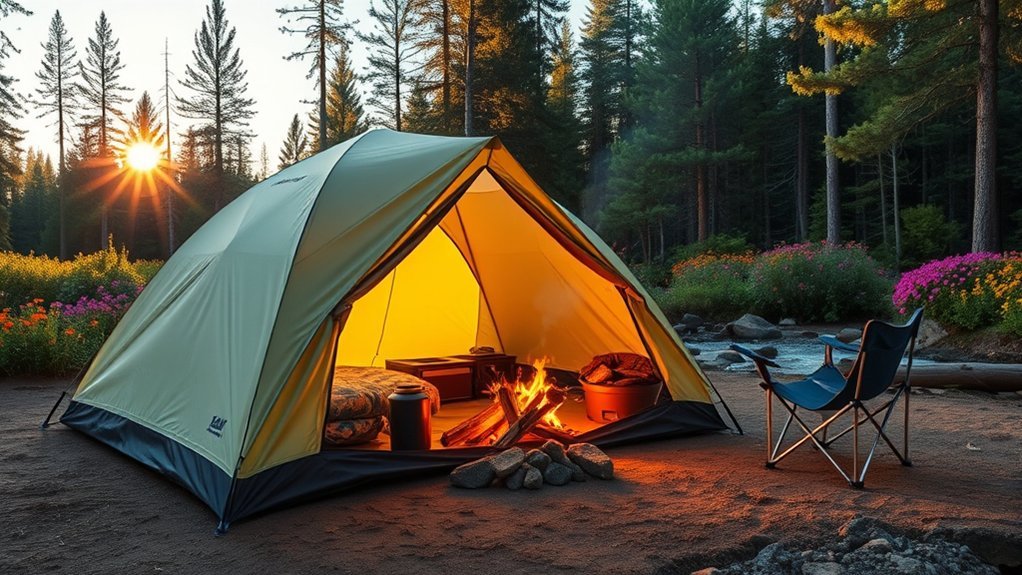
For easier state park tent camping trips, choose parks known for scenic views and diverse landscapes, and book campsites well in advance. Pack essential gear like a quality tent, a sleeping bag suited for the season, and a first aid kit. Stay organized with a tailored packing list and engage in park activities, from guided hikes to ranger-led programs. Also, make sure to follow park regulations and Leave No Trace principles for a more enjoyable experience. There’s plenty more to explore!
Choosing the Right State Park for Tent Camping


When you’re planning a tent camping trip, how do you choose the perfect state park? Start by seeking out parks like South Toledo Bend State Park and Fontainebleau State Park, known for their stunning scenic views and inviting tent sites. Before you decide, check the park websites for essential amenities like restrooms, water sources, and nearby recreational activities. Parks with diverse landscapes, such as Chicot State Park’s budget-friendly primitive sites or Grand Isle State Park’s beach camping, offer unique adventures. To maximize your relaxation, use maps to pinpoint parks within a short driving distance, cutting down travel time. If you want a more tranquil experience, consider mid-week camping or visiting during the off-season when fewer visitors are around. By focusing on these aspects, you’ll find a state park that not only meets your needs but also enriches your camping experience. Happy camping!
Booking Your Campsite: Tips and Tricks
How do you guarantee you snag the perfect campsite for your upcoming adventure? First, plan ahead! Popular campsites fill up six months in advance, so set calendar reminders for your desired dates. Consider using reservation strategies like camping mid-week (Monday–Thursday) or during the offseason for better availability.
Don’t forget to check out reservecalifornia.com to monitor cancellations and set alerts for your preferred sites—this can be a game-changer! Before booking, explore the park’s website to understand specific amenities and rules, like campfire regulations and pet policies, to ascertain your trip meets your needs.
If tent sites are fully booked, keep your options open by considering alternative lodging like cabins or yurts. With these tips, you’ll be well on your way to securing that perfect camping experience, feeling free and connected to nature!
Essential Gear for Tent Camping
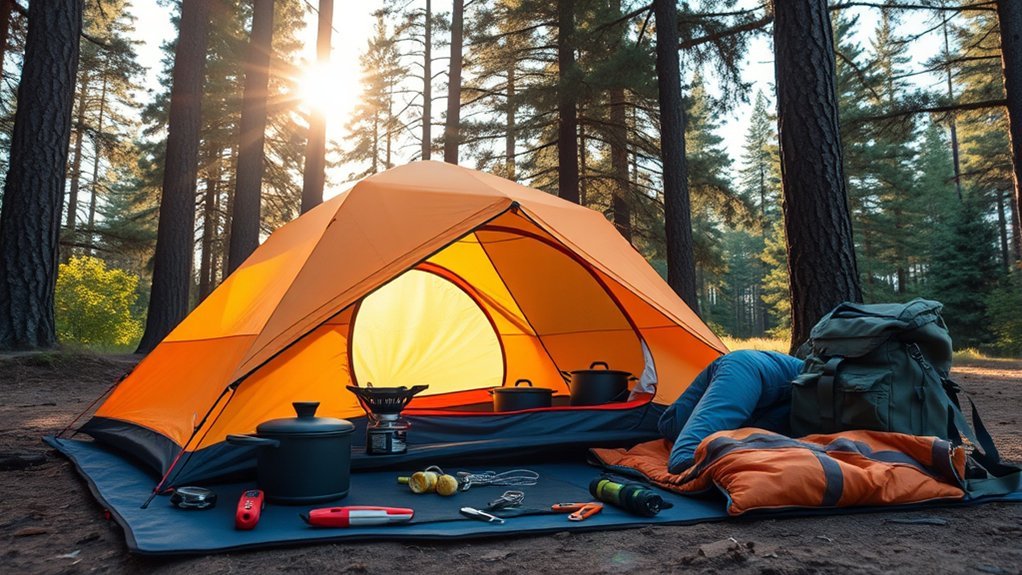
To guarantee a comfortable and enjoyable tent camping experience, it’s vital to pack the right gear. Start with a quality tent—consider tent types like dome, cabin, or pop-up for varying comfort and protection. Don’t forget a sleeping bag suited for the season, preferably a mummy or rectangular style with appropriate insulation materials. A sleeping pad is essential for extra comfort and insulation from the cold ground.
Here’s a quick gear checklist:
| Gear Type | Importance |
|---|---|
| Tent | Provides shelter and protection |
| Sleeping Bag | Secures warmth during the night |
| Sleeping Pad | Adds comfort and insulation |
Additionally, bring cooking equipment and a first aid kit for safety. Dress in layers with quick-drying fabrics to stay comfortable during outdoor activities. With the right gear, you’re set for an unforgettable adventure!
Packing Strategies for a Successful Trip
Packing for a tent camping trip requires thoughtful strategies to assure you have everything you need without overloading your pack. Here are some effective packing techniques to guarantee your adventure is seamless:
Thoughtful packing strategies ensure you have essentials for a seamless tent camping adventure without overloading your pack.
- Tailored Packing List: Create a detailed list based on your camping style. Include essentials like a tent, sleeping bag, cooking equipment, and a first aid kit.
- Balance and Test Gear: Rent items from outdoor stores to test models before buying. This helps you find gear that fits your comfort and reduces unnecessary purchases.
- Screen-Free Activities: Don’t forget to pack activities like cards, watercolors, or books to foster connection with nature.
Focus on gear organization by selecting lightweight, functional items and prepare for varying weather with appropriate clothing layers and rain gear. Simplifying your packing not only enhances your experience but also promotes a liberating escape into the great outdoors.
Understanding Park Regulations and Safety
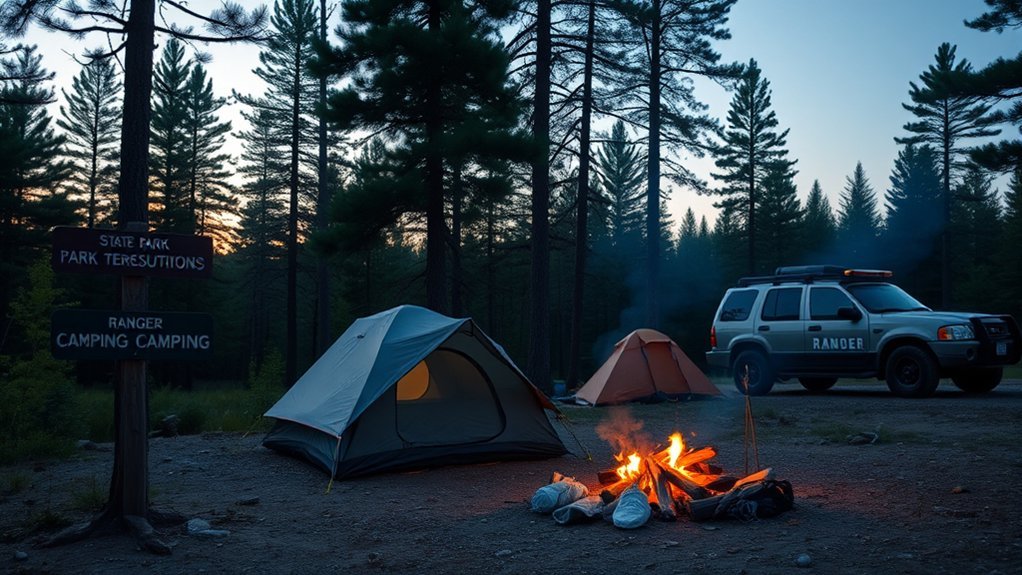
Before you set off on your camping adventure, it’s essential to understand the park regulations and safety measures in place. Start by reviewing the park’s website for specific campfire regulations, pet policies, and waste disposal rules. Each park has its own occupancy limits, so make sure to confirm the maximum number of visitors allowed at your campsite to avoid overcrowding.
Familiarize yourself with the safety guidelines and emergency procedures outlined by the park. This preparation can help you tackle any potential issues during your trip. Remember, most state parks have designated areas for campfires, and you need to check for burn bans or restrictions before lighting up.
Lastly, practicing Leave No Trace principles is crucial. Pack out all waste and respect wildlife by observing them from a distance. By following these regulations, you’ll create a safer and more enjoyable experience for everyone.
Preparing for Weather Conditions
Understanding park regulations and safety measures sets a solid foundation for your camping trip, but being prepared for weather conditions is just as important. To guarantee effective weather preparedness and temperature management, keep these tips in mind:
- Check the Forecast: Always look up the weather for the nearest town to your park. This helps you pack appropriate clothing and gear.
- Layer Up: Prepare for temperature fluctuations by packing layers, as conditions can shift dramatically, especially in mountainous or desert regions.
- Rain Gear Essentials: Bring waterproof gear like rain jackets and tarps to protect yourself and your equipment. A bivy bag keeps your sleeping bag dry, while a tent footprint safeguards your tent floor.
Stay informed about any weather alerts from park authorities to guarantee a safe and enjoyable camping experience. Embrace nature’s unpredictability with the right preparation!
Setting Up Your Campsite Efficiently
When you arrive at your campsite, setting up your tent efficiently can make all the difference in your outdoor experience. Start by choosing a level, dry area free from debris and at least 200 feet away from water sources. This minimizes environmental impact and enhances comfort. Lay down a footprint or tarp to protect your tent from moisture and abrasions. Pay attention to tent orientation; position the entrance away from prevailing winds for better ventilation and protection from the elements. Secure your tent with stakes and guylines, keeping them taut to prevent sagging during rain. For effective campsite organization, designate specific areas for cooking, sleeping, and gear storage. This not only maintains cleanliness but also enhances safety, allowing you to fully enjoy the liberation of the great outdoors. With these tips, you’ll create a functional and inviting campsite in no time.
Engaging in Park Activities and Exploration
When you’re camping in a state park, don’t miss out on ranger-led nature programs that provide fascinating insights into the local ecology. Take advantage of the visitor center to gather maps and learn about trail exploration opportunities, ensuring you make the most of your adventure. Engaging in these activities will deepen your appreciation for the beautiful surroundings and create lasting memories.
Ranger-led Nature Programs
Ranger-led nature programs can transform your camping experience by offering a deeper connection to the park’s unique ecology and history. These engaging ranger programs provide valuable wildlife education and insights that can enrich your visit. Here are three reasons to participate:
- Family-Friendly Learning: Programs cater to all ages, making it easy to share knowledge and experiences with your loved ones.
- Specialized Topics: From bird watching to stargazing, you can dive deeper into specific interests and gain expertise from knowledgeable rangers.
- Enhanced Exploration: Engaging with park staff helps you learn about trail conditions, safety, and unique features, ensuring a well-rounded experience.
Don’t miss the chance to connect with nature and expand your understanding of the park!
Trail Exploration Opportunities
How can you make the most of your camping experience? Immerse yourself in the trail diversity that state parks offer! With options ranging from easy nature walks to challenging backcountry routes, you’ll discover unique ecosystems and breathtaking landscapes. Don’t forget to chat with park rangers—they can provide invaluable insights on current trail conditions and safety tips to enhance your adventure. Look for staff-led programs, which often include guided hikes that explore local ecology and history, adding an educational twist to your exploration. As you trek, keep your eyes peeled for wildlife encounters; spotting native animals and vibrant birds can truly enrich your trip. Grab a map, plan your routes, and get ready for unforgettable experiences in nature!
Visitor Center Activities
After exploring the diverse trails of the park, don’t miss out on the valuable experiences offered at the visitor center. Here, you can deepen your connection with nature through engaging activities:
- Visitor center exhibits: Discover local ecology and history through interactive displays that captivate all ages.
- Educational programs: Join guided sessions led by knowledgeable park staff, where you’ll learn about the area’s natural and cultural significance.
- Family-friendly activities: Participate in hands-on programs tailored for both children and adults, enhancing your camping experience.
Connecting with campground hosts and visitor center staff can also provide you with valuable insights and tips for maximizing your enjoyment during your stay. Embrace this opportunity to enrich your adventure!
Maintaining a Leave No Trace Ethic
When you’re camping, proper waste disposal is essential for keeping the environment pristine. Always pack out everything you bring in, including food scraps, to protect wildlife and maintain the beauty of the area. Additionally, minimize your campfire impact by using designated fire rings and ensuring your fire is completely extinguished before you leave.
Proper Waste Disposal
Proper waste disposal is essential for maintaining the beauty of our natural landscapes and ensuring a sustainable camping experience. To practice effective waste management, follow these tips:
- Always pack out what you pack in. This includes all trash, food scraps, and personal items.
- Use designated trash and recycling bins when available. If not, bring a trash bag to store waste until you can dispose of it properly.
- Educate yourself on local regulations regarding waste disposal. Adhering to state park guidelines protects natural resources and wildlife.
Minimize Campfire Impact
To minimize your campfire’s impact on the environment, it is crucial to follow best practices that align with the Leave No Trace ethic. Always use designated fire rings or grills to prevent damage to the natural areas around you. Before lighting up, check the park’s website for burn bans and regulations, as conditions can change. Purchase firewood locally to avoid introducing invasive species, and never harvest wood from the park. For fire safety, keep water nearby to extinguish the flames completely before leaving. Finally, maintain a safe distance from trees and vegetation when setting up your fire, protecting wildlife habitats while enjoying your outdoor experience. Embracing these eco-friendly practices guarantees you leave a positive mark on nature.
Tips for a Memorable Camping Experience
How can you guarantee your camping trip becomes an unforgettable adventure? By embracing the beauty of nature and planning wisely! Here are three tips for a memorable experience:
Embrace nature and plan wisely to ensure your camping trip is an unforgettable adventure.
- Choose the Right Park: Opt for state parks like South Toledo Bend or Fontainebleau, where stunning views and diverse wildlife await.
- Plan for Fun: Prepare engaging activities, such as wildlife photography, to capture the vibrant ecosystem around you. Engage with park staff for local insights and trail recommendations.
- Delicious Campfire Recipes: Pack easy-to-cook, non-perishable foods, and don’t forget to experiment with simple campfire recipes. Enjoying meals under the stars elevates the camping experience.
Frequently Asked Questions
What Should I Do if I Encounter Wildlife While Camping?
If you encounter wildlife, stay calm and maintain your distance. Don’t feed or approach animals. Instead, back away slowly and make noise to encourage them to leave. Prioritize wildlife safety and respect their space during animal encounters.
Can I Bring My Pet Camping in State Parks?
Sure, you can bring your pet camping, but remember, they won’t handle the bear encounter as well as you! Check pet camping guidelines and seek the best pet-friendly parks for a tail-wagging adventure.
Are Campfires Allowed at All State Parks?
Campfires aren’t allowed in all state parks. Check specific campfire regulations before your trip. Always prioritize fire safety—keep fires small, supervised, and contained. Embrace the freedom of nature while respecting its boundaries!
What Should I Do in Case of an Emergency?
In case of an emergency, stay calm. Use first aid supplies for injuries and contact emergency services. Keep a list of emergency contacts handy, so you can quickly reach help when needed. Stay safe!
How Do I Find Out About Park Events and Programs?
To discover park events and programs, immerse yourself in park newsletters and explore their social media pages. They’re treasure maps leading you to exciting adventures, ensuring you never miss out on memorable experiences in nature!
Conclusion
As you commence your tent camping adventure, remember that preparation is key. With the right park selection, gear, and mindset, you’re not just setting up a tent; you’re crafting memories that will last a lifetime. Think of camping as a dance with nature—every step you take, from packing to exploring, brings you closer to the rhythm of the great outdoors. So gear up, embrace the wild, and let the adventure unfold!