



To keep condensation off your sleeping bag, start by managing humidity and ensuring proper ventilation. Choose a sleeping bag with effective insulation and water-resistant materials. Position your tent wisely to maximize airflow, and keep vents open for cross-ventilation. Consider using a vapor barrier liner to minimize moisture from perspiration. Regularly air out your sleeping bag in the morning to let it dry, preventing moisture buildup. There’s more to optimizing your camping experience with additional techniques and gear choices.
Understanding the Causes of Condensation

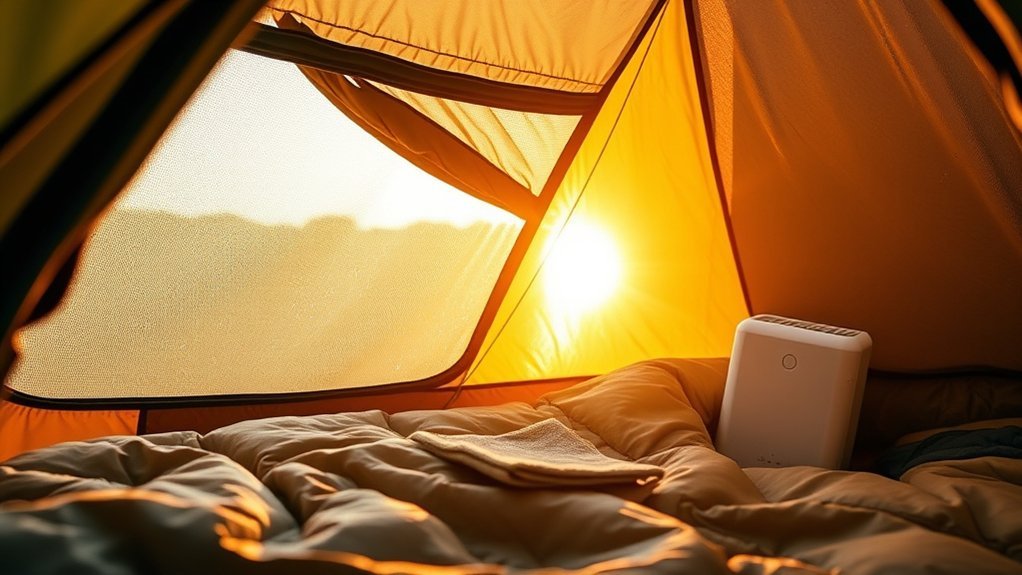
Condensation in your sleeping bag can arise when body heat meets the cooler surfaces of the bag’s shell, leading to moisture buildup. Understanding the moisture sources is vital for mitigating this issue. High humidity levels, particularly above 80%, create an environment ripe for capillary condensation, where water vapor transforms into droplets as it cools. If you wear damp clothing or generate excessive warmth, you risk amplifying moisture levels inside the bag.
Temperature differentials further complicate matters, especially when your bag contacts cold surfaces like tent walls or floors. This contact can exacerbate condensation due to the significant temperature contrast. Additionally, the dew point may exist within your sleeping bag, indicating when condensation will occur. It’s essential to manage both internal and external humidity levels to maintain a dry, comfortable sleeping environment. By recognizing these factors, you can better prepare for your next adventure.
Choosing the Right Sleeping Bag
When choosing a sleeping bag, focus on insulation material, temperature ratings, and shell fabric. Select modern materials like treated down and Pertex shells to reduce condensation risks. Make certain your bag’s temperature rating aligns with your expected conditions to prevent overheating and moisture buildup.
Insulation Material Selection
Selecting the right insulation material for your sleeping bag is essential for a comfortable night’s sleep in varying conditions. Down insulation, especially treated versions like DriDown or DownTek, offers excellent warmth and loft but may struggle in humid environments. In such situations, synthetic alternatives are often your best bet, as they resist moisture absorption and maintain insulation properties even when wet. Look for sleeping bags with breathable shells to allow moisture vapor to escape, minimizing condensation buildup. Additionally, features like draft collars and adjustable hoods help maintain warmth and reduce moisture ingress from the outside. By choosing the right insulation, you can enhance your comfort and guarantee a more restful night’s sleep, no matter the conditions.
Temperature Rating Considerations
Choosing the right sleeping bag temperature rating is key to managing moisture and ensuring comfort during your outdoor adventures. The temperature rating impact can’t be overstated, as it directly influences how well you control condensation. Here are some essential considerations:
- Select a bag rated lower than expected temperatures to reduce internal moisture.
- Avoid extreme temperature differences; a lighter bag for milder conditions helps manage humidity.
- Choose down bags with hydrophobic treatments for humid environments.
- Consider synthetic insulation for consistent humidity; it retains insulation when wet.
- Balance your bag’s temperature rating with intended use and environmental conditions to minimize condensation.
Shell Fabric Properties
The shell fabric of your sleeping bag plays an essential role in managing condensation and overall comfort during your adventures. Opt for breathable fabrics like Pertex or other moisture-wicking materials, which greatly reduce condensation buildup inside the bag. Consider water-resistant down insulation to maintain loft and warmth while repelling moisture in humid conditions. If you’re in consistently wet environments, synthetic materials often outperform traditional down. Look for a sleeping bag with a high waterproof rating, ideally a hydrostatic head of at least 1,500mm, to block external moisture. A combination of a water-resistant outer layer and effective ventilation is important for best moisture management, ensuring you stay dry and comfortable throughout the night.
Effective Ventilation Techniques
To effectively reduce condensation, orient your tent to maximize airflow and utilize any ventilation openings. This setup promotes cross-flow ventilation, keeping humidity levels low inside the tent. Additionally, guarantee your sleeping area allows for air circulation to further minimize moisture buildup on your sleeping bag.
Tent Orientation Strategies
When you position your tent strategically, you can greatly enhance ventilation and reduce condensation buildup. Focus on effective tent positioning by considering wind direction and elevation. Here are some tips to optimize your setup:
- Face your tent into the prevailing wind to improve airflow.
- Keep vents open for cross-flow ventilation, decreasing humidity levels.
- Pitch on higher ground to allow better drainage and minimize moisture.
- Elevate your tent slightly and use a footprint to block ground moisture.
- Shake out the tent canopy in the morning to remove dew prior to packing.
Maximize Airflow Options
Maximizing airflow inside your tent is essential for reducing condensation and ensuring a comfortable night’s sleep. Start with proper tent orientation to prevailing winds, enhancing airflow management and minimizing moisture buildup. Utilize vents on both your tent and sleeping bag to promote cross-ventilation, aiding moisture control and lowering humidity levels. Maintain an open space between your sleeping bag and tent walls by using a sleeping pad; direct contact can lead to moisture transfer. In the morning, shake out and air the tent canopy before packing to reduce residual moisture and improve airflow for the next night. If conditions permit, sleep with the tent door partially open to facilitate airflow and further decrease humidity inside your sleeping area.
Use Ventilation Openings
Effective ventilation techniques are essential for minimizing condensation inside your sleeping area. To manage moisture effectively, use the following strategies:
- Orient your tent to catch prevailing winds for better airflow.
- Open vents on the tent canopy and rainfly to let humid air escape.
- Maintain a gap at the base of the tent to enhance airflow and prevent ground moisture accumulation.
- Slightly open the sleeping bag’s neck or use a ventilation zipper on colder nights to regulate internal moisture without losing warmth.
- Shake out and drape the tent canopy in the morning to dry it before packing.
Using Vapor Barrier Liners
To enhance warmth and manage moisture in your sleeping bag, think about using a Vapor Barrier Liner (VBL). VBLs protect down insulation from moisture produced by perspiration, greatly improving thermal efficiency in consistently below-freezing temperatures. They create a barrier that minimizes condensation, reducing contact between your body heat and the cooler outer shell, effectively enhancing warmth during long trips.
However, while VBLs offer notable benefits, there are disadvantages to reflect upon. They may require an adjustment period for comfort, as the lack of moisture escape can feel stifling at first. Additionally, in highly saturated environments, VBLs won’t completely eliminate humidity issues, making proper ventilation and layering necessary. Balancing these factors is vital, but if you seek liberation from dampness and cold, integrating a VBL into your gear can be a game-changer for your outdoor adventures.
Maintenance and Care for Your Gear
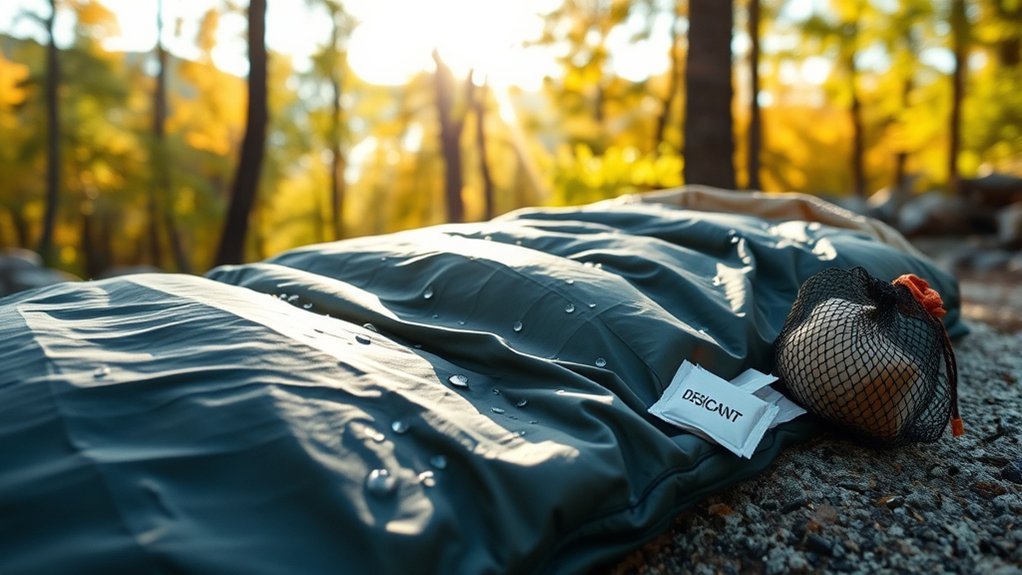
While you might focus on your sleeping bag’s performance outdoors, maintaining and caring for it is essential for long-lasting functionality. Proper sleeping bag maintenance will enhance its water resistance, prevent moisture accumulation, and preserve insulation loft. Here are some key care tips:
Maintaining your sleeping bag is crucial for performance, enhancing water resistance and preserving insulation loft for lasting outdoor adventures.
- Regularly wash your sleeping bag and use treatments like Nikwax for added water resistance.
- Keep it clean; dirt and oils diminish its moisture-repelling ability.
- Air it out each morning to allow condensation to evaporate before packing.
- Use super-absorbent materials to blot excess moisture from the exterior.
- Store it properly in a well-ventilated area to prevent mold growth during long-term gear storage.
Practical Tips for Reducing Moisture
Moisture control is vital for a comfortable night’s sleep in the outdoors, especially when temperatures drop. To effectively manage moisture, change into dry base layers before sleeping. This minimizes moisture transfer from damp clothing to your sleeping bag, enhancing sleeping bag hygiene. Ventilating your sleeping area is important; open vents and orient your tent for cross-flow to reduce humidity buildup. Confirm you’re using a sleeping bag rated for the conditions you’ll face. A bag too warm can lead to condensation inside.
Consider incorporating a vapor barrier liner (VBL) on longer trips in cold conditions, as it protects your sleeping bag from perspiration moisture. Finally, regularly air out your sleeping bag each morning to mitigate moisture buildup. Following these practical tips will help you maintain effective moisture management, guaranteeing your sleeping bag stays dry and enhancing your overall outdoor experience.
Frequently Asked Questions
Can I Use a Regular Bucket Instead of a Foot Bucket?
You can use a regular bucket, but a foot bucket offers specific benefits, like easier access and focused warmth. Consider bucket alternatives for convenience, but prioritize functionality to enhance your overall camping experience.
How Does Humidity Affect My Sleeping Bag’s Performance?
Humidity levels impact your sleeping bag’s performance considerably. High humidity can hinder moisture management, leading to dampness and reduced insulation. To maximize warmth, consider using moisture-wicking materials and ventilating your sleeping bag during use.
What Materials Are Best for Breathable Sleeping Bags?
Breathable sleeping bags often use synthetic insulation or down feathers, with down being 30% warmer for its weight. Choose wisely to enhance comfort and performance, ensuring you stay dry and cozy during your adventures.
Are There Specific Camping Locations More Prone to Condensation?
Certain camping climates, like humid or coastal areas, are more prone to condensation. Effective moisture management strategies, such as choosing elevated sites or using breathable gear, can greatly reduce condensation issues during your camping trips.
How Often Should I Clean My Sleeping Bag to Prevent Moisture?
You should clean your sleeping bag every few months, especially after heavy use. Regular sleeping bag maintenance helps reduce moisture buildup, ensuring better performance and longevity while keeping you comfortable on your adventures.
Conclusion
In summary, managing condensation in your sleeping bag is essential for a comfortable night’s sleep. Remember, around 30% of moisture in the air can condense inside your bag during cold nights. By choosing the right sleeping bag, employing effective ventilation techniques, and maintaining your gear, you can greatly reduce moisture buildup. Implement these strategies to enhance your outdoor experience, ensuring you stay warm and dry, no matter the conditions. Happy camping!