



Pop-up tents offer quick setup and are ideal for casual outings, taking as little as 15 seconds to pitch. However, their shorter lifespan, bulkier packed size, and limited weather resilience pose challenges. They excel in fair weather, making them great for backyard camping or festivals. Conversely, regular tents provide better durability, wind protection, and ventilation, but at the cost of setup time. Explore the nuances to determine when a pop-up tent might be your best option.
What Is a Pop-Up Tent?

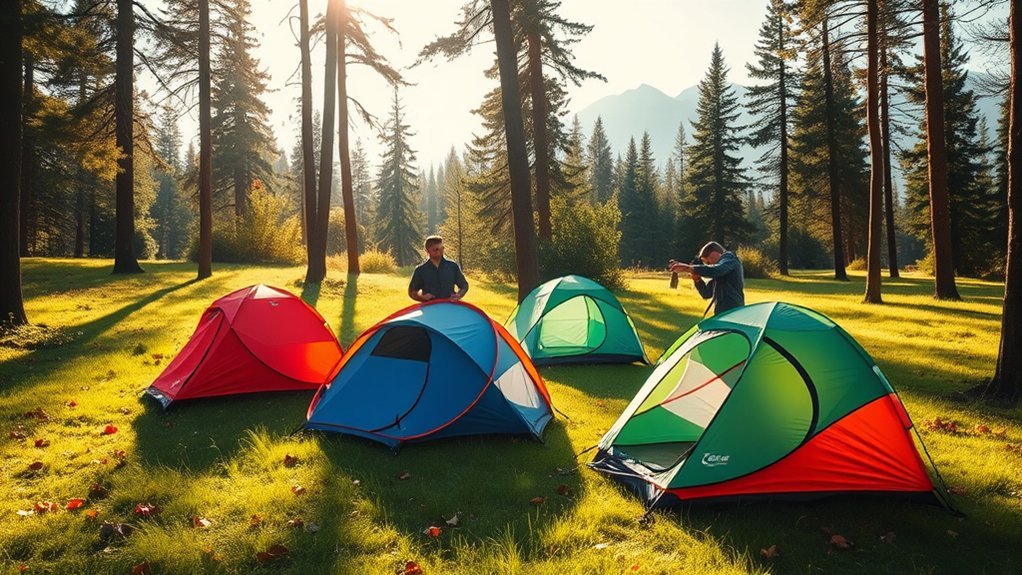
A pop-up tent is an innovative camping solution that prioritizes convenience and speed. Designed for quick setup, you can erect it in as little as 15 seconds, thanks to effective pop-up mechanisms. These tents utilize pre-connected, plastic-coated aluminum loops that unwind to create the structure effortlessly when you remove them from their storage bag. Weighing less and being highly portable, pop-up tents cater to casual camping, festivals, and spontaneous getaways. However, they often come with a larger packed size, typically in circular shapes, making them bulkier and sometimes challenging to store in vehicles. While their ease of use is appealing, you should consider the durability aspect. Composed of thinner materials and less robust pole designs, these tents usually have a lifespan of 3 to 7 years, making them less resilient than traditional camping options. Ultimately, understanding these characteristics helps you make an informed decision.
Advantages of Pop-Up Tents
When considering the advantages of pop-up tents, you’ll find that their rapid setup time greatly enhances the camping experience. These tents can be assembled in as little as 15 seconds without staking, making them perfect for first-time campers or anyone wanting a hassle-free assembly. The user-friendly features allow even children to set them up independently, fostering a fun outdoor experience during backyard campouts. Additionally, pop-up tents pack up quickly, taking only 1.75 to 3.5 minutes, which eliminates the cumbersome process of removing poles or rainflies. Their lightweight design provides significant portability benefits, making them ideal for casual camping, festivals, and family outings. With these tents, you can easily shift from one location to another, especially after concerts or events when you need a quick overnight solution. To conclude, pop-up tents blend convenience and ease, enhancing your outdoor adventures with minimal effort.
Disadvantages of Pop-Up Tents
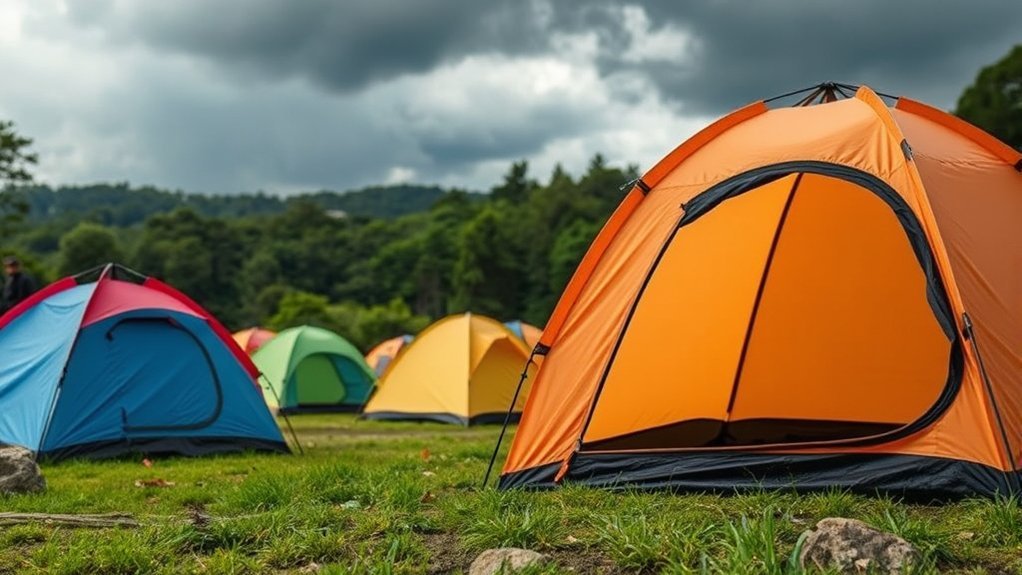
While pop-up tents offer remarkable convenience, they come with several notable disadvantages that can affect your camping experience. One major issue is their maintenance challenges; the crevice-filled designs trap dirt and debris, making cleaning a hassle. Additionally, pop-up tents typically have a shorter lifespan of 3 to 7 years compared to regular tents, which can last between 5 to 10 years. This is largely due to their thinner fiberglass poles and construction.
Weather limitations also pose a significant concern. Most pop-up tents struggle to withstand winds over 20 to 30 mph, making them unsuitable for adverse conditions. Moreover, many feature a non-removable rainfly that restricts ventilation, leading to stuffiness and condensation inside. Finally, their bulkier packed size can complicate storage and transportation, which might hinder your spontaneous adventures. These factors warrant careful consideration before choosing a pop-up tent for your outings.
Ideal Use Cases for Pop-Up Tents
Pop-up tents shine in specific scenarios where convenience and speed take precedence over durability and weather resilience. They’re perfect for backyard camping or family outings, allowing you to set up a cozy space in just 2 to 4 minutes. This user-friendly design is particularly beneficial for first-time campers or children, making camping accessible and enjoyable.
Additionally, pop-up tents serve as excellent festival shelters. After a long day of activities, you can quickly erect a lightweight, portable refuge to relax and recharge. These tents excel in fair weather, making them ideal for sunny summer trips when rain and wind aren’t concerns. However, it’s important to note that they’re not suitable for unpredictable weather or severe conditions, as they struggle with wind tolerance and may lead to discomfort due to trapped condensation. Embrace the convenience of pop-up tents, but choose your scenarios wisely.
Comparison With Regular Tents
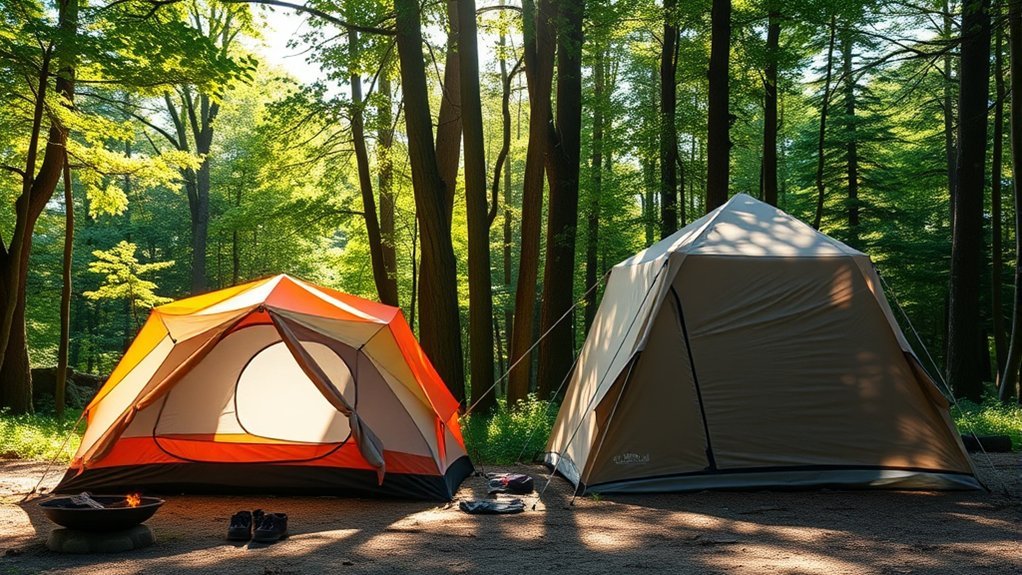
Choosing between pop-up tents and regular tents involves understanding their distinct characteristics and how they cater to different camping needs. Pop-up tents excel with quick setup, taking as little as 15 seconds, while regular tents usually require 7 to 22 minutes. However, the trade-off lies in durability; regular tents, made from robust materials, last 5 to 10 years, whereas pop-up tents, with thinner fiberglass poles, typically last only 3 to 7 years.
When it comes to wind protection, regular tents can handle gusts of 30 to 50 mph, while pop-up tents are limited to 20 to 30 mph. Additionally, ventilation options are superior in regular tents, thanks to removable rainflies, which help mitigate condensation. While pop-up features offer convenience, they sacrifice compactness and performance. Ultimately, your choice hinges on your priorities: speed versus resilience and comfort.
Frequently Asked Questions
How Do I Clean and Maintain a Pop-Up Tent?
To clean and maintain your pop-up tent, regularly inspect it for damage, wash the fabric with mild soap, and guarantee it’s completely dry before storage. Follow these tent cleaning and maintenance tips for longevity and performance.
Can Pop-Up Tents Be Used for Backpacking Trips?
Ever wondered if you can take a pop-up tent backpacking? While their portability is appealing, they often lack the lightweight design and compactness needed for extended trips, making them less suitable for serious backpacking adventures.
What Is the Weight Limit for Pop-Up Tents?
Pop-up tents generally have a weight capacity ranging from 2 to 6 people, depending on their durability. Always check the manufacturer’s specifications to verify the tent can support your gear and occupants safely.
Do Pop-Up Tents Come With a Warranty?
While some pop-up tents come with warranty coverage, it varies by brand. You should carefully check the specifics, as tent durability often correlates with the warranty offered, ensuring peace of mind for your adventures.
Are There Waterproof Options for Pop-Up Tents?
Yes, there are waterproof options for pop-up tents. These tents often utilize waterproof materials that enhance durability, ensuring you stay dry during rain. When choosing, prioritize both water resistance and overall tent durability for ideal protection.
Conclusion
In the world of camping gear, pop-up tents stand out like a lighthouse in a stormy sea, guiding you toward convenience and ease. While they offer quick setup and portability, their durability and weather resistance can be questionable. Ultimately, your choice hinges on your specific needs and the environment you’ll face. Weigh the pros and cons carefully, and you’ll find that when used correctly, pop-up tents can be your trusted companion for spontaneous adventures.