


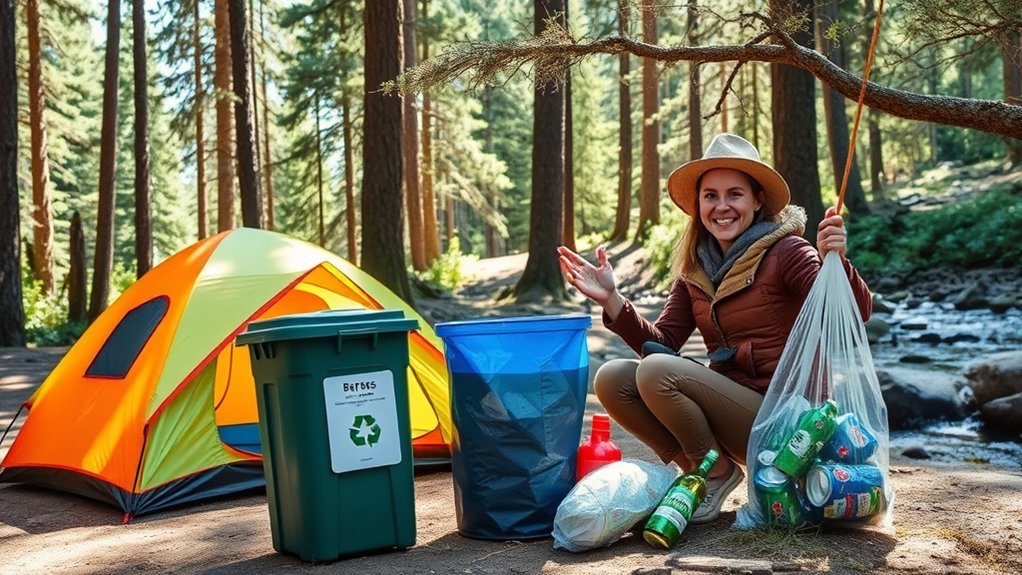
To manage trash while tent camping effectively, ditch single-use disposables and prep meals at home to cut down on waste. Use refillable containers for toiletries and avoid travel-sized products. Eliminate plastic water bottles by carrying a large reusable one. Separate your recycling and compost, and always pack out what you pack in. Reuse bags for trash and practice Leave No Trace principles. Stick around to explore more eco-friendly camping tips!
Ditch Single-Use Disposables

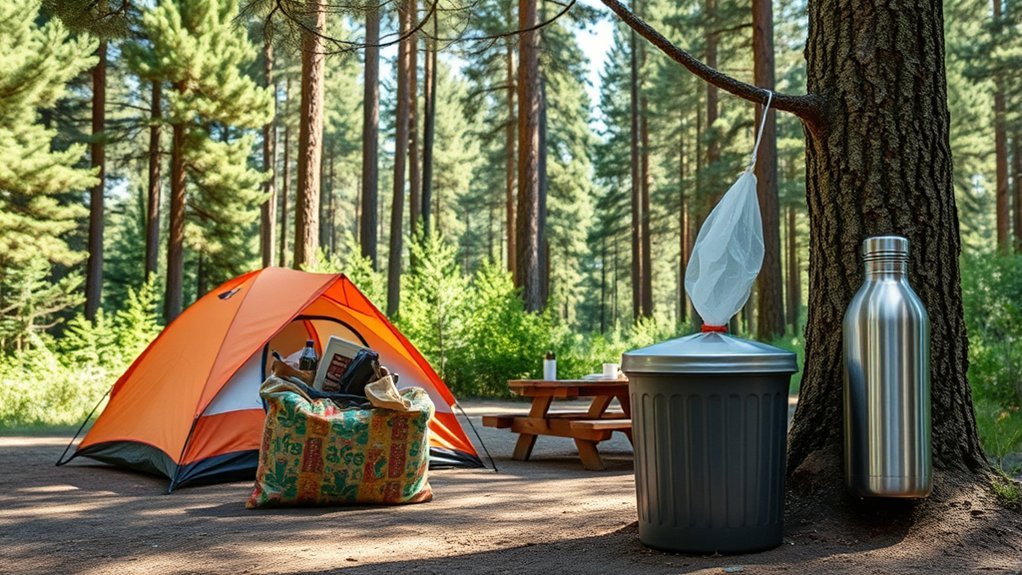
While you might be tempted to rely on convenient single-use disposables during your camping trip, ditching them can greatly reduce waste and enhance your outdoor experience. Instead of plastic utensils and plates that end up harming the environment, opt for eco-friendly utensils and sustainable plates. They’re not only better for the planet but also elevate your meals.
Consider packing insulated tumblers for drinks and silicone bags for food storage; these reusable items minimize waste while improving quality. Avoid those travel-sized toiletries that contribute to plastic pollution. Instead, bring regular-sized products or refillable containers to keep your impact low. Look for multi-purpose biodegradable products like Dr. Bronner’s soap to handle your cleaning needs without harming the environment. By thinking creatively about zero-waste solutions, you can enjoy a more liberating, sustainable camping lifestyle while leaving minimal trace behind.
Prep and Pack Food From Home
Ditching single-use disposables is just the first step in minimizing your environmental impact while camping. By prepping and packing food from home, you can reduce reliance on pre-packaged foods that harm our planet. Consider meal prep options like veggie kebabs, homemade hummus, and salads to keep your meals nutritious and waste-free.
| Food Item | Storage Method |
|---|---|
| Veggie Kebabs | Reusable containers |
| Homemade Hummus | Reusable silicone bags |
| Fresh Salads | Reusable containers |
| Bulk Snacks | Reusable bags |
Buying in bulk is a great strategy to cut down on packaging waste. Choose items like legumes and snacks that fit in your reusable bags. Remember, packing out all waste, including food scraps, guarantees you leave the campsite cleaner than you found it, reinforcing your commitment to our environment.
Eliminate Single-Use Plastic Water Bottles
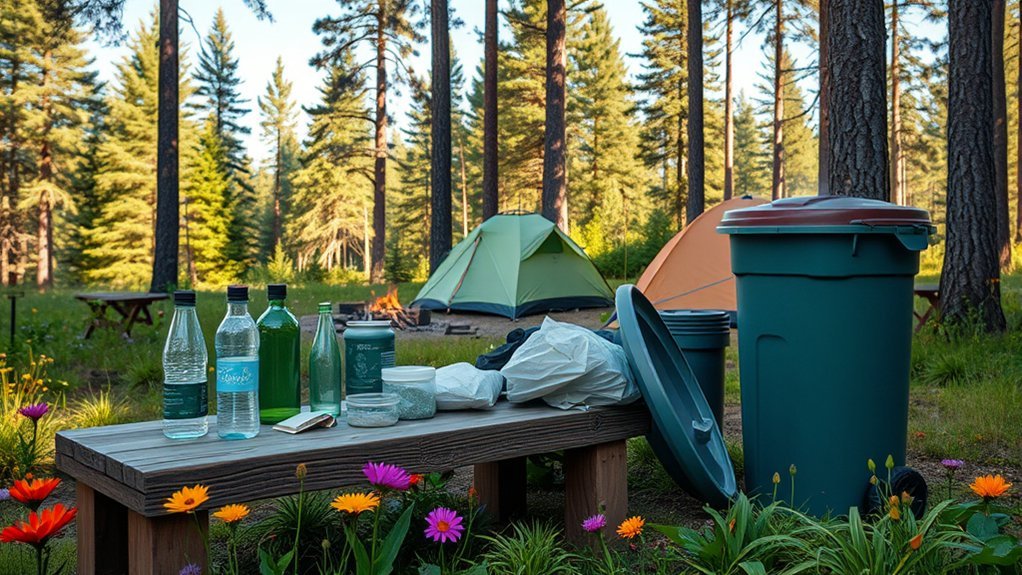
To reduce your environmental impact while camping, consider eliminating single-use plastic water bottles from your gear. These bottles contribute greatly to waste, with millions ending up in landfills and oceans each year. Instead, opt for large reusable water bottles or hydration packs that promote sustainable hydration. Not only do these eco-friendly alternatives help you cut down on waste, but they also save you money over time by minimizing the need to buy bottled water.
During your camping trip, refill your reusable containers at potable water stations or use water filters to collect and purify water, especially on longer excursions. By making this simple switch, you’ll greatly reduce your overall waste footprint and enjoy a more environmentally responsible outdoor experience. Embrace the freedom of knowing you’re making a positive impact on the planet while staying hydrated. So, let’s ditch those plastic bottles and go for a more sustainable approach!
Avoid Miniature Toiletries
When packing for a camping trip, it’s crucial to contemplate the impact of miniature toiletries on the environment. These small bottles contribute to single-use waste, so consider more sustainable options. Here are some practical toiletry alternatives to enhance your packing efficiency:
- Reusable Containers: Opt for refillable containers for your favorite products instead of buying travel-sized items.
- Multi-Purpose Biodegradable Products: Choose items that serve multiple functions, like a shampoo that doubles as body wash.
- Eco-Friendly Soaps: Products like Dr. Bronner’s soap can tackle various cleaning needs, reducing the number of items you bring.
- Plan Ahead: By carefully selecting your toiletries, you can greatly lessen your environmental footprint while enjoying the great outdoors.
Make smart choices, and you’ll not only pack efficiently but also embrace a more liberating, eco-conscious camping experience.
Use a Refillable Propane Tank
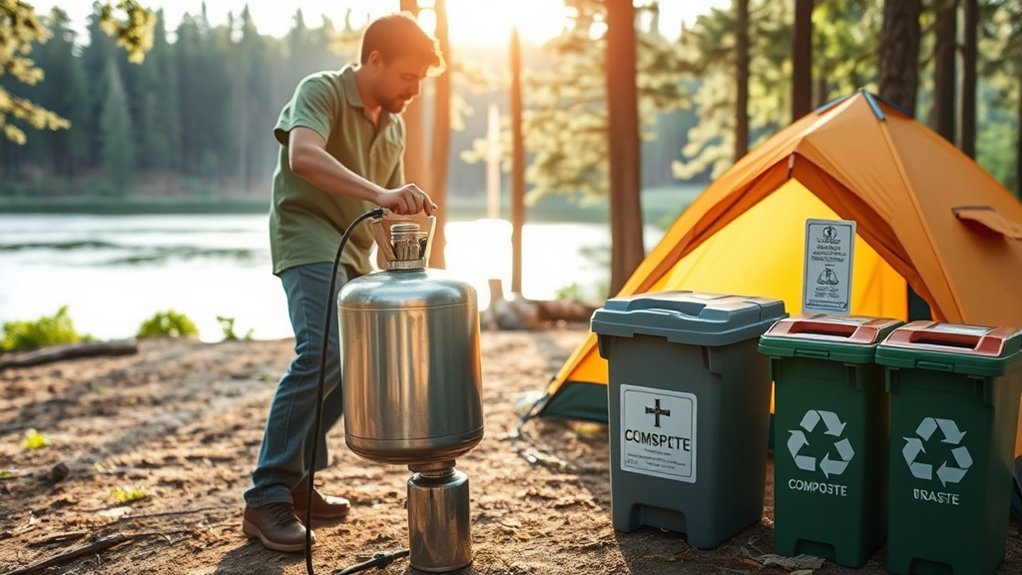
Using a refillable propane tank not only helps minimize waste but also makes your camping experience more efficient. By choosing a refillable tank over disposable canisters, you greatly reduce plastic and metal waste, contributing to a cleaner environment. With many camping supply stores offering refill services, it’s easy to adopt sustainable practices while enjoying the great outdoors.
Though refillable tanks may have a higher initial cost, they save you money in the long run due to their durability and increased fuel capacity. This means longer cooking and heating times, enhancing your overall camping experience. Plus, the propane tank efficiency of refillables guarantees you won’t find yourself scrambling for extra fuel mid-trip.
Always check for leaks and maintain your tank according to manufacturer guidelines for safe use. Embrace the refillable benefits and enjoy a more responsible, liberated camping adventure!
Manage Wastewater Effectively
When you’re tent camping, managing wastewater is essential for protecting the environment. Always wash your dishes at least 200 feet away from water sources and use biodegradable soap sparingly to minimize your impact. Remember to rinse with a pot or jug to filter out waste and pack out any leftover wastewater when possible.
Biodegradable Soap Usage
Although biodegradable soap is a more eco-friendly choice for cleaning while tent camping, it’s essential to use it wisely to protect local water sources. Even eco-friendly products can have an environmental impact if misused. Here are some key practices to follow:
- Always wash dishes and yourself at least 200 feet away from water sources.
- Rinse dishes and gear in a pot or jug, allowing soil to act as a natural filter for wastewater.
- Avoid using lotions, sunscreens, and body oils near water, as they also contribute to pollution.
- Dispose of any personal care products, including biodegradable soap, properly to safeguard local ecosystems.
Proper Washing Techniques
Proper washing techniques are essential for managing wastewater effectively while tent camping. Always wash your dishes and yourself at least 200 feet away from water sources to prevent contamination. Use biodegradable soap sparingly, and collect rinse water in a pot to utilize soil as a natural filter. A designated wash basin can contain wastewater, allowing for responsible disposal away from campsites.
| Step | Action |
|---|---|
| 1 | Gather all dirty dishes and utensils |
| 2 | Fill a wash basin with collected water |
| 3 | Use biodegradable soap, if necessary |
| 4 | Rinse dishes with soil-filtered water |
| 5 | Dispose of food scraps properly |
Following these washing techniques guarantees you’re respecting nature while enjoying your outdoor adventure!
Water Source Protection
Managing wastewater while camping goes hand in hand with protecting nearby water sources. By being mindful, you can guarantee water safety and safeguard aquatic ecosystems. Here are some practical tips:
- Always wash dishes and personal items at least 200 feet away from water sources.
- Use biodegradable soap sparingly, as excessive use can still harm water quality.
- Rinse dishes in a pot or jug, letting soil filter the wastewater before proper disposal.
- Never dump food scraps, grease, or kitchen waste near water to avoid attracting wildlife and pollution.
Separate Your Recycling & Compost
When you’re tent camping, it’s essential to set up a system for recycling and composting right from the start. Bring an extra bag for recyclables and pack a seal-tight container for food scraps to promote a zero-waste approach. By managing these items separately, you’ll not only lighten your impact on the environment but also set a great example for fellow campers.
Recycling Bin Preparation
A well-prepared recycling system can greatly reduce your waste while tent camping. Start by taking action to guarantee you’re recycling efficiently and effectively. Here’s how:
- Bring an extra box or bag specifically for recyclables; around 75% of waste is recyclable.
- Utilize campground recycling bins if available, guaranteeing proper disposal and preventing landfill overflow.
- Take recyclables home if no bins exist at your site—this promotes responsible waste management.
- Engage in recycling education with fellow campers, fostering community involvement in environmental stewardship.
Composting Food Scraps
Composting food scraps not only helps reduce your waste while tent camping, but it also minimizes your environmental impact by keeping organic materials out of landfills. To enjoy the composting benefits, pack a small, seal-tight container for your food scraps—this keeps wildlife at bay and makes transport easy. Common compostable items like vegetable peels, fruit cores, and coffee grounds enrich soil when properly decomposed. Always check local regulations regarding composting in campgrounds, as some require you to pack out all food waste. By practicing composting techniques, you promote awareness of sustainable practices, encouraging fellow campers to adopt responsible waste management. Embrace this liberating habit and enjoy your camping experience while protecting our planet!
Reuse Bags & Containers for Trash
Managing trash while tent camping can be simple and sustainable by reusing bags and containers you already have. Instead of relying solely on traditional trash bags, consider these trash bag alternatives that not only cut down on plastic use but also help keep your campsite organized:
- Food Packaging: Use clean bags from snack or meal packaging as mini trash bags.
- Ziplock Bags: Store used tissues or toilet paper in ziplock bags to contain waste effectively.
- Seal-Tight Containers: Keep food scraps in a seal-tight container to prevent attracting wildlife.
- Reusable Trash Bags: Clean and reuse your trash bags after the trip, contributing to sustainable camping habits.
Leave No Trace Principles
While enjoying the great outdoors, you can considerably impact the environment by following Leave No Trace principles. These guidelines emphasize packing out all trash, including food scraps, and leaving campsites cleaner than you found them. This practice not only prevents pollution but also minimizes human impact on ecosystems.
Here’s a quick reference to help you embrace these principles:
| Leave No Trace Principle | Action |
|---|---|
| Pack It In, Pack It Out | Take all waste home |
| Dispose of Waste Properly | Use designated systems |
| Minimize Campfire Impact | Use established sites |
| Respect Wildlife | Keep a safe distance |
| Share Knowledge | Educate fellow campers |
Frequently Asked Questions
What Should I Do With Food Scraps While Camping?
You can handle food scraps by exploring composting options. Instead of tossing them, create a small compost pile or use a portable compost bin. This way, you reduce food waste and enrich the soil for future plants.
How Can I Securely Store Trash to Avoid Wildlife?
To avoid wildlife encounters, you’ll want to use sturdy, sealable trash bags and store them in bear-resistant containers or hang them high in trees. Proper trash containment keeps your campsite safe and nature thriving.
Are There Eco-Friendly Alternatives to Trash Bags?
You can ditch traditional plastic bags for biodegradable options or reusable containers. Think of them as your eco-warriors, fighting waste while you camp. Embrace nature and reduce your footprint—every small step counts toward liberation!
How Often Should I Empty My Trash During the Trip?
You should empty your trash every couple of days during your trip, depending on your trash frequency. This keeps your campsite clean and prevents odors, helping you enjoy your time in nature even more.
What Are the Best Practices for Disposing of Hazardous Waste?
When dealing with hazardous waste, always follow local regulations. Use designated disposal methods, like recycling centers or hazardous waste facilities. Your careful choices protect nature’s beauty, ensuring you camp freely and responsibly.
Conclusion
In your quest for the perfect camping experience, think of trash management as the anchor that keeps your adventure grounded. By ditching disposables, prepping food, and effectively managing waste, you’re not just caring for the environment—you’re ensuring future generations can enjoy the great outdoors, too. Embrace these practices, and you’ll be leaving nothing but footprints behind. Remember, every small effort adds up, creating a cleaner, more beautiful world for all who wander.