


To deal with skunks safely at campsites, secure your food in bear-proof containers and clean up any scraps daily. Keep your campsite well-lit and select flat areas away from water sources. If a skunk approaches, maintain a safe distance and make noise to encourage it to leave. Use natural repellents, like vinegar-soaked rags, to deter them. Following these strategies can minimize your encounters, and there’s more to learn about effective prevention and skunk behavior.
Understanding Skunk Behavior

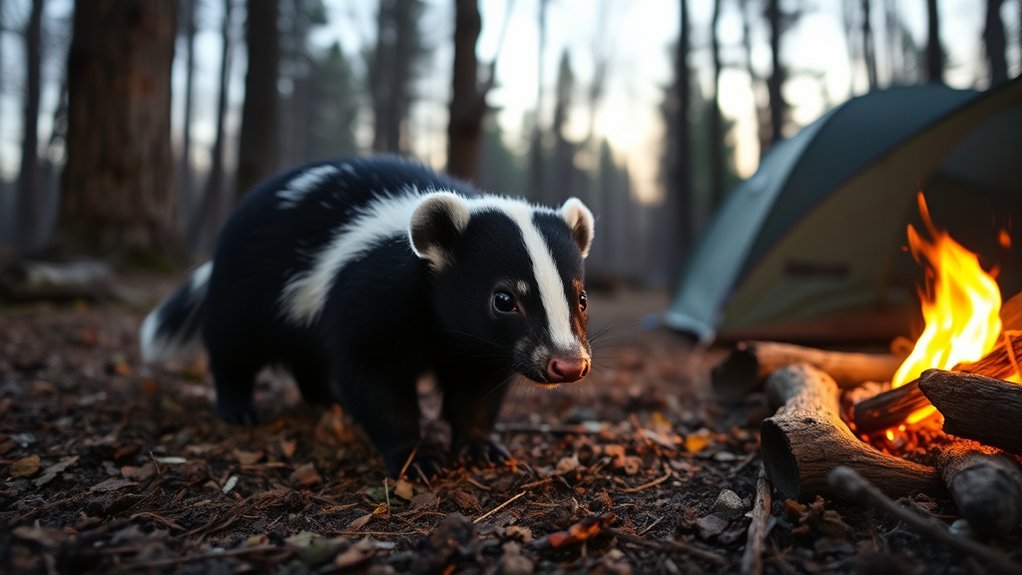
Understanding skunk behavior is essential for campers to minimize potential conflicts with these animals. The Common Striped Skunk (Mephitis mephitis) is attracted to campsites due to its lack of fear of humans and its search for food, especially at night when they’re most active. Recognizing skunk communication, including body language and vocalizations, can help you anticipate their actions and avoid confrontations. Skunks display specific behaviors during mating season, like increased activity and scent marking, which can lead them closer to your campsite. Their defensive mechanism involves spraying a foul-smelling liquid when threatened, so be cautious. Remember, skunks are part of a larger ecosystem, facing predation from natural predators like Great-horned Owls. By understanding their behavior, you can coexist peacefully and enjoy your camping experience without unnecessary disturbances.
Why Proper Food Storage Matters
Skunks are often drawn to campsites because of food waste and leftovers left unsecured. Proper food storage is vital for maintaining campsite hygiene and reducing food attraction. By securing food in bear-proof containers or hanging it at least 20 feet off the ground and 8 feet from the tree trunk, you greatly decrease the chances of skunks visiting your campsite. A clean environment, where food waste is disposed of correctly and trash is secured, prevents skunks from associating human activity with a food source. If you’re camping for an extended period, neglecting food management can lead to increased skunk presence, disrupting your experience. It’s important to educate all campers about these practices, as even experienced volunteers may overlook food storage rules. By prioritizing proper food storage, you create a safer, more enjoyable camping experience for everyone while minimizing unwanted wildlife encounters.
Cleaning and Maintaining Your Campsite
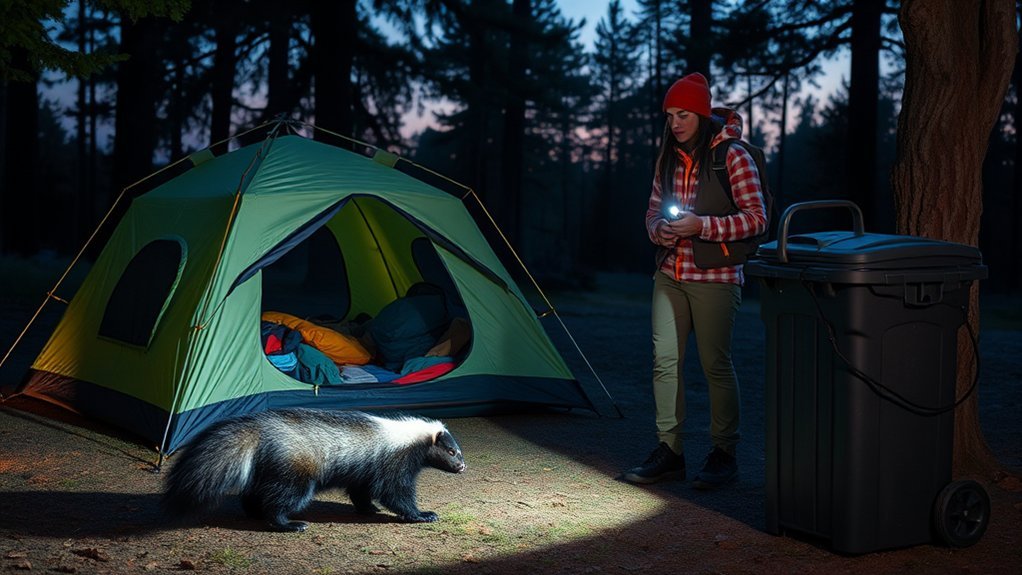
To keep skunks away, you need to prioritize secure food storage and proper waste disposal at your campsite. Regularly clean up any food scraps and maintain overall campsite cleanliness to reduce odors that attract wildlife. By following these practices, you can considerably lower the chance of unwanted skunk encounters.
Secure Food Storage
When camping, securing your food is essential for preventing unwanted wildlife encounters, including skunks. Implementing effective food storage techniques can greatly enhance your wildlife safety. Here are some tips to keep in mind:
- Use a locking cooler or bear canister, securing it with rope and elevating it at least 20 feet off the ground.
- Regularly wash cooking utensils to remove any food residues.
- Store trash in heavy-duty, odor-proof bags, hanging them at the same height as your food.
- Follow Leave No Trace principles by checking for food scraps and disposing of them responsibly.
- Opt for freeze-dried meals to minimize odors that attract skunks.
Proper Waste Disposal
Although the thrill of camping often brings you closer to nature, improper waste disposal can invite unwanted wildlife, including skunks, into your campsite. Effective waste management is essential for a safe and enjoyable experience. Use heavy-duty, odor-proof waste bags for trash removal, securely storing all food scraps to minimize odors that attract skunks. Following Leave No Trace principles, hang trash bags at least 20 feet off the ground and 8 feet from tree trunks, preventing wildlife access. Regularly check your campsite for any food scraps or waste, as even small amounts can lure skunks. Avoid burying or burning garbage, as these methods harm the environment and don’t effectively deter skunks. Prioritize proper waste disposal to protect both nature and your camping experience.
Maintain Campsite Cleanliness
Maintaining cleanliness at your campsite is essential for both your comfort and safety. Following campsite etiquette not only enhances your experience but also minimizes wildlife interaction, particularly with skunks.
- Use heavy-duty, odor-proof waste bags for trash disposal.
- Hang trash bags at the same height as food coolers if containers aren’t available.
- Regularly check for food scraps; even small amounts can attract skunks.
- Opt for freeze-dried meals to reduce strong odors.
- Wash cooking supplies thoroughly after use to deter rodents and skunks.
Effective Repellents for Skunks
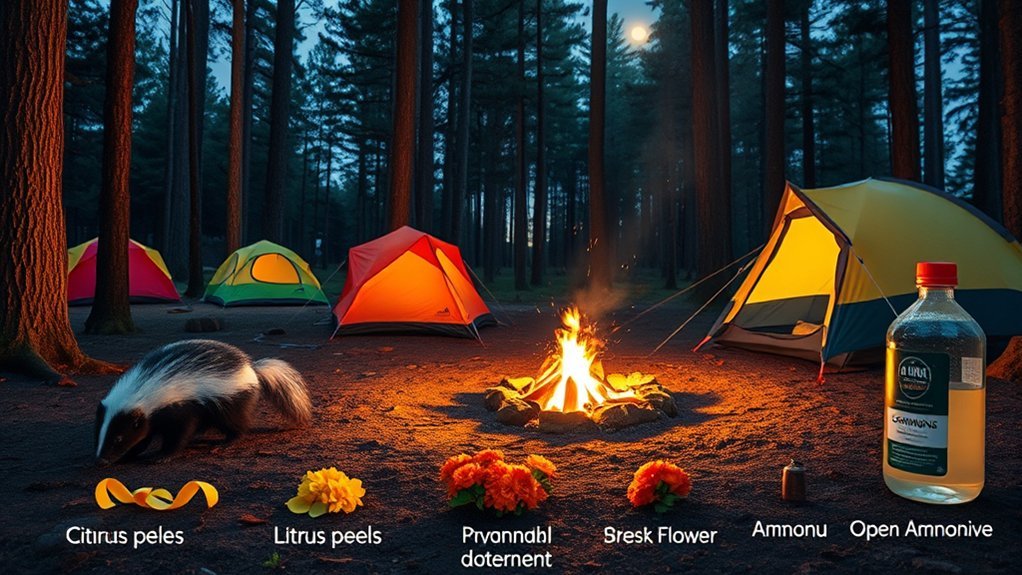
When camping, using effective repellents is essential to keep skunks at bay. You can choose from natural deterrents like vinegar or commercial chemical repellents designed for critters. Additionally, implementing preventive measures, such as maintaining a well-lit campsite, enhances your efforts to create a skunk-free environment.
Natural Deterrent Options
Skunks can pose a challenge at campsites, but several effective natural deterrents can help keep them at bay. Utilizing eco-friendly solutions with natural ingredients not only protects the environment but also discourages these critters. Here are some options to evaluate:
- Soak rags in vinegar and place them around your campsite for a strong odor that skunks dislike.
- Spray repellents designed for pets, like Critter Ridder, to create a barrier.
- Keep your campsite well-lit with battery-operated lights to deter nocturnal skunks.
- Use ammonia or bleach as repellents, but remember to use them separately and in well-ventilated areas.
- Explore eco-friendly repellents that utilize natural active ingredients for effective skunk deterrence.
Chemical Repellent Choices
Finding effective chemical repellents can greatly enhance your camping experience by keeping skunks at a safe distance. Dog and cat repellents available at pet stores are particularly effective when sprayed around your campsite. Vinegar’s strong odor also acts as a natural skunk deterrent; soak rags in vinegar and place them near your tent. Eco-friendly options like Critter Ridder contain natural active ingredients and provide lasting protection. While ammonia and bleach can deter skunks, be cautious—never mix these substances due to safety risks. Regular reapplication of these repellents guarantees their effectiveness, maximizing chemical repellent benefits. Always follow chemical repellent precautions for safe use, protecting both your camping environment and yourself from unwanted encounters with skunks.
Preventive Measures Overview
To keep skunks at bay while camping, implementing effective preventive measures is essential. Understanding skunk habitats helps you take proactive steps. Here are some effective repellents to take into account:
- Use pet-safe repellents from local stores around your campsite.
- Soak rags in vinegar and place them near your tent to utilize its strong odor.
- Illuminate your site with battery-operated lights to deter these nocturnal creatures.
- Choose eco-friendly options like Critter Ridder for lasting protection.
- Maintain camping etiquette by regularly disposing of food waste and reapplying repellents.
Creating a Safe Camping Environment
When choosing a camping site, selecting a flat, open area away from water sources can greatly reduce the likelihood of skunk encounters. This strategy minimizes proximity to their natural habitats, enhancing your wildlife safety. Maintaining cleanliness is essential; follow Leave No Trace principles and properly dispose of food waste. Secure food storage practices, like using bear canisters or hanging coolers at least 20 feet off the ground, prevent skunks from associating human food with your campsite.
Implement well-lit areas around your campsite to deter nocturnal skunks, as they typically avoid bright spaces. Additionally, consider using natural repellents, such as vinegar-soaked rags placed around your tent, to create a barrier that skunks are likely to avoid. By prioritizing these strategies during your campsite selection, you’ll foster a safer environment, allowing for a more enjoyable camping experience while minimizing potential skunk interactions.
How to Handle Skunk Encounters
Although skunks are generally non-aggressive, it’s important to know how to handle encounters effectively to avoid potential issues. Understanding skunk behavior can help you implement suitable encounter strategies.
- Maintain a safe distance; don’t provoke them.
- Store food properly in bear canisters or hang it at least 20 feet off the ground.
- Stay aware of skunks’ nocturnal habits; they prefer dark areas.
- Use natural deterrents like vinegar-soaked rags around your tent.
- If a skunk enters your campsite, stay calm; make noise or blow gently in its face to encourage it to leave.
The Role of Lighting in Skunk Deterrence
Lighting plays an essential role in deterring skunks from approaching your campsite, as these nocturnal animals naturally shy away from well-lit areas. By implementing effective lighting strategies, you can create a barrier that discourages skunks from venturing close. Utilize battery-operated lights to maintain campsite illumination without the risks associated with open flames. Keeping lights on throughout the night reduces the chances of skunks entering your area, as they prefer darker environments for foraging.
Strategically place lights around food storage and cooking zones to specifically deter skunks from these critical spots. This targeted approach not only helps keep skunks at bay but also enhances overall safety by increasing visibility at your campsite. Ultimately, adequate lighting serves as both a deterrent and a safety measure, allowing you to enjoy your camping experience without unwanted skunk encounters.
Strategies for Educating Campers
To effectively manage skunk encounters, you need to educate yourself and fellow campers about proper food storage practices. Understanding skunk behavior will help you recognize what attracts them to campsites, while knowledge of effective repellents can further deter these animals. By sharing this information, you can create a safer camping environment for everyone.
Proper Food Storage Practices
Proper food storage practices are essential for preventing unwanted encounters with skunks and other wildlife at campsites. By managing food scents effectively, you can minimize the risk of attracting skunks to your area. Here are some strategies to follow:
- Secure food in a locking cooler or bear canister, at least 20 feet off the ground.
- Clean cooking supplies thoroughly to eliminate odors.
- Use heavy-duty, odor-proof trash bags for waste disposal.
- Hang trash away from the campsite to deter wildlife.
- Always reinforce the “Don’t feed the skunks” rule.
Skunk Behavior Awareness
Understanding skunk behavior is essential for campers who want to avoid unwanted encounters with these nocturnal animals. Skunks, particularly the Common Striped Skunk, often search for food and aren’t afraid of humans. To educate yourself and others, consider the following:
| Behavior Aspect | Key Points | Prevention Tips |
|---|---|---|
| Skunk Communication | They use hisses and growls | Stay calm and avoid aggression |
| Habitat Preferences | Favor dark, undisturbed areas | Keep lights on around campsites |
| Food Attraction | Drawn to food waste | Securely store all food and trash |
| Encounter Impact | Can disturb sleep | Share stories to raise awareness |
Effective Repellent Usage
Effective repellent usage is essential for campers aiming to minimize skunk encounters. By understanding repellent effectiveness and natural alternatives, you can create a skunk-free environment. Here are some strategies to contemplate:
- Use pet-safe repellents available at stores, spraying around the campsite.
- Place vinegar-soaked rags around your tent to deter skunks with its strong odor.
- Keep your campsite well-lit with battery-operated lights to discourage nocturnal visits.
- Regularly reapply eco-friendly repellents containing natural active ingredients for ongoing protection.
- Educate fellow campers on proper food storage and cleanliness to reduce attraction to skunks.
Wildlife Regulations and Safety Guidelines
While enjoying the great outdoors, it is crucial to be aware of wildlife regulations and safety guidelines related to skunks. Familiarize yourself with local wildlife laws, as they may dictate specific interactions with skunks. Some areas enforce campsite regulations that require proper food storage practices to minimize attraction, so always comply with these guidelines.
If you spot a skunk or encounter any issues, report them to park rangers or local authorities. They can provide essential assistance for safe management of wildlife encounters.
Tips for a Successful Camping Experience
To guarantee a successful camping experience, it’s essential to plan ahead and take proactive measures to minimize wildlife encounters, especially with skunks. Understanding their skunk habitat and communication patterns can help you avoid unwanted interactions.
Planning ahead is key to a successful camping trip, especially in avoiding unwanted encounters with skunks.
- Research the camping area to identify common wildlife, including skunks.
- Choose a flat, open site at least 200 feet from water sources.
- Secure food and waste in locking coolers or bear canisters, hung 20 feet off the ground.
- Follow Leave No Trace principles; dispose of trash in heavy-duty, odor-proof bags.
- Use vinegar-soaked rags or eco-friendly repellents to deter skunks.
Frequently Asked Questions
Can Skunks Climb Trees or Fences?
Skunks can’t climb trees or jump fences effectively. Their body structure limits tree climbing ability, while their short legs make high jumps challenging. You’ll find them staying grounded, foraging rather than traversing elevated terrains.
What Time of Day Are Skunks Most Active?
Skunks’ secretive, stealthy skirmishes occur primarily at dusk and dawn, showcasing their nocturnal habits. Understanding skunk behavior helps you appreciate their patterns, ensuring you’re prepared for any encounters during these active hours in the wild.
Are Skunks Dangerous to Pets?
Skunks aren’t typically dangerous to pets, but their behavior can provoke aggressive reactions. Guarantee your pet’s safety by keeping them leashed and supervised, especially during dusk and dawn when skunks are most active.
How Far Can a Skunk Spray?
Did you know skunks can spray up to 10 feet? Understanding skunk behavior helps you appreciate their defensive tactics. Maintaining distance guarantees safety, as their spray distance can catch you off guard if approached too closely.
Do Skunks Hibernate During Winter?
Skunks don’t hibernate in the traditional sense; instead, they enter a state of dormancy during winter. Their winter habits involve finding shelter and slowing down their activity, conserving energy until warmer temperatures return.
Conclusion
To sum up, while you might think a skunk’s antics are just nature’s way of keeping things interesting, the reality is that a close encounter can quickly turn unpleasant. By understanding their behavior and employing effective strategies for food storage and campsite maintenance, you can avoid the unwanted “fragrance” of a skunk. So, embrace the great outdoors, but remember: a little precaution goes a long way in ensuring your camping experience is memorable for the right reasons.