


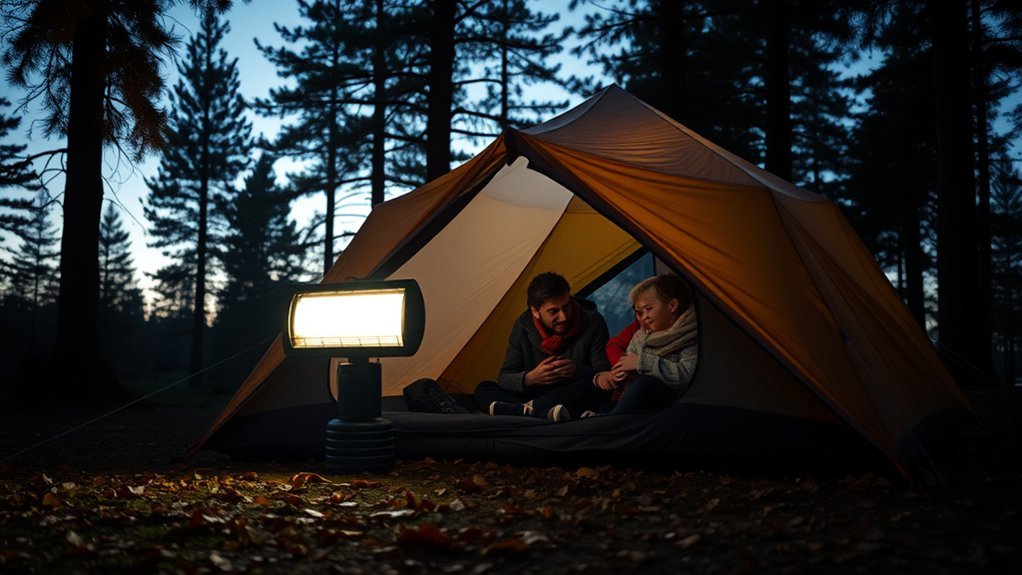
Using a heater in a tent can be risky. Many heaters, including ultralight wood burners, propane, and diesel models, come with dangers like carbon monoxide poisoning and fire hazards. These risks increase without proper ventilation and monitoring. Battery-powered sources offer a safer alternative, eliminating combustion risks. Always check safety ratings and follow usage guidelines to stay secure. If you want to learn about specific heater types and their challenges, there’s much more to reflect upon.
The Trouble With an Ultralight Wood Burner

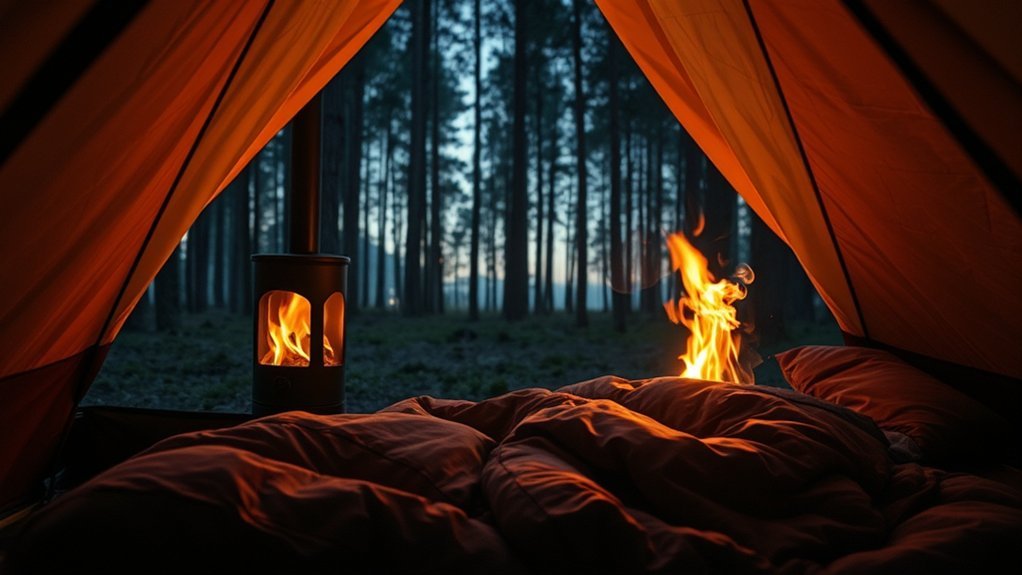
Using an ultralight wood burner in a tent can pose several challenges that you should consider. First, wood preparation is essential; you’ll need to cut wood into specific sizes, which can be labor-intensive and time-consuming. This meticulous process is necessary to guarantee efficient burning.
Once you start, managing heat becomes another hurdle. The stove typically burns for only about half an hour unattended, making it critical to monitor and restart frequently to maintain consistent warmth. Setting up the burner requires patience and experimentation, especially with its titanium chimney and multiple stake points for stability.
Additionally, burning wood generates ash and smoke, which can be hazardous in confined spaces. You’ll need to manage these by providing proper ventilation to avoid smoke inhalation. While ultralight wood burners offer warmth, their operational challenges demand careful attention and setup to promote safety and comfort inside your tent.
The Trouble With Propane
While ultralight wood burners present their own set of challenges, propane heaters introduce a different array of safety concerns. One significant issue is the risk of carbon monoxide poisoning, as propane can emit harmful levels, especially in enclosed spaces like tents. With levels reaching 15 parts per million during regular use, it’s essential to prioritize ventilation requirements to mitigate this hazard. Additionally, the open flames from propane heaters pose fire hazards, particularly if the heater isn’t stable or is placed too close to flammable materials. High altitudes can trigger oxygen sensors, causing unexpected shutdowns when warmth is critical. Furthermore, burning propane generates excessive water vapor, creating a damp environment that can erode your comfort. Most manufacturers strongly advise against using propane heaters without adequate ventilation, emphasizing the need for careful monitoring and safe practices to guarantee your camping experience remains enjoyable and liberating.
The Trouble With Diesel Heaters
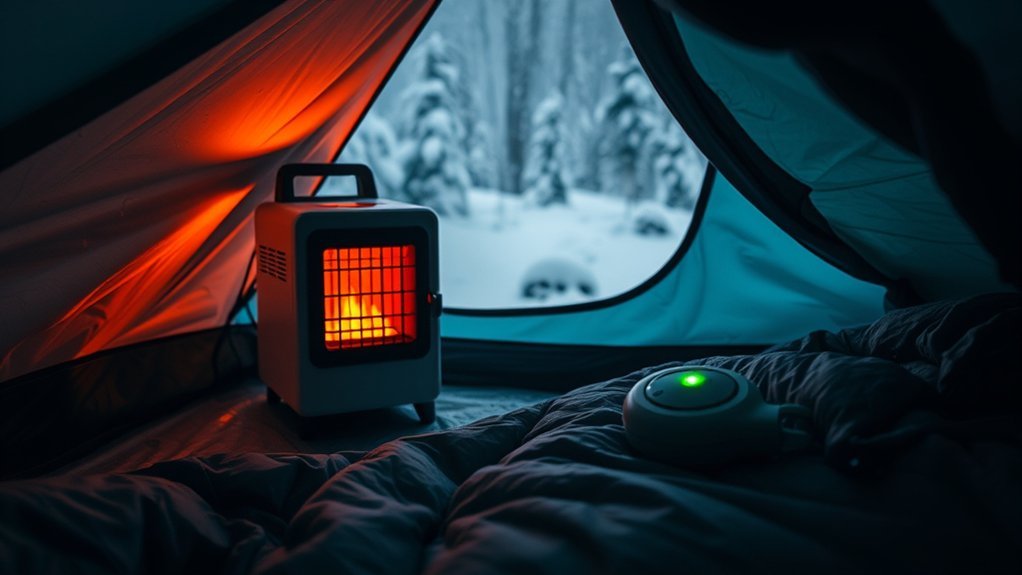
When it comes to staying warm in a tent, diesel heaters can seem like a practical choice, but they come with their own set of complications. First, you’ll need a reliable supply of diesel fuel, which can be messy and smelly. Plus, these heaters require an electric power source to operate, complicating your setup, especially in remote camping spots.
Another critical factor is altitude performance; diesel heaters often struggle above 8,000 feet, which can leave you cold and uncomfortable. While high-quality portable units exist, they tend to be expensive and heavy, demanding careful management of both the heater and its fuel supply.
Lastly, be aware that carbon monoxide emissions are a serious hazard. Proper ventilation is crucial when using diesel heaters in enclosed spaces to guarantee your safety. Consider these factors before deciding if a diesel heater is right for your tent camping experience.
The Lux Option: The SnowTrekker Basecamp
The SnowTrekker Basecamp tent offers a unique combination of design benefits and efficient heating solutions, making it a top choice for family camping trips. With a quick setup time of under 20 minutes and a robust guyout system for stability, you’ll appreciate its ease of use in various weather conditions. Adding the optional wood-burning stove enhances heating capabilities, ensuring your tent remains warm and comfortable.
Tent Design Benefits
For campers seeking a blend of luxury and practicality, the SnowTrekker Basecamp tent offers remarkable design benefits. Its lightweight seven-ounce cotton canvas guarantees durability while enhancing tent ventilation, providing a comfortable environment. Here are some key features:
- Weighs only 31 pounds for easy transport
- Quick setup in under 20 minutes
- Unique guyout system for stability in windy conditions
- Spacious four-person design for comfort
- Optional wood-burning stove for a warm interior
At $2,000, this tent combines high-quality craftsmanship with practical functionality, making it a great investment for those who value both comfort and performance in their outdoor adventures. You’ll find that the SnowTrekker Basecamp meets your needs while allowing you to enjoy nature’s beauty.
Efficient Heating Solutions
While many campers seek warmth during chilly nights, using a heater inside a tent requires careful consideration to guarantee safety and comfort. The SnowTrekker Basecamp tent offers an efficient heating solution with its breathable cotton canvas design, which enhances tent insulation and keeps the interior warm and dry. Weighing just 31 pounds, this portable tent is easy to transport, making it an ideal choice for your adventures. For an additional $300, you can add a wood-burning stove, enhancing your heating options further. The unique guyout system allows for a quick setup in under 20 minutes, ensuring you can focus on enjoying your camping experience while staying cozy. Prioritize safety and comfort, and you’ll find liberation in your outdoor endeavors.
Easy Setup Process
Setting up the SnowTrekker Basecamp tent is a breeze, especially with its innovative guyout system that guarantees stability and efficiency. You can have it fully set up in under 20 minutes, making it the epitome of camping convenience. Weighing only 31 pounds, this four-person tent features lightweight cotton canvas that enhances portability without sacrificing quality.
- Unique guyout system for stability
- Breathable canvas for warmth and dryness
- Optional wood-burning stove for added comfort
- Quick assembly for hassle-free camping
- Emphasis on quality craftsmanship
With SnowTrekker’s dedication to customer service, you’ll enjoy both comfort and an easy setup that liberates your camping experience. Just remember to prioritize safety when using any heating solution inside.
The Simple Option: Battery-Powered Heating Sources
When you’re looking for a safe way to keep your tent warm, battery-powered heating sources offer a practical solution. These devices eliminate the risks of combustion and carbon monoxide emissions associated with traditional heaters. For example, the Jackery Explorer 500 can run a 100-watt heated blanket for about five hours, while the Jackery Explorer 1500 can last two nights on a single charge.
Here’s a quick comparison:
| Device | Capacity (Watt-hours) | Run Time (100W Blanket) | Best Use | Temperature Limitations |
|---|---|---|---|---|
| Jackery Explorer 500 | 500 | ~5 hours | Short trips | Above freezing |
| Jackery Explorer 1500 | 1500 | ~2 nights | Extended trips | Above freezing |
Keep in mind battery safety and insulation tips to maximize warmth, especially in colder conditions. Planning ahead will guarantee you stay cozy while enjoying the great outdoors.
Safety Ratings and Usage Guidelines for Tent Heaters
When choosing a heater for your tent, it’s essential to check its indoor safety ratings, as many aren’t designed for that environment. You should also consider the stability of your heater, since a secure design can prevent accidents. Finally, be aware of carbon monoxide risks; always monitor your heater and guarantee proper ventilation to keep yourself safe.
Indoor Safety Ratings
How safe is it to use a heater inside your tent? You need to be cautious, as many heaters aren’t rated for indoor use. While Flame King claims indoor safety, its manual contains warnings that create doubts about using it in enclosed spaces. Mr. Heater offers indoor-rated options, but these are meant for emergency use only. Remember these essential safety tips:
- Always check for indoor safety ratings.
- Follow heater regulations diligently.
- Guarantee proper ventilation to reduce carbon monoxide risks.
- Monitor the heater closely to prevent fire hazards.
- Choose stable models, like the Martin CH3, for added safety.
Heater Stability Considerations
While using a heater in your tent can provide much-needed warmth, ensuring its stability is essential for safety. Look for heaters with solid stability features, like the Martin CH3’s tripod design, which outperforms others that rely on propane bottles for support. When selecting a heater, consider its design and stability ratings; the Portable Buddy heater stands out for its tip detection, minimizing the risk of accidental tip-over. Always follow manufacturer instructions and maintain a safe distance from tent walls and bedding. Avoid using heaters while sleeping, as this increases safety risks. By prioritizing stability in your heater choice, you can enjoy the warmth while minimizing potential hazards in your camping experience.
Carbon Monoxide Risks
Using a heater in your tent can enhance comfort, but it also brings significant risks, particularly from carbon monoxide (CO) exposure. Understanding these risks is imperative for your safety.
- CO levels above 25-50 parts per million pose serious health risks.
- Models like Little Buddy can reach 37 parts per million during operation.
- Many heaters aren’t rated for indoor use; check warnings carefully.
- Ventilation is essential; guarantee air circulation to avoid CO buildup.
- Monitor heaters for defects and never leave them unattended, especially while sleeping.
Being aware of carbon monoxide emissions and their health risks is fundamental for a safe camping experience. Prioritize safety, and don’t compromise on ventilation when using heaters in tents.
Frequently Asked Questions
Can I Use a Regular Home Heater in My Tent?
You shouldn’t use a regular home heater in your tent. Tent heater safety is essential, and heater types designed for camping minimize risks. Always prioritize ventilation and fire safety when choosing heating options for outdoor adventures.
What Are the Signs of Carbon Monoxide Poisoning?
You’ll notice carbon monoxide symptoms like headaches, dizziness, confusion, and nausea. If you experience these in a tent, evacuate immediately. Prioritize tent safety by ensuring proper ventilation and avoiding heaters that produce harmful gases.
How Can I Improve Ventilation in My Tent?
To improve tent ventilation, open vents and windows for air circulation. Utilize a battery-operated fan if needed, and avoid blocking airflow. Regularly check for fresh air to guarantee a comfortable and safe environment inside your tent.
Are There Any Alternatives to Heating a Tent?
You can use portable heaters, but they’re risky! Instead, try tent insulation, warm sleeping bags, or thermal blankets. These alternatives can keep you cozy without the fire hazards. Stay warm and adventurous!
What Should I Do if My Heater Tips Over?
If your heater tips over, immediately turn it off and unplug it if possible. Follow safety measures by evacuating the area and using emergency procedures, like calling for help, if there’s a fire or gas leak.
Conclusion
When it comes to using a heater in your tent, safety should always be your top priority. Think of it like lighting a fire in a medieval castle; it can keep you warm, but if you’re not careful, it can lead to disaster. Stick to heaters designed for tent use, follow safety guidelines, and never leave them unattended. With the right precautions, you can enjoy a cozy camping experience without putting yourself at risk. Stay warm and safe!