


When camping, pitch your tent at least 100 feet from water sources to protect the environment and guarantee your safety. Ideally, aim for 200 feet to align with Leave No Trace principles, which can help prevent contamination and preserve wildlife habitats. Being mindful of your distance not only protects the ecosystem but also minimizes soil erosion and maintains water quality. The guidelines for camping can vary, so check local regulations for specifics and discover more about responsible camping practices.
Understanding the Importance of Distance From Water Sources

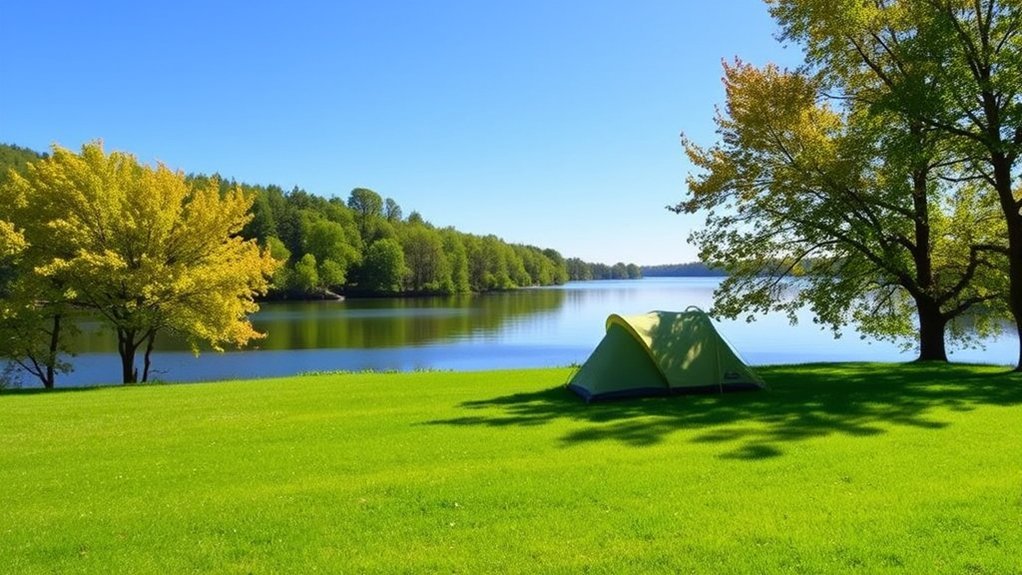
When you’re setting up camp, understanding the importance of distance from water sources is essential for both your safety and the environment. Maintaining a minimum distance of 100 feet from any water source helps prevent contamination from human waste and soap runoff. To guarantee responsible camping, the Leave No Trace principle suggests staying at least 200 feet away, which not only minimizes pollution but also protects wildlife that depend on these areas for hydration and feeding.
You can estimate this distance by walking 70 to 80 paces from the water’s edge. This practice enhances your camping experience by preserving ecosystem health and reducing the risk of harmful human-wildlife encounters. By respecting these guidelines, you contribute to the integrity of riparian zones, which play a significant role in filtering water and preventing soil erosion. Prioritizing distance from water sources is imperative for camping safety and environmental stewardship.
Recommended Setback Distances for Camping
When planning your campsite, aim for at least 100 feet from any water source to avoid contamination and protect wildlife. Keep in mind that some local regulations may require even greater distances, so always check the specific rules for your area. Staying mindful of these setback distances helps guarantee a safer and more sustainable camping experience.
Minimum Recommended Distances
To minimize your impact on the environment and protect local wildlife, it’s crucial to set up your tent at a safe distance from water sources. The common recommendation is to camp at least 100 feet away, but following Leave No Trace principles suggests aiming for 200 feet to guarantee water quality and wildlife habitats remain intact. Different land management agencies enforce varying regulations, with 37% of the US Forest Service advocating for specific setbacks. Camping too close can lead to soil erosion and compromise water safety. Before you unpack your camping gear, check the guidelines for your specific location to make sure you’re respecting the ecosystem while enjoying your outdoor adventure.
Local Regulations Considerations
Understanding local regulations is essential for responsible camping, especially regarding recommended setback distances from water sources. Many land management agencies suggest a minimum setback of 100 feet, but the Leave No Trace guidelines advocate for at least 200 feet to protect water quality and wildlife access. It’s important to remember that local regulations can vary greatly; some areas may require greater distances based on unique topographical and ecological factors. For instance, the US Forest Service enforces camping setbacks in 37% of its areas, while the National Park Service only has 22%. By adhering to these local regulations, you not only enhance your camping experience but also help preserve fragile ecosystems and riparian zones. Always check specific camping setbacks before setting up your tent.
Environmental Impact Awareness
Camping close to water may seem appealing, but it can greatly harm the environment. To protect water ecosystems and promote sustainable practices, aim to camp at least 200 feet away from any water source, as suggested by Leave No Trace principles. Many land management agencies enforce a minimum setback of 100 feet to minimize contamination and safeguard wildlife habitats. Studies reveal that camping too close leads to soil erosion and water quality issues, like elevated coliform bacteria levels. By prioritizing environmental education and respecting riparian zones, you preserve critical ecosystems that filter water and support wildlife. So, choose your campsite wisely—your choices today can impact the environment for generations to come.
Estimating Distance Accurately in the Wilderness
When you’re in the wilderness, accurately estimating distance from water sources is essential for both safety and environmental protection. Use distance measurement techniques, like counting your paces. An average adult stride measures about 2.5 feet, so walking 70 to 80 paces from the water’s edge gets you around 200 feet—ideal for camping setbacks. Observe high water marks on trees or rocks for visual cues about potential water rise. This awareness aids in determining a safe distance. Combining pacing with an understanding of the terrain enhances your wilderness navigation skills. Remember, keeping at least 100 feet from water sources prevents contamination and minimizes disturbance to local wildlife. Familiarizing yourself with local regulations can also provide insight into required distances, as some areas may mandate greater setbacks. Embrace these practices to guarantee a responsible and liberating camping experience.
Regulations and Guidelines for Campsite Location
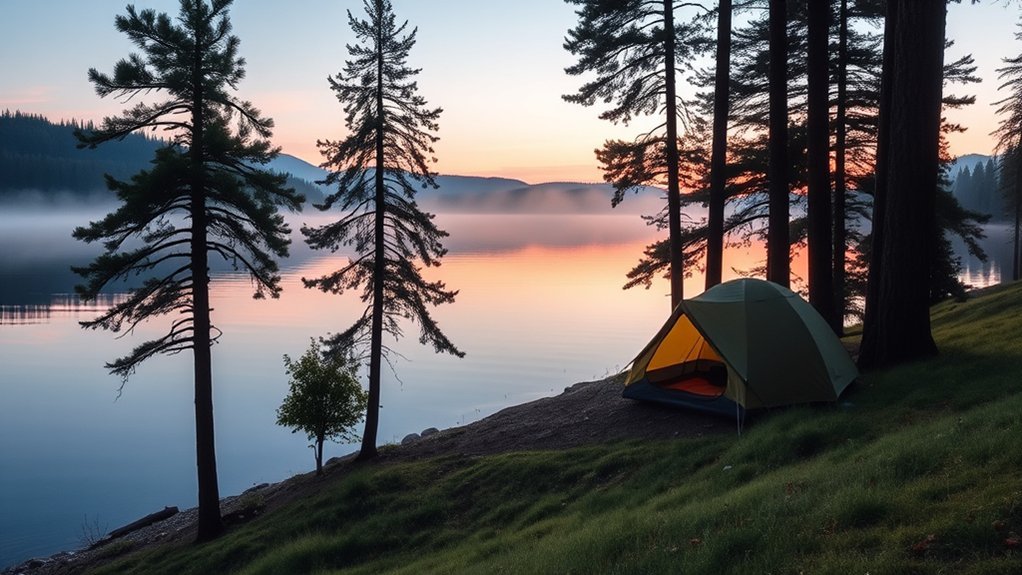
When choosing a campsite, it’s essential to know the recommended distance from water sources. Most guidelines suggest camping at least 100 feet away, but some local regulations may require greater setbacks. Understanding these rules not only protects the environment but also guarantees your safety while enjoying the great outdoors.
Recommended Distances From Water
Maintaining a safe distance from water sources is essential for both environmental protection and campsite quality. It’s commonly recommended to camp at least 100 feet away to prevent contamination and protect aquatic ecosystems. However, Leave No Trace principles suggest aiming for 200 feet to minimize your impact and guarantee wildlife protection. While various land management agencies may enforce distances from 50 to 1,320 feet, the 100-foot guideline is the most frequently observed. Setting up camp too close can threaten local vegetation, increase soil erosion, and elevate pollution levels in nearby water bodies. Always check local regulations, as specific campgrounds may require greater distances than the standard recommendations. Prioritizing these distances guarantees both your safety and the health of the environment.
Local Regulations Variability
Understanding local regulations is key to responsible camping. Setback enforcement can differ widely, with some areas demanding you camp more than the standard 100 feet from water sources. While 100 feet is common, some land management agencies may require distances ranging from 50 feet up to 1,320 feet, depending on ecological conditions. Surprisingly, only 37% of the U.S. Forest Service and 22% of the National Park Service have set guidelines for these setbacks. Consequently, it’s vital to check local guidelines before you pitch your tent. Ignoring these regulations can lead to non-compliance, harming the environment and local wildlife. Stay informed, respect the rules, and enjoy a liberated camping experience!
Importance of Setbacks
Setbacks from water sources are essential for ensuring both environmental protection and a pleasant camping experience. When planning your tent placement, remember the following key points regarding water protection:
| Guideline | Details |
|---|---|
| Recommended Distance | 100 feet is common; 200 feet is ideal. |
| Pollution Risks | Closer sites show elevated coliform bacteria. |
| Wildlife Impact | Setbacks maintain wildlife access and habitat. |
| Soil Stability | Protects riparian zones from erosion. |
Leave No Trace Principles and Responsible Camping
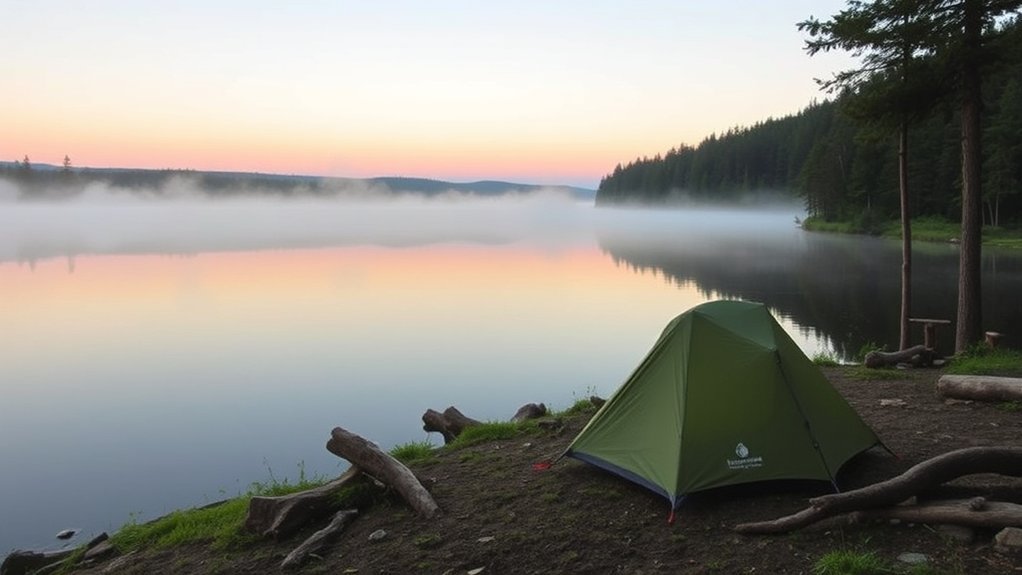
When you plan your camping trip, it’s important to follow Leave No Trace principles to protect the environment and wildlife. Aim to camp at least 200 feet from water sources to minimize pollution and safeguard aquatic ecosystems. Many campgrounds require a minimum distance of 100 feet, which protects wildlife habitats and reduces contamination risks.
Choose designated sites whenever possible to limit your environmental impact and prevent the spread of informal campsites that can harm delicate areas. Proper waste disposal is significant; always pack out what you bring in.
Be mindful of wildlife interactions by keeping food secured and maintaining a respectful distance from animals. Practicing campfire safety is essential, ensuring fires are contained and properly extinguished to prevent wildfires. By observing high water marks, you can select responsible camping locations that respect nature and its inhabitants, enhancing your outdoor experience.
The Role of Riparian Zones in Ecosystem Health
Choosing a camping spot involves more than just finding a flat area; it’s also about recognizing the significance of nearby riparian zones. These essential areas of vegetation along rivers, streams, and lakes play a key role in filtering pollutants, enhancing water quality, and stabilizing soil to prevent erosion. You’ll find that healthy riparian zones support a diverse array of wildlife, providing important habitats for species that thrive in aquatic ecosystems.
Visitor Preferences: The Attraction to Water
Water’s allure is undeniable for many campers, making it a top consideration when selecting a campsite. Research shows that 38% of visitors prioritize proximity to water, while Lime’s 1971 study highlights that waterfront campsites account for 84% of campground occupancy variation. You’re drawn to these areas not just for the scenic views, but also for the abundant water activities like fishing, swimming, and kayaking. The presence of water enhances your experience, offering a serene backdrop for relaxation and reflection.
Social factors also matter; many campers seek solitude near water, with 22% choosing sites based on their distance from others. Ultimately, it’s clear that the majority of campers, 62%, prioritize locational features, underscoring water’s magnetic pull. So, whether you’re craving adventure or peace, camping near a water source can elevate your outdoor experience.
Environmental Concerns Associated With Shoreline Camping
Camping near water may enhance your experience, but it also comes with significant environmental concerns. Setting up too close to shorelines can degrade vegetation and increase soil erosion, disrupting natural stability and leading to runoff that harms aquatic ecosystems. To protect shoreline biodiversity, it’s recommended to maintain at least a 200-foot setback from water sources. This distance minimizes contamination from waste and soap, preserving water quality.
Your presence in riparian zones can displace wildlife that depend on these areas for feeding and hydration, disrupting their natural behaviors. Unregulated camping often leads to an excess of campsites, threatening cultural sites and damaging wildlife habitats. Practicing good camping ethics means respecting these delicate ecosystems. By choosing to camp further from the water, you contribute to the health of the environment and guarantee that future generations can enjoy the same natural beauty you cherish.
Strategies for Effective Camping Management in Sensitive Areas
While exploring sensitive areas for your next adventure, implementing effective camping management strategies is essential to preserving the environment. Start by adhering to Leave No Trace principles, which recommend camping at least 200 feet away from water sources. This helps minimize pollution and protects wildlife. Opt for sustainable practices in your campsite design, such as limiting the size of your campsite and rerouting access trails to reduce soil erosion and safeguard fragile riparian zones.
Stay informed about local camping regulations, as they vary by area and are vital for maintaining ecological integrity and protecting cultural sites. Designated sustainable campsites have gained public support, showing that many campers value preserving nature. By following these strategies, you’ll not only enhance your outdoor experience but also contribute to the long-term health of the environment you cherish.
Frequently Asked Questions
What Are the Risks of Camping Too Close to Water?
Camping too close to water exposes you to flood hazards and increases the risk of water contamination. It’s best to maintain a safe distance, ensuring your safety and the quality of your surroundings during your adventure.
Can I Camp Closer Than 100 Feet in Dry Seasons?
Sure, you can camp closer than 100 feet in dry seasons, but remember, even the driest times need water conservation. Balance your freedom with respect for nature—camp wisely and keep the environment thriving.
How Do I Find the Nearest Water Source?
To find the nearest water source, scan your surroundings for streams, lakes, or ponds. Look for wildlife trails or listen for flowing water. Carry a map or use a GPS app to pinpoint locations.
What Types of Wildlife Are Affected by Camping Near Water?
Camping near water disrupts wildlife behavior, affecting animals like deer and birds that rely on the habitat. Imagine a bustling café suddenly silenced; that’s the impact on nature when humans encroach too closely.
Are There Exceptions to the 100-Foot Rule?
Yes, there are exceptions to the 100-foot rule. If you’re in a designated campsite or facing difficult terrain, you might need to adjust your tent positioning for easier water access while still considering wildlife safety.
Conclusion
When camping near water, it’s vital to maintain a safe distance—typically at least 200 feet—to protect both the environment and your experience. Did you know that nearly 80% of outdoor enthusiasts prefer to camp near water? While the allure is strong, remember that keeping your distance helps preserve ecosystems and guarantees a more enjoyable stay. By following guidelines and embracing responsible practices, you can enjoy nature while safeguarding it for future campers. Happy adventuring!