


To maximize rain protection using a tent rain fly, make certain it’s set up above your tent, allowing proper elevation. Secure it with stakes at a 45-degree angle to prevent water pooling. Adjust tension with straps, keeping it taut to withstand wind and rain. Create a sheltered entrance by angling the fly away, channeling water. Regularly inspect your setup, and maintain your tent. Follow these tips for better performance and discover more essential techniques along the way.
The Importance of a Rain Fly

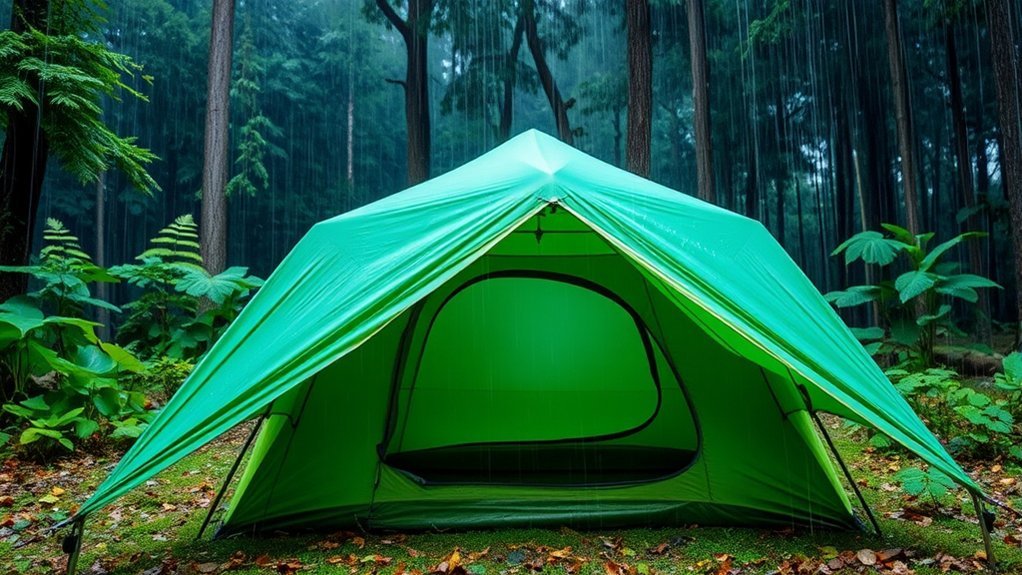
When you’re camping and the skies open up, having a rain fly is essential to keeping your tent dry. A rain fly serves as an additional waterproof layer over your tent canopy, providing important protection from rain. Its benefits extend beyond mere dryness; it creates a sheltered entrance, allowing for easy access while staying dry. Properly setting up your rain fly prevents water pooling on the tent surface, greatly reducing the risk of leaks and water ingress.
Moreover, a rain fly enhances air circulation, minimizing condensation inside your tent. This is critical for maintaining a comfortable environment during wet weather. Utilizing effective waterproofing techniques, like seam sealing, can further enhance your rain fly’s performance. The increased camping comfort from a dry space for gear storage and entry makes a rain fly not just an accessory, but a necessity for outdoor freedom. So, equip yourself wisely and enjoy your adventure without worry!
Setting Up Your Rain Fly
To set up your rain fly effectively, start by placing poles to elevate it above your tent, ensuring maximum protection from rain. Next, secure the stakes to hold the rain fly in place and prevent water pooling beneath. Finally, adjust the tension with straps to keep the fly taut and reduce flapping during windy conditions.
Proper Pole Placement
Setting up your tent rain fly requires careful attention to pole placement, as this forms the backbone of your shelter’s stability and water resistance. Position the rain fly poles to create a sturdy frame that elevates the fly above the tent, ensuring effective water runoff. Securely insert the poles into the designated grommets or pole sleeves for peak support. Place the poles at a slight angle away from the tent to maximize rain fly height and prevent pooling. Utilize guy lines attached to the poles to create tension, enhancing pole stability against wind and heavy rain. Regularly check and adjust the pole placements throughout your camping trip to maintain proper tension and stability in changing weather conditions.
Secure Stake Positioning
Securing the stakes properly is essential for your rain fly’s stability and effectiveness. Position your stakes at a 45-degree angle to maximize stability and resist wind forces. Drive them firmly into the ground to anchor the rain fly, preventing it from lifting during heavy rain. Utilize additional guy lines attached to the rain fly’s edges, staked in opposite directions, to enhance tension and support against wind.
| Stake Positioning | Recommended Techniques | Key Considerations |
|---|---|---|
| Angle | 45-degree to the ground | Guarantees stability |
| Anchoring | Drive stakes firmly | Prevents lifting |
| Guy Lines | Attach to edges | Provides extra support |
| Tension | Keep rain fly taut | Avoids water pooling |
| Final Check | Verify all are secured | Maintain ideal protection |
Tension Adjustment Techniques
While adjusting the tension of your rain fly, it’s essential to make certain that it remains taut to prevent water pooling, which can lead to leaks and compromise your shelter. Use effective tension techniques, like positioning your stakes at a 45-degree angle for enhanced stability against strong winds. Incorporate elastic straps during setup; these materials allow for flexibility, helping maintain tension in gusty conditions. Regularly check and adjust the tension after heavy rain or wind gusts, ensuring all attachment points, including clips and straps, are secure and taut. By mastering these adjustments, you maximize the protective capabilities of your rain fly, keeping your camping experience dry and liberating.
Ensuring Proper Tension and Stability
To guarantee proper tension and stability of your rain fly, start by adjusting the straps to keep it taut, which prevents water pooling. Next, stake down the corners at a 45-degree angle to enhance stability against wind gusts. Regularly check all connections to maintain tension and prevent sagging that could lead to leaks.
Adjusting Tension Properly
Proper tension in your tent rainfly is essential for ensuring stability and effective water runoff. Start by making guy line adjustments to create a taut surface; this will prevent water pooling. Use adjustable tensioners or carabiners for easy modifications of height and angle, enhancing stability against wind. Remember to stake down the corners at a 45-degree angle to the ground for added support. Regular tension monitoring is vital—check and readjust after heavy rain or gusty winds to maintain protection. Incorporate elastic straps into your setup, allowing the rainfly to flex with the wind. This approach reduces the risk of damage while ensuring effective tension throughout your camping experience. Enjoy the liberation of staying dry!
Securing Stakes Effectively
Securing stakes effectively is essential for maintaining the tension and stability of your tent rainfly. Drive heavy-duty stakes, at least 6-8 inches long, into the ground at a 45-degree angle to enhance grip, especially in soft or loose ground conditions. After setting up, adjust the stakes to guarantee the rainfly is taut; loose tension can lead to water pooling and leaks. Utilizing elastic straps can provide flexibility against wind, helping maintain tension without risking damage to your fly or tent. Regularly inspect your stakes throughout your trip, as changing ground conditions may affect their stability. By following these guidelines, you’ll guarantee a secure and protective setup that liberates you from the worry of unexpected rain.
Creating a Sheltered Entrance

When you set up your tent rainfly correctly, it can extend over the entrance, creating a sheltered area that keeps you dry while allowing easy access. Elevate the rain fly using poles to form a protected space, letting you enter and exit with your gear without getting wet.
| Action | Purpose |
|---|---|
| Secure with stakes | Prevent sagging in windy conditions |
| Angle the fly | Redirect rainwater away |
| Use elastic straps | Enhance flexibility against gusts |
Maintaining Your Tent and Rain Fly
After enjoying the benefits of a well-placed rainfly, it’s important to focus on maintaining your tent and rainfly. Regular tent inspections are vital; check for signs of wear like tears or broken poles to guarantee maximum rain protection. Always zip your tent when not in use to keep water and insects out, extending the life of both your tent and rainfly.
After rain, open flaps to promote air circulation, allowing your gear to dry completely and preventing mold and mildew growth. For effective moisture prevention, store your tent and rainfly in a cool, dry place, away from direct sunlight, to maintain their waterproof coating and overall integrity.
Additionally, consider using a 5-gallon bucket as a makeshift table to keep your gear off the ground and dry, reducing the risk of moisture damage. With these practices, you can make certain your camping gear remains in top condition for future adventures.
Tips for Quick Tent Setup

Setting up your tent quickly can make a significant difference in your camping experience. To enhance your setup efficiency, follow these tips for ideal tent organization:
- Familiarize Yourself: Before your trip, get to know all components of your tent and rain fly. This familiarity guarantees a smooth setup process.
- Practice Makes Perfect: Set up your tent in a controlled environment. This practice builds your confidence and speed for when you’re outdoors.
- Organize Parts: Lay out all tent components in a designated area. This organized approach allows for quick assembly and minimizes searching for pieces.
Additionally, use toggles to secure tent flaps during setup, keeping everything manageable. When staking down your tent, adjust stakes at a 45-degree angle. This technique maximizes stability and guarantees your rain fly remains taut against wind and rain. By implementing these strategies, you’ll streamline your tent setup and enjoy your camping experience more fully.
Common Mistakes to Avoid
Even with a quick setup, common mistakes can compromise your tent’s performance in bad weather. One significant rain fly mistake is failing to stake it down properly. This can lead to water pooling, increasing the risk of leaks. Maintain proper tension; neglecting this allows wind to lift the fly, reducing its protective capabilities. Another common oversight is setting up the rain fly too low, which can expose your tent to rain during storms. Verify all components are attached; overlooking this can cause instability, diminishing the fly’s effectiveness. Finally, check the orientation of the rain fly. Forgetting this step might result in the entrance facing into the wind, allowing rain to invade your space. By avoiding these pitfalls, you’ll enhance your tent’s rain protection and enjoy a more liberated camping experience.
Additional Camping Resources
When you’re preparing for a camping trip, having access to reliable resources can greatly improve your experience and safety. To enhance your outdoor adventure, consider utilizing the following resources:
- AlaskaGranny.com: This site offers extensive tips on tent setup, maintenance, and outdoor safety, ensuring you’re well-prepared for the elements.
- YouTube Channel: Subscribe to the AlaskaGranny channel for visual demonstrations of camping techniques and gear reviews, which can help you choose the right camping gear.
- Online Camping Forums: Engage with these communities to share experiences and gather advice from seasoned campers, enriching your knowledge and confidence.
Engaging With the Camping Community
Connecting with the camping community can greatly enhance your understanding and practical skills, particularly when it comes to using a tent rainfly. By engaging in online forums and social media groups, you’ll gain valuable community insights from seasoned campers who share their experiences and tips on effective rain fly setups during adverse weather conditions.
Joining local camping clubs or meetups gives you hands-on demonstrations, allowing you to apply what you’ve learned in real-world scenarios. Attending workshops or events introduces you to expert advice on maintaining and utilizing your rain fly for maximum rain protection.
Don’t hesitate to share your own challenges and experiences regarding rain flies in community discussions; this interaction often leads to innovative solutions and constructive feedback. By immersing yourself in this supportive network, you’ll not only improve your skills but also foster a sense of liberation in your camping adventures.
Frequently Asked Questions
Can I Use a Rainfly With Any Tent Size?
You can use a rainfly with any tent size, but guarantee the rainfly’s dimensions match your tent’s compatibility. A properly fitted rainfly maximizes coverage, preventing water from entering while maintaining airflow and comfort inside.
How Do I Clean My Rainfly After Use?
Cleaning your rainfly’s as easy as pie! For effective rainfly maintenance, use mild soap and a soft sponge. Rinse thoroughly, and let it dry completely to prevent mildew. Store it properly, and you’re good to go!
What Materials Are Best for a Rainfly?
Nylon’s lightweight, durable properties make it ideal for rainflies. Look for options with waterproof coatings like silicone or polyurethane to enhance water resistance. This combination guarantees you stay dry and comfortable during your outdoor adventures.
How Do I Store My Rainfly Properly?
Think of your rainfly as a delicate flower; store it in a cool, dry place. Make certain it’s clean and completely dry to prevent mold. Proper rainfly storage guarantees ideal rainfly maintenance for your next adventure.
Can I Use a Rainfly in Sunny Conditions?
Yes, you can use a rainfly in sunny conditions. It provides effective sun protection and UV blocking, helping to keep your tent cooler and shielding you from harmful rays during your outdoor adventures.
Conclusion
Incorporating a rainfly into your camping setup can make all the difference when the skies open up. By following these steps, you’ll guarantee maximum rain protection and keep your gear dry. After all, who wants to wake up in a soggy tent? Proper tension, a sheltered entrance, and routine maintenance are key to a successful experience. Embrace these techniques, and you’ll not only stay dry but also enhance your overall camping adventure. Happy camping!