


When comparing PU and silicone coatings for tents, silicone finishes greatly outperform PU in longevity and durability. Silicone resists hydrolysis and UV exposure, maintaining waterproofness and fabric integrity for over 10 years with proper care. In contrast, PU coatings may last only a few years due to degradation from environmental factors and water absorption. Although PU tents are cheaper upfront, the long-term value often favors silicone coatings for serious outdoor enthusiasts. Explore further to find out more about their differences.
Understanding Tent Coatings: An Overview

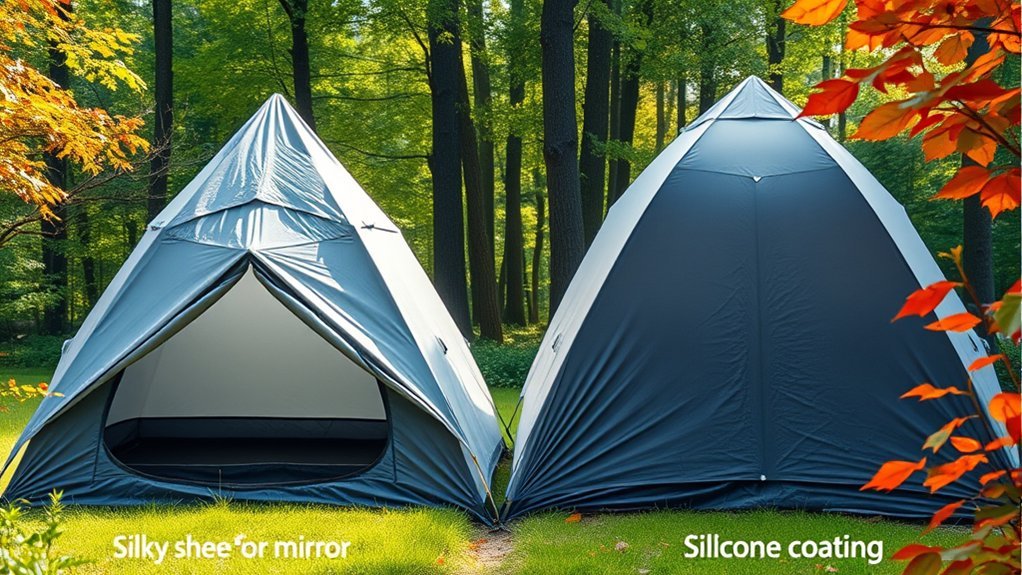
In contrast, silicone coatings excel in durability, resisting water absorption and preventing nylon from stretching when wet. This characteristic guarantees that the fabric maintains its strength and waterproofness over time, particularly in extreme conditions. While silicone coatings typically cost 10% to 30% more than PU options, their superior performance in UV resistance and longevity justifies the investment. Understanding these coating technologies empowers you to make an informed choice, guaranteeing your tent serves you well in your outdoor adventures.
The Benefits of PU Coating
When considering tent coatings, PU coatings stand out as a cost-effective waterproof solution, achieving impressive hydrostatic head ratings over 10,000mm. Additionally, their compatibility with fire retardants makes them a preferred choice among manufacturers. These benefits position PU coatings as a practical option for your outdoor equipment needs.
Cost-Effective Waterproof Solution
Although many tent materials claim waterproof capabilities, PU (Polyurethane) coating stands out as a cost-effective solution that effectively meets budget-conscious consumers’ needs. With high hydrostatic head ratings exceeding 10,000mm, PU coatings provide a reliable barrier against water ingress, making them an appealing choice for those seeking budget-friendly options. They’re generally cheaper to produce than silicone coatings and can accept fire retardants, solidifying their status as economic choices. However, you should be aware that PU coatings can absorb water, leading to longer drying times and potential mold growth if stored improperly. Additionally, their hydrophilic nature may compromise long-term waterproofness, making regular maintenance essential to prolong the lifespan of your tent.
Fire Retardant Compatibility
PU coatings not only provide an economical waterproof solution but also excel in fire retardant compatibility, making them ideal for tent manufacturers aiming to meet safety standards. This compatibility enhances fire safety without sacrificing the fabric’s waterproof properties. Here are three key benefits of PU coatings:
- Compliance: They meet essential safety standards like CPAI-84, ensuring tents are suitable for various environments.
- Affordable Safety: Fire retardant-treated PU coatings maintain cost-effectiveness while enhancing safety, appealing to budget-conscious manufacturers.
- Reliability: Unlike silicone coatings, PU coatings avoid compatibility issues with fire retardants, ensuring dependable performance.
High Hydrostatic Head Ratings
While many coatings offer basic waterproofing, PU coatings stand out due to their impressive hydrostatic head ratings, often exceeding 10,000mm. This exceptional performance guarantees your tent remains dry even in challenging weather conditions, providing peace of mind during outdoor adventures. The high performance ratings of PU coatings make them a reliable choice for those seeking durability and effectiveness. Additionally, PU’s hydrophilic nature allows for breathability, minimizing condensation inside the tent, which enhances comfort. While long-term waterproofing can be a concern, proper care and storage can maintain PU’s effectiveness. Cost-effective yet high-performing, PU coatings strike a balance between affordability and quality, making them a preferred option for manufacturers and outdoor enthusiasts alike.
The Advantages of Silicone Coating
When you compare tent coatings, you’ll find that silicone coatings stand out for their superior durability and water resistance. These silicone benefits greatly enhance tent longevity, making them a smart choice for outdoor enthusiasts. Here are three key advantages:
- Hydrolysis Resistance: Unlike PU coatings, silicone does not hydrolyze, preventing the degradation and unpleasant odors often associated with aging tents.
- Reduced Water Absorption: Silicone-coated fabrics absorb less water, minimizing stretch and maintaining tautness even in wet conditions.
- Mold and Mildew Resistance: Silicone coatings excel in damp environments, offering excellent resistance to mold and mildew, which further prolongs the life of your tent.
While the initial cost may be 10% to 30% higher, the long-term performance of silicone coatings justifies the investment, ensuring your tent remains functional and fresh for many adventures to come.
Comparing Durability and Longevity
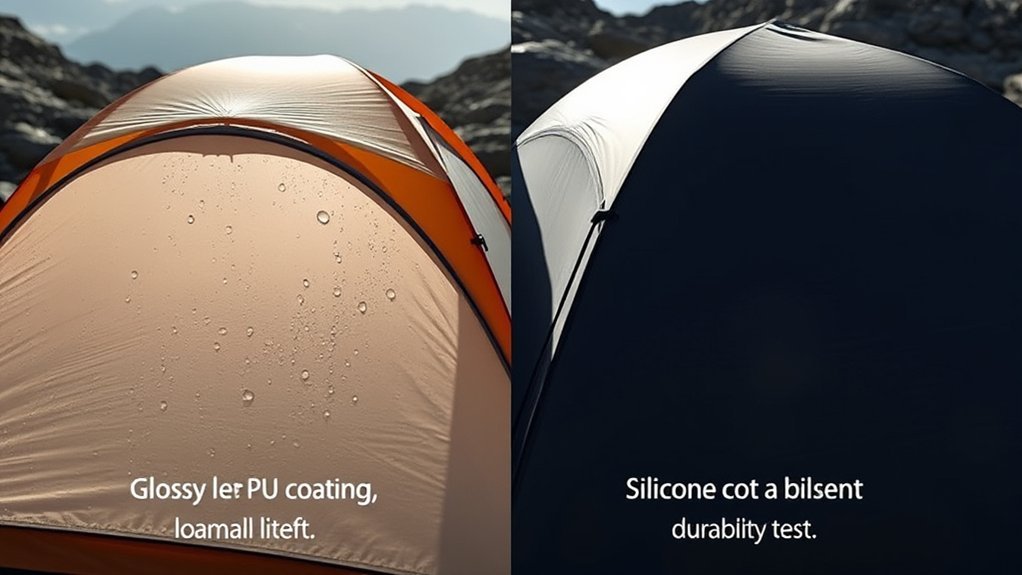
When comparing durability and longevity between PU and silicone coatings, it’s crucial to evaluate hydrolytic stability, UV resistance, and fabric lifespan. PU coatings may initially provide high waterproof ratings, but they suffer from significant degradation over time, especially under UV exposure. In contrast, silicone coatings maintain their integrity and performance longer, making them a superior choice for long-term use.
Hydrolytic Stability Differences
Understanding the hydrolytic stability differences between polyurethane (PU) and silicone coatings is essential for selecting the right tent material for durability and longevity. PU coatings exhibit notable hydrolytic breakdown, often leading to a sticky texture and loss of waterproofness within three to five years. In contrast, silicone coatings maintain superior coating performance and structural integrity over time. Here are key factors to evaluate:
- Longevity: Silicone coatings resist hydrolysis, extending their lifespan considerably.
- Water Absorption: PU fabrics absorb moisture, while silicone fabrics minimize sagging.
- Environmental Resistance: Silicone consistently outperforms PU under harsh conditions.
Ultimately, silicone coatings provide reliable protection, ensuring your tent remains functional and durable during your adventures.
UV Resistance Comparison
While both polyurethane (PU) and silicone coatings serve as protective layers for tents, their UV resistance greatly impacts their durability and longevity. PU coatings are more susceptible to UV exposure effects, which can reduce waterproofness and fabric integrity within a few seasons. In contrast, silicone coatings excel in longevity factors, often lasting over 10 years with proper care. Here’s a quick comparison:
| Coating Type | UV Resistance |
|---|---|
| PU Coating | Degrades quickly under UV light |
| Silicone Coating | Retains properties after sun exposure |
| Waterproofness | Decreases over time |
| Mold Resistance | Lower due to higher absorption |
| Cost Difference | 10% to 30% more expensive |
Choosing silicone could enhance your tent’s lifespan and overall value, making it a worthy investment.
Fabric Lifespan Considerations
Fabric lifespan considerations are essential for selecting the right tent material, especially when comparing the durability and longevity of PU and silicone coatings.
- Hydrolytic Stability: Silicone coatings maintain integrity without hydrolyzing, while PU coatings can deteriorate, leading to leaks and the notorious “Old Tent Smell.”
- Water Absorption: Silicone fabrics resist moisture absorption, minimizing sagging, unlike PU coatings that may absorb water and decrease performance.
- Cost vs. Longevity: Although silicone may cost 10% to 30% more upfront, its durability and lower maintenance needs often result in better long-term user experiences.
Prioritizing fabric maintenance and understanding these differences will lead you to make a more informed choice for your outdoor adventures.
Hydrolysis and Its Impact on Tent Performance
Hydrolysis greatly impacts tent performance, particularly in fabrics treated with Polyurethane (PU) coatings. This chemical process deteriorates PU coatings over time, leading to leaks and the notorious “Old Tent Smell.” If you’re not diligent with tent maintenance and moisture management, hydrolysis can accelerate, especially when storing your tent wet.
| Factor | PU Coating |
|---|---|
| Hydrolytic Stability | Poor |
| Resistance to Moisture | Low |
| Lifespan | A few years |
| Waterproof Barrier | Breaks down quickly |
| Alternative | Silicone coatings |
In contrast, silicone coatings resist hydrolysis, maintaining their waterproof properties for much longer. With silicone, you can expect better performance under extreme weather, ensuring your tent remains functional without the issues linked to hydrolyzed PU coatings. Choose wisely to enhance your outdoor experience.
Waterproofness and Breathability: A Trade-off
Tent coatings must balance waterproofness and breathability to optimize performance in varying weather conditions. This trade-off is essential for your tent’s longevity and usability. Here are key considerations:
- Hydrostatic Head Ratings: PU coatings can exceed 10,000mm, ensuring high waterproof technology, but they’re hydrophilic, risking water absorption over time.
- Breathability Factors: Silicone coatings excel in maintaining breathability, preventing sagging and fabric integrity issues, vital for comfort in humid conditions.
- Longevity: Silicone offers greater durability and resistance to hydrolysis, making it a better long-term choice for extreme environments, despite potentially lower initial ratings.
Ultimately, the right coating depends on your priorities. If you prioritize waterproofness, PU might seem appealing, but it can compromise breathability, especially in humid climates. Conversely, silicone may cost more upfront but provides a more balanced performance, ensuring you stay dry and comfortable during your adventures.
UV Resistance and Environmental Factors
When choosing a tent coating, you can’t overlook the impact of UV resistance on the overall performance and lifespan of your gear. PU coatings, while popular, degrade quicker under UV exposure due to their organic polymer structure, leading to diminished fabric performance over time. This degradation necessitates more frequent tent maintenance, ultimately affecting your outdoor experience.
In contrast, silicone coatings excel in UV resistance, maintaining their waterproofness and strength longer in sunlight. Research shows that silicone fabrics resist hydrolysis, preventing UV-induced deterioration. Consequently, they can greatly prolong the lifespan of your tent, making them a smart choice for long-term outdoor use.
Although silicone coatings may have higher initial costs, their durability against UV degradation offsets this investment. Considering the environmental impact of replacing gear frequently, opting for silicone could lead to a more sustainable choice while enhancing your camping experience.
Making the Right Choice for Your Camping Needs
How do you determine the best tent coating for your camping adventures? Understanding your camping preferences and tent maintenance needs is vital. Here are three key factors to take into account:
- Durability: If you’re camping in extreme conditions, silicone-coated tents excel with superior longevity and resistance to environmental factors, making them a wise investment despite the higher price.
- Waterproofing: PU coatings provide effective waterproofing but may degrade over time due to hydrophilic properties. If long-term waterproofness is essential, silicone is the way to go.
- Cost vs. Value: While PU tents are cheaper, their susceptibility to UV damage and water absorption could lead to additional maintenance issues. Weigh the upfront cost against potential long-term savings with a silicone option.
Ultimately, aligning the tent’s features with your camping style will lead to an informed decision that enhances your outdoor experience.
Frequently Asked Questions
How Do PU and Silicone Coatings Affect Tent Weight?
PU coatings typically increase tent weight due to their thicker application, enhancing durability. In contrast, silicone coatings often provide a lighter finish, maintaining strength while reducing overall weight. You’ll find both options impact your tent’s performance.
Can I Apply a Silicone Coating Over a Pu-Coated Tent?
You can’t apply silicone over a PU-coated tent easily; silicone adhesion challenges and coating compatibility issues often lead to peeling or failures. Instead, consider alternatives to enhance performance without risking your tent’s integrity.
What Maintenance Do PU and Silicone-Coated Tents Require?
You’ll need to regularly clean both PU and silicone-coated tents to maintain coating durability. Make certain you store them dry, avoid harsh chemicals, and inspect for wear. Proper tent care enhances longevity and performance during adventures.
Are There Specific Brands Known for Superior Coatings?
You’ll find brands like Big Agnes and MSR known for their superior coatings, emphasizing coating durability. These manufacturers consistently deliver tents that withstand wear and tear, ensuring your adventures remain uninterrupted and enjoyable.
How Do Temperature Fluctuations Impact Tent Coating Performance?
Temperature extremes can cause performance degradation in tent coatings. When you’re camping, rapid shifts in heat and cold stress the material, leading to cracks or peeling, ultimately affecting the tent’s waterproofing and durability.
Conclusion
In conclusion, choosing between PU and silicone coatings hinges on your specific camping needs. While PU coatings can last up to 10 years with proper care, silicone coatings often outperform in extreme conditions, showing a 30% better resistance to UV degradation. Hydrolysis can greatly affect longevity, so consider your tent’s intended use. Ultimately, understanding these factors will help you make an informed decision that guarantees durability and peak performance for your outdoor adventures.