


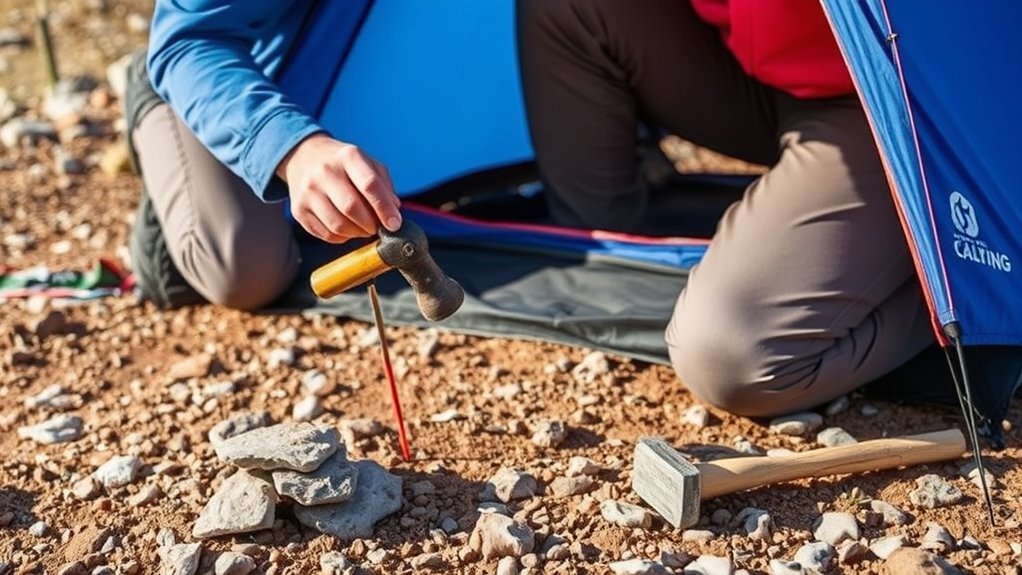
To stake a tent on hard ground without bending stakes, use a sturdy stick that’s 1.5 to 2 feet long. Girth hitch it to your tent corner or guyline for a secure attachment. Balance the stick by piling rocks at both ends, ensuring even weight distribution. Maintain a straight line from the guyline to the stick for stability. Regularly check and adjust the tension to keep your setup secure. There’s more effective tips and techniques to enhance your anchoring method.
Understanding the Alternative Method

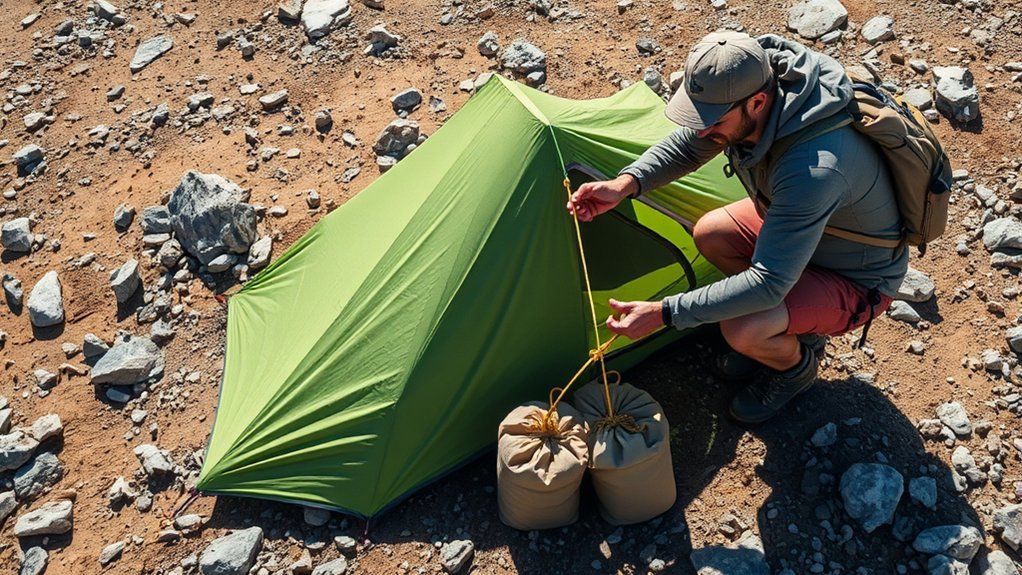
When you’re faced with hard ground, understanding the alternative method for staking a tent can make all the difference. This technique employs a stick girth hitched to the guyline or tent corner, providing a stable anchor without traditional stakes. To enhance stability, pile rocks at both ends of the stick, which allows for easy adjustments to guyline tension. Unlike the Big Rock Little Rock method, this approach reduces the need to lift heavy rocks, lowering the risk of instability during setup. Confirm you maintain a straight line from the guyline to the stick for effective tensioning, vital for your tent’s structure. This method is versatile, permitting the use of short or long sticks based on your specific situation. Fine-tune the anchor point as needed for ideal setup, empowering you to secure your tent confidently, regardless of the ground conditions.
Benefits of Using a Stick for Anchoring
Using a stick for anchoring your tent offers several key advantages, especially on hard ground. One of the primary stick advantages is that it minimizes the risk of bending traditional stakes, which can be a challenge when the ground is too hard. By using the girth hitch technique, you can securely attach the stick to the guyline or tent corner, creating a stable anchor point. Piling rocks on both ends of the stick enhances anchoring stability, preventing any shifting during strong winds or tension adjustments. This method allows for easy tension adjustments, enabling you to fine-tune the anchor point location based on varying ground conditions. Additionally, by maintaining a straight line from the guyline to the stick, you greatly enhance the effectiveness and stability of your tent setup. Embracing these techniques empowers you to achieve a secure and reliable camping experience, regardless of the terrain.
Step-by-Step Setup Process
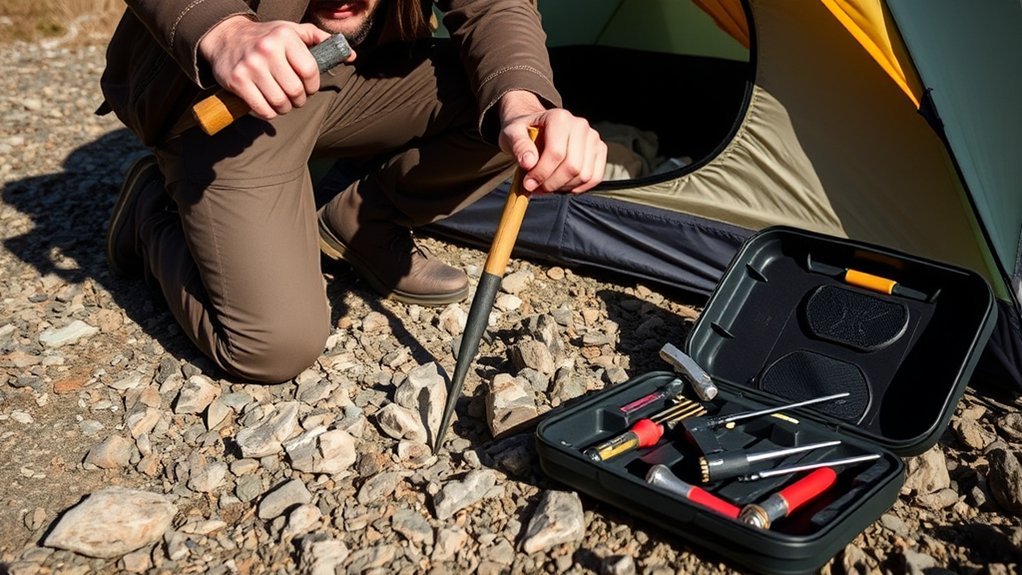
To begin the setup process, select a sturdy stick that’s at least as long as your tent’s guylines. Girth hitch the stick to the tent corner or guyline for a secure attachment, then balance it by placing rocks at both ends. This will stabilize your setup and prevent movement, ensuring your tent remains anchored effectively.
Select Appropriate Stick
Selecting the right stick is essential for successfully staking a tent on hard ground. Start by choosing a stick that’s at least 1.5 to 2 feet long, ensuring it’s sturdy enough to handle tension and weight. Focus on stick characteristics like a straight shape and minimal flex; this will maintain stability during setup. Aim for a thickness of 1 to 2 inches for ideal strength without added weight. For convenience, find a stick that’s readily available in your camping area, such as a fallen branch, to lighten your load. Finally, position the stick securely between two piles of rocks, allowing for proper weight distribution and balance during the anchoring process, ensuring a solid foundation for your tent.
Secure With Rocks
Once you’ve chosen a sturdy stick for anchoring your tent, securing it with rocks is the next step in ensuring stability. Begin by girth hitching the stick securely to your desired anchor point. Next, focus on rock placement: position a heavy rock at each end of the stick to provide balance. For added security, place additional rocks on top of the stick, ensuring the guyline runs straight to prevent sideways pull. This method enhances your tent’s stability on hard ground. Finally, regularly check and adjust the tension of the guyline to maintain an effective setup. With proper stick selection and rock placement, you’ll enjoy a secure and liberating camping experience.
Enhancing Flexibility and Adjustability
Using short sticks for anchoring provides you with the flexibility to adapt to various terrain conditions during setup. You can easily fine-tune the tension on the guy lines, ensuring maximum stability without the need for significant adjustments. This method allows you to maintain a straight line from the guy line to the stick, enhancing the overall effectiveness of your tent on hard ground.
Short Stick Usage
To enhance the flexibility and adjustability of your tent setup, incorporating short sticks as anchors can be a game changer, especially on hard ground. You can utilize various short stick types, ensuring the stick length is appropriate for your tent’s needs. By employing the girth hitch method, you effectively secure the guyline to the short stick, creating a stable anchor point without driving stakes into the ground. This approach allows for strategic placement, accommodating limited space while enabling effective rock placement for added weight. Additionally, using short sticks reduces the physical strain of lifting heavy rocks, simplifying tension adjustments and facilitating alignment of the guyline. Ultimately, this method empowers you to achieve a stable setup effortlessly.
Tension Fine-Tuning
Incorporating short sticks as anchors not only simplifies the staking process but also allows for effective tension fine-tuning of your tent’s guylines. This method enhances tension management by enabling easy adjustments. By placing rocks on both ends of the stick, you create a balanced anchor point that can be modified without bending stakes. The direct line from the guyline to the stick effectively controls tension, preventing sideways pull and maintaining stability. For less challenging ground conditions, short sticks work well, while longer sticks provide added flexibility for ideal tension adjustment. Regularly checking and fine-tuning the tension during use guarantees your tent remains secure and stable, using straightforward adjustment techniques that promote a liberated camping experience.
Best Practices for Effective Setup
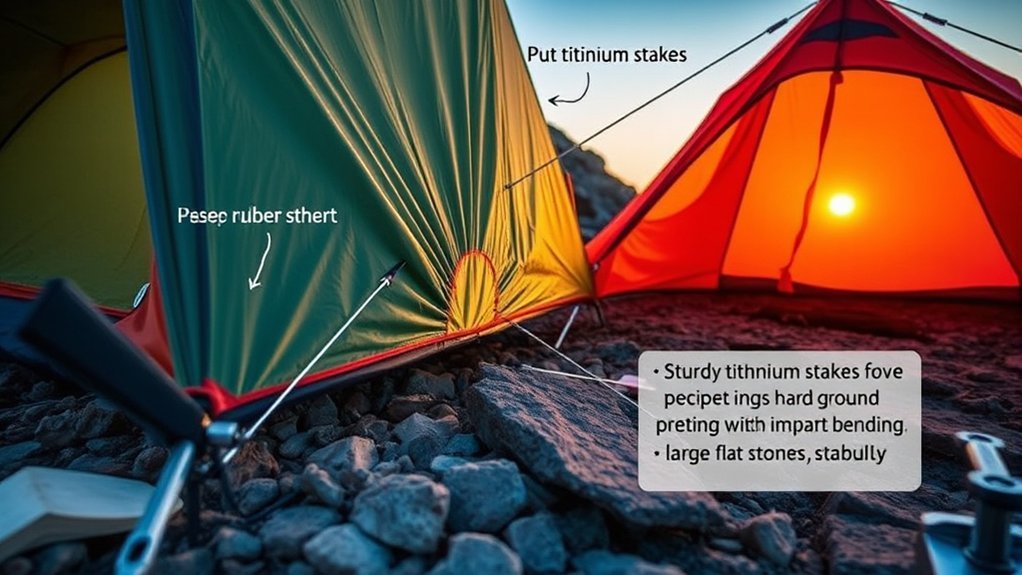
When setting up a tent on hard ground, selecting the right materials and methods is crucial for guaranteeing stability and security. Begin by considering ground condition considerations; adapt your anchor method accordingly. Use a stick of appropriate length and girth, hitching it to your guyline or tent corner to create a stable anchor point. Position rocks at both ends of the stick to balance and secure it, guaranteeing even weight distribution for maximum stability. Maintain a straight line from the guyline to the stick; this prevents sideways pull that could compromise your anchor’s effectiveness. Regularly check the tension of the guyline after setup to guarantee your tent remains secure and stable throughout its use. These tent setup tips will enhance your camping experience, allowing you to enjoy the outdoors without worry. Following these practices will empower you to set up your tent confidently, regardless of the hard ground beneath you.
Choosing the Right Stick and Rocks
Choosing the right stick and rocks is essential for creating a secure anchor for your tent on hard ground. Start by selecting a sturdy stick type that’s at least 1-2 feet longer than the distance from your tent corner to the desired anchor point. This provides the leverage needed for stability. For rock selection, opt for flat and heavy rocks, ideally weighing 5-10 pounds each, to secure both ends of the stick without shifting.
Consider the ground conditions; larger rocks work best in loose soil, while smaller, denser rocks are suitable for compact surfaces. Verify the stick has a minimum diameter of 1 inch to support the weight without bending. Using a variety of rock sizes creates a balanced anchor; place smaller rocks on top of larger ones for added stability.
| Stick Type | Rock Selection |
|---|---|
| Sturdy, long | Flat, heavy |
| 1-2 feet longer | 5-10 pounds |
| 1 inch diameter | Varied sizes |
| Compact support | Ground condition |
| Balanced anchor | Stability |
Common Mistakes to Avoid
Even with the right stick and rocks, mistakes can compromise your tent’s stability on hard ground. One common mistake is using stakes that are too thin or weak; these are more likely to bend under pressure. Don’t hammer stakes directly into extremely hard surfaces without softening the soil with water or creating a pilot hole first. Make sure you’re driving stakes at the correct angle; incorrect angles can lead to bending. A more angled approach secures them better. Avoid using a single large rock to drive stakes, as it creates uneven force, increasing the chance of bending. Finally, be cautious about wrapping the guyline around the stake multiple times. This can lead to tension issues and instability, further contributing to bending stakes. By steering clear of these common mistakes, you’ll enhance your tent’s stability on hard ground.
Maintenance and Regular Checks for Stability
To guarantee your tent remains stable on hard ground, regular maintenance and checks are essential. Start with tension checks on the guylines; verify they’re taut to effectively secure your tent. Inspect the placement of rocks on the anchoring stick, confirming they’re balanced and positioned to prevent any shifting.
Perform a thorough wear assessment on guylines and stakes, replacing any damaged components to maintain stability. Periodically assess the surrounding ground conditions, as shifting soil or moisture changes may require adjustments to your anchoring method or added weight.
After any strong winds or storms, conduct routine checks to verify your tent remains secure and that the anchoring system is still effective. By staying proactive with these maintenance tasks, you’ll enhance your tent’s stability, allowing you to enjoy your outdoor experience with peace of mind.
Frequently Asked Questions
Can I Use Any Type of Stick for Anchoring?
You can’t just use any stick for anchoring; specific stick types matter. Choose sturdy materials like hardwood or bamboo. They provide better support and stability, ensuring your tent remains secure against wind and other elements.
How Do I Know if the Rocks Are Heavy Enough?
If the rocks feel solid in your grip, they’re likely heavy enough. Test their weight against the ground composition; a firm, compact surface requires heavier rocks to guarantee stability and secure your tent effectively.
Is This Method Suitable for All Tent Types?
This method isn’t suitable for all tent designs. Different anchoring techniques may be necessary based on the tent’s structure and fabric. Always consider your tent’s specifications to guarantee stability and safety during your outdoor experience.
What if I Can’t Find a Suitable Stick?
If you can’t find a suitable stick, consider alternative anchoring methods like using heavy rocks or weights. Ground preparation, such as leveling and clearing debris, can enhance stability and improve your tent’s overall security.
How Do Weather Conditions Affect This Anchoring Method?
Weather impacts your tent’s stability; strong winds can uproot poorly anchored tents, while rain softens ground conditions, making stakes easier to drive. Always assess the forecast to guarantee secure anchoring and protect your outdoor adventure.
Conclusion
By using a sturdy stick and strategically placed rocks, you can effectively stake your tent on hard ground without bending stakes. Coincidentally, this method not only enhances stability but also allows for easy adjustments during changing weather. As you embrace this technique, remember to check your setup regularly for peak performance. With these tips, you’re set for a secure camping experience, making the great outdoors enjoyable and worry-free. Happy camping!