


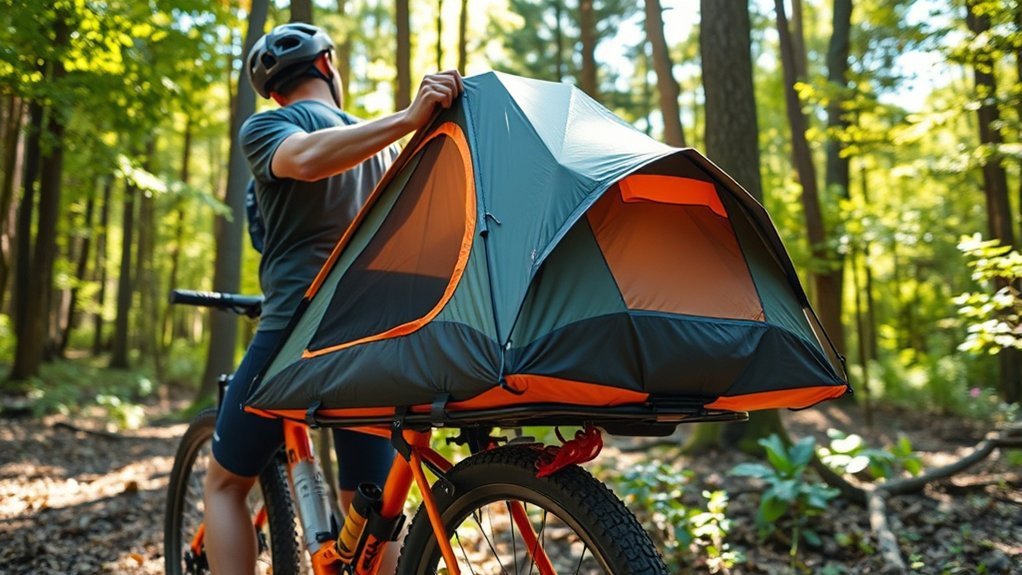
To pack your tent for bikepacking, prioritize balance and protection. Place heavier components low and centered in your setup. Use compression sacks to minimize bulk and keep your tent accessible if you plan to camp nightly. Storing poles in a frame bag enhances stability while strapping them to the bike frame optimizes space. Protect your gear with waterproof bags and avoid sharp objects during transport. This approach sets you up for a smooth adventure with your tent and gear intact. There’s more to explore on optimizing your bikepacking gear!
Understanding Tent Options for Bikepacking

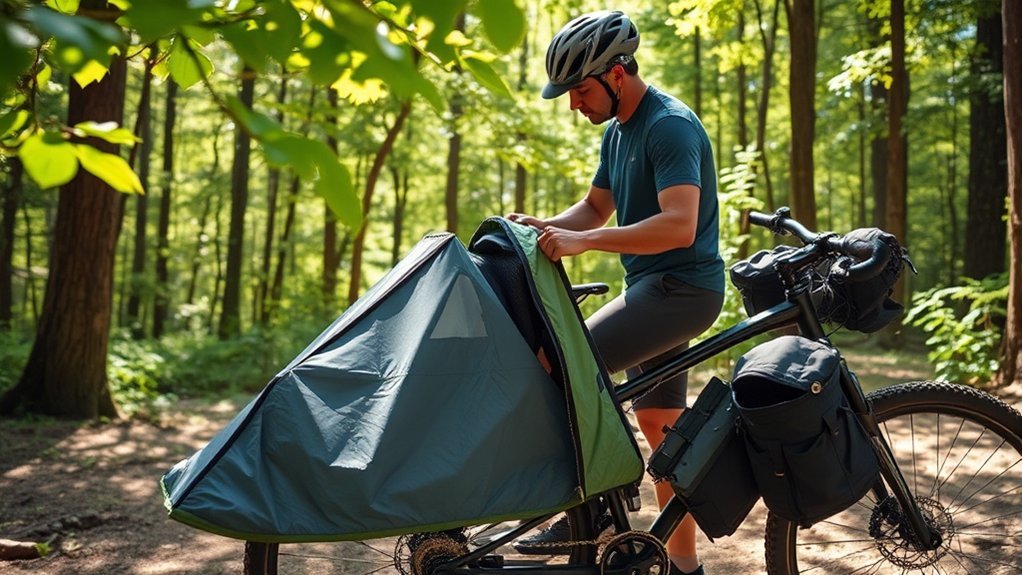
When you’re gearing up for a bikepacking adventure, understanding your tent options is essential for a comfortable experience. Lightweight backpacking tents typically weigh between 2-4 pounds and boast compact designs with minimal poles, making them perfect for transport. Consider weight considerations carefully; while freestanding tents offer easy setup without stakes, they can be slightly heavier than non-freestanding options like bivvy bags and tarps.
Bikepacking-specific tents are crafted with shorter poles, enhancing stowability on your bike. If you’re looking for protection from bugs, ultralight tents are ideal, often including a tent body, rain fly, poles, stakes, and optional ground sheets for added comfort. Remember to choose a tent suited to your camping season and local climate; the right waterproof rating and durable materials are vital to ensuring you stay dry and protected on the road.
Key Considerations for Packing
Packing your tent effectively is crucial for a successful bikepacking trip. Start by prioritizing weight distribution; place heavier components low and centered in your setup to enhance balance and stability. Use compressible packing methods, like compression sacks, to minimize bulk and guarantee your tent fits within your bike’s carrying capacity.
If you plan to camp nightly, pack your tent where you can easily access it. For infrequent camping, stow it deeper in your gear. Always consider the weather conditions and pack waterproof gear to protect your tent and other items from rain and moisture.
Lastly, organize your packing systematically to boost overall efficiency. This systematic approach makes it easier to find and access gear as you ride, allowing you to focus on the freedom of the journey without the hassle of rummaging through your supplies.
Packing Strategies for Your Tent
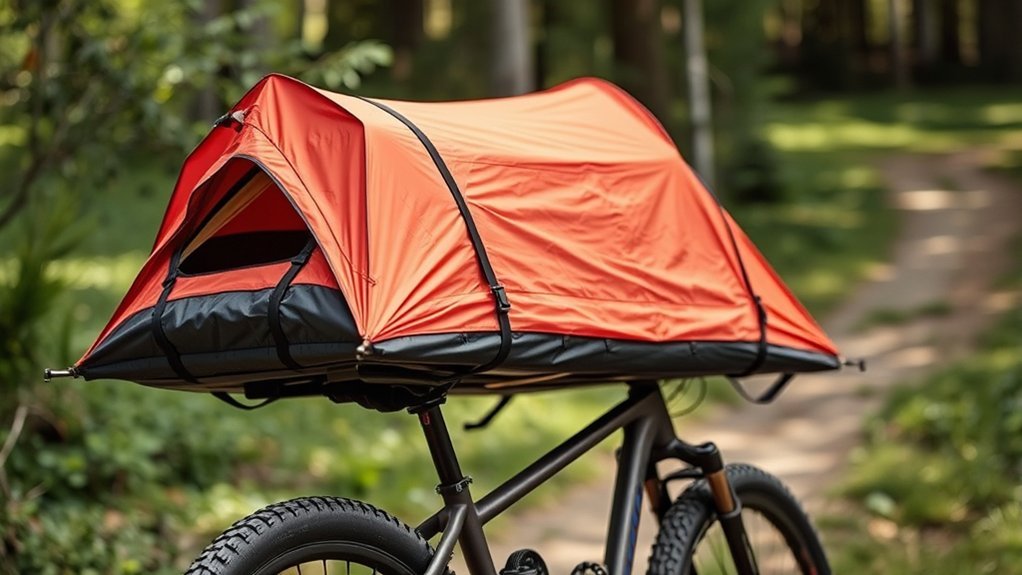
Efficient packing strategies can greatly enhance your bikepacking experience by optimizing space and weight management. Start by using a handlebar harness for lightweight tents, keeping them easily accessible while maintaining balance. Pack your tent directly into a saddle bag without the stuff sack, storing poles separately to maximize packing efficiency.
Utilize a frame bag for collapsible poles, placing heavier items lower to improve stability. Consider splitting tent components with a partner to lighten the load and enhance comfort. Strapping poles to the bike frame and filling any gaps with additional gear can also boost tent organization.
Here’s a quick overview of effective packing methods:
| Method | Description | Benefits |
|---|---|---|
| Handlebar Harness | Attaches tent to front of bike | Easy access, balanced ride |
| Saddle Bag Packing | Tent without stuff sack | Space optimization |
| Frame Bag Usage | Store poles in frame bag | Lower center of gravity |
| Creative Strapping | Attach poles to bike frame | Maximize packing efficiency |
Choosing the Right Tent for Your Adventure
Selecting the right tent for your bikepacking adventure is crucial for comfort and protection from the elements. When evaluating tent features, focus on lightweight options, ideally backpacking tents between 2-4 pounds or bikepacking-specific designs that use shorter poles for easy stowing. Consider seasonal tenting; a three-season tent is best for colder conditions, while a lightweight two-season tent works perfectly for summer escapades.
Durability is also key—look for tents made from weather-resistant materials with high waterproof ratings to withstand adverse conditions. Prioritize ease of setup by choosing tents with quick-pitch features and color-coded poles, making assembly a breeze after long rides. Finally, assess the tent size to guarantee it accommodates your needs; opt for a one-person tent for solo trips or a more spacious option for two. By carefully considering these factors, you can guarantee a comfortable and secure camping experience on your journey.
Maintaining Your Gear
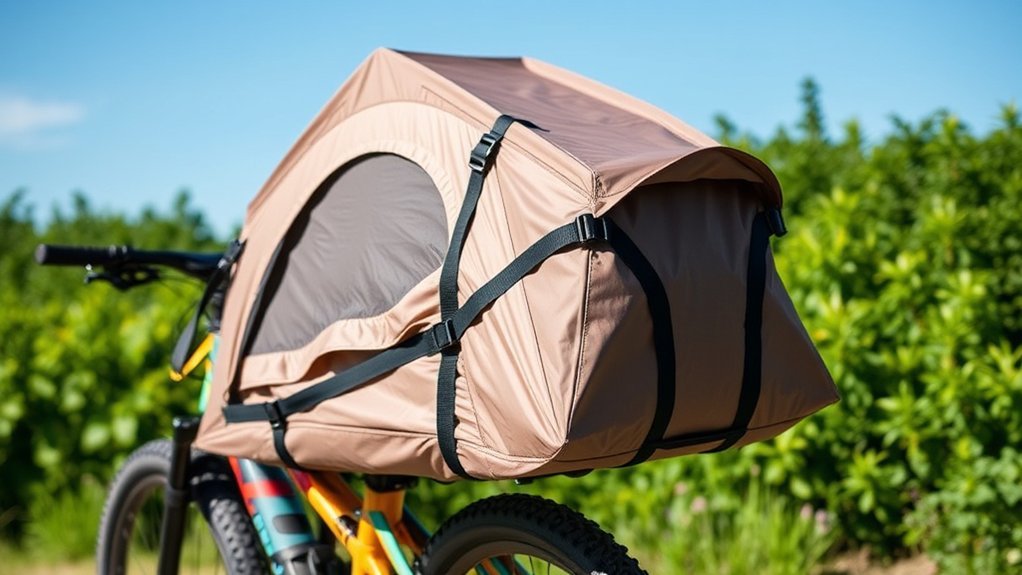
To keep your gear in top shape, regularly inspect your tent and packing materials for any signs of wear. After each trip, clean your tent with mild soap and water, and guarantee it’s completely dry before storing it away. Proper storage and carrying a small repair kit will prepare you for any unexpected challenges on your bikepacking adventures.
Regular Inspections and Cleaning
Regular inspections and cleaning are essential for maintaining your tent’s performance and longevity. After each bikepacking trip, inspect your tent for signs of wear, like frayed seams or damaged zippers. This proactive tent maintenance guarantees it’s ready for your next adventure. Use mild soap and water for cleaning techniques, and allow your tent to dry completely to prevent mold and mildew. Store it in a cool, dry place away from direct sunlight to avoid UV damage. Avoid long-term compression in the stuff sack; store it loosely to maintain its shape. Keep a small repair kit handy for quick fixes, which should include patches for fabric tears and seam sealer for leaks, guaranteeing your gear remains reliable on the road.
Proper Storage Techniques
After verifying your tent is clean and free of damage, proper storage techniques play a significant role in maintaining your gear’s longevity. Follow these storage solutions to keep your tent in prime shape:
- Inspect Regularly: Check for wear and tear before each trip to guarantee peak performance.
- Clean and Dry: Use mild soap and water post-use, and let your tent dry completely to prevent mold.
- Choose the Right Space: Store your tent in a cool, dry place, away from direct sunlight to avoid UV damage.
- Avoid Compression: Instead of long-term storage in the stuff sack, consider tent folding into a larger storage sack or hanging it loosely to preserve insulation and waterproofing.
These techniques will enhance your tent’s lifespan and performance.
Repair Kit Essentials
A thorough repair kit is essential for any bikepacking adventure, ensuring you’re prepared for unexpected mechanical issues on the road. Equip your kit with essential tools like a multi-tool featuring Allen and Torx bits, a chain breaker, and master link pliers to tackle common bike problems. Don’t forget crucial tire repair supplies: a mini pump, tire plugs, spare tubes, and tire levers for quick fixes on flat tires. Regularly check your repair kit before you leave, keeping tools organized for easy access in emergencies. Also, include spare parts like extra spokes, derailleur hangers, and brake pads to avoid being stranded. Familiarize yourself with your bike’s components to boost your confidence in handling repairs while bikepacking.
Shelter and Sleep System
When you’re out bikepacking, choosing the right shelter and sleep system is essential for a comfortable experience. Consider these options to enhance your adventure:
- Ultralight Tents: Weighing between 2-4 pounds, they protect against bugs and the elements, featuring minimal poles for easy transport.
- Bivvy Bags: Perfect for minimalists, they’re compact and lightweight, requiring little space and setup time—ideal for solo adventurers.
- Sleeping Bags: Match your bag to expected nighttime temperatures, choosing from summer bags to three-season designs to stay warm and comfortable.
- Sleeping Pads: Invest in a quality pad with an appropriate R-value to insulate from the ground, greatly improving sleep comfort.
Regular maintenance, including cleaning and proper storage, will enhance the longevity and performance of your shelter types and sleeping arrangements. So gear up wisely, and enjoy the freedom of the open road!
Frequently Asked Questions
What Materials Are Best for Lightweight Tent Packing?
For lightweight tent packing, you’ll want silicone coatings for waterproofing and lightweight fabrics like ripstop nylon or polyester. These materials reduce weight without sacrificing durability, allowing you to travel freely and efficiently on your adventures.
How Do I Clean My Tent Before Packing?
Before packing, shake out dirt and debris, then wipe down surfaces with a damp cloth. For tent maintenance, you should air it out completely, ensuring it’s dry to prevent mold. Use proper packing techniques for added protection.
Can I Pack a Tent Without a Footprint?
You can pack a tent without a footprint, just like a bird soars without a nest. Consider alternatives like a tarp for protection. Use strategic packing techniques to maximize space and minimize weight on your journey.
What’s the Best Way to Dry My Tent After Rain?
To dry your tent after rain, use drying techniques like hanging it in a well-ventilated area. Store it only when completely dry to prevent mold and mildew, ensuring your gear stays in top condition for future adventures.
How Do I Prevent Damage to My Tent While Packing?
To prevent damage while packing your tent, use proper tent storage techniques. Roll it loosely, avoid sharp objects, and protect it from moisture. These packing techniques guarantee your tent stays in great condition for future adventures.
Conclusion
Packing your tent for bikepacking isn’t just about cramming it in your bag; it’s about balance and protection. By understanding your tent options and employing smart packing strategies, you can guarantee a smoother ride. Think of your gear like a knight’s armor—each piece plays a vital role in your adventure. With proper maintenance and the right choice of shelter, you’ll be ready to conquer the trails ahead, enjoying every starry night along the way.