


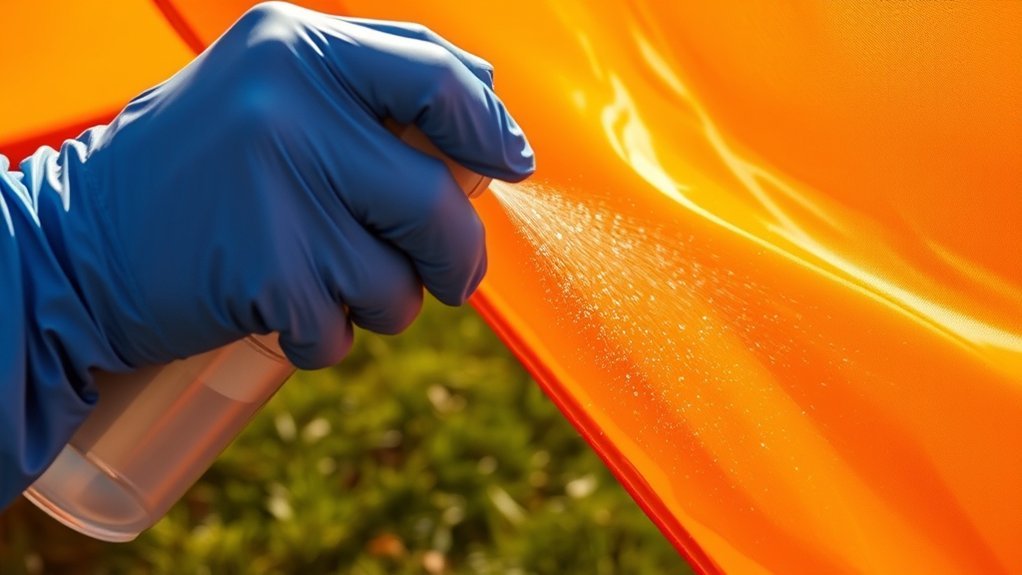
To apply DWR to your tent rainfly for better beading, start by cleaning and drying the fly. Set it up in a dry area, then lightly wet the fabric to improve bonding. Choose a silicone or polyurethane waterproofing spray designed for outdoor fabrics. Shake the canister and spray evenly on the wet fly. Wipe away excess with a damp cloth and allow adequate drying time. Consistent treatment can enhance performance considerably, and there’s more to take into account for long-lasting results.
Importance of DWR Treatment

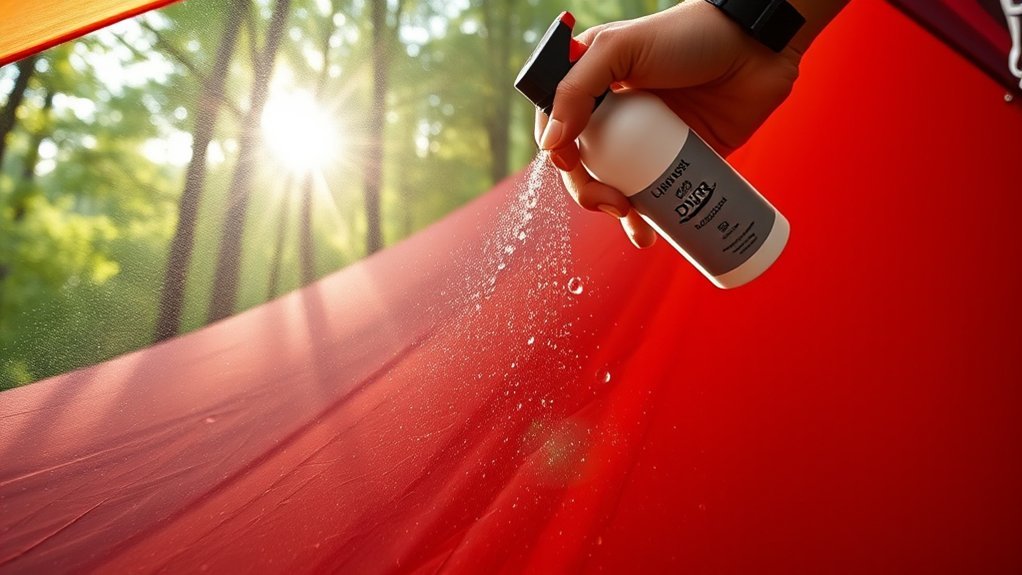
When you head out into the great outdoors, a Durable Water Repellent (DWR) treatment is essential for your tent rainfly. This treatment guarantees that water beads up and rolls off the fabric, instead of soaking in and compromising your shelter. One of the key DWR benefits is moisture prevention; it greatly reduces the risk of water damage and mold growth, which can ruin your camping experience. A well-maintained DWR coating can extend your tent’s lifespan, making it a worthy investment for outdoor enthusiasts.
You’ll want to regularly refresh your DWR treatment, especially when you notice water no longer beading on the surface. This indicates a breakdown that needs attention. Using a waterproofing spray designed for tent fabrics optimizes the DWR treatment’s effectiveness, assuring proper adhesion and coverage. Keeping your rainfly in peak condition enhances comfort and reduces leaks, allowing you to enjoy nature freely and confidently.
Preparing the Tent Rainfly
Preparing your tent rainfly is essential for guaranteeing a successful DWR application. Start by setting up your tent in a dry area to maintain stability and provide easy access to the rainfly. Next, focus on rainfly maintenance by cleaning it thoroughly. Use effective cleaning techniques to remove dirt and debris, promoting better adhesion of the waterproofing spray.
- Lightly wet the rainfly with water to enhance DWR bonding.
- Shake the waterproofing spray canister thoroughly to guarantee an even distribution of the solution.
- Apply the DWR spray evenly across the entire surface, covering all areas.
Once applied, wipe off any excess spray with a damp cloth. This preparation will set the stage for peak performance, keeping your rainfly effective against moisture and prolonging its lifespan. Embrace these steps to guarantee your outdoor adventures remain dry and enjoyable!
Choosing the Right Waterproofing Spray
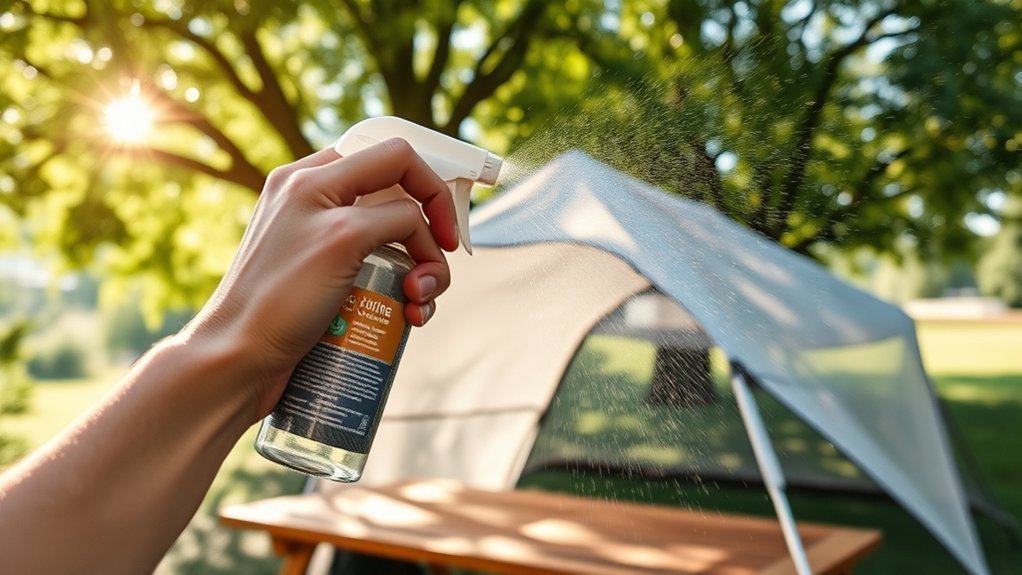
When selecting a waterproofing spray for your tent rainfly, you’ll want to compare different types to find the best fit for your needs. Consider the application process and how easily you can apply the spray, as well as any environmental factors that might affect performance. Understanding these elements will help guarantee your tent stays protected and lasts longer in the elements.
Spray Types Comparison
Selecting the right waterproofing spray for your tent rainfly is essential for maintaining its performance and longevity. You’ll typically encounter two main types: silicone sprays and polyurethane sprays. Each comes with its advantages, so consider your specific needs.
- Silicone Sprays: Offer enhanced flexibility and durability, ideal for varied weather conditions.
- Polyurethane Sprays: Provide a stronger bond to fabrics, ensuring better longevity against wear and tear.
- DWR Labels: Opt for sprays marked “DWR” for maximum water beading performance.
Always check compatibility with your tent material, whether it’s nylon or polyester. Don’t forget to read user reviews to find the most effective and easy-to-use options available.
Application Process Steps
After you’ve chosen the right waterproofing spray, it’s time to focus on the application process. Start by selecting a silicone or polyurethane-based spray specifically designed for outdoor fabrics, ensuring compatibility with your tent material. Look for high durability ratings and those labeled “DWR” for maximum water repellency. Remember to avoid harmful chemicals like PFCs. An important application tip is to spray on wet fabrics for easier coverage, but be sure to read the product instructions for the correct application distance and drying time. Common mistakes include over-spraying and not allowing sufficient drying time, which can compromise effectiveness. Follow these guidelines for the best results and enjoy a liberating, water-resistant tent experience.
Environmental Considerations
Choosing an environmentally friendly waterproofing spray for your tent rainfly is crucial for minimizing your ecological impact. By selecting the right product, you can combine effective protection with eco-friendly practices. Look for sprays that prioritize sustainable materials and avoid harmful chemicals like PFCs.
- Opt for biodegradable options that won’t harm wildlife.
- Choose brands with certifications like Green Seal or EcoLogo.
- Select products with low volatile organic compounds (VOCs) to reduce air pollution.
Researching these factors guarantees you’re not just keeping your gear dry but also protecting the planet. By making informed choices, you contribute to a sustainable future, allowing you to enjoy the outdoors without compromising your values.
Application Process for DWR
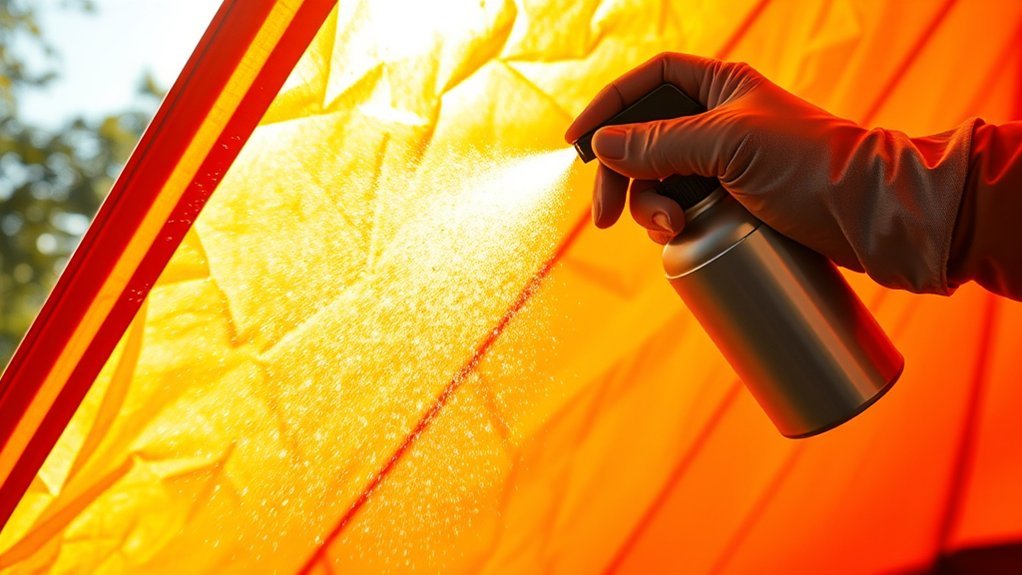
To effectively apply Durable Water Repellent (DWR) to your tent’s rainfly, start by setting up the tent in a clean, dry area. This guarantees ideal adhesion of the DWR coating. Lightly wet the rainfly with water; this prepares the surface and enhances the DWR’s effectiveness.
Next, apply the DWR spray evenly across the entire surface, guaranteeing complete coverage for the best results. As you spray, remember that DWR benefits include improved water repellency and longevity of your gear. After application, use a damp cloth to wipe off any excess coating to prevent uneven drying or clumping.
Finally, allow the treated rainfly to dry thoroughly before packing it away. This curing process is essential for maximum water repellency. Following these application tips will help you maintain a reliable shelter, allowing you to enjoy your adventures without worry.
Wiping and Drying the Fly
Wiping and drying the tent rainfly is essential for achieving ideal results with your DWR application. Start by setting up the fly in a well-ventilated area. Use effective wiping techniques, like a damp cloth, to remove dust and debris. This guarantees a clean surface for maximum DWR adhesion.
Next, employ the following drying methods:
- Allow the fly to air dry briefly to avoid trapping moisture beneath the DWR coating.
- After applying DWR, gently wipe off any excess with a clean, dry cloth for an even finish.
- Confirm the rainfly is completely dry before storing to prevent mold and mildew growth.
Maintaining Your Tent’s Water Resistance
Once your tent rainfly is clean and dry, maintaining its water resistance becomes a priority. Regularly renewing the Durable Water Repellent (DWR) coating is essential for peak water beading and preventing moisture penetration. To enhance the DWR coating, use a waterproofing spray designed specifically for fabric, like solar proof. Before applying this treatment, verify your rainfly is clean and dry; this allows for better adhesion and effectiveness of the waterproofing techniques.
Watch for signs of wear; if water starts soaking into the fabric instead of beading on the surface, it’s time to reapply the DWR treatment. Consistent tent care not only improves performance in wet conditions but also extends your tent’s lifespan. By prioritizing these maintenance steps, you empower yourself to enjoy your outdoor experiences without the worry of leaks or dampness.
Frequently Asked Questions
How Often Should I Apply DWR to My Tent Rainfly?
You should apply DWR every six months or after several washes, depending on usage. Regular inspections help gauge DWR longevity, ensuring your tent rainfly maintains its water resistance and performance during outdoor adventures.
Can I Use DWR on Other Outdoor Gear?
You can release the magic of DWR applications on various outdoor gear, such as jackets, sleeping bags, and backpacks. This treatment dramatically enhances water resistance, keeping you dry and comfortable during your adventures.
Is DWR Treatment Safe for All Tent Materials?
DWR treatment isn’t compatible with all tent material types. You should check your tent’s specifications; some fabrics, like silicone-coated nylon, may not bond well with DWR, affecting performance and longevity. Always verify compatibility before application.
What Should I Do if My Tent Leaks After Treatment?
If your tent leaks after treatment, inspect seams and fabric for damage. About 30% of tents experience leaks post-treatment. Consider advanced waterproofing techniques like seam sealing as part of your tent maintenance routine for peak performance.
Can I Apply DWR in Cold Weather?
Yes, you can apply DWR in cold weather, but make certain temperatures are above the product’s minimum application range. For best results, warm the fabric slightly and follow application tips for even coverage and effectiveness.
Conclusion
By applying DWR to your tent rainfly, you’re not just enhancing its water resistance; you’re ensuring a drier, more comfortable camping experience. Picture the rain beading up and rolling off, like marbles on a polished surface, keeping you and your gear safe from moisture. Regular maintenance will extend your rainfly’s life, creating a reliable shield against the elements. So, the next time you gear up for an adventure, remember: a well-treated rainfly makes all the difference.