


Hydrostatic head measures a tent’s waterproof abilities by indicating how much water pressure it can withstand before leaking. Ratings range from 1,000 mm for light rain to 10,000 mm or more for extreme conditions. Tightly woven fabrics and effective seam sealing boost performance. Choosing the right rating helps guarantee comfort during outdoor adventures, whether you’re camping in summer showers or facing unpredictable weather. Stick around to discover more about optimizing your tent’s waterproofing.
How Is Hydrostatic Head Measured?

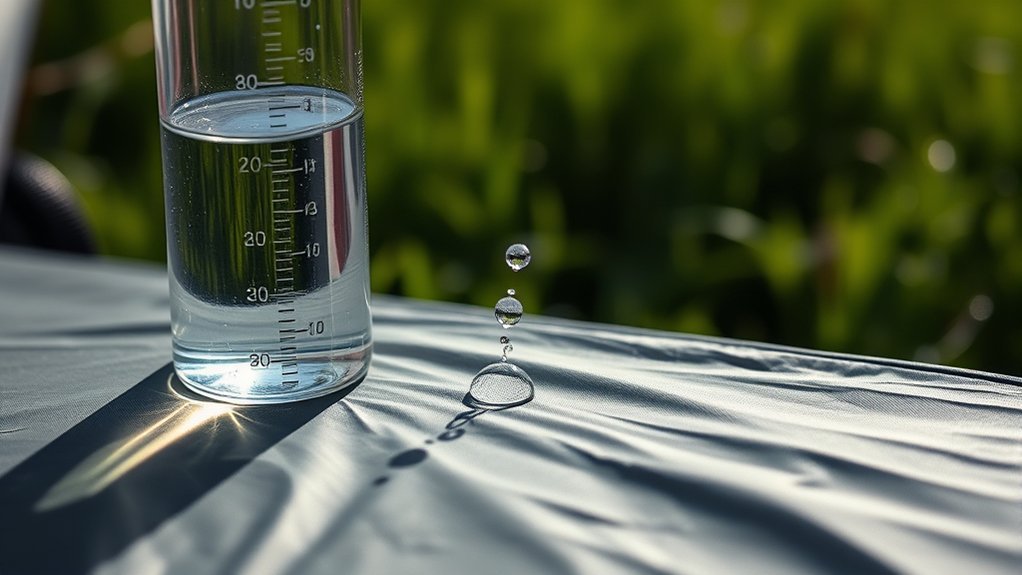
When it comes to measuring hydrostatic head, you’ll find that the process is both straightforward and precise. To assess a fabric’s waterproof capabilities, testing procedures involve clamping a sample over a sealed water-filled tube. You then gradually increase the water level until it seeps through the fabric, marking the point of measurement accuracy. This rating, expressed in millimeters (mm), indicates the height of the water column the material can withstand before leakage occurs. For instance, a fabric with a hydrostatic head rating of 3,000 mm can resist the pressure of a 3-meter water column. Various methods, like applying static water pressure, guarantee that known pressures are accurately tested against the fabric. By adhering to these rigorous testing procedures, you can trust the hydrostatic head rating as a reliable indicator of a tent’s performance in wet conditions, empowering your outdoor adventures with confidence.
Why Does Hydrostatic Head Matter?
Understanding hydrostatic head ratings plays a significant role in selecting the right tent for your outdoor adventures. These ratings indicate how well a tent can withstand various weather conditions, ensuring your comfort and dryness. For instance, a rating of 1,500 mm is suitable for light rain, while anything above 5,000 mm is ideal for extreme weather.
| Hydrostatic Head Rating | Ideal Use |
|---|---|
| 1,500 mm | Light rain |
| 3,000 mm | Prolonged wet weather |
| 5,000 mm | Heavy rain or standing water |
| 10,000 mm | Professional expeditions |
Choosing a tent with the appropriate hydrostatic head rating helps you prepare for the unexpected. Regular tent maintenance, such as checking seams and coatings, can further enhance waterproofing, ensuring that your gear remains reliable through diverse weather conditions.
Practical Hydrostatic Head Ratings
Practical hydrostatic head ratings provide essential guidance for choosing the right tent based on your camping needs. Hydrostatic head ratings typically range from 1,000 mm to over 10,000 mm. For summer camping in light showers, a tent with a 1,000 mm HH rating will suffice. However, if you face more unpredictable weather, look for tents with a 3,000 mm HH rating or higher. Tents designed for 2-3 season use generally offer wall ratings of 1,000 mm to 1,500 mm and floor ratings between 2,000 mm and 3,000 mm. If you’re gearing up for professional expeditions or extended exposure to severe weather, opt for tents with ratings of 5,000 mm or more. Remember, while higher hydrostatic head ratings indicate better waterproof capabilities, the tent materials and construction, including seam sealing, considerably impact overall water resistance. Choose wisely, and enjoy your adventures!
Factors Influencing Hydrostatic Head Performance
Choosing a tent with the right hydrostatic head rating is only part of the equation; various factors can greatly influence its performance in wet conditions. The type of fabric you choose matters—a tightly woven fabric generally resists water better than a loose weave. Additionally, coating materials like polyurethane (PU) or Gore-Tex can greatly boost waterproof capabilities.
However, wear and tear from use and washing can reduce a fabric’s effectiveness over time. Seam sealing is another crucial aspect; unsealed seams are weak points that can lead to leaks, no matter the hydrostatic head rating. Furthermore, the fabric’s construction, including its denier and reinforced stress points, plays an essential role in its performance.
| Factor | Impact on Hydrostatic Head | Example |
|---|---|---|
| Fabric Types | Resistance to water | Tightly woven fabrics |
| Coating Materials | Enhances waterproofing | PU, Gore-Tex |
| Seam Sealing | Prevents leaks | Fully taped seams |
| Wear and Tear | Reduces effectiveness | Abrasion over time |
| Construction Quality | Improves overall strength | Reinforced stress points |
Choosing the Right Hydrostatic Head Rating for Your Tent
When you’re selecting a tent, the hydrostatic head rating is essential for guaranteeing you stay dry during your adventures. For summer camping, look for a rating between 1,000mm to 1,500mm, which can handle light rain but might struggle with heavy downpours. If you plan on encountering moderate rain, opt for a tent rated between 2,000mm to 3,000mm for reliable waterproofing during prolonged exposure. For 3-season tents, aim for an outer fly rating of 1,200mm to 1,800mm, combined with a floor rating of 2,000mm to 3,000mm to keep moisture at bay. If you’re gearing up for extreme weather, go for tents rated 3,000mm and above. In your tent selection, remember to take into account the hydrostatic head rating alongside other factors like waterproof materials, fabric type, and seam sealing for peak performance. This guarantees you stay comfortably dry, no matter the conditions.
Frequently Asked Questions
Can Hydrostatic Head Ratings Vary by Tent Brand?
Yes, hydrostatic head ratings can vary by tent brand due to differences in tent materials and construction techniques. When making brand comparisons, consider these factors to guarantee you’re choosing the right tent for your adventures.
How Often Should I Check My Tent’s Waterproof Rating?
You should check your tent’s waterproof rating annually to keep it in tip-top shape. Regular tent maintenance and waterproof tests guarantee you’re ready for the great outdoors, avoiding any unpleasant surprises when the rain hits.
Does Hydrostatic Head Affect Breathability in Tents?
Yes, hydrostatic head affects breathability in tents. Higher waterproof materials can limit airflow, impacting breathability factors. Balancing waterproofing and ventilation guarantees you stay dry without sacrificing comfort during your outdoor adventures.
Are Higher Ratings Always Better for Camping?
Higher ratings aren’t always better for camping. You need to take into account tent features and camping conditions. A balance between waterproofing and breathability guarantees comfort, especially in varying weather, so choose wisely based on your adventure.
What Maintenance Improves a Tent’s Waterproof Performance?
To improve your tent’s waterproof performance, regularly clean it to remove dirt and grime, and don’t forget to seal seams. These steps help maintain its integrity, ensuring you stay dry and comfortable during your adventures.
Conclusion
In the world of tents, hydrostatic head ratings symbolize your shield against nature’s downpour. Just as a sturdy fortress stands against relentless rain, a tent with the right rating keeps you dry and comfortable. By understanding these ratings, you’re not just choosing shelter; you’re embracing adventure with confidence. So, when the clouds gather and the winds howl, trust in your tent’s hydrostatic head to be your unwavering guardian, transforming stormy nights into peaceful dreams beneath the stars.