



To choose the right tent stakes for any campsite, consider the terrain type and weather conditions. Opt for durable materials like titanium or aluminum for lightweight needs, and go for longer stakes in soft soil. If you’re dealing with rockier ground, stronger options are a must. Typically, 6 to 7.5 inch stakes provide stability, and using a mix of lengths can enhance performance. Keep exploring to discover top recommendations and maintenance tips for ensuring reliable anchoring.
Understanding the Importance of Tent Stakes

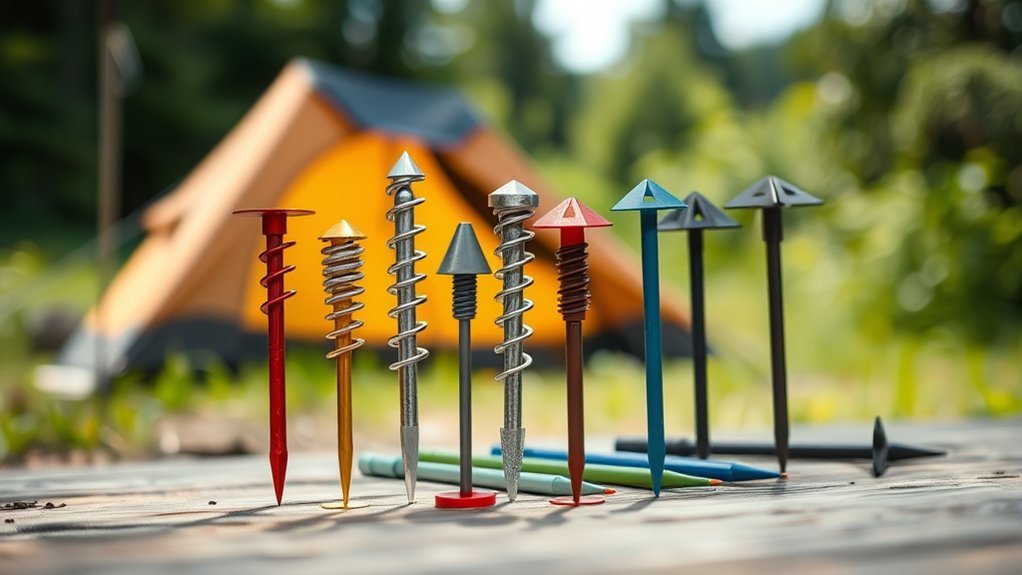
While you might think of a tent as a simple shelter, understanding the importance of tent stakes is essential for guaranteeing a stable and comfortable camping experience. Tent stakes are critical for maintaining tent stability, especially during adverse weather conditions. They prevent your tent from collapsing, guaranteeing you stay dry and cozy. High-quality stakes, typically ranging from 6 to 7.5 inches in length, provide ideal holding power across various ground types. When you stake at a 45-degree angle, you enhance your tent’s stability, considerably reducing movement in windy conditions. Regular maintenance, like inspecting stakes for damage and cleaning them, prolongs their lifespan and guarantees reliable performance for future trips. By prioritizing tent stakes, you’re not just securing your shelter; you’re also investing in your overall camping comfort and freedom to enjoy the great outdoors.
Common Tent Stake Materials
Choosing the right tent stakes involves understanding the various materials available, each with its own set of advantages and limitations. Here’s a quick look at some common materials you might consider for your camping trips:
| Material | Key Features |
|---|---|
| Titanium | Lightweight, strong, ideal for backpackers |
| Aluminum | Affordable, versatile, lightweight but bends |
| Stainless Steel | Durable, stable in high winds, heavier |
| Plastic | Budget-friendly, lightweight, limited reliability |
| Carbon Fiber | Ultra-lightweight, strong, expensive, less durable |
When selecting stakes, think about your tension adjustment needs and stake placement. Titanium and carbon fiber are great for weight-conscious campers, while stainless steel excels in windy conditions. Aluminum provides a good balance, but keep an eye on bending. Plastic can work in soft soils but may fail in tougher terrains. Choose wisely to guarantee a secure setup!
Common Tent Stake Designs
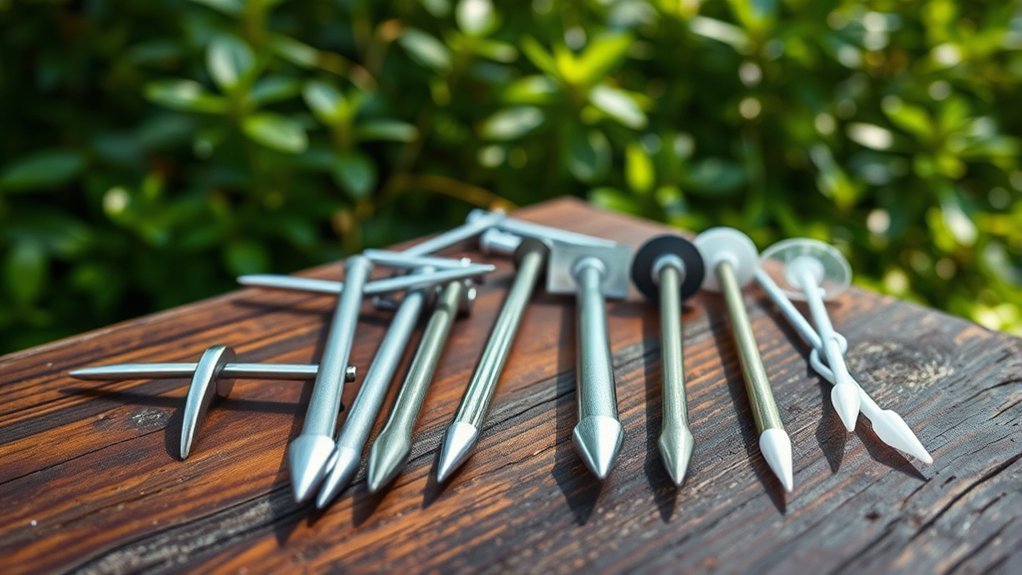
When choosing tent stakes, consider the Y-shape and V-shape designs, both of which offer distinct advantages. Y-shape stakes excel in windy conditions and various soil types, while V-shape stakes provide stability in both hard-packed and loose ground. Understanding these designs will help you select the right stakes for your camping needs.
Y-Shape Tent Stakes
Y-Shape tent stakes stand out among common designs due to their unique three-pronged structure, which offers superior stability and holding power. These stakes are particularly useful for various soil types and windy conditions, making them a reliable choice for your outdoor adventures.
Consider the following Y Shape advantages and applications:
- Durable Materials: Made from aluminum or steel, they withstand harsh weather.
- Easy Installation: Pointed ends penetrate hard ground effortlessly.
- Secure Anchoring: Ideal for larger tents or canopies, distributing tension effectively.
- Optimal Positioning: Drive them at a 45-degree angle for enhanced stability.
With Y-Shape stakes, you can enjoy peace of mind knowing your tent is anchored securely, allowing you to focus on the freedom of your camping experience.
V-Shape Tent Stakes
If you’re looking for a reliable option for your campsite, V-Shape tent stakes provide a solid balance of stability and ease of use. These stakes excel in both hard-packed and loose soil, making them versatile for various terrains. With their unique design, they grip the ground securely, offering significant advantages in high winds. Although they may bend when used in firm ground, their overall durability guarantees they withstand the rigors of camping. Weighing between 11 to 15 grams each, V-Shape stakes are lightweight, making them perfect for casual campers and backpackers alike. Their straightforward installation process simplifies setup, allowing you to focus on enjoying your time outdoors while knowing your tent’s secure.
Factors to Consider When Choosing Tent Stakes
Choosing the right tent stakes is vital for guaranteeing a stable and secure campsite, especially since various factors can impact their effectiveness. Here are key considerations to keep in mind:
- Terrain Type: Soft soil needs longer stakes, while rocky ground requires stronger options to avoid bending.
- Weather Conditions: High winds or heavy rain call for durable stakes, whereas milder weather allows for lighter materials.
- Weight for Backpacking: Opt for lightweight materials like aluminum or titanium to keep your pack manageable.
- Tent Size: Larger tents demand sturdier stakes due to increased surface area and wind resistance.
Prioritizing tent stake durability is vital, as these camping gear essentials can make or break your outdoor experience. By evaluating these factors, you’ll guarantee your tent remains secure, allowing you to enjoy the freedom of the great outdoors without worry.
Recommended Length and Quantity of Tent Stakes
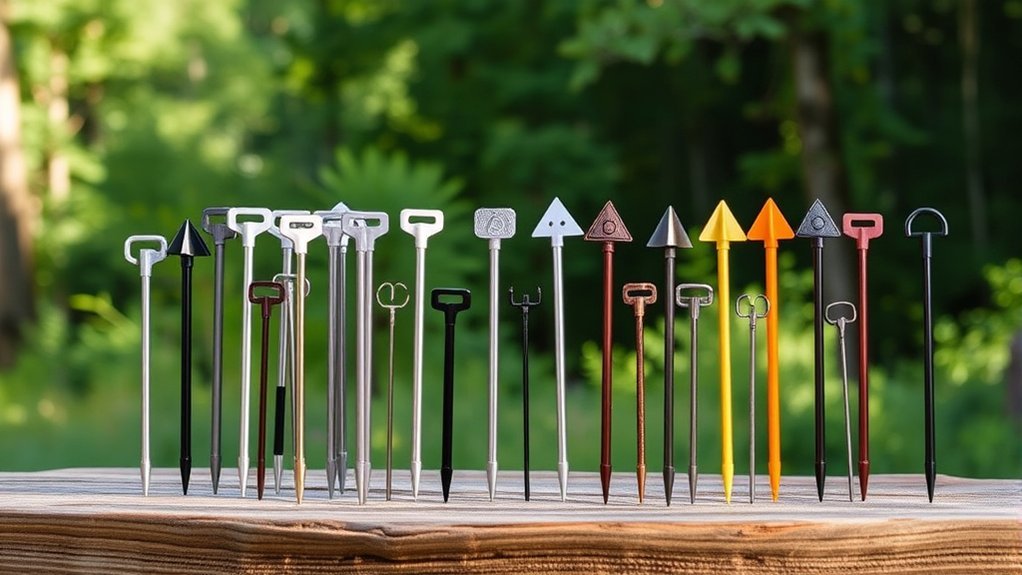
When choosing tent stakes, aim for a length between 6 to 7.5 inches for ideal stability in various ground conditions. For a 2-4 person tent, having 8-12 stakes will guarantee proper anchoring at all corners and guylines. Additionally, mixing short and long stakes can help you adapt to different soil types and weather scenarios.
Optimal Stake Lengths
To guarantee your tent remains secure in various conditions, selecting the right stake length is essential. The common recommendation ranges from 6 to 7.5 inches, striking a balance between stability and ease of use. Here are some key considerations:
- Stake length variations: Use longer stakes for soft ground and shorter ones for harder surfaces.
- Optimal stake types: Choose heavier-duty stakes for larger tents to manage wind resistance effectively.
- Soil conditions: Consider the terrain; high winds or heavy rain may require more durable stakes.
- Number of stakes: Ascertain you have 8-12 stakes for an average 2-4 person tent to anchor all corners securely.
Quantity for Stability
For ideal stability at your campsite, having the right quantity and length of tent stakes is vital. For a 2-4 person tent, aim for 8-12 stakes to guarantee adequate anchoring points. Stakes between 6” to 7.5” in length typically provide a secure hold across different ground types. A mix of shorter and longer stakes enhances adaptability, significant for varying soil conditions and weather. Shorter stakes resist bending but may struggle in windy conditions, so a variety can optimize tent stability. If you expect harsh weather, consider heavier-duty stakes for reliable performance. Proper stake placement and the right quantity will help you secure your tent, assuring a restful and carefree camping experience.
Proper Use of Tent Stakes
Proper use of tent stakes is essential for ensuring your tent remains secure and stable, especially in windy conditions. To optimize tent stability, focus on proper stake placement and technique. Here’s how:
- Always stake all corners and anchor points of your tent.
- Drive stakes into the ground at a 45-degree angle away from the tent for better holding power.
- Use a rubber mallet or designated tool for driving stakes; avoid rocks to prevent damage.
- Regularly inspect your stakes for bends or breaks before each trip.
Adapting to various terrains is vital; carry a mix of stake lengths and designs for soft, rocky, or sandy soils. By following these practices, you’ll enhance your tent’s stability and enjoy a worry-free camping experience. Remember, proper stake placement is key to keeping your tent grounded against the elements.
Maintenance Tips for Tent Stakes
To keep your tent stakes in top shape, you should regularly inspect them for any bends, breaks, or signs of wear. After each use, clean off dirt and debris to prevent corrosion, especially if they’re metal. Proper care and maintenance can greatly extend their lifespan and guarantee your tent remains securely anchored.
Regular Inspection Practices
Before heading out on your camping trip, it’s essential to inspect your tent stakes to confirm they’re in prime condition. Regular inspection practices guarantee your stakes remain functional and safe, especially considering the stake material. Aim to inspect them before every trip to maintain reliability.
- Check for bends, breaks, or signs of wear.
- Verify notches for guylines are well-designed for ease of extraction.
- Store stakes in a protective case to prevent damage.
- Replace any damaged or worn stakes promptly for maximum tent stability.
Proper Cleaning Techniques
Maintaining your tent stakes through proper cleaning techniques is essential for their longevity and performance. After each camping trip, clean your stakes with water and a soft cloth to remove dirt and debris, ensuring rust prevention. For metal stakes, use a mild detergent and a soft brush to eliminate any rust or buildup. Make this a part of your regular cleaning frequency to keep them lightweight and effective. While cleaning, inspect for bends or breaks; proactive maintenance helps catch damage early. Store stakes in a protective case to avoid physical damage and keep them organized. Finally, regularly check for sharp edges or burrs, smoothing them out as needed to prevent injuries or tent damage.
Staking in Different Ground Conditions
When you’re setting up camp, the ground conditions play a crucial role in how effectively you can stake your tent. Different environments require specific stake types to guarantee ground stability. Here’s how to adapt:
Ground conditions are key for effective tent staking; adapt your stakes to ensure stability in various environments.
- Grass and Soft Soil: Lightweight stakes work, but for larger tarps in high winds, opt for long, heavy stakes.
- Desert Hardpan and Gravel: Use strong-shafted stakes with sharp tips to penetrate rocky surfaces; avoid loose spots to prevent damage.
- Sand: Employ deadman anchors, like large rocks or thick stakes, to secure your tent against wind instability.
- Frozen Ground: Rely on deadman anchors like snow baskets or thick sticks, as traditional stakes often struggle in these conditions.
Testing and Performance of Tent Stakes
As you explore different tent stakes, understanding their performance is essential to ensuring a successful camping experience. Testing methods for these stakes involved real-world scenarios across various terrains, evaluating durability, packability, holding power, versatility, and ease of use. Each stake underwent 80 installations, totaling over 800 uses.
| Stake Model | Performance Rating | Key Features |
|---|---|---|
| MSR Mini Groundhog | 9.0 | Lightweight, strong hold |
| Orange Screw | 8.5 | High durability |
| Aluminum Stake | 6.0 | Affordable, less durable |
| Titanium Stake | 7.5 | Good balance of weight and strength |
The MSR Mini Groundhog stood out for backpacking, while the Orange Screw excelled in longevity. Understanding these performance metrics will guide you in making the right choice for your adventure.
Top Tent Stake Recommendations
Selecting the right tent stakes can greatly impact your camping experience, especially when it comes to stability and ease of setup. Here are some top stake recommendations tailored to various needs:
- MSR Mini Groundhog: Weighs just 0.39 oz, known for durability and excellent holding power—perfect for backpacking.
- Eurmax Galvanized Stakes: At 3.25 oz each, they offer strong performance in sandy conditions, albeit on the heavier side.
- All One Tech 12 Pack: A budget-friendly option, each stake weighs 0.53 oz and performs remarkably well, rivaling pricier models.
- Vargo Titanium Shepherd’s Hook: A lightweight option at about 8.2 grams, great for those prioritizing weight, though it may lack durability compared to aluminum alternatives.
Consider these stake brands and their lightweight options to guarantee your tent stays secure, no matter where your adventures take you.
Frequently Asked Questions
Can I Use Regular Garden Stakes for My Tent?
You can’t use regular garden stakes for your tent. Their materials often lack strength, raising tent stability concerns. Opt for proper tent stakes designed to secure your shelter against wind and weather effectively.
How Many Tent Stakes Do I Need for a Large Tent?
For a large tent, you’ll typically need 8 to 12 stakes to guarantee stability. Consider factors like wind and soil type, as these greatly influence your tent’s stability requirements and overall performance during your camping adventure.
Are There Eco-Friendly Tent Stake Options Available?
Yes, there are eco-friendly tent stake options available! Look for stakes made from biodegradable materials to enhance your sustainable camping experience. Why not contribute to nature while enjoying the great outdoors?
What Should I Do if a Stake Bends During Use?
If a stake bends during use, don’t panic. Assess the damage and replace it if necessary. To prevent bending, guarantee stakes are properly driven into the ground, using durable materials suited for your terrain.
Can I Make My Own Tent Stakes at Home?
Absolutely, you can craft DIY tent stakes using homemade materials like metal rods or sturdy branches. Just make certain they’re strong enough to withstand wind and pressure, turning your camping experience into a self-sufficient adventure.
Conclusion
Choosing the right tent stakes is like selecting the foundation for a house; it guarantees stability and security for your outdoor experience. By understanding materials, designs, and ground conditions, you can make informed decisions that enhance your camping adventures. Remember the recommended lengths and quantities, and don’t forget maintenance to prolong their life. With the right stakes, your tent will stand strong against the elements, allowing you to enjoy nature without worry. Happy camping!