


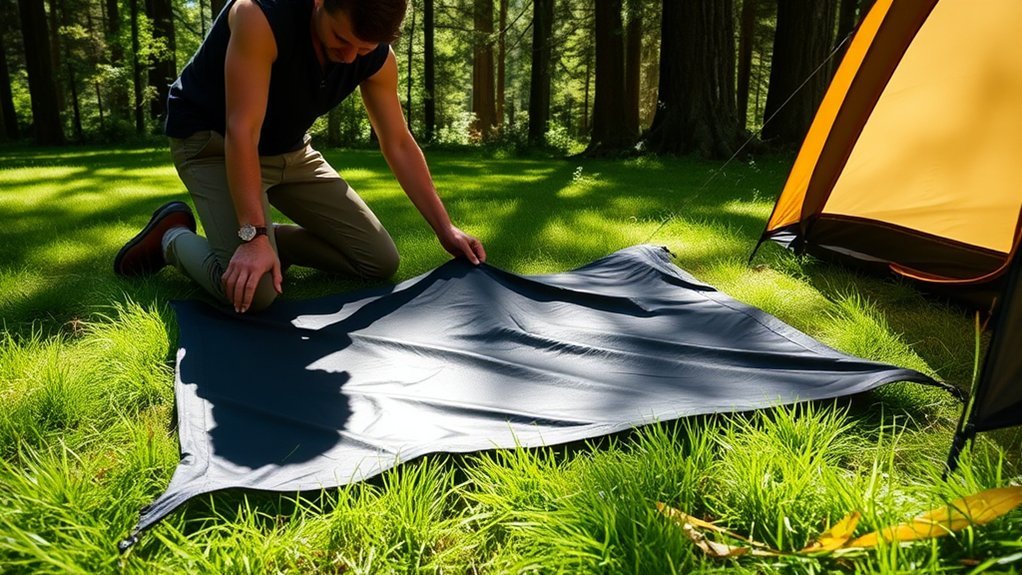
To set up a tent footprint correctly, first, check that its dimensions are compatible with your tent. Look for webbing loops or grommets at the corners for attachment. Align these features with your tent’s corners. If using webbing loops, stake both the footprint and tent separately; if you have grommets, stake them together for stability. Make certain the footprint’s taut for best coverage. You’ll find more detailed techniques to guarantee a smooth setup.
Verifying Footprint Compatibility


Before you set up your tent footprint, it’s essential to verify its compatibility with your tent model. Start by checking the footprint spec sheet on alpsmountaineering.com. You’ll want to guarantee that the footprint’s measurements are slightly smaller than your tent floor. This design prevents water from collecting between the two during rain, protecting your gear and maintaining stability.
Consider the footprint materials as well; they should provide durability while remaining lightweight. If the materials are incompatible with the environment you’re camping in, you might face issues like wear or inadequate protection. Also, confirm specific design features that align with your tent’s setup. Using an incompatible footprint can lead to improper setup, increasing the risk of water damage and instability. By guaranteeing everything matches, you’ll enhance your camping experience and liberate yourself from unnecessary stress.
Understanding Corner Attachments
Understanding corner attachments is essential for effectively setting up your tent footprint. You’ll encounter two main types: webbing loops, commonly found on traditional camping tents, and grommets with buckles, typically used in backpacking tents. Knowing the features and deployment methods of each will guarantee a stable and watertight setup.
Webbing Loop Overview
Webbing loops play an important role in securely attaching your tent footprint to the corners of your camping tent. When deployed, align the webbing loop with the tent’s corner loop and stake both down. This method not only enhances stability, but it also allows you to stake the footprint and tent separately if necessary. Using durable webbing loop materials, like nylon or polyester, guarantees longevity and resistance to wear. Proper alignment of the webbing loop prevents water from collecting between the footprint and the tent floor, safeguarding your gear. Understanding the webbing loop benefits, including increased stability and versatility, is vital for effective tent setup and deployment. With this knowledge, you can set up your camp confidently.
Grommet and Buckle Features
While webbing loops provide a reliable method for securing your tent footprint, grommet and buckle features offer another effective option for corner attachments. This system enhances grommet durability, ensuring that your footprint withstands the rigors of backpacking. To set up, attach the female buckle on the tent fly to the male buckle on the footprint, creating a secure connection. You can choose to stake through both the tent and footprint loops or use a tent pole for quick pitching. It’s vital to stake through the footprint’s loop to maintain stability and proper positioning during setup. Understanding grommet and buckle functionality is essential for effective deployment, allowing you to maximize the performance of your tent footprint in various conditions.
Deployment Methods Comparison
When choosing a deployment method for your tent footprint, it is essential to evaluate the type of corner attachment your tent uses, as this directly impacts setup efficiency.
| Attachment Type | Deployment Advantages | Deployment Disadvantages |
|---|---|---|
| Webbing Loops | Secure alignment with tent loops | Requires stakes for stability |
| Grommet and Buckle | Quick pitch option available | May need extra poles for setup |
Understanding these corner attachments enhances your setup’s stability and performance. Webbing loops require precise staking, while grommet and buckle systems offer flexibility in deployment. Weighing these advantages and disadvantages helps you choose the best method for your outdoor experience, ensuring a liberated camping adventure.
Deploying Footprints With Webbing Loops
Deploying a footprint with webbing loops is a straightforward process that guarantees your tent stays stable and dry. Start by aligning the footprint’s webbing loops with your tent’s corner loops. This alignment is essential as it enhances the webbing loop benefits, providing a secure connection between the two. Next, insert a stake through both the footprint and tent corner loops to secure stability and proper positioning. This method not only prevents water collection between the footprint and tent floor but also keeps the footprint material taut and effective. If you prefer, you can stake the footprint and tent separately for more flexibility in your setup. This approach is particularly advantageous in varying terrains, allowing you to adjust as needed. By following these steps, you maximize the potential of your tent and footprint for a more liberating camping experience.
Deploying Footprints With Grommet and Buckle

Setting up a footprint with grommet and buckle attachments is an efficient way to guarantee your tent remains secure and protected. Start by aligning the loops of your tent with the footprint, making sure the footprint materials are properly oriented for maximum coverage. For added stability, stake the combination together, or simplify your setup by inserting a tent pole through the grommet of the footprint. This method streamlines the process, especially in a quick pitch scenario.
Next, connect the female buckle on the tent fly to the male buckle on the footprint to effectively secure them together. This connection is vital for maintaining tension and stability. Once aligned, finalize your setup by placing a stake through the loop of the footprint. Understanding these deployment methods for various grommet types not only enhances efficiency but also guarantees your tent withstands the elements throughout your adventure.
Tips for Effective Setup
To achieve an effective setup of your tent footprint, start by confirming its compatibility with your tent’s specifications. This guarantees a proper fit and functionality. Follow these tips for ideal setup:
- Identify the type of corner attachments: webbing loops or grommet and buckle.
- For webbing loop footprints, align the loops with your tent’s corners and stake through both.
- If using grommet and buckle, choose between two methods: stake both loops or use a quick pitch setup with a tent pole.
- Ascertain your footprint is slightly smaller than the tent floor to prevent water accumulation during use.
- Regularly check your footprint materials for wear and tear to maintain tent longevity.
Customer Support Resources

Even with the best setup practices, questions can arise during the installation of your tent footprint. If you encounter any issues, don’t hesitate to reach out to ALPS Mountaineering’s customer support team. They’re ready to assist you with setup troubleshooting, ensuring you have the proper deployment and compatibility for your footprint. Customer feedback is essential for them, as it helps improve their products and services.
For specific inquiries, you can check the ALPS Mountaineering website, where you’ll find additional resources like footprint spec sheets. These documents can provide further clarification on the setup process and help you troubleshoot effectively. Remember, ALPS Mountaineering prioritizes your satisfaction, aiming to deliver timely and effective support. By utilizing these resources, you can confidently navigate any challenges and enjoy your outdoor experience to the fullest.
Frequently Asked Questions
Can I Use a Footprint From a Different Tent Brand?
You can use a footprint from a different brand, but make certain it’s compatible with your tent size. Proper footprint compatibility enhances tent protection, helping to prevent wear and tear on your tent’s floor.
What Materials Are Tent Footprints Typically Made From?
Tent footprints typically consist of durable polyester materials, often enhanced with waterproof coatings. This combination provides essential protection against moisture and abrasions, ensuring your tent remains a fortress against the elements while you seek adventure.
How Do I Clean and Maintain My Tent Footprint?
To clean your tent footprint, use mild soap and water with a soft cloth. For maintenance, store it dry and avoid sharp objects. Regularly inspect for damage to prolong its life and guarantee peak performance.
Can Footprints Be Used in Extreme Weather Conditions?
Your footprint’s like a steadfast shield in extreme weather, offering durability and weather resistance. It protects your tent from sharp objects and moisture, ensuring you stay dry and comfortable during your outdoor adventures, no matter the conditions.
Are Footprints Necessary for All Types of Camping Tents?
Footprints aren’t strictly necessary for all tents, but they offer significant benefits. Comparing footprint sizes helps guarantee ideal protection and fit, enhancing durability and comfort during your camping experience in various environments.
Conclusion
To summarize, setting up a tent footprint correctly guarantees a solid foundation for your camping experience. By verifying compatibility, understanding corner attachments, and choosing the right deployment method, you can safeguard your shelter from the elements. Remember, a footprint is like a shield, protecting your tent from wear and tear. With these tips in hand, you’ll be ready to face the great outdoors with confidence. Don’t hesitate to reach out to customer support for any additional guidance!