


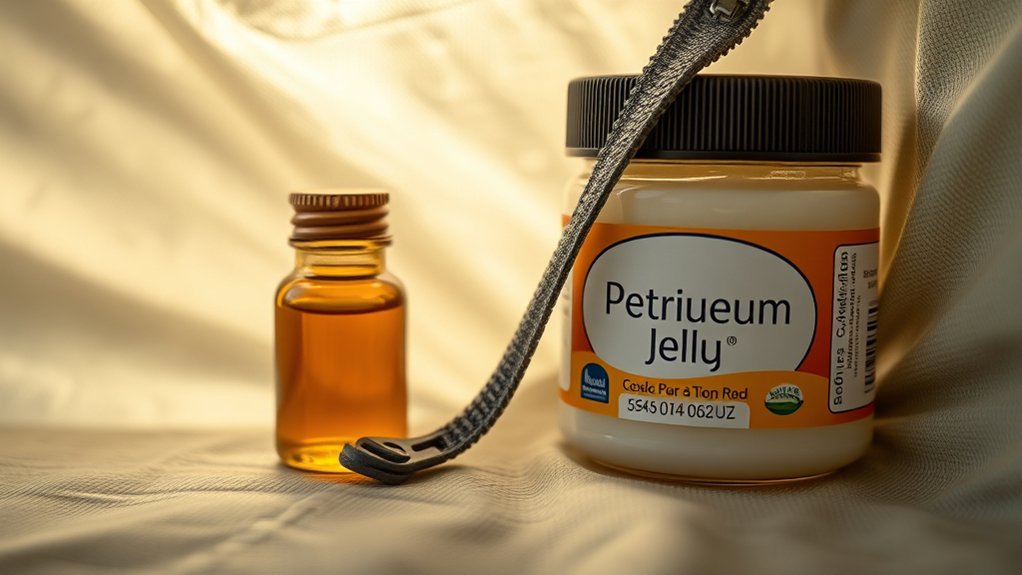
To keep your tent zippers functioning smoothly, apply a suitable lubricant like Gear Aid Zipper Lubricant or Zipper Ease. Avoid using traditional WD-40 on plastic zippers, and steer clear of cooking oils that can spoil. Regularly clean zippers with a soft brush and mild solution before lubrication. Monthly applications are best for frequently used zippers, especially before outdoor trips. If you experience specific zipper issues, there are effective solutions you might want to check out.
Why Do Zippers Need Lubricating?

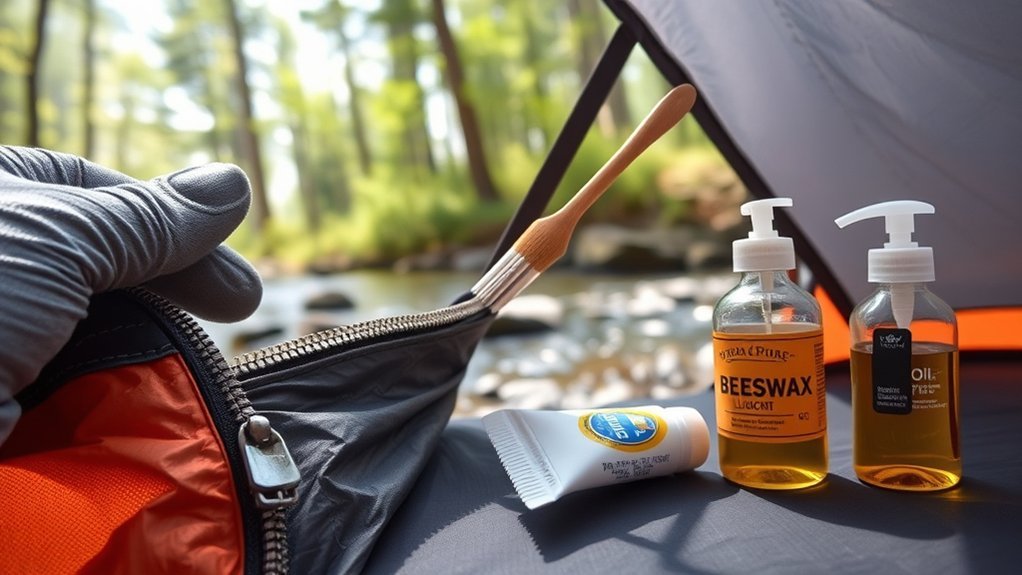
Zippers, often taken for granted, need regular lubrication to function smoothly and avoid sticking. This is particularly true for metal zippers, which can rust or wear down. When exposed to dirt and debris, zippers can malfunction if not properly maintained. Regular lubrication can prevent sticking, enhancing both longevity and functionality.
You should clean your zipper before applying lubricant to avoid trapping dirt, which can worsen sticking issues. Depending on usage, you may need to lubricate monthly for daily-use items or every few months for those less frequently utilized.
Several lubrication methods work well, including silicone sprays, wax, and specialized zipper lubes. Choosing the right lubrication method for your specific zipper materials guarantees peak performance. With proper care, you can liberate your zippers from the frustrations of sticking and enjoy smoother operation every time you need to open or close them.
When to Apply Zipper Lubricant
Applying zipper lubricant at the right times is crucial for maintaining functionality and preventing issues. To guarantee zipper longevity, keep these seasonal considerations in mind:
Timely application of zipper lubricant is essential for optimal performance and longevity of your gear.
- After Cleaning: Always apply lubricant after washing your tent or gear to promote ideal adhesion.
- Regular Maintenance: For daily-use items, lubricate monthly. For those used less frequently, every few months will suffice.
- Before Extreme Trips: Reapply the lubricant before any outdoor adventure in harsh environments to maintain smooth operation.
- When Zippers Stick: If you notice your zippers struggling but aren’t caught on debris, a quick application can help unstick them.
Keeping your zippers clean and well-lubricated prevents sticking, misalignment, and potential permanent damage. By following these guidelines, you can enjoy hassle-free access to your gear and prolong the life of your zippers.
Recommended Lubrication Products

When it comes to keeping your tent zippers in top shape, choosing the right lubrication product is essential. Gear Aid Zipper Lubricant is a top choice, as it dries non-sticky and avoids silicone or paraffin wax, ensuring your zippers perform smoothly without unwanted residue. Another fantastic option is Zipper Ease, available in a clear wax stick form, which offers peak performance without the risk of staining your tent fabric.
While WD-40’s silicone variant can help unjam zippers, be cautious—traditional WD-40 may damage plastic zippers and stain fabrics. Cooking oils might seem handy in a pinch, but they can spoil and emit unpleasant odors over time. For a more natural approach, consider bar soap or crayon wax, but remember that colored alternatives can leave a residue. By choosing the right products, you’ll keep your zippers gliding effortlessly for all your adventures.
DIY Lubrication Solutions
Keeping your tent zippers functioning smoothly doesn’t always require store-bought lubricants; many effective solutions can be found right in your home. Here are some DIY lubrication options using common household items:
Keep your tent zippers running smoothly with simple DIY lubricants found at home, avoiding costly store-bought options.
- Chapstick or Vaseline: Apply sparingly to avoid attracting dirt.
- Graphite from a pencil: Rub it on zipper teeth for a lubricating layer, but beware of residue on fabrics.
- Bar soap or wax: Use these on both metal and plastic zippers without major staining risks.
- Cooking oil: This can work in a pinch, but it spoils over time, so consider it a temporary fix.
While these natural alternatives can be effective, always remember to avoid petroleum-based products like WD-40, as they can damage your zippers. By using these simple solutions, you can keep your tent zippers in great shape without relying on commercial products.
Cleaning and Maintenance Tips
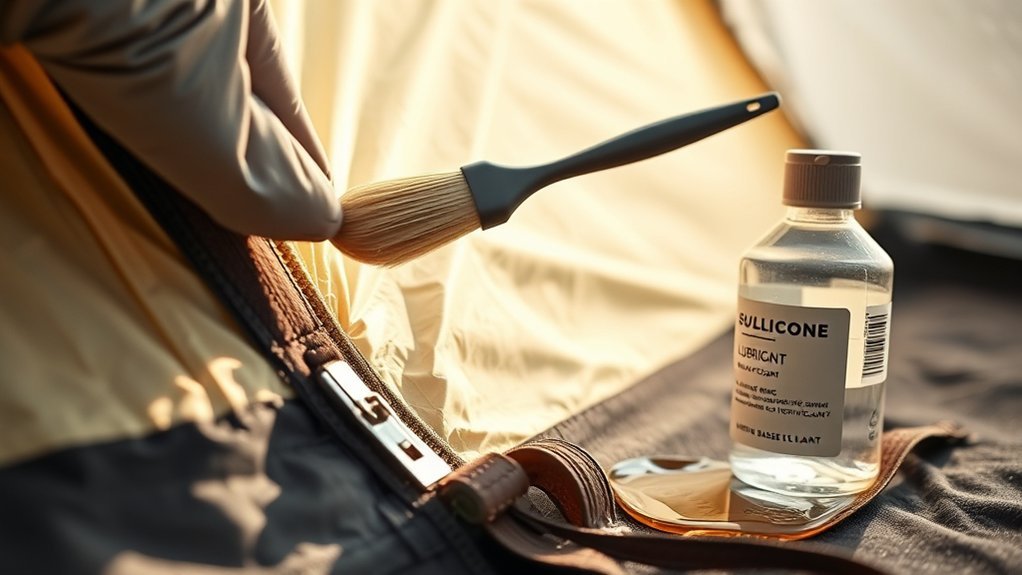
To guarantee your tent zippers operate smoothly, it’s essential to regularly clean and maintain them. Use effective cleaning techniques like a soft-bristled brush and a mild cleaning solution to remove dirt and debris, making sure they’re ready for lubrication. Avoid submerging zippers in water; instead, opt for a damp cloth to protect waterproof coatings and adhesive tapes.
After cleaning, let zippers air dry completely before applying any lubricant. This step guarantees ideal adhesion and performance. Regularly inspect your zippers for any bent or misaligned teeth, gently straightening them with pliers to prevent future issues.
Establish a maintenance schedule to store your tent in a dry, cool place, preventing moisture buildup that can lead to zipper wear and corrosion. By following these tips, you’ll keep your zippers in excellent condition, enhancing your outdoor experiences and making sure your gear stays functional for every adventure.
Common Zipper Issues and Solutions
Even with proper cleaning and maintenance, tent zippers can still encounter issues that affect their performance. Here are some common problems and solutions to boost zipper durability and facilitate zipper repair:
- Sticking Zippers: Clean with a soft-bristled brush or compressed air to remove debris. Lubricate with Gear Aid Zipper Lubricant to maintain smooth operation.
- Jumping Teeth: Inspect for bent teeth or misalignment. Gently wiggle the slider to realign and try lubricating.
- Misalignment: Confirm the zipper is correctly threaded. If misalignment persists, consider temporary fixes like applying wax or soap.
- Frayed Fabric: Regularly check for fraying. If noted, avoid further use until you can repair or replace the zipper.
Addressing these issues promptly can prevent more significant failures and keep your tent secure and functional. Don’t let faulty zippers ruin your outdoor experience!
Frequently Asked Questions
Can I Use Silicone Spray for Tent Zippers?
Yes, you can use silicone spray for tent zippers. It offers benefits like reducing friction and preventing rust. Just remember to apply it sparingly and wipe off excess for ideal zipper maintenance. Enjoy your adventures!
How Often Should I Lubricate My Tent Zipper?
You should lubricate your tent zipper every few months, or whenever it feels stiff. Regular zipper maintenance keeps it functioning smoothly, ensuring your tent remains easy to open and close during your outdoor adventures.
What Tools Do I Need for Zipper Maintenance?
When it comes to zipper maintenance, you’ll need a toothbrush for cleaning, a soft cloth for applying lubricant, and a needle for minor repairs. Follow these maintenance tips, and you’ll keep your zippers in top shape!
Are There Any Eco-Friendly Lubricant Options Available?
Yes, you can find eco-friendly lubricant options like biodegradable options and natural alternatives. These products effectively reduce friction while being gentle on the environment, ensuring your gear stays functional without harming nature.
Can I Use Lubricant on Waterproof Zippers?
Sure, you can use lubricant on waterproof zippers—just like oiling a raincoat! However, prioritize zipper care by choosing the right lubricant that won’t compromise your waterproofing techniques. Keep it smooth, but stay smart!
Conclusion
In summary, keeping your tent zippers well-lubricated is key to smooth operation and longevity. By applying the right products at the right times, you can prevent frustrating snags and tears. Whether you choose a recommended lubricant or a DIY solution, a little maintenance goes a long way. Remember to clean your zippers regularly and address common issues promptly. With these tips, you’ll guarantee your camping experience is hassle-free and enjoyable, making every adventure a breeze.