


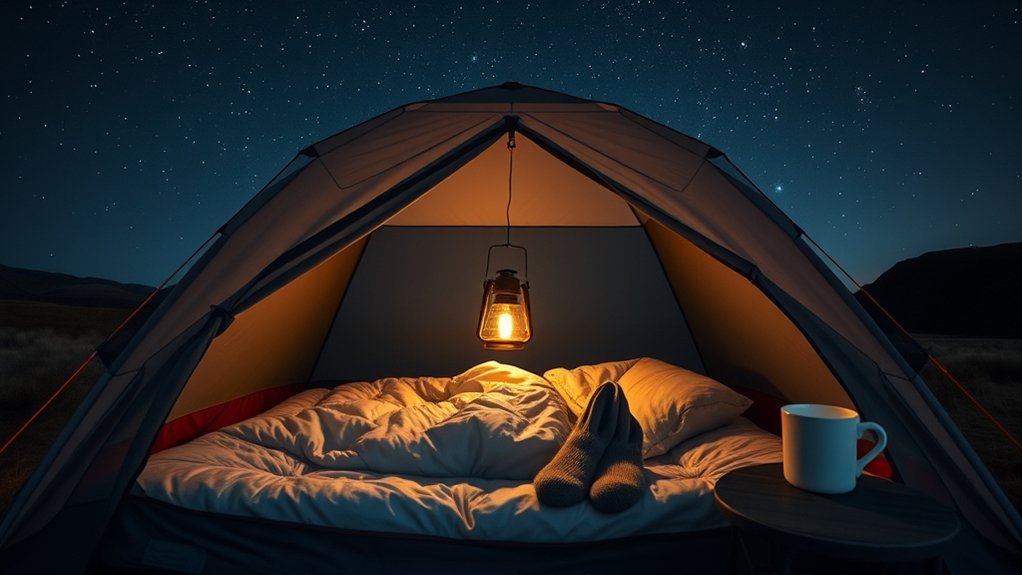
To sleep better in a tent, choose a flat camping spot away from noise and hazards. Select a thick sleeping pad and a well-insulated sleeping bag. Create a cozy atmosphere with warm pajamas and a camping pillow. Establish a calming bedtime routine, limit screens, and consider using a hot water bottle for warmth. Keep your space organized and securely manage food to deter wildlife. Stick around to uncover even more tips on enhancing your camping comfort!
Choose the Right Camping Spot

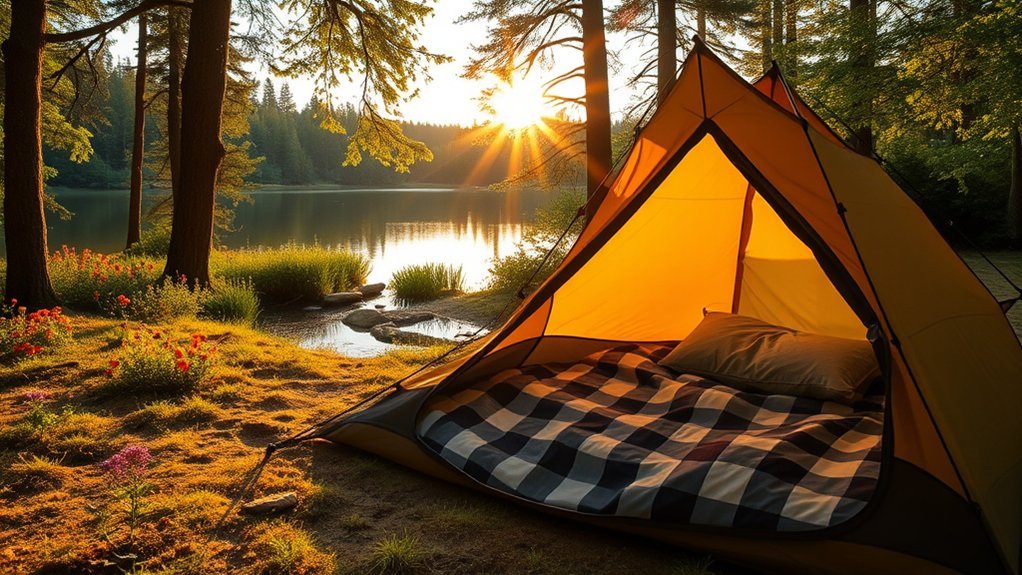
Choosing the right camping spot is essential for a good night’s sleep in your tent. Start by looking for a flat and level area; slanted spots can disrupt your sleep and lead to discomfort. You can use the water bottle technique—laying a mostly-filled transparent bottle horizontally on the ground—to check for levelness before pitching your tent.
For noise reduction, opt for quieter dispersed camping sites or smaller private campgrounds instead of busy ones. This choice helps minimize disturbances, enhancing your overall camping experience. Aim to set up away from popular tourist spots, where you’ll find more secluded and peaceful environments.
Before you settle in, make sure your campsite is clear of hazards like rocks, branches, or ant hills. Take a few moments to level the ground and clear any debris, ensuring a cozy and safe sleeping environment. Your choice in campsite selection truly sets the stage for restful nights under the stars.
Select Your Sleeping Gear Wisely
When it comes to getting a good night’s sleep in a tent, selecting your sleeping gear wisely can make all the difference. To maximize your comfort, focus on these essentials:
- Sleeping Pad: Choose a thicker sleeping pad, like the Therm-a-Rest ProLite or Sea To Summit Ether Lite XT, for car camping. It enhances insulation and cushions you from the ground.
- Sleeping Bag: Opt for a sleeping bag rated 10-20 degrees lower than expected nighttime temperatures. This guarantees you stay warm and cozy throughout the night.
- Camping Pillow: Don’t underestimate the value of a proper camping pillow. Selecting an inflatable or compressible option will offer much better neck support than rolling up clothes.
Additionally, consider wearing warm pajamas and using warm socks inside your sleeping bag. This not only retains body heat but also signals to your brain that it’s time to rest. Enjoy the liberation of a great night’s sleep!
Enhance Comfort Inside the Tent
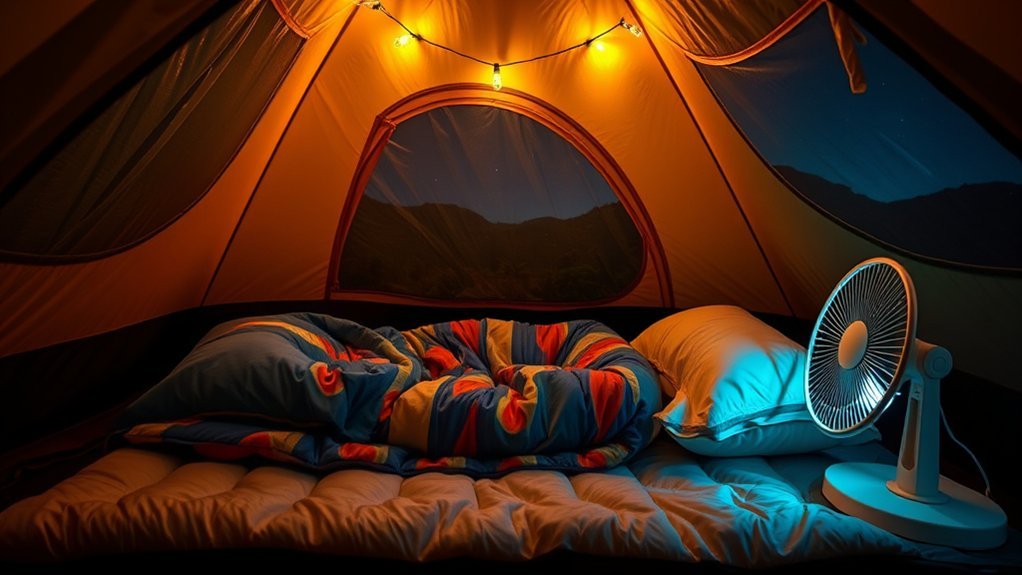
Creating a cozy atmosphere inside your tent can greatly enhance your overall comfort and sleep quality. Start by investing in essential sleep accessories, like a camping pillow, which provides vital neck support compared to makeshift options like stuffed clothes. To combat the chill, stash a down jacket near your feet in your sleeping bag for extra warmth, ensuring you don’t wake up with cold toes.
Packing cozy pajamas, such as warm leggings and long-sleeve shirts, signals to your body that it’s time to wind down. Keep your tent organized by using storage pockets for small items and designating a space for shoes; a clutter-free environment fosters relaxation. Finally, remember that proper ventilation is key. It helps to prevent condensation and enhances tent insulation, creating a more comfortable sleeping atmosphere. Embrace these tips, and you’ll transform your tent into a haven of comfort.
Create a Relaxing Bedtime Routine
To sleep better in your tent, start by establishing a consistent bedtime routine that signals your body it’s time to wind down. Engage in calming activities like reading or gentle stretching to ease tension and promote relaxation. By creating this soothing atmosphere, you’ll set yourself up for a more restful night under the stars.
Establish Consistent Routine
A consistent bedtime routine can transform your camping experience by signaling to your brain that it’s time to wind down. Establishing effective bedtime rituals enhances your sleep hygiene and prepares you for restorative rest. Consider incorporating these three calming activities:
- Gentle Stretching: Release tension in your body, making it easier to relax.
- Sipping Herbal Tea: Enjoy a warm cup to soothe your mind and body, lulling you into tranquility.
- Limiting Screen Time: Switch off devices at least an hour before bed to reduce stimulation and help melatonin production.
Wind Down Activities
As the sun sets and the sounds of nature begin to quiet down, incorporating wind down activities can help shift your mind and body into a restful state. Start by engaging in meditative practices like gentle stretching or deep breathing exercises to release tension. Settle into your tent with a good book or a journal, signaling to your body that it’s time to relax. Avoid screens and bright lights; instead, play calming music to soothe your senses. Sipping herbal tea or enjoying a light snack can create a comforting atmosphere, preventing hunger during the night. Allow yourself extra time to unwind after setting up camp—this simple routine can greatly enhance your overall sleep quality, leading to a more rejuvenating experience in nature.
Manage Temperature and Environment
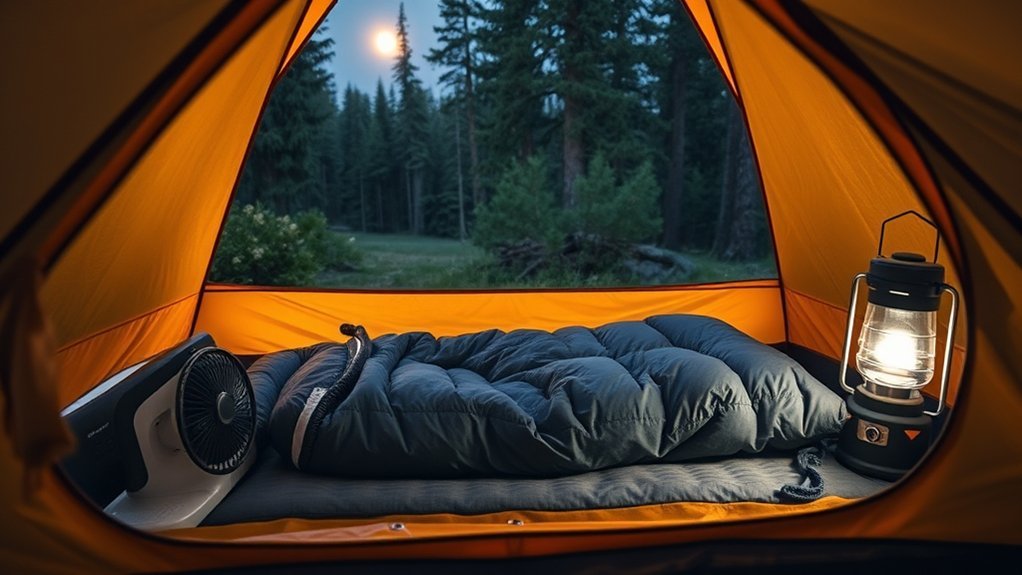
Managing the temperature and environment inside your tent is essential for a good night’s sleep, especially when outdoor conditions fluctuate. To guarantee you stay comfortable, consider these effective strategies:
- Ventilation Techniques: Open vents or remove the tent fly (if rain isn’t expected) to enhance airflow and reduce condensation.
- Layer Clothing: Regulate your body temperature by wearing layers, allowing you to adjust as the weather changes. Insulate against the cold ground with a tent footprint or tarp.
- Extra Warmth: Use a Nalgene bottle filled with hot water near your feet in the sleeping bag, and keep a down jacket or blanket handy for chilly nights.
Aim for a sleeping temperature of 65 to 68 degrees Fahrenheit for ideal rest. In hot weather, pitch your tent in shaded areas and take advantage of cross breezes for natural cooling. Embrace these tips for an invigorating camping experience!
Stay Hydrated and Nourished
Staying hydrated and nourished while camping is essential for a good night’s sleep, especially after a day full of activities. Aim for at least half a gallon (about 2 liters) of water daily to keep dehydration at bay. Use effective hydration methods like carrying a water filter or electrolyte drinks to replenish lost minerals during hot days.
Additionally, munch on light nighttime snacks such as nuts or granola to stave off hunger pangs. Avoid heavy meals close to bedtime, as they can disrupt your sleep.
Here’s a handy table for your hydration and snack planning:
| Hydration Methods | Recommended Snacks | Timing |
|---|---|---|
| Water | Mixed Nuts | Before bedtime |
| Electrolyte Drinks | Granola Bars | After activities |
| Water Filter | Dried Fruits | Throughout the day |
| Reusable Water Bottle | Rice Cakes | Just before sleep |
Stay nourished, and you’ll sleep like a champ!
Organize Your Tent Space
After a day of outdoor adventures and proper hydration, creating an organized tent space can greatly enhance your sleeping experience. A clutter-free environment is essential for restful sleep, so here are some tips for effective gear organization within your tent compartments:
- Designate areas: Keep shoes and other gear outside your sleeping space to prevent dirt from entering and maintain a clean atmosphere.
- Maximize vertical space: Utilize a gear loft or overhead storage for easy access to frequently used items, keeping your floor space open.
- Categorize belongings: Use small bins or bags to separate cooking gear from personal items, streamlining access and enhancing convenience.
Prepare for Wildlife Encounters
When camping, preparing for wildlife encounters is essential for a good night’s sleep. Store your food properly, keep your tent zipped tight, and educate yourself about local wildlife to stay safe. By taking these simple steps, you can minimize the risk of unexpected visits from curious critters.
Proper Food Storage
To guarantee a peaceful night’s sleep in your tent, proper food storage is essential for keeping wildlife at bay. Here are three key strategies to assure wildlife safety while you camp:
- Use food canisters: Store all food, toiletries, and scented items in secure bear canisters or hang them at least 10 feet off the ground and 4 feet away from tree trunks.
- Cook wisely: Avoid cooking or eating within 200 feet of your tent to minimize food odors that attract animals.
- Clean up promptly: Wash cooking utensils and dispose of waste in sealed trash bags right after use to deter wildlife.
Tent Security Measures
While camping can be a thrilling escape into nature, ensuring your tent is secure against wildlife encounters is essential for a peaceful night’s sleep. Always keep your tent zipped tight; even a small opening can invite animals inside. Store food in bear canisters or hang it high and away from tree trunks to avoid attracting wildlife. Use unscented toiletries and be mindful of wrappers. Familiarize yourself with local wildlife behaviors to enhance your wildlife awareness. During the day, make noise to deter animals, as they often shy away from human presence.
| Security Measure | Action | Purpose |
|---|---|---|
| Tent Zippers | Keep closed at all times | Prevents animal entry |
| Food Storage | Use bear canisters | Avoids attracting wildlife |
| Scents | Opt for unscented products | Reduces attraction of animals |
| Wildlife Knowledge | Research local species | Informs safety precautions |
| Noise | Talk or clap during the day | Deters wildlife approach |
Wildlife Education Resources
Understanding the wildlife in your camping area can greatly enhance your safety and enjoyment. By familiarizing yourself with local wildlife behavior, you can prepare for encounters that might arise. Here are three vital tips for camping safety:
- Food Storage: Use bear canisters or hang food at least 10-15 feet off the ground to deter hungry bears and other animals.
- Tent Security: Keep your tent zipped at all times to prevent small animals from sneaking in and causing disturbances during the night.
- Bear Spray: Carry bear spray and know how to use it; it can be an important tool if you find yourself face-to-face with wildlife.
Embrace the great outdoors with confidence, knowing you’re prepared for anything that comes your way!
Test Gear Before the Trip
Before heading out on your camping adventure, testing your gear at home is essential to confirm a smooth and enjoyable experience. Proper gear preparation can prevent unexpected surprises that disrupt your trip. Set up your tent to verify all parts are functional, and inflate your sleeping pads to check for leaks. Spending a night in your sleeping bag helps assess warmth and comfort, ensuring it fits your camping conditions.
Here’s a quick checklist for effective equipment testing:
| Gear Item | Testing Tips |
|---|---|
| Tent | Set up and check for missing parts |
| Sleeping Pad | Inflate and inspect for leaks |
| Sleeping Bag | Test fit and comfort overnight |
Additionally, don’t forget to test lanterns and cooking gear. Familiarizing yourself with all your equipment will boost your confidence and make your camping experience far more enjoyable.
Embrace the Outdoor Experience
Once you’ve guaranteed your gear is ready, it’s time to fully immerse yourself in the outdoor experience. Embracing nature can greatly enhance your sleep quality, allowing you to unwind amidst calming nature sounds. Here are three ways to deepen your connection with the outdoors:
- Stargazing Benefits: Spend some time under the night sky. The vastness of stars not only relaxes your mind but also cultivates a sense of wonder, creating a positive mindset for sleep.
- Reflect on Your Day: As you settle in, reflect on your adventures. This practice eases worries, promoting a peaceful mental state.
- Incorporate Relaxation Techniques: Engage in deep breathing or gentle stretches to prepare your body for a restful night’s sleep.
Frequently Asked Questions
How Can I Keep My Tent Organized for Better Sleep?
To keep your tent organized, prioritize gear placement. Use designated areas for your sleeping bag, clothes, and personal items. This way, you’ll minimize clutter and create a more peaceful, restful space for sleep.
What Should I Do if It Rains While Camping?
About 40% of campers experience rain during their trips. To stay dry, wear quality rain gear and make certain your tent’s seams are sealed. Regular maintenance prevents leaks, keeping your camping experience enjoyable, even in wet weather.
How Can I Minimize Insects in My Tent?
To minimize insects in your tent, use insect repellents on your skin and gear. Confirm your tent screens are intact, sealing any gaps. Keep your tent zipped, especially at night, to create a bug-free sanctuary.
Are There Specific Sleeping Bags for Different Seasons?
Yes, there are specific sleeping bag types designed for different seasons. For colder months, choose a bag with higher insulation. In warmer weather, opt for lightweight options that offer breathability and comfort without excess heat.
What Snacks Help Promote Better Sleep While Camping?
Sleep promoting snacks like almonds, cherries, and oatmeal enhance your camping nutrition. They’re rich in melatonin and magnesium, helping you relax. Grab these tasty treats before bed, and you’ll drift off easier under the stars.
Conclusion
By choosing the right camping spot, selecting quality gear, and enhancing your tent’s comfort, you can transform your outdoor experience into a restful retreat. Manage the temperature, create a calming bedtime routine, and organize your space to maximize relaxation. Prepare for wildlife and test your gear beforehand to guarantee peace of mind. Embrace the sounds of nature and the beauty of the stars, and you’ll discover that a great night’s sleep in a tent is truly achievable.