


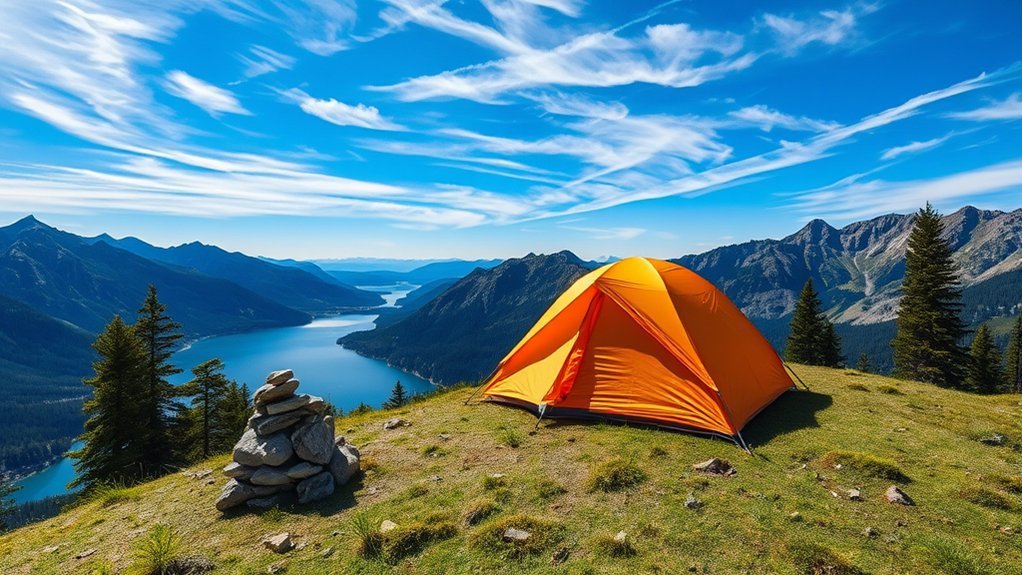
When camping in the mountains, prioritize flat, level ground away from sharp objects and low valleys that might trap water. Position your tent at least 50 feet above the lowest point for airflow and orient the entrance away from prevailing winds for added protection. Look for natural windbreaks like trees or hills to reduce gusts. Ventilate your tent to manage humidity and keep it secure against strong winds. Each step you take enhances your comfort—discover more strategies for a successful adventure!
Importance of Tent Placement in Mountain Camping

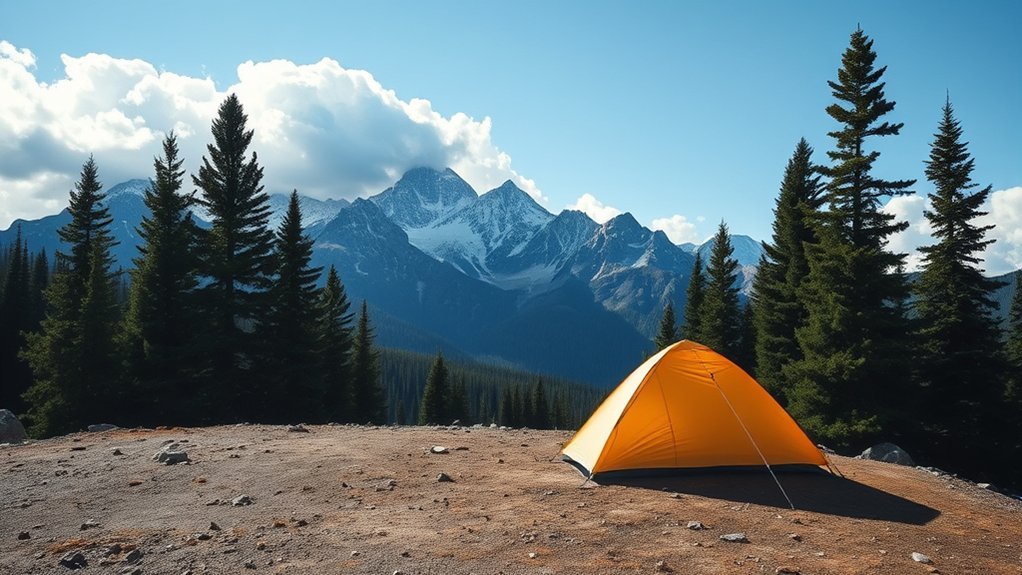
When you’re camping in the mountains, choosing the right spot for your tent is essential to guarantee safety and comfort. Look for flat, level ground, free from sharp objects or dead branches overhead. These can become hazards during storms. To enhance tent stability, avoid low valleys that might pool water and increase condensation. Position your tent at least 50 vertical feet above the lowest point to minimize wind turbulence and maximize airflow. Orient the entrance away from prevailing winds, especially in open areas or near natural windbreaks like trees or hills. Be aware of the surrounding terrain; sharp ridges can lead to dangerous downdrafts that disrupt your tent’s stability. By being mindful of these factors, you create a secure and comfortable camping experience, allowing you to focus on enjoying the liberation of the great outdoors.
Understanding Wind Patterns and Their Impact
Selecting the right tent placement is just the beginning; understanding wind patterns can greatly enhance your mountain camping experience. Wind direction plays a vital role in your tent’s stability, especially in elevated areas where speeds can soar. You’ll notice turbulence effects as wind interacts with the terrain, creating eddies that can whip around solid objects, potentially destabilizing your tent.
Watch nature closely—observe water surfaces and vegetation to glean insights about prevailing wind directions. This knowledge helps you choose a safer spot, away from sudden gusts that can hit like an elephant’s stomp, risking structural damage. While natural windbreaks like trees can reduce ground-level speeds, be wary of the risks they pose from falling branches. By being mindful of wind patterns, you not only secure your shelter but enhance your entire outdoor experience, allowing you to truly embrace the freedom of the mountains.
Identifying Natural Windbreaks
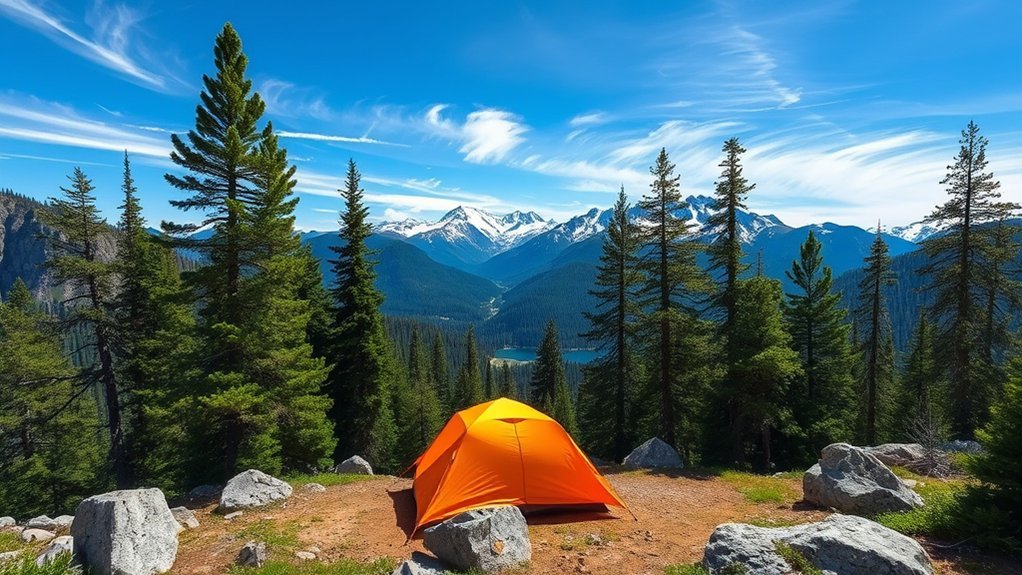
As you navigate the mountains, recognizing natural windbreaks can transform your camping experience by shielding you from harsh winds and enhancing comfort. Look for tree clusters and hill formations; these rounded structures create less turbulence than sharp-edged obstacles. Pitching your tent near these features can greatly reduce wind speed and turbulence, making your campsite safer and more enjoyable.
To maximize protection, orient your tent with its entrance facing away from prevailing wind directions. This simple adjustment can further decrease exposure to gusts. Pay attention to the local vegetation as well; the way grass bends or water ripples can reveal typical wind patterns, helping you pinpoint the best natural windbreaks. By thoughtfully selecting your campsite in relation to these natural elements, you’ll find yourself more liberated to enjoy the breathtaking beauty of the mountains without the relentless assault of the wind.
Weather Considerations and Climate Control
Understanding weather considerations is essential for a successful mountain camping experience, especially since temperatures can swing dramatically between valley bottoms and higher elevations. You can face temperature fluctuations of up to 10°F, so it’s vital to choose your tent location wisely. Avoid low valleys prone to dampness, and aim for a spot at least 50 vertical feet above the lowest point to enhance comfort.
| Weather Factor | Tips |
|---|---|
| Temperature Fluctuations | Use a thermometer to monitor changes. |
| Humidity Management | Keep the tent ventilated to reduce condensation. |
| Storm Preparedness | Select sheltered locations for safety. |
| Wind Conditions | Avoid camping in areas where wind settles. |
| Elevation Awareness | Recognize that higher elevations can be colder. |
Tips for Securing Your Tent Against Strong Winds
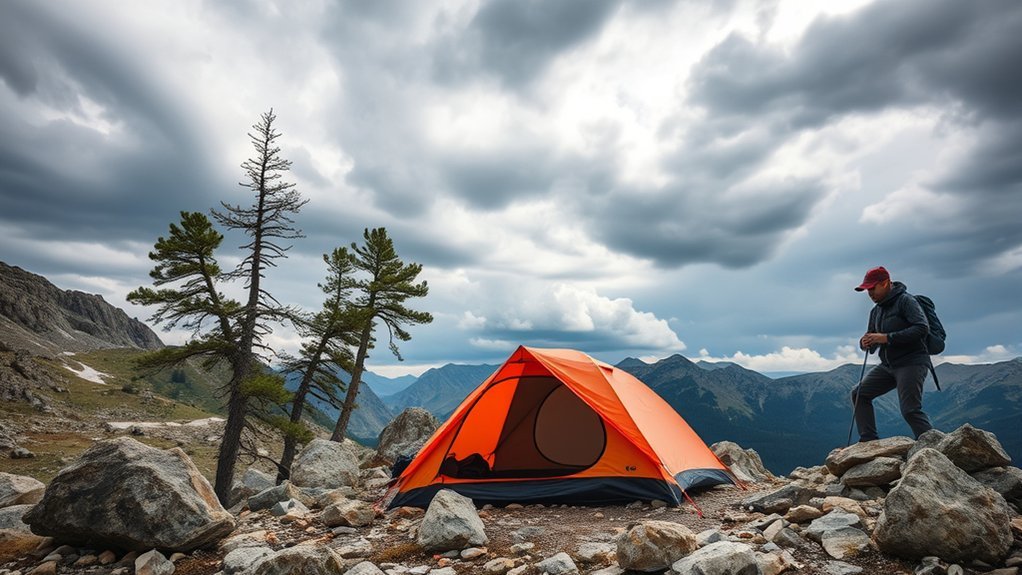
Even with careful weather considerations, strong winds can pose a considerable challenge when camping in the mountains. To enhance your tent stability, choose a location sheltered by trees or hills, providing natural windbreaks that reduce turbulence. Orient your tent with its narrowest side facing the prevailing wind, minimizing impact and maximizing wind resistance.
When securing your tent, stake it down at a 45-degree angle to counteract upward forces from gusts. Ascertain all guy lines are taut and anchored properly. Avoid flat, open areas where wind can accelerate; instead, opt for slightly elevated ground that offers better drainage and protection from flooding.
Lastly, consider using an aerodynamic tent design that performs better in turbulent conditions, considerably reducing the risk of damage from strong winds. Embrace the adventure, and you’ll find your mountain camping experience enriched by your preparation.
Frequently Asked Questions
What Type of Tent Is Best for Mountain Camping?
For mountain camping, lightweight, four-season tents are best. Consider size based on your group; a two-person tent might feel snug, but offers warmth. Choose a design that withstands wind and snow for ultimate protection.
How Do I Choose a Campsite Away From Wildlife?
To guarantee a harmonious stay, choose a campsite nestled away from wildlife activity. Observe wildlife behavior; set up your location at least 200 yards from trails or known animal paths for a peaceful retreat.
What Should I Do if It Rains While Camping?
When it rains, grab your rain gear and seek shelter. Use drying techniques like hanging clothes inside your tent. Stay warm, enjoy the sound of rain, and embrace nature’s rhythm while waiting for the sun to return.
How Can I Prepare for Sudden Weather Changes?
To prepare for sudden weather changes, pack essential weather gear like waterproof jackets and warm layers. Don’t forget an emergency kit with first aid supplies and food, ensuring you’re ready for whatever nature throws at you.
Are There Specific Tent Materials That Are Better for Mountains?
For mountains, choose tents made from durable, weather-resistant materials like nylon or polyester. These fabrics withstand harsh conditions, ensuring you stay dry and secure. Investing in quality gear means embracing freedom in any outdoor adventure!
Conclusion
As you prepare to camp in the mountains, remember that the right tent placement can make or break your adventure. Picture the wind whipping through the peaks, but you’ve found that perfect spot behind a sturdy boulder. The weather shifts unexpectedly, clouds roll in, but you’ve secured your tent tightly, ready for whatever nature throws your way. With every gust that rattles your shelter, you can breathe easy, knowing you’ve made the right choices. Adventure awaits—are you ready?