


To reduce campground noise in your tent, start by choosing a design that offers good sound insulation, like a heavier, 4-season tent. Use noise-reducing curtains and thick carpets to absorb sound. Rig a tarp above your tent to muffle rain and wind. Consider earplugs or noise-canceling headphones for budget-friendly options. Finally, placing your tent under trees can help minimize disturbances. Want to explore more ways to enhance your camping experience?
Why Soundproofing Your Tent Is Essential

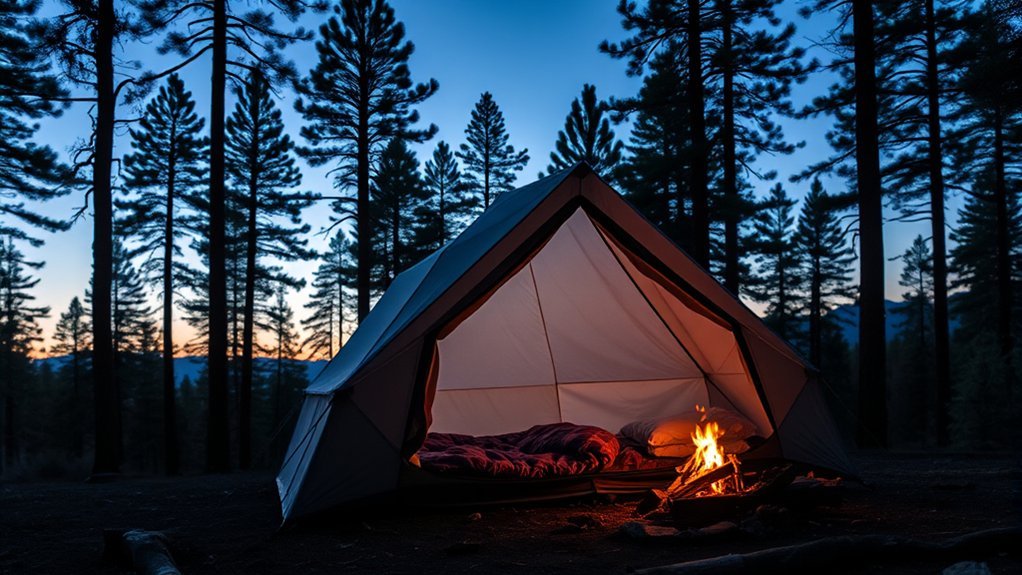
When you’re out camping, the last thing you want is to be kept awake by the sounds of your neighbors or campsite activities. That’s where soundproofing your tent becomes essential. By enhancing your tent acoustics, you’ll considerably improve your camping comfort. Utilizing noise-reducing tools, like curtains or acoustic barriers, can block disruptive sounds and create a peaceful sleeping environment. Insulated tents, paired with soundproofing solutions, not only dampen noise but also help regulate temperature, keeping you cool in the summer and warm in the winter. Investing in heavy-duty vinyl or thick carpets pays off for frequent campers, ensuring long-term benefits. Effective soundproofing also reduces light pollution, allowing you to wake up refreshed and ready to embrace the great outdoors. So, take control of your camping experience and prioritize soundproofing for restful nights beneath the stars.
Effective Techniques for Reducing Tent Noise
To guarantee a peaceful night’s sleep while camping, you can implement several effective techniques for reducing tent noise. By incorporating these methods, you’ll enhance tent insulation and achieve better sound absorption:
- Noise-reducing curtains: Hang these inside your tent to block external sounds and sunlight, promoting restful sleep.
- Acoustic barriers or moving blankets: Drape these items inside to absorb sound waves, minimizing echo and outside noise intrusion.
- Thick carpets or rugs: Lay them on the floor to not only boost comfort but also add mass that traps sound, reducing outside disturbances.
Additionally, consider wearing earplugs or noise-canceling headphones for a budget-friendly solution. Rigging a tarp above your tent can also create another layer of sound barrier against rain and wind. By applying these techniques, you’ll enjoy a quieter camping experience and focus on relaxation amidst nature.
Choosing the Right Tent for Noise Reduction
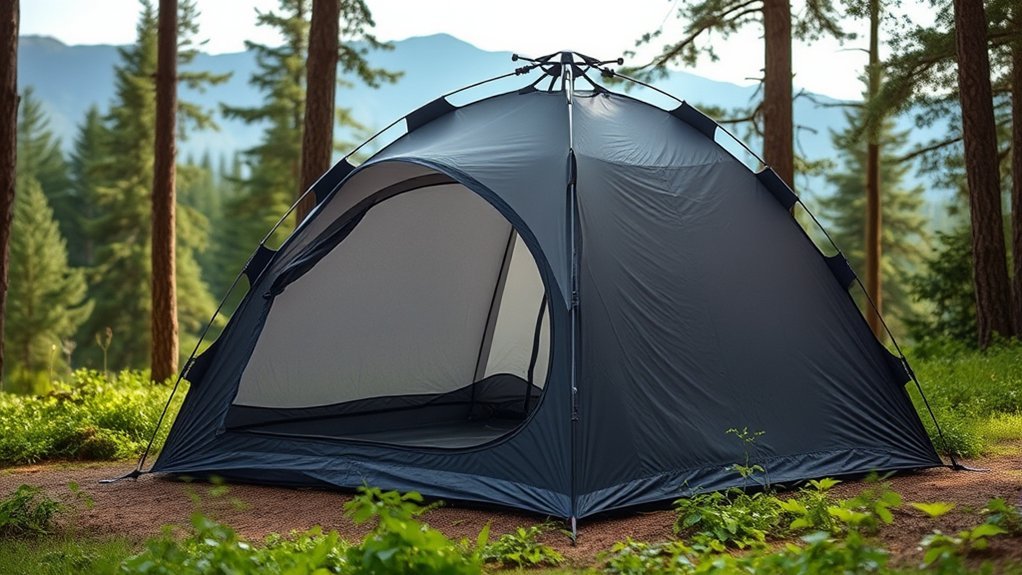
Choosing the right tent can make a considerable difference in minimizing noise during your camping trip, especially if you’re camping in windy or busy areas. Opting for a single-wall tent, like the Bibler or Mountain Hardwear EV2, can help you avoid the flapping noise caused by multiple fabric layers. If you’re expecting turbulent weather, upgrading to a 4-season tent such as the Marmot Alpinist enhances wind resistance, keeping disturbances at bay.
When selecting your tent, pay attention to tent materials. Heavier designs often offer better sound insulation, while lighter options might compromise on this front. Additionally, look for tents with built-in sound-dampening layers, which can considerably improve your camping experience by reducing unwanted noises. By choosing wisely, you can enjoy a peaceful night under the stars, liberated from the chaos of the outside world.
Utilizing Soundproofing Tools and Products
While camping in a noisy area can be challenging, utilizing soundproofing tools and products can greatly enhance your tent’s tranquility. You don’t have to let outside sounds ruin your adventure. Here are a few effective options:
- Acoustic barriers: Hang these inside your tent to deflect sound waves and considerably reduce noise from the outside.
- Noise-reducing curtains: These not only dampen and absorb sound but also block sunlight, creating a more peaceful sleeping environment.
- Thick carpets: Adding mass helps trap sound waves, effectively reducing echo and enhancing your overall camping experience.
You might also consider investing in soundproof tents or adding mass-loaded vinyl for superior noise reduction. If you’re looking for a budget-friendly solution, earplugs can minimize sound effectively. Embrace the tranquility of nature by making these practical choices to create your serene escape.
Creating a Quieter Camping Environment

Creating a quieter camping environment can greatly enhance your experience and help you reconnect with nature. Start with smart tent placement—choose a sheltered spot under thick foliage or behind natural barriers. This minimizes wind and noise from nearby activities, setting the stage for peace.
Next, consider incorporating soundproofing tools. A tarp rigged a few feet above your tent can effectively muffle rain and other disturbances. Inside, thick carpets or rugs absorb sound waves, reducing echo and enhancing comfort.
For immediate noise management, invest in earplugs or noise-canceling headphones. These personal tools are essential for blocking out campground sounds, ensuring you get the restful sleep you crave.
Frequently Asked Questions
Can I Use Regular Foam for Soundproofing My Tent?
You can use regular foam for some soundproofing benefits, but it’s not the best choice for tent insulation. Opt for specialized soundproof materials designed for outdoor use to effectively minimize noise while camping.
Will Camping Near Water Increase Noise Levels?
Camping near water can amplify noise levels like a megaphone. Water acoustics carry sounds further, mixing with wildlife sounds, creating a symphony of nature. You’ll hear everything, so choose your spot wisely for peace.
How Can I Choose a Quieter Campsite?
To choose a quieter campsite, assess noise levels around potential sites. Look for locations away from trails, water, and roads. Prioritize secluded spots where nature’s sounds drown out human activity, ensuring a peaceful experience.
Are There Specific Tent Brands Known for Sound Reduction?
Yes, brands like REI and Big Agnes offer tents with excellent insulation and noise dampening features. These tents minimize sound intrusion, enhancing your camping experience and helping you enjoy nature in peace. Choose wisely for tranquility!
What Time of Year Is Best for Quieter Camping?
For a peaceful escape, consider spring camping or fall camping. Nature’s whispering beauty during these seasons creates a serene ambiance, allowing you to relax and enjoy the tranquility away from summer’s bustling crowds.
Conclusion
By implementing these techniques to reduce campground noise, you can create a more peaceful and enjoyable camping experience. Whether it’s choosing the right tent or using soundproofing tools, every little effort counts. Isn’t it worth investing in your comfort and rest while surrounded by nature? Remember, a quieter tent not only enhances your sleep but also helps you connect more deeply with the great outdoors. So gear up and enjoy the serenity that camping has to offer!