



To prevent back pain from backpack travel, choose a well-fitted pack that’s 10-15% of your body weight, featuring wide, adjustable straps for comfort. Pack heavier items close to your back for balance and distribute weight evenly. Wear the backpack on both shoulders and alternate carrying methods to engage different muscle groups. Regularly assess your load and adjust as needed. Pay attention to warning signs of pain, as they’ll guide better practices for effective packing and carrying techniques.
Selecting the Right Backpack Size


Selecting the right backpack size is vital for preventing back pain during your travels. First, you should choose a backpack that fits your torso length and is proportionate to your body size. This guarantees comfort and proper support as you move. Aim for a backpack that weighs no more than 10-15% of your body weight to avoid unnecessary strain on your back and shoulders.
When selecting your backpack, consider options that allow for adjustable features to achieve a snug fit. A well-fitted backpack should sit close to your back, distributing weight evenly. Additionally, a built-in waist strap can greatly relieve shoulder pressure and enhance stability. These factors are essential for maintaining your freedom of movement, allowing you to enjoy your journey without the burden of discomfort. Prioritize these aspects when making your choice, and you’ll set yourself up for a more liberating travel experience.
Importance of Wide Straps and Adjustable Features
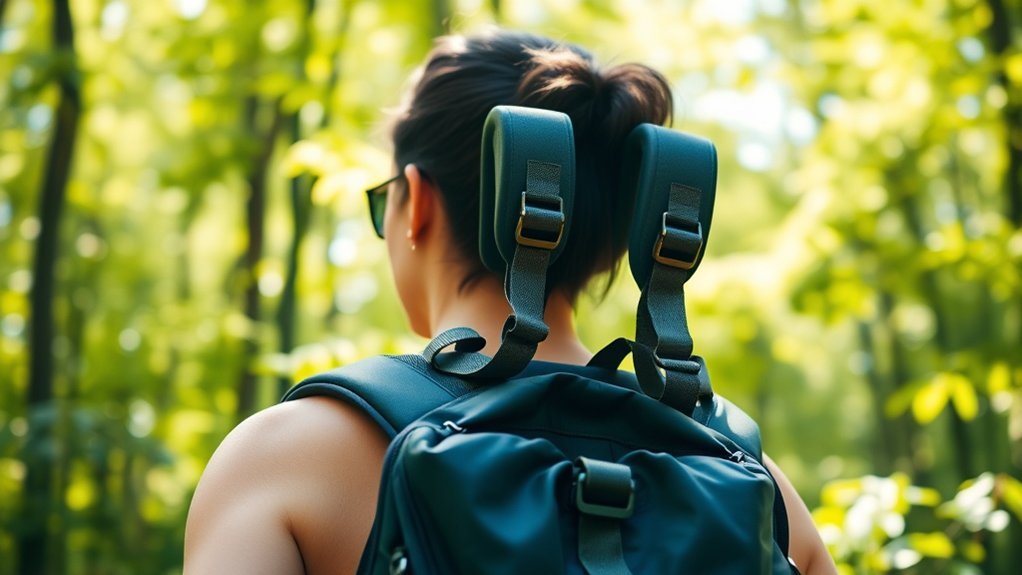
Choosing the right backpack size is just the beginning; the features of your pack play a notable role in preventing back pain during travel. Wide straps are essential, as they distribute weight evenly across your shoulders, reducing compression and discomfort. Padded wide straps enhance this effect by minimizing pressure points, making extended wear more comfortable and preventing muscle fatigue.
Adjustable strap lengths allow you to customize the fit, guaranteeing the backpack sits close to your body for better balance and reduced strain on your back. Incorporating a waist strap can further alleviate shoulder pressure by transferring some weight to your hips, effectively balancing the load. Research indicates that using backpacks with wide and adjustable features considerably lowers the incidence of back pain among travelers. Investing in these features guarantees a more liberating travel experience, allowing you to explore without the burden of discomfort.
Packing Techniques for Balanced Load
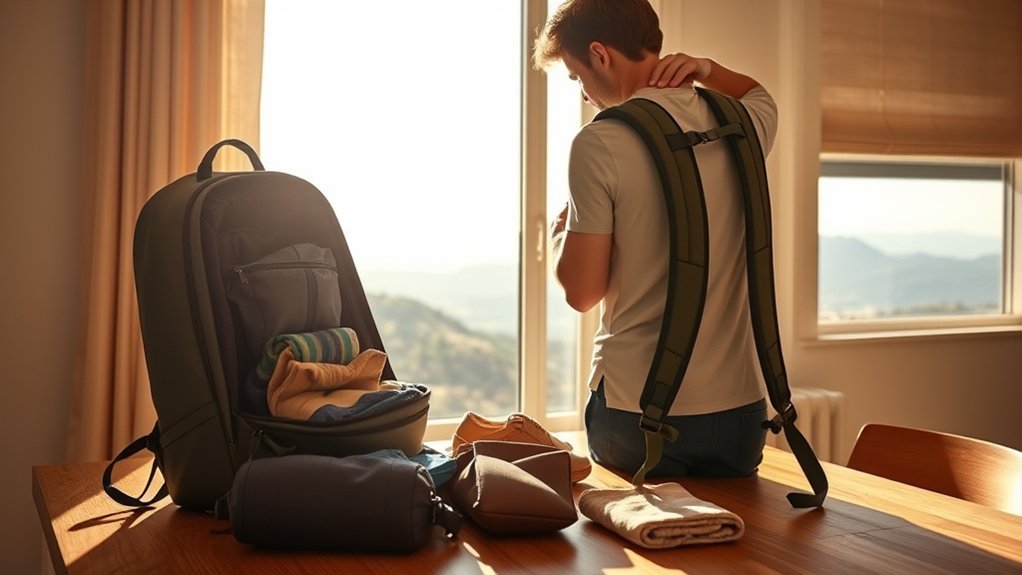
To prevent back pain while traveling with a backpack, it’s crucial to employ effective packing techniques that promote a balanced load. Start by loading heavier items first and position them close to your back. This keeps the weight centered and reduces strain on your spine. Next, place lighter items further from your body to prevent tipping and discomfort. Distribute weight evenly across all compartments to avoid a lopsided load that can lead to muscle strain. Regularly check your backpack and declutter unnecessary items, ensuring you carry only what you need. Aim to keep the total weight below 10-15% of your body weight; this minimizes the risk of back pain and injury. By following these techniques, you’ll enjoy a more liberating travel experience, free from the burdens of discomfort.
Regularly Assessing Backpack Contents
Regularly evaluating your backpack contents is essential to prevent excess weight that can lead to back pain. By identifying and removing unnecessary items, like outdated materials or accumulated snacks, you can maintain a lightweight and organized pack. Aim to keep your backpack’s weight within 10-15% of your body weight and schedule weekly checks to guarantee ideal packing.
Importance of Regular Checks
As you commence your backpacking adventures, evaluating the contents of your backpack is vital for preventing back pain. Regular checks help you identify unnecessary items, markedly reducing weight and minimizing strain on your back. Keeping only essential gear enhances your balance and stability while walking, lowering the risk of shoulder and back discomfort. Aim to keep your backpack’s weight within 10-15% of your body weight to avoid muscle strain. Additionally, routine evaluations maintain organization, allowing quick access to necessary items without excessive digging. By inspecting your backpack regularly, you guarantee it’s not overloaded, which is fundamental for maintaining proper posture and reducing injury risks. Embrace this habit for a more liberating and pain-free travel experience.
Identifying Unnecessary Items
Evaluating your backpack contents is key to guaranteeing a comfortable travel experience. Regularly assess what you carry, focusing on identifying unnecessary items like outdated books, unused supplies, or excess personal belongings. Aim to maintain your backpack’s weight at 10-15% of your body weight to reduce strain. Before packing, create a checklist of essential items to avoid including unnecessary gear. Schedule a weekly review of your backpack to guarantee you’re only carrying what’s truly needed for your activities. If you haven’t used an item in the past month, consider donating or discarding it. This practice keeps your backpack lightweight and functional, allowing you to travel freely without the burden of excess weight.
Weight Management Strategies
To effectively manage the weight of your backpack, it’s essential to routinely assess its contents, ensuring you only carry what you need. Regularly check your backpack at least once a week to eliminate unnecessary items and prevent excessive weight accumulation. Aim to keep your backpack’s weight to no more than 10-15% of your body weight. Use packing cubes to streamline your items, making it easier to evaluate what’s essential. Set a reminder to reassess your backpack before each trip. Here’s a quick checklist to guide you:
| Item Type | Keep or Remove? |
|---|---|
| Textbooks | Remove |
| Unused equipment | Remove |
| Toiletries | Keep |
| Clothing | Keep (essentials) |
| Snacks | Keep (moderate) |
Carrying Methods for Even Weight Distribution
When you carry a backpack, proper weight distribution is essential to preventing back pain and ensuring comfort during your travels. Start by wearing your backpack on both shoulders to evenly distribute weight, which reduces strain on your back and shoulders. To further alleviate pressure, alternate carrying methods; switch sides or utilize a waist strap to engage different muscle groups. Packing your backpack smartly also matters—place heavier items closest to your body and lighter ones further away to enhance balance. If you experience persistent back pain, consider carrying the backpack in front, as this can offer better support. For particularly heavy loads, a wheeled bag with handles can be an effective alternative, allowing you to transport your belongings without straining your back. Adopting these carrying methods will help you travel with ease and liberation.
Monitoring Backpack Sway While Walking
After ensuring proper weight distribution in your backpack, it’s important to monitor how it moves while you walk. Excessive sway can lead to muscle strain and discomfort in your shoulders and back. A well-fitted backpack should hug your body closely, minimizing sway for better balance.
| Action | Benefits | Tips |
|---|---|---|
| Adjust straps snugly | Reduces sway | Check fit regularly |
| Engage core muscles | Stabilizes backpack movement | Practice while walking |
| Redistribute weight | Prevents excessive shifting | Reassess packing often |
Regularly check for any signs of swaying. If your backpack shifts too much, consider redistributing the weight or adjusting the packing. By actively monitoring your backpack’s movement, you can prevent discomfort and liberate yourself from pain, allowing you to fully enjoy your travels.
Allowing Time for Body Adjustment
Although you may feel some initial discomfort with a new backpack, allowing your body time to adjust is essential for preventing pain. As you change, gradually increase both the duration and weight of your backpack use. This gradual approach enables your muscles and posture to adapt effectively over time. Incorporating regular strength and flexibility exercises into your routine can further ease this adjustment, enhancing your body’s resilience against discomfort.
Listen to your body; if you experience persistent discomfort, it might indicate the need for a better-fitting backpack or different carrying techniques. Allocate at least a couple of weeks for this adjustment phase. Doing so will not only build muscle strength but also improve your overall comfort while carrying a backpack. Embrace this process, and you’ll find freedom in your travels without the burden of pain.
Recognizing Signs of Persistent Pain
Recognizing the signs of persistent pain is important for maintaining your well-being while traveling with a backpack. If you experience consistent discomfort while wearing your backpack, pain radiating down your legs, or difficulty performing daily activities, these may be indicators of an underlying issue. Persistent back pain lasting more than a few days, even after adjusting to a new backpack, likely suggests an improper fit or excessive weight.
It’s essential to regularly monitor your pain levels and note any patterns. If your pain worsens despite following proper packing and carrying techniques, it’s time to reassess the size and weight distribution of your backpack. Don’t hesitate to consult a healthcare professional if your pain persists or impacts your mobility. Early intervention can guarantee that you enjoy your travels while minimizing discomfort and maintaining your freedom to explore.
Alternative Carrying Options for Comfort
When considering alternative carrying options for comfort, you should explore front carrying techniques that help distribute weight evenly across your body. Wheeled bags can also greatly reduce back strain while transporting heavy items, making them a practical choice. Additionally, crossbody sling bags offer a versatile solution that allows for easy access without compromising comfort.
Front Carrying Techniques
Front carrying techniques offer a practical alternative for travelers seeking to minimize back pain. By holding the backpack against your chest, you can distribute weight more evenly, reducing strain on your back and shoulders. This method also enhances visibility and access to items, allowing for quick retrievals when needed. If you have existing back discomfort or find traditional carrying methods uncomfortable, front carrying could be your solution. To maximize comfort, consider using a smaller backpack specifically designed for this purpose or a crossbody bag that evenly distributes weight. Regularly alternating between front and back carrying engages different muscle groups, helping to prevent overuse injuries and promote a more balanced approach to carrying your belongings.
Wheeled Bag Options
For those seeking relief from back pain while traveling, considering wheeled bag options can be a game changer. Wheeled bags feature handles and wheels that allow you to transport your belongings effortlessly, minimizing the strain on your back and shoulders. Many models come with an adjustable telescoping handle, ensuring ergonomic use for travelers of different heights. Additionally, these bags often include multiple compartments, promoting better organization and helping you avoid overpacking, which can add unnecessary weight. Opting for a lightweight wheeled bag means you can maneuver through crowded or uneven surfaces without excessive effort, greatly reducing your risk of back pain. Embracing this alternative can liberate you from discomfort, allowing for a more enjoyable travel experience.
Crossbody Sling Bags
If you’re looking for a comfortable alternative to traditional backpacks, crossbody sling bags can effectively reduce strain on your back and shoulders. These bags distribute weight evenly across your body, helping to alleviate discomfort. With adjustable straps, you can customize the fit for extended wear, ensuring maximum comfort. Many sling bags are ergonomically designed to conform to your shape, enhancing stability while walking. Unlike traditional backpacks, they offer easy access to your belongings without needing to remove the bag, making them convenient for travel. Additionally, you can switch sides while wearing a crossbody sling bag to engage different muscle groups, which helps prevent muscle fatigue and discomfort. This flexibility promotes a more liberating travel experience.
Sharing Safety Tips and Best Practices
To effectively prevent back pain during backpack travel, it’s essential to share safety tips and best practices with fellow travelers. First, regularly assess the weight of your backpack, ensuring it doesn’t exceed 10-15% of your body weight. This minimizes strain on your back. Share packing techniques that prioritize placing heavier items close to your body for better weight distribution.
Educate friends about the advantages of wide, adjustable straps to prevent shoulder compression and enhance comfort. Encourage them to alternate carrying methods, like switching shoulders or using wheeled bags, to engage different muscle groups and lower injury risks.
Additionally, promote a downloadable backpack safety tips handout to spread awareness about proper packing and carrying techniques. By sharing these practices, you empower others to travel safely and enjoy their journeys without the burden of back pain.
Frequently Asked Questions
How Often Should I Replace My Backpack?
You should replace your backpack every 2-3 years, or sooner if you notice wear and tear. Regularly check for damage, as a well-maintained backpack supports your posture and enhances your travel experience.
Can I Use a Regular Bag Instead of a Backpack?
You can use a regular bag instead of a backpack, but guarantee it distributes weight evenly. Crossbody or messenger bags may strain your back more, so choose wisely to avoid discomfort during travel.
What Should I Do if My Backpack Feels Too Heavy?
If your backpack feels burdensome, balance the load by redistributing weight, removing unnecessary items, or opting for lighter alternatives. Prioritize comfort and consider using supportive straps to minimize strain and promote proper posture during travel.
Are There Specific Exercises to Strengthen My Back?
Yes, incorporate exercises like planks, rows, and bridges into your routine. Focus on strengthening your core and lower back muscles. Consistent practice enhances stability and support, reducing the risk of discomfort during travel.
How Can I Find a Comfortable Fit for My Backpack?
Finding a comfortable fit for your backpack’s like searching for true love—try different sizes and adjust the straps! Aim for even weight distribution, and don’t forget to secure the hip belt for ultimate bliss.
Conclusion
To sum up, preventing back pain during backpack travel hinges on mindful choices. Just as a well-tuned instrument plays harmoniously, the right backpack, proper packing techniques, and mindful carrying methods create a balanced experience for your body. Stay aware of how your body responds and adjust accordingly; listen to its signals. By prioritizing comfort and safety, you can enjoy your travels without the burden of discomfort weighing you down.