


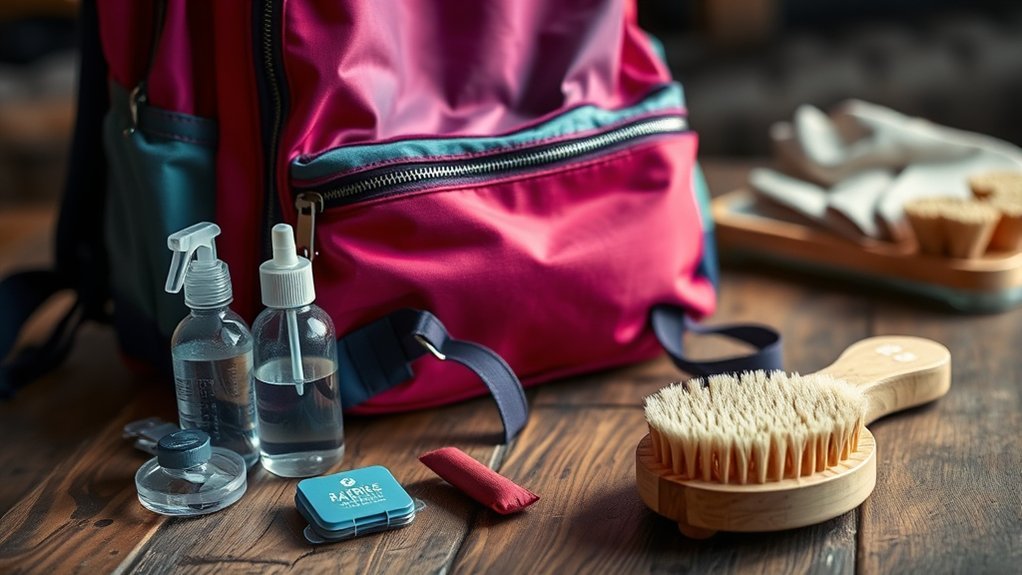
To keep your backpack in top shape, regularly inspect for wear and clean it properly. Empty your pack, shake out debris, and use a soft brush or cloth to remove dirt. Hand wash with a gear-specific cleaner, avoiding machine washing unless specified. After cleaning, hang it upside down in a ventilated area to dry fully. Store it in a cool, dry place with silica packs to prevent moisture issues. Discover more strategies to guarantee your backpack lasts longer.
Importance of Backpack Maintenance

When you neglect backpack maintenance, you risk shortening its lifespan and compromising its functionality. Regular care can extend your backpack’s life by up to 50%, ensuring it remains reliable through countless adventures. By consistently cleaning and inspecting your gear, you can catch issues like broken zippers or fabric tears before they worsen.
Dirt, sweat, and grime can wear down materials, making maintenance essential for preserving both appearance and comfort. Plus, proper cleaning and storage prevent unpleasant odors and the growth of mold or mildew, enhancing your overall experience.
Establishing a routine not only fosters responsible gear ownership but also saves you money in the long run by reducing the need for premature replacements or repairs. By prioritizing backpack maintenance, you liberate yourself from the frustration of a malfunctioning bag and enjoy your journeys with confidence and ease.
Preparation for Cleaning
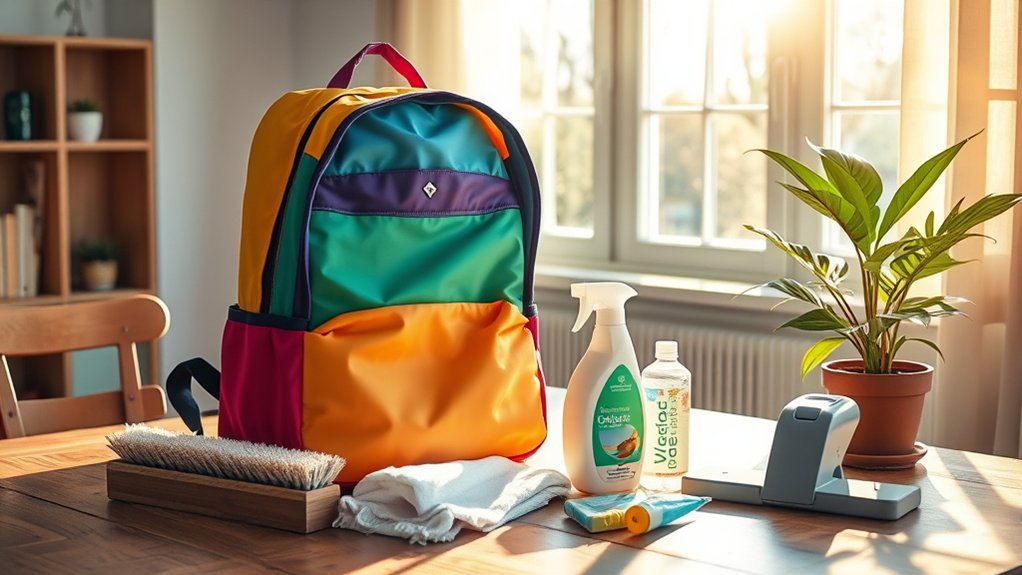
Before you start cleaning your backpack, make certain it’s completely empty by checking all pockets and compartments for hidden items. Next, inspect it for any wear, like loose stitching or broken zippers, which you’ll want to fix before cleaning. Finally, always check the care label for specific instructions to guarantee you’re using the right methods for your backpack’s material.
Empty All Compartments
To effectively prepare your backpack for cleaning, make sure it’s completely empty by checking all compartments and pockets for hidden items. This step not only sets the stage for a thorough clean but also prevents unpleasant surprises later. Here’s how to do it efficiently:
- Open everything: Check each pocket and compartment, and don’t forget the small ones that often hide crumbs or lost treasures.
- Shake it out: Give your backpack a good shake to dislodge any dirt or debris that’s settled inside.
- Organize items: Use a plastic bag to keep any detached items safe and organized during the cleaning process.
Inspect for Wear
As you prepare to clean your backpack, it is crucial to inspect it for wear and tear that could impact its functionality. Look for loose stitching, broken zippers, or frayed straps; these issues need immediate attention. Check every compartment and pocket for hidden debris that might obstruct your cleaning process. Pay attention to signs of fabric wear, especially at stress points like corners and strap attachments. Regular inspections can help catch minor issues early, preventing significant damage down the line.
| Area of Inspection | What to Look For |
|---|---|
| Stitching | Loose threads, breaks |
| Zippers | Functionality, damage |
| Fabric | Thinning, discoloration |
| Stress Points | Wear at corners, strap attachments |
Check Care Label
How can you guarantee your backpack receives the best care possible? Start by checking the care label, usually found inside the backpack. This small but mighty tag holds crucial information that can save you from costly mistakes. Here’s what to look for:
- Washing Method: It’ll indicate if your backpack is machine washable or if you need to hand wash it. Avoiding the wrong method can prevent damage.
- Detergent Type: The label may recommend specific detergents to prevent discoloration and material degradation.
- Care Symbols: Familiarize yourself with washing and drying symbols; they offer quick guidance on proper techniques.
Cleaning Techniques
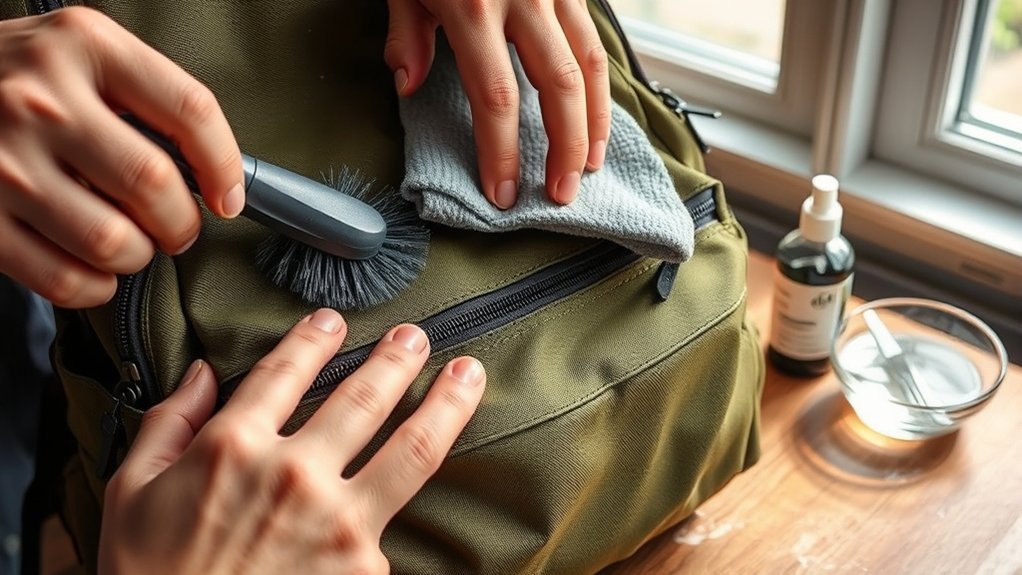
To keep your backpack looking fresh, start with light cleaning methods like using a soft brush or cloth to wipe away surface dirt, especially on the straps and back panel. For a more thorough clean, mix a gear-specific cleaner or mild soap with cool water and gently scrub the fabric, making sure to rinse away all soap. Remember to air-dry your backpack in a ventilated space, avoiding direct sunlight to protect the materials.
Light Cleaning Methods
While you might think deep cleaning is the only way to keep your backpack in shape, light cleaning can be just as effective in maintaining its condition. Here are three simple methods to keep your bag looking fresh:
- Brush Off Dirt: Use a soft brush or cloth to gently remove surface dirt, especially from high-sweat areas like straps and the back panel.
- Spot Clean Stains: Mix mild soap with water and focus on areas with noticeable grime. Avoid machine washing to prevent damage.
- Rinse Thoroughly: After cleaning, always rinse with cool water to eliminate soap residue, which can degrade the fabric over time.
Regular light cleaning can greatly extend your backpack’s lifespan, potentially helping it last up to 50% longer than untreated bags.
Deep Cleaning Techniques
Deep cleaning your backpack is essential for maintaining its longevity and appearance, especially after heavy use or exposure to tough conditions. Start by using a gear-specific cleaner or a mild soap mixed with cool water. This combination effectively removes dirt without damaging the fabric. Gently scrub your backpack with a soft brush or cloth, paying extra attention to high-sweat areas like straps and the back panel. After scrubbing, rinse thoroughly with cool water to wash away any soap residue, preventing future dirt attraction. Avoid machine washing unless the care label says it’s safe, as it can tear the fabric. For stubborn stains, pre-treat with a specialized stain remover and use a toothbrush for gentle scrubbing before deep cleaning.
Proper Drying Methods
Once you’ve cleaned your backpack, it’s crucial to dry it properly to maintain its shape and longevity. Follow these methods to guarantee your backpack dries safely and effectively:
- Hang it Upside Down: Find a well-ventilated area to hang your backpack upside down. This helps with drainage and promotes air circulation, preventing moisture buildup.
- Avoid Direct Sunlight: Keep your backpack out of direct sunlight. UV rays can fade colors and weaken the fabric over time, compromising your gear.
- Leave it Open: Confirm all compartments are open during drying. This allows for better airflow, reducing the risk of mildew developing inside your backpack.
Storage Best Practices
Proper storage is essential for extending the life of your backpack and keeping it in top condition. Start by guaranteeing your backpack is clean and completely dry before stashing it away. Choose a cool, dry spot to prevent mold and mildew growth—damp areas and direct sunlight can damage the fabric and cause fading. To keep moisture at bay during long-term storage, tuck a few silica gel packs inside. Make sure all compartments and pockets are empty and well-ventilated; this helps reduce the risk of unpleasant odors. Regularly check your storage environment for humidity and temperature fluctuations, as these can adversely affect your backpack’s condition. By following these simple storage best practices, you’ll protect your backpack and guarantee it’s ready for your next adventure.
Practical Tips for Extending the Life of Your Backpack
To keep your backpack in great shape for years to come, it’s essential to adopt a few practical maintenance habits. By following these tips, you’ll enhance its durability and performance:
- Use a rain cover: Shield your backpack from moisture and dirt. This simple addition can greatly extend its lifespan and maintain its appearance.
- Store it right: Keep your backpack in a cool, dry place away from direct sunlight. This prevents fading and material degradation, ensuring it looks good for longer.
- Inspect and adjust: Regularly check for signs of wear and tear. Address any issues promptly to maintain its integrity. Also, avoid overloading it to prevent strain on seams and zippers.
Addressing Minor Damages Promptly
While it might be tempting to ignore minor damages on your backpack, addressing them promptly can save you time and money in the long run. Small rips or broken buckles may seem insignificant, but they can worsen and lead to costly repairs or replacements. Use a needle and thread for simple stitches or consider specialized repair kits designed for fabric and gear.
Regularly inspect your backpack for wear signs like frayed straps or loose seams to catch issues early. Keep a small repair kit handy with items like fabric patches, sewing supplies, and adhesive for quick fixes.
Here’s a quick reference table for common backpack damages:
| Damage Type | Quick Fix | Recommended Tool |
|---|---|---|
| Small Rips | Stitch with needle and thread | Sewing Kit |
| Broken Buckles | Replace with new buckle | Repair Kit |
| Frayed Straps | Use fabric patches or sewing | Fabric Patch |
Timely repairs can extend your backpack’s lifespan by up to 50%.
Frequently Asked Questions
How Often Should I Clean My Backpack?
You should clean your backpack every few months, or sooner if it gets dirty. Empty it completely, use mild soap and water, then air dry. Keeping it clean helps maintain its durability and appearance.
Can I Use Bleach on My Backpack?
No, you shouldn’t use bleach on your backpack; it can damage the fabric. For instance, if you accidentally bleach a colorful backpack, it’ll fade and lose its vibrant look. Stick to mild detergents for cleaning instead.
What if My Backpack Has a Mildew Smell?
If your backpack has a mildew smell, wash it with a vinegar-water solution, then let it air dry in a well-ventilated area. Make sure to clean any items inside it to prevent future odors.
Is It Safe to Machine Wash All Backpack Types?
It isn’t safe to machine wash all backpack types. Check the care label; some materials can get damaged. Instead, spot clean or hand wash your backpack to maintain its integrity and longevity.
How Do I Reproof My Backpack Effectively?
To reproof your backpack effectively, first, clean it thoroughly. Then, apply a breathable, waterproof spray evenly, ensuring coverage. Finally, let it dry completely, and enjoy your adventures, knowing you’re shielded from the elements!
Conclusion
By keeping your backpack well-maintained, you can extend its lifespan and save money in the long run. Did you know that a well-cared-for backpack can last up to 50% longer than one that’s neglected? Regular cleaning, proper drying, and smart storage practices not only enhance its appearance but also guarantee it functions effectively. So, take a few minutes each month to follow these maintenance tips, and you’ll be rewarded with a reliable companion for all your adventures.