


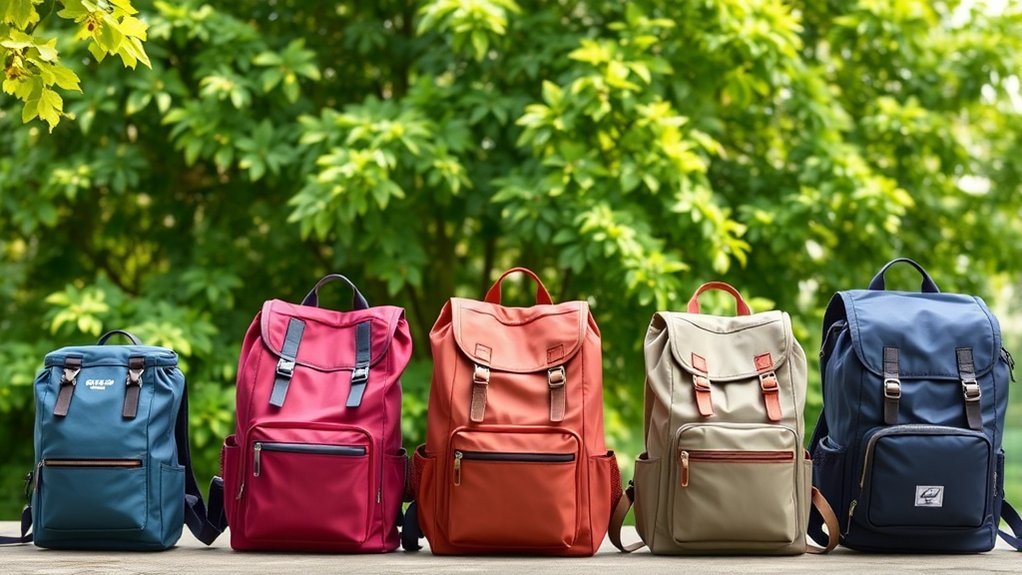
When choosing a backpack, focus on your torso length rather than height for the best fit. Measure from the C7 vertebra to your iliac crest for accuracy. A proper fit guarantees comfort, with 80% of the weight on your hips and 20% on your shoulders. Pick sizes based on your needs: daypacks for short trips, and larger packs for overnight or multi-day adventures. Stick around for more helpful tips on finding your perfect backpack.
Understanding Backpack Sizes and Capacity

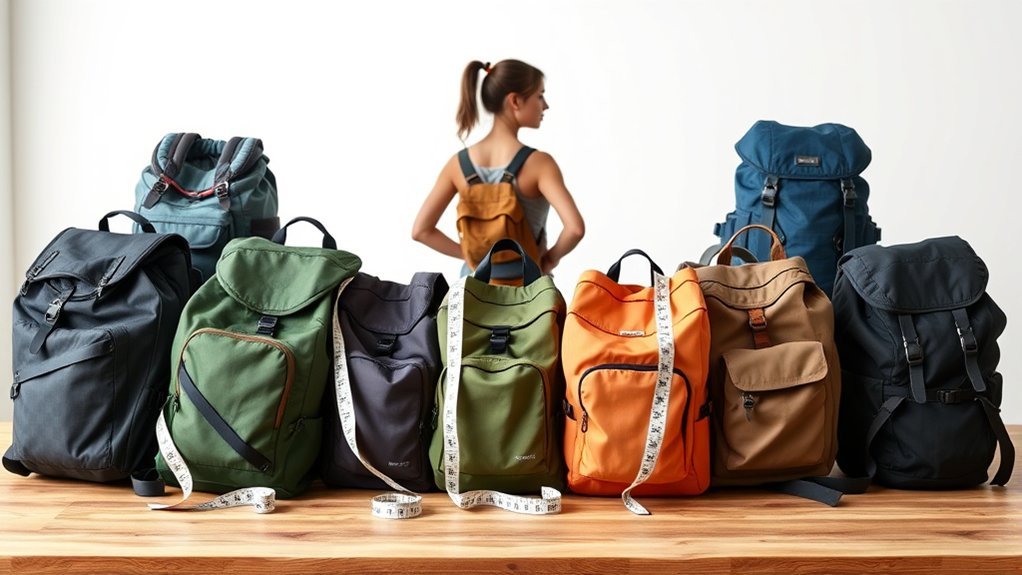
When you’re choosing a backpack, understanding sizes and capacity is essential to guarantee it meets your specific needs. Backpacks are typically measured in liters, which indicates how much you can carry. For day trips, consider a daypack with a capacity of 0-10 liters; it’s perfect for essentials. If you plan an overnight adventure, an overnight pack in the 10-30 liter range will suit you well. For longer excursions, look for expedition packs that hold 30-50 liters, designed for multiple days on the trail. Packs larger than 50 liters cater to specialized needs, like extended trips. To visualize these sizes, think of a standard Nalgene bottle, which holds 1 liter. Remember, your choice should reflect your intended activities, as different adventures require varying capacities for your gear and supplies. Choose wisely, and let your backpack empower your adventures!
How to Measure Your Torso Length

Choosing the right backpack size goes beyond just capacity; it also involves knowing your torso length. To measure it accurately, first locate the C7 vertebra at the base of your neck by tilting your head forward. Grab a flexible tape measure or a piece of string to follow the natural curve of your spine down to your iliac crest, which is the top of your hip bones.
For precision, place your hands on your hips with your thumbs pointing towards your back; this helps identify the endpoint for your measurement. Make certain you measure along an imaginary line between your thumbs to capture the exact torso length. This measurement is vital for selecting a backpack that fits you perfectly, as backpacks are designed based on torso length rather than height. Understanding this will empower you to choose the right gear for your adventures, enhancing your freedom and comfort on the go.
Choosing the Right Fit for Comfort
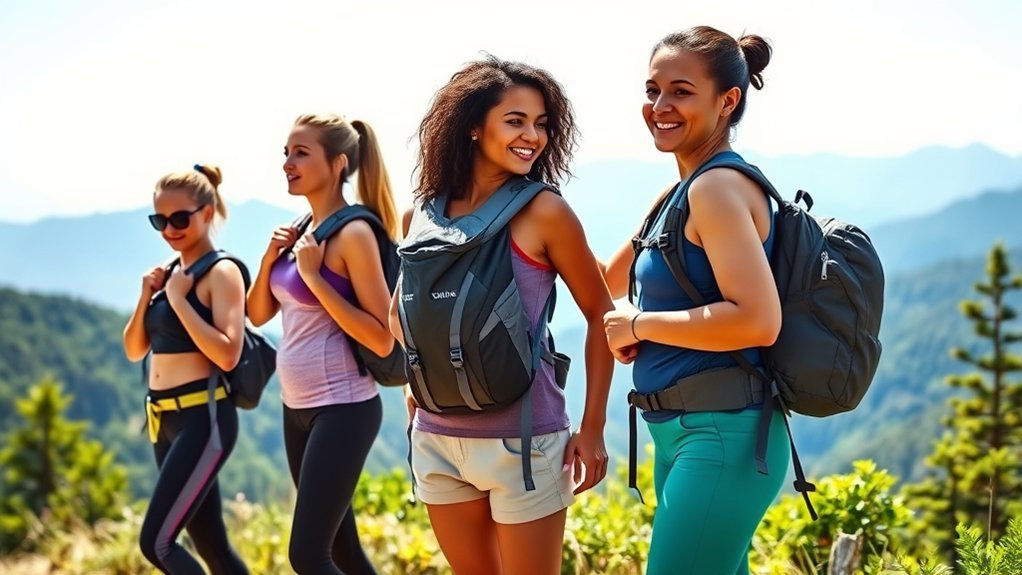
Finding the right fit for your backpack can make all the difference in your comfort during long hikes or daily commutes. Start by measuring your torso length from the C7 vertebra to the iliac crest; this measurement is more important than your height. Women’s backpacks often come with narrower shoulder straps and shorter torso lengths, perfect for smaller frames.
Ensure the hip belt sits over your iliac crest and is adjustable, allowing an inch of room on either side of the buckle for stability. Your shoulder straps should fit snugly without digging into your neck, with padding extending at least an inch below the armpit.
Lastly, always test the fit with weight. Aim for 80% of the load on your hips and 20% on your shoulders, adjusting straps as needed for a balanced carry. A comfortable fit allows you to focus on the adventure ahead, not on discomfort.
Recommended Backpack Sizes for Specific Uses
Selecting the right backpack size is essential for optimizing your outdoor experience, whether you’re heading out for a quick day hike or an extended adventure. For short outings, a daypack (0-10 liters) is perfect for carrying light essentials like hydration and snacks. If you’re planning a longer hike and need extra gear for one or two nights, an overnight pack (10-30 liters) is your best bet.
For those commencing extended trips or international travel, consider an expedition pack (30-50 liters) to accommodate more supplies. If you’re tackling multi-day backpacking journeys, packs in the 50-70 liter range will guarantee you have enough space for food, water, and equipment. Finally, for winter trips that demand bulkier gear, a pack of 70+ liters will keep you prepared for varying conditions. Choose wisely, and enjoy your adventures with the right gear!
Packing Strategies for an Enjoyable Experience
After you’ve picked the right backpack size for your adventure, it’s time to focus on how you pack it. Proper weight distribution is key to enjoying your hike. Place heavier items close to your back and lower in the pack, while lighter items should sit at the top for easy access. Aim for an 80/20 weight distribution—80% on your hips and 20% on your shoulders—to enhance comfort.
Proper weight distribution is crucial for a comfortable hike: pack heavier items close to your back and lighter ones on top.
Here are some packing strategies to keep in mind:
- Keep snacks and rain gear at the top for quick access.
- Test your pack’s fit with 10 to 20 pounds to adjust hip and shoulder straps.
- Avoid overpacking; focus on essentials and learn from seasoned travelers.
Tips for Finding the Perfect Backpack
Finding the perfect backpack starts with accurately measuring your torso length, as it’s more important than your height. When you’re in-store, try on the backpack with a weight of 10 to 20 pounds to see how it feels. Don’t forget to check the fit adjustments, like the hip belt and shoulder straps, to guarantee maximum comfort on your adventures.
Measure Torso Length Accurately
Measuring your torso length accurately is essential for choosing the perfect backpack. Start by locating your C7 vertebra at the base of your neck. Use a flexible tape measure to find the distance down to your iliac crest, ensuring the tape follows your spine’s natural curve. Here are some tips to help you:
- Place your hands on your hips to find the iliac crest.
- Measure where the tape crosses an imaginary line between your thumbs.
- Refer to pack sizing charts that match torso length to specific pack sizes.
If your measurement falls between sizes, opt for the larger size for better comfort and adjustability. Getting this right empowers you to hit the trails with confidence!
Try on With Weight
Trying on a backpack with some weight can make all the difference in finding the right fit for your outdoor adventures. Load it with 10 to 20 pounds to accurately assess comfort and balance. Before you slip it on, adjust all straps—shoulder, load lifters, sternum, and hip belt—to guarantee a proper fit. The hip belt should sit snugly over your iliac crest, about an inch above your hips, for ideal weight distribution. Make sure the shoulder straps extend at least an inch below your armpits to prevent discomfort. After loading, aim for 80% of the weight on your hips and 20% on your shoulders, adjusting as needed for perfect balance and stability. Your freedom in movement starts here!
Consider Fit Adjustments
When you’re on the hunt for the perfect backpack, considering fit adjustments is essential for a comfortable and enjoyable adventure. To guarantee you get the right fit, keep these tips in mind:
- Try on backpacks designed specifically for women, featuring narrower shoulder straps and a shorter torso length.
- Adjust the hip belt to sit directly over your iliac crest for ideal weight distribution.
- Use load lifter straps at a 45° angle to shift the weight closer to your body, enhancing stability.
Customization options like belt extenders and adjustable straps can further personalize your fit, making your backpack feel like a second skin. With the right adjustments, you’ll be free to explore without discomfort holding you back!
Frequently Asked Questions
Can I Use a Unisex Backpack if It Fits Well?
Absolutely, you can use a unisex backpack if it fits well! Comfort and functionality matter most, so choose one that suits your needs. Don’t hesitate to explore options that empower your adventures. Happy packing!
What Materials Are Best for Women’s Backpacks?
For women’s backpacks, look for durable materials like nylon or polyester, which resist water and wear. Lightweight fabrics enhance comfort, while breathable mesh helps with ventilation. Choose materials that fit your adventure and personal style.
How Do I Clean and Maintain My Backpack?
Isn’t it frustrating when your backpack gets dirty? To clean it, empty your bag, spot clean with mild soap and water, then air dry. Regularly check for wear and tear to keep it in top shape!
Are There Specific Brands Known for Women’s Backpacks?
Yes, brands like Osprey, Deuter, and REI offer women-specific backpacks designed for comfort and fit. These companies focus on ergonomics, ensuring you can explore freely without discomfort or strain on your body.
How Much Weight Can a Women’s Backpack Comfortably Carry?
You can comfortably carry about 20-25% of your body weight in a women’s backpack. Focus on proper fit and distribution to guarantee ease and freedom while hiking, traveling, or exploring the great outdoors.
Conclusion
Choosing the right backpack isn’t just about size; it’s about comfort, fit, and purpose. Whether you’re hiking through scenic trails, commuting to work, or exploring a new city, the right gear enhances your experience. Measure your torso, consider your needs, and pack wisely. Remember, a well-fitted backpack supports your journey, while a poorly chosen one can weigh you down. So, take the time to find the perfect backpack, and enjoy every adventure that awaits you!