


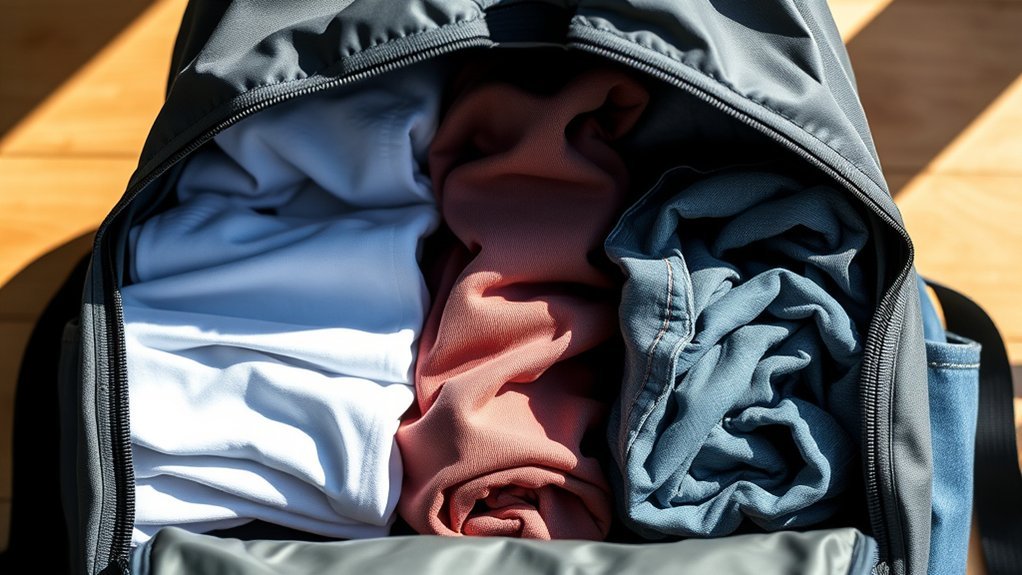
When packing your backpack, rolling clothes maximizes space and minimizes wrinkles for lightweight fabrics, while folding maintains structure and reduces creasing in natural fibers. Rolling enhances visibility and is quick for small items, but can be time-consuming and challenging with bulky garments. Folding offers easier access but may create gaps in packing. Consider using packing cubes for added organization and efficiency. Explore how to select the best method based on your travel needs next!
Understanding the Basics of Rolling and Folding

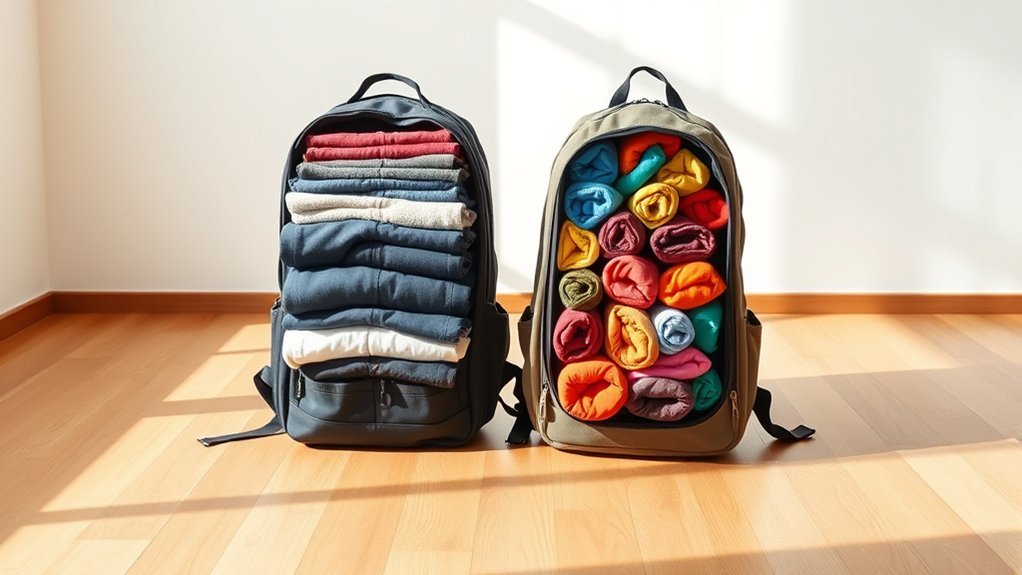
When you’re packing for a trip, understanding the basics of rolling and folding clothes can make a big difference in how much you can fit in your backpack. Rolling clothes is often more space-efficient, especially for lightweight items like t-shirts and pants. This method allows you to pack efficiently, maximizing your available space. Meanwhile, folding is better suited for natural fabrics like cotton and linen, as it helps prevent wrinkling and maintains the garment’s shape, particularly for formal wear. You can also fit smaller items like socks and underwear into corners or gaps when rolling, enhancing organization. On the other hand, folding creates a stackable arrangement, making it easier to access specific items without disturbing your entire pack. Don’t forget, using compression packing cubes can elevate both methods, allowing for better categorization and efficient space utilization, ultimately leading to a more liberated travel experience.
Advantages of Rolling Clothes
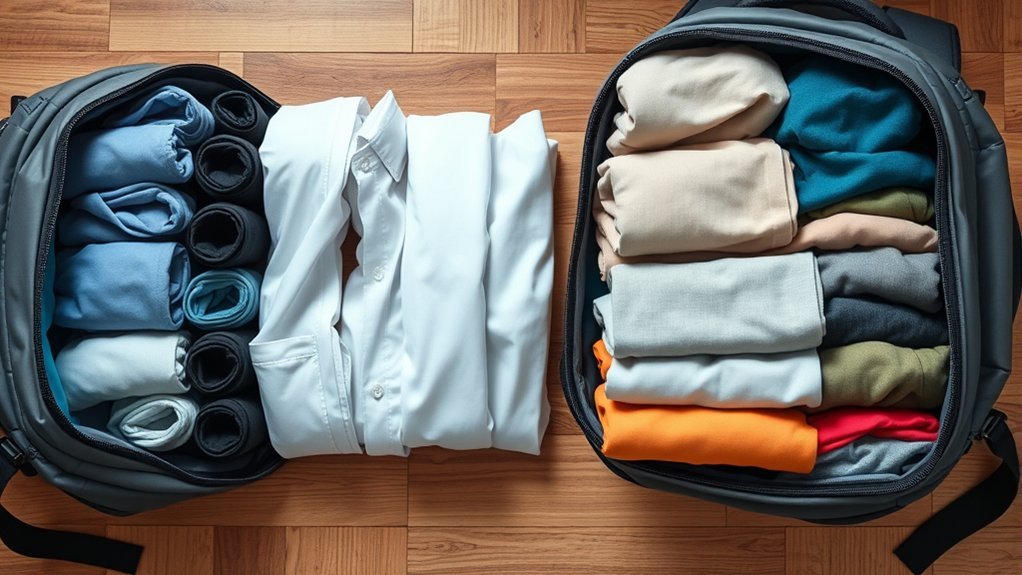
Rolling your clothes offers several key advantages that can enhance your packing experience. It maximizes space in your backpack, reduces wrinkling, and makes it easier to see and access your items. If you’re looking for a more organized and efficient way to pack, rolling could be your best bet.
Space-Saving Benefits
If you want to maximize the space in your backpack, rolling clothes is a smart choice. This method allows you to pack more efficiently, as rolled items fill gaps and adapt to your backpack’s shape. When you roll your clothes tightly, you not only save space, but you also keep your wardrobe organized and accessible. It’s easier to find what you need without displacing everything else in your pack. Rolling works particularly well for lightweight fabrics like t-shirts and pants, which can be compacted without losing volume. By choosing to roll, you gain a slight space advantage, making it the ideal packing technique for travelers who crave freedom and efficiency on their adventures.
Reduced Wrinkling Potential
While many packing methods can lead to wrinkles, rolling your clothes stands out as a practical solution. By rolling tightly, you minimize those hard edges that cause creasing. This method works particularly well for fabrics like Lycra and polyester, which resist wrinkling better than cotton or linen. When done right, lightweight items such as t-shirts and socks keep their shape, ensuring a smooth unpacking experience.
Here’s a quick comparison of rolling vs. folding:
| Method | Wrinkle Potential | Best Fabrics |
|---|---|---|
| Rolling | Low | Lycra, Polyester |
| Folding | Medium | Cotton, Linen |
| Rolling | High | Heavy Fabrics |
| Folding | High | Non-stretch Fabrics |
| Rolling | Consistent | T-shirts, Socks |
Choose rolling for a wrinkle-free journey!
Enhanced Visibility and Access
When you’re packing for a trip, having quick visibility and easy access to your clothing can make all the difference. Rolling your clothes enhances organization and allows you to see everything at a glance, cutting down the time you spend searching for specific items. The cylindrical shape of rolled garments maximizes space, letting you pack more without losing accessibility. Plus, tightly rolled clothes minimize creasing, ensuring you grab wrinkle-free outfits quickly. You can easily arrange rolled items by type or color, simplifying outfit selection. This method prevents the hassle of unpacking your entire bag just to reach one piece, giving you the freedom to enjoy your travels without unnecessary stress.
Disadvantages of Rolling Clothes

While rolling clothes can be a space-saver, it’s often more time-consuming than folding, especially if you want to avoid wrinkles. Bulky items like sweaters don’t roll well and can take up more space than folded clothes. Plus, you might find that certain fabrics still end up wrinkled, adding to the packing frustration.
Time-Consuming Technique
Rolling clothes may seem like a space-saving solution, but it can actually be a time-consuming technique that tests your packing efficiency. Unlike folding, rolling demands precision; you need to smooth out each garment and adjust sleeves to minimize wrinkles. These extra steps can slow your packing process considerably. If you’re used to folding, shifting to rolling might require practice, adding even more time to your routine. Attention to detail is essential—missed creases can lead to frustration, especially with items already neatly folded in drawers. Plus, bulkier clothing like sweaters can be particularly challenging to roll effectively, extending your packing time further. Ultimately, while rolling has its benefits, it might not be the liberating method you hoped for.
Bulky Items Challenge
Packing bulky items can turn the rolling method into a frustrating experience. While rolling can save space for lighter fabrics, it often struggles with thicker materials. Here are some challenges you might face:
- Space Inefficiency: Bulky clothes like sweaters don’t compress well, taking up more room than you’d expect.
- Uneven Packing: Rolling bulky items can lead to an uneven backpack, making it difficult to fit everything snugly.
- Access Issues: When you need a specific bulky item, it might be buried under other rolled pieces, wasting your valuable time.
Ultimately, if you’re packing bulky items, you may find folding to be a more liberating solution that keeps your backpack organized and accessible.
Wrinkle Potential Increase
When you opt for rolling your clothes, you might inadvertently increase the chances of wrinkles, particularly in natural fibers like cotton and linen. If you don’t roll tightly, bulkier items like sweaters may retain creases, making them less suitable for this method. Additionally, structured garments with collars and buttons can develop hard edges, leading to unsightly creases. While rolling can save space for lightweight items, it’s often time-consuming, requiring careful attention to minimize wrinkles—especially for delicate or formal wear.
| Item Type | Wrinkle Potential |
|---|---|
| Natural Fibers | High |
| Structured Garments | Moderate |
| Lightweight Items | Low |
| Bulky Clothing | Moderate to High |
Benefits of Folding Clothes
Folding clothes offers several distinct advantages, especially for items like button-up shirts and formal wear that need to stay crisp and crease-free. Here are three key benefits to contemplate:
- Space Efficiency: Folding allows you to stack garments neatly, making it intuitive to organize thicker fabrics like wool and cotton while maximizing your backpack’s capacity.
- Enhanced Accessibility: When you fold clothes, you can categorize them by outfit or type, so you’ll spend less time rummaging through your bag and more time enjoying your travels.
- Minimized Wrinkles: This method helps reduce creasing in natural fibers since folded clothes maintain structure better than rolled items, ensuring you look polished and put together.
Drawbacks of Folding Clothes
While folding clothes has its benefits, it also comes with several drawbacks that can impact your packing experience. Here are some key issues to evaluate:
| Drawback | Explanation |
|---|---|
| Inefficient Use of Space | Folding creates gaps, wasting valuable backpack space. |
| Increased Wrinkles | Natural fibers wrinkle more when folded, affecting appearance. |
| Less Effective for Small Items | Folding doesn’t maximize visibility and organization, unlike rolling. |
Additionally, bulkier items like sweaters take up more space when folded, limiting your packing options. If you’re not used to folding, this method may require more time and effort, slowing you down. By recognizing these drawbacks, you can make a more informed choice about how to pack. Whether you need efficiency or wrinkle-free clothes, understanding these factors can lead to a more liberating travel experience.
The Role of Packing Cubes in Organization
Packing cubes play an essential role in organizing your belongings, especially when you’re on the go. They simplify packing and make it easier to find what you need. Here are three key benefits of using packing cubes:
- Categorization: You can sort clothes by type or weather, so finding specific garments becomes a breeze.
- Separation: Keep your clean and dirty clothes separate, which helps maintain organization and prevents messes.
- Compression: Compression packing cubes maximize space in your backpack, allowing you to pack more efficiently.
Additionally, packing cubes enhance visibility, letting you quickly access items without unpacking everything. Layering similar items inside not only keeps your clothes tidy but also reduces wrinkles, especially when combined with rolling techniques. With packing cubes, your travel experience can be more streamlined, granting you the freedom to focus on your adventures.
Choosing the Right Method for Your Trip
Selecting the right packing method can make a significant difference in your travel experience. If you’re packing lightweight items like t-shirts and socks, rolling is typically your best bet. It saves space and lets you see everything at a glance. However, when it comes to formal wear or structured garments like blazers, folding is the way to go. It helps minimize creasing and keeps your clothes looking sharp.
For bulkier items like sweaters, folding is more effective to prevent them from taking up too much space. Also, pay attention to the fabric type: synthetic fibers roll well with reduced wrinkling, while natural fibers like cotton are best folded to keep creases at bay. Don’t forget that packing cubes can work with both methods, keeping your backpack organized and allowing easy access to your essentials. Choose wisely, and enjoy your liberated travel experience!
Frequently Asked Questions
Which Method Is Better for Fragile Items?
For fragile items, folding’s your best bet. It minimizes movement and provides extra cushioning. You’ll protect delicate fabrics and guarantee they stay in shape, so you can travel freely without worrying about damage.
How Does Each Method Affect Clothing Odor?
Rolling reduces wrinkles, allowing your clothes to breathe better, so odors dissipate. Folding, however, can trap smells in creases. If you’re aiming for freshness, consider rolling to keep your clothes smelling clean and crisp.
Are There Specific Fabrics That Suit Rolling or Folding?
Certain fabrics, like cotton and polyester, suit rolling well due to their flexibility, while stiffer fabrics, such as denim and linen, often fold better. Choose based on your packing style and fabric characteristics for ideal results.
Can I Mix Both Methods in My Packing?
Absolutely, you can mix both methods! Picture your neatly folded shirts stacked alongside rolled-up pants, creating a colorful tapestry in your backpack. This combo maximizes space and keeps your clothes wrinkle-free, offering packing freedom.
What Are Some Tips for Rolling and Folding Efficiently?
To roll and fold efficiently, start by organizing your clothes by type. Use tight rolls to save space, and fold larger items neatly. Layer rolled clothes on top of folded ones for easy access and organization.
Conclusion
In the end, whether you choose to roll or fold your clothes, both methods have their charm and quirks. Rolling can save space and minimize wrinkles, while folding offers a neat presentation and easy access. Think of packing cubes as your trusty sidekicks, helping you maintain order in your backpack. So, as you prepare for your next adventure, consider your needs and preferences—after all, the journey is just as important as the destination!