


To carry a heavy backpack comfortably, make certain it fits well by resting on your hips, not your shoulders. Adjust shoulder straps and hip belts for even weight distribution. Keep your pack under 20% of your body weight to avoid strain. Incorporate strength training, like squats and planks, to build core and lower body strength. Select lightweight, cushioned footwear for comfort. Maintain an upright posture while hiking for better balance and support. Discover more tips to enhance your hiking experience.
Importance of Proper Fit for Comfort

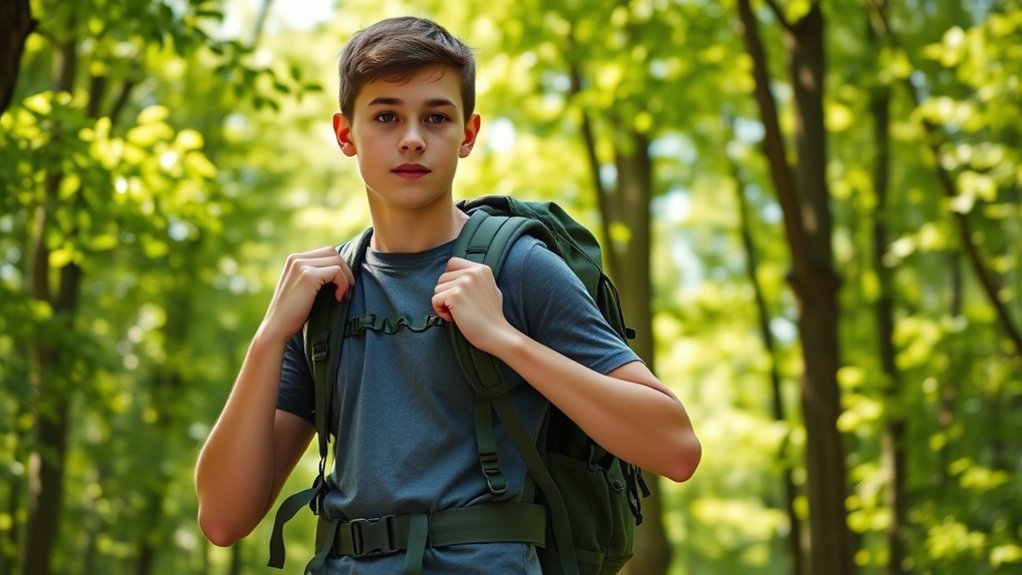
When it comes to carrying a heavy backpack, the right fit makes all the difference in your comfort. A well-fitted backpack should rest on your hips rather than your shoulders, allowing for effective weight distribution and reducing strain on your back. Confirm the backpack is snug against your body to minimize leaning forward, which helps you maintain an upright posture. Features like padded shoulder straps and wraparound hip belts enhance comfort, especially during long hikes.
Start by tightening the hip strap first; this ideal support stabilizes the load and prevents excessive pressure on your shoulders. Don’t forget to regularly check and tighten all straps during your travels. This practice maintains stability and comfort while preventing potential injuries from an improper fit. Prioritizing a proper fit transforms your backpacking experience, allowing you to focus on the adventure rather than discomfort.
Step-by-Step Guide to Adjusting Your Backpack
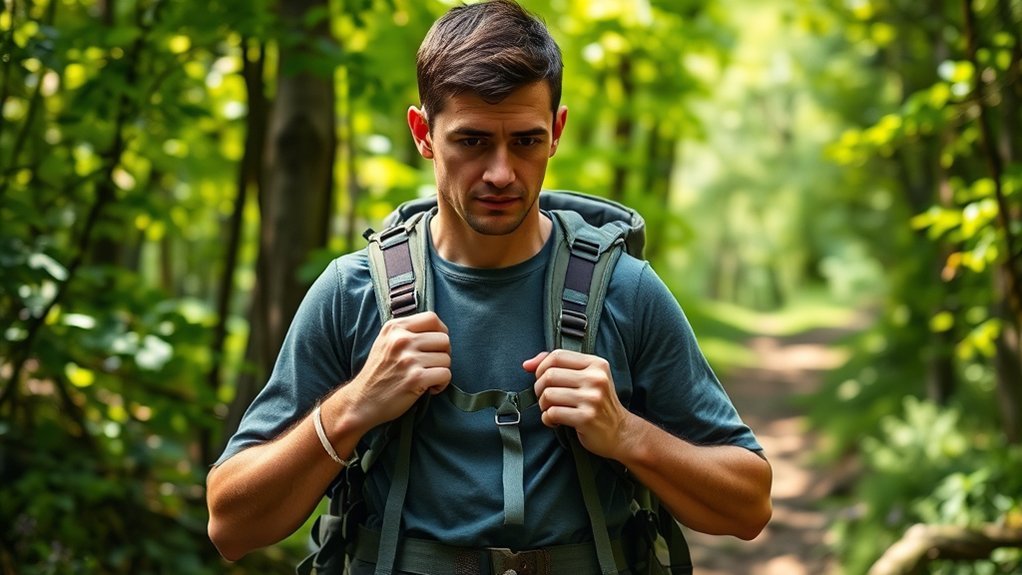
To guarantee your backpack is comfortable and well-adjusted, start with the hip strap. Adjust it so the weight sits evenly on your hips. Next, cinch the shoulder straps snugly to bring the backpack close to your body. This helps reduce strain on your back. Confirm the backpack rests on your hips, not your shoulders, to maintain an upright posture. Finally, tighten any additional straps, like load lifters, to keep the backpack stable and aligned with your center of gravity.
| Step | Action | Purpose |
|---|---|---|
| 1. Adjust Hip Strap | Position on hips | Even weight distribution |
| 2. Tighten Shoulder Straps | Secure close to body | Reduce back strain |
| 3. Check Position | Confirm it’s on hips | Maintain upright posture |
| 4. Tighten Load Lifters | Align weight properly | Enhance stability |
| 5. Regularly Adjust | Check during hike | Prevent discomfort or injury |
Techniques for Safe Backpack Removal
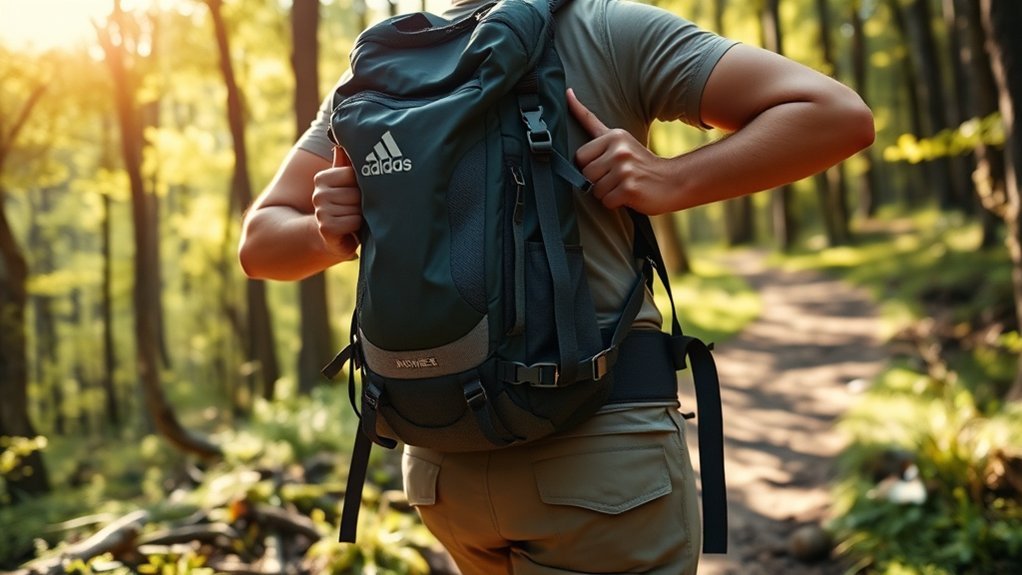
When it’s time to remove your heavy backpack, take a moment to position yourself against a stable surface for support. Use a proper technique by bending slightly and ensuring the weight is balanced before lifting it off. Remember to avoid sudden movements to protect your back and make the experience safer and more comfortable.
Proper Technique for Removal
Removing a heavy backpack safely requires careful technique to prevent injury and maintain balance. Follow these steps to guarantee a smooth removal:
- Back Into Support: Find a stable surface or have someone assist you to provide support as you unload the weight.
- Lower Your Body: Bend your knees and lower your body to relieve pressure on your back, keeping your movements slow and controlled.
- Stay Upright: Maintain an upright posture to minimize strain while removing the backpack.
Once you’ve removed the backpack, take a moment to stretch and relieve any tension in your muscles. This not only promotes recovery but also enhances your comfort, allowing you to feel liberated and free from the burdens you’ve been carrying.
Avoiding Sudden Movements
After successfully taking off your backpack, it’s important to focus on avoiding sudden movements during the removal process. To guarantee a safe and controlled approach, follow these techniques:
| Technique | Description |
|---|---|
| Backing into support | Find a stable surface to lean against before unloading. |
| Bending at the knees | Keep your back straight and bend your knees to avoid strain. |
| Holding onto straps | Maintain grip on the straps until the backpack is on the ground. |
| Avoid twisting | Steer clear of abrupt motions that can lead to injury. |
| Gradual unloading | Unload your backpack slowly to prevent sudden shifts. |
Supporting Weight During Unloading
To guarantee a safe unloading process, it is vital to support the weight of your backpack while you remove it. Follow these techniques to prevent strain and injury:
- Back into a stable surface: Use a wall or bench for support as you prepare to unload.
- Bend at the knees: Keep your back straight to avoid sudden movements that can lead to injury.
- Loosen all straps: Make sure your backpack’s straps are loose before removal to enhance comfort.
As you shift the weight, keep the backpack close to your body and gradually guide it off your shoulders. Avoid leaning forward excessively, as this increases the risk of back pain. Following these steps will help you unload safely and comfortably.
Assessing Your Backpack Weight Regularly
Regularly checking your backpack weight is essential for a comfortable hiking experience. Aim to keep your pack under 20% of your body weight; exceeding this can lead to injuries and fatigue. When you assess the weight, verify you can carry it without leaning forward, which can strain your back and throw off your balance. Maintaining an upright posture while hiking helps distribute the weight evenly, reducing discomfort.
Don’t forget to adjust your backpack straps frequently. This guarantees the weight sits snugly on your body and mitigates strain on your shoulders and hips. Regular assessments of your load can also help you identify unnecessary items that can lighten your pack. Remember, comfort is key; discomfort can derail your trip and lead to longer-term issues. By staying mindful of your backpack weight, you empower yourself to enjoy the journey without unnecessary burdens.
Tips for Efficient Packing
Efficient packing can make a world of difference in your hiking experience. By optimizing your load, you’ll enhance comfort and freedom on the trail. Here are some essential tips to contemplate:
- Prioritize ultralight gear: Choose lightweight tents and sleeping bags to greatly cut pack weight.
- Plan your food and water: Identify resupply points to avoid overpacking and lighten your load.
- Eliminate non-essentials: Regularly review your packing list and remove any items you don’t need.
Incorporating Heavy Pack Training Into Daily Life
You can easily incorporate heavy pack training into your daily life by commuting with a loaded backpack, which simulates the weight you’ll carry on your hikes. Consider using weekends for longer training hikes or even doing your grocery shopping with a packed bag to maximize your practice. Gradually increase the weight as you build strength, ensuring it’s manageable and aligned with your fitness goals.
Daily Commuting With Weights
Carrying a loaded backpack during your daily commute can transform routine errands into valuable strength training sessions. By incorporating this practice, you’ll prepare your body for the demands of hiking while enhancing your overall fitness. Here are a few practical ways to integrate heavy pack training into your daily life:
- Walk to work with your loaded backpack, building endurance and strength.
- Shop with a weighty pack, turning grocery trips into effective training.
- Attend family gatherings while carrying your gear, making every event an opportunity for fitness.
Gradually increase the weight to boost confidence and improve your body’s adaptability. This approach helps maintain proper weight ratios, reducing the risk of injury during your outdoor adventures. Embrace the freedom of fitness in your daily routine!
Weekend Training Hikes
As you plan your weekend, consider incorporating training hikes with a heavy pack to boost your endurance and strength for upcoming outdoor adventures. Prioritize these hikes, gradually increasing both distance and pack weight over time. Choose local trails that mimic the terrain of your intended hikes. You can also turn family gatherings into training opportunities by walking with a loaded pack. This not only allows you to practice but makes it a social event. Regular evening hikes can complement your weekend training, ensuring your body adapts to the conditions you’ll face. By integrating heavy pack training into your routine, you’ll prepare your body effectively, making your outdoor experiences more enjoyable and liberating.
Grocery Shopping Load Practice
Training doesn’t have to be limited to weekend hikes; incorporating heavy pack practice into your grocery shopping routine is a smart way to boost your strength and endurance daily. Start by loading your backpack with groceries, keeping the weight below 20% of your body weight to prevent strain. Here are a few tips to enhance your grocery shopping workout:
- Opt for longer shopping trips with your loaded pack.
- Gradually increase both the distance and weight to mimic real hiking conditions.
- Involve family gatherings or community events to make training fun and social.
As you get fitter, reassess your pack weight to verify it remains manageable. This practical approach transforms everyday errands into effective training sessions!
Strength Training Exercises for Backpacking
To effectively prepare for backpacking, incorporating strength training exercises into your routine is vital. Start with jump squats—perform 3 sets of 15 jumps to strengthen your lower body and legs, giving you better support while carrying a heavy backpack. Next, include single-leg deadlifts, doing 3 sets of 15 reps on each leg to enhance hip and core strength, which boosts your balance and stability on the trail. Side planks with hip dips are also important; aim for 3 sets of 60 seconds on each side to build core endurance and strengthen your hips. Don’t forget regular press-ups to develop upper body strength, helping you manage pack weight and avoid fatigue. Finally, consider consulting a personal trainer for a tailored strength training plan that guarantees safety and addresses your specific fitness needs for backpacking. Embrace the freedom of exploration by getting strong!
Choosing the Right Footwear for Your Hike
Carrying a heavy backpack on your hike can be a challenge, but the right footwear can make a world of difference. Selecting lightweight, cushioned shoes with proper grip is vital to reduce foot fatigue. Here are some key features to look for:
- Good fit: Confirm your shoes fit well to avoid blisters and discomfort.
- Arch support: Look for footwear that offers solid arch support and shock absorption.
- Terrain suitability: Consider brands like ROCFLY and ROCLITE for ideal support and traction on various terrains.
Before you head out, break in your new shoes to prevent injuries and verify they’re comfortable. The right footwear not only enhances your hiking experience but also helps you carry that heavy pack with greater ease. Choose wisely, and your feet will thank you!
Maintaining an Upright Posture While Carrying
To maintain an upright posture while carrying your backpack, focus on proper weight distribution by ensuring the pack rests on your hips. Engage your core muscles to stabilize your spine, which helps prevent strain and discomfort. Regularly check your posture to avoid leaning forward, keeping your shoulders relaxed and back for ideal alignment.
Proper Weight Distribution
While you’re on the move with a heavy backpack, proper weight distribution is essential for maintaining an upright posture. Here are a few tips to help you carry that load comfortably:
- Limit weight: Verify your backpack doesn’t exceed 20% of your body weight to avoid strain.
- Adjust hip straps: Secure the hip strap first to shift the weight onto your hips, improving balance and posture.
- Keep it close: Position the backpack close to your body to reduce leverage and strain.
Regularly check your posture while walking. If you find yourself leaning forward, the weight might be too heavy or misaligned. Remember, a well-distributed load not only enhances comfort but also liberates your movement!
Core Engagement Techniques
Engaging your core muscles is essential for maintaining an upright posture when you’re on the move with a heavy backpack. To effectively engage your core, draw your belly button towards your spine and tighten those abdominal muscles before lifting. This stabilizes your spine and reduces the risk of back pain. Keep your shoulders back and relaxed; this posture allows for better weight distribution and minimizes strain on your lower back. Incorporating regular core-strengthening exercises like planks and deadlifts can further enhance your stability, making it easier to maintain posture under load. Remember to check your alignment frequently while walking, ensuring your hips and shoulders are aligned. This habit helps maintain comfort and prevents fatigue during your hike.
Prioritizing Back Health During Your Journey
Carrying a heavy backpack should never come at the expense of your back health. To enjoy your journey without discomfort, follow these practical tips:
- Limit the weight: Keep your backpack under 20% of your body weight to maintain proper posture and prevent strain.
- Adjust the hip strap first: This guarantees weight is evenly distributed, reducing shoulder pressure and promoting better back health.
- Check snugness regularly: Make sure your pack fits snugly against your back and hips to avoid leaning forward, which can lead to injury.
Additionally, integrate strength-building exercises into your routine. Focus on core workouts and leg strengthening to boost your stability while carrying a load. When it’s time to take off your backpack, use a stable surface to support the weight, preventing sudden movements that could harm your back. Prioritizing these elements guarantees a more enjoyable, liberating experience on your adventures!
Frequently Asked Questions
How Do I Know if My Backpack Is Too Heavy?
You’ll know your backpack’s too heavy if it strains your shoulders, causes back pain, or makes walking difficult. If you struggle to lift it or maintain balance, it’s time to lighten your load.
Can I Use My Backpack for Hiking and Everyday Use?
Yes, you can definitely use your backpack for both hiking and everyday activities. Just make certain it’s versatile, durable, and comfortable. Adjust the straps for a snug fit to guarantee it supports you in every situation.
What Should I Do if My Backpack Causes Discomfort?
Adjust your straps for a better fit, redistribute weight evenly, and consider using additional padding. Take breaks often, and if discomfort persists, rethink your load and choose a more ergonomic backpack design.
Are There Specific Brands Known for Comfortable Backpacks?
Yes, brands like Osprey, Deuter, and Gregory are known for their comfortable backpacks. They offer ergonomic designs, adjustable straps, and excellent padding, ensuring you can carry your load with ease and enjoy your adventures.
How Often Should I Take Breaks While Hiking With a Heavy Backpack?
You should take breaks every 30 to 60 minutes while hiking with a heavy backpack. This helps you recharge, prevents fatigue, and keeps your spirits high, allowing you to enjoy the journey more fully.
Conclusion
By following these steps and tips, you can greatly enhance your comfort while carrying a heavy backpack. Did you know that nearly 75% of hikers experience back pain due to improper backpack use? Prioritizing a proper fit, efficient packing, and maintaining good posture can help you avoid discomfort and stay focused on your adventure. So, lace up those shoes, pack wisely, and enjoy your journey with ease and confidence!