


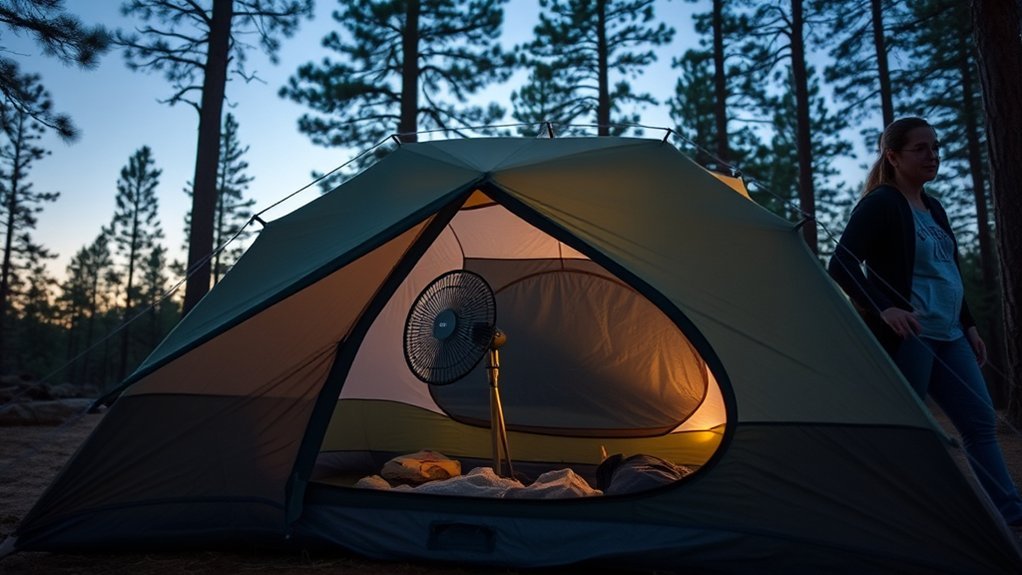
To improve tent airflow for better sleep, choose a shady campsite away from water sources to minimize humidity. Use reflective sunshades or tarps to deflect sunlight and keep hot air from accumulating. Incorporate battery-powered fans to circulate air effectively. You can also freeze water bottles or use ice packs in front of fans for a cooling effect. These simple adjustments can enhance your comfort greatly, and there’s more to explore for a perfect camping setup.
Choose the Right Tent Location

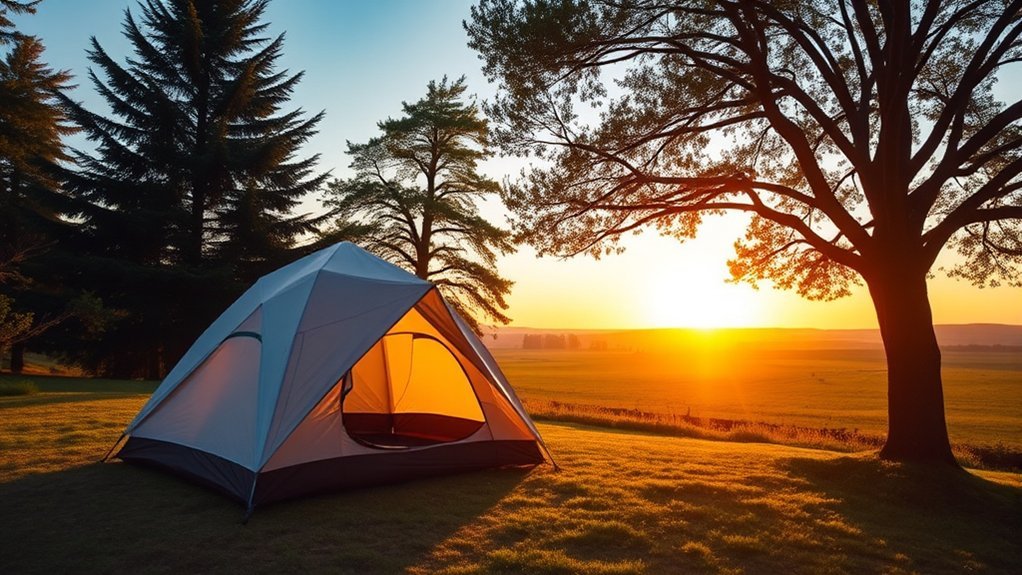
When you’re setting up your tent, choosing the right location is essential for ensuring ideal airflow and comfort. Start with site selection by finding shaded areas, like beneath large trees or beside hills, to minimize direct sun exposure during peak heat hours. Pay attention to tent orientation; position your tent to maximize shade throughout the day by observing the sun’s path, avoiding spots that receive afternoon sunlight.
Opt for higher ground to take advantage of natural airflow, as cold air tends to settle in low areas, increasing condensation risks. Additionally, keep your tent away from water sources to reduce humidity levels inside, which can exacerbate condensation issues. Finally, scout for flat, dry spots for your setup, steering clear of low dips where water may accumulate. Ensuring your tent walls aren’t in contact with surrounding vegetation helps maintain airflow, enhancing your overall camping experience.
Use a Reflective Sunshade or Tarp
To keep your tent cooler during hot weather, consider using a reflective sunshade or tarp overhead. This setup deflects sunlight and reduces heat absorption, creating a more comfortable sleeping environment. Choose tarp materials like emergency space blankets or specialized sunshades to maximize effectiveness; these can greatly lower indoor temperatures compared to tents without such protections.
For best results, pay attention to sunshade positioning. Hang the tarp so it creates a gap between the tarp and the tent roof, allowing hot air to escape while still providing essential shade. Adjust the position throughout the day to guarantee consistent protection from direct sunlight, preventing overheating. This method is particularly beneficial during summer camping, where high temperatures can severely impact sleep quality. By utilizing a reflective sunshade or tarp, you not only enhance airflow but also reclaim the restful nights you deserve while camping.
Improve Airflow With Ventilation
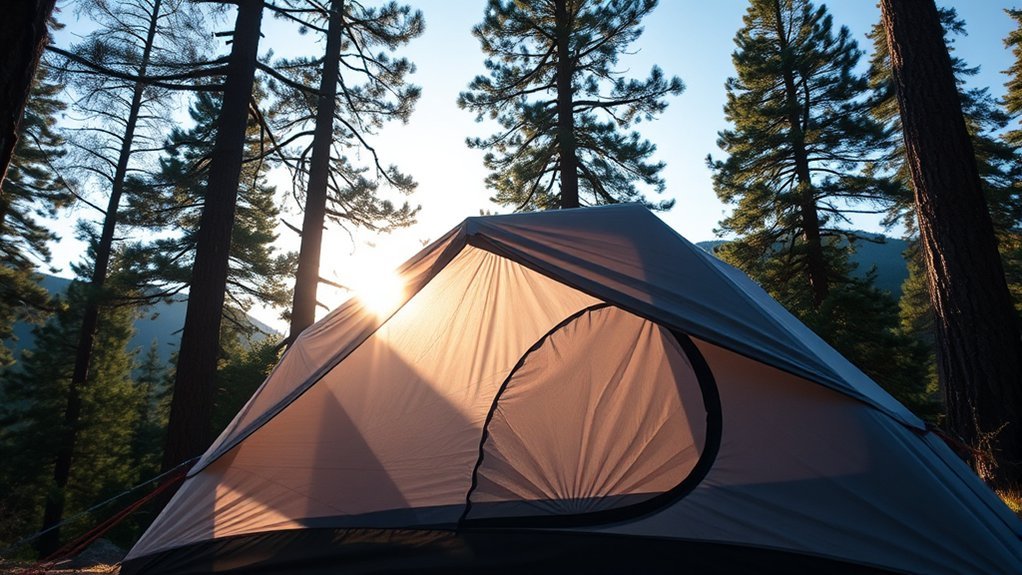
Effective ventilation is essential for maintaining a comfortable camping experience, as it greatly enhances airflow while regulating temperature and humidity inside your tent. To optimize airflow, pitch your tent with entrances facing prevailing breezes, and keep windows and doors partially open while ensuring screens are closed. This setup allows fresh air to flow in while minimizing bugs.
Utilizing mesh panels is vital, as they considerably improve cross ventilation, reducing stuffiness and condensation. On warm nights, keep rain flaps or vestibules propped open to further enhance air circulation. If your tent lacks built-in features, consider installing ventilation accessories like battery-powered fans or mesh inner tents to boost airflow.
Use a Battery-Powered Tent Fan
A battery-powered tent fan can greatly enhance your tent’s airflow, but choosing the right model is essential. Look for fans with rechargeable batteries and quiet operation to maintain comfort while you sleep. Additionally, positioning the fan strategically near the entrance or elevated can maximize airflow throughout the tent.
Fan Selection Tips
When choosing a battery-powered tent fan, prioritize models with rechargeable batteries for extended use during your camping trip without constant replacements. Opt for fans that operate quietly; noise can disrupt your sleep in the peaceful environment of a tent. Adjustable speed settings are essential fan features, allowing you to customize airflow for your comfort level and current weather conditions. Look for compact and lightweight options, making them ideal for backpacking and easy to pack. Some fans even have built-in LED lights, offering dual functionality for nighttime visibility. Regular fan maintenance, such as cleaning the blades and checking battery health, guarantees peak performance and longevity. Make informed choices to enhance your camping experience and sleep quality.
Optimal Fan Placement
Proper fan placement can greatly enhance airflow in your tent, guaranteeing a comfortable camping experience. Position your battery-powered tent fan near the highest point, ideally mounted above ground, to maximize airflow and create a downward breeze. Use effective fan orientation techniques by aiming the fan towards the center of the tent for even air distribution, reducing heat buildup. For larger tents, employ multiple fans—one for every 20 feet of space—to maintain effective airflow. Opt for fans with adjustable speed settings; higher speeds can considerably increase airflow during warm nights. Verify your fan is free from walls or obstructions to avoid airflow disruption, allowing for steady and consistent breezes throughout your tent. Implement these airflow optimization strategies for the best results.
Battery Life Management
Managing battery life effectively is essential for getting the most out of your battery-powered tent fan during camping trips. To guarantee peak fan usage, choose a model with rechargeable batteries and quiet operation, minimizing noise as you sleep. For better battery conservation, operate the fan on lower settings or intermittently, especially if your tent is smaller. Bringing extra batteries or a portable power bank can be a game-changer on longer adventures. Additionally, positioning the fan elevated and strategically within the tent allows for improved airflow and reduced heat buildup. By being mindful of your fan settings and battery management, you can enjoy a revitalizing breeze while maximizing your fan’s longevity, enhancing your overall camping experience.
Camp Near Water for Natural Cooling
Camping near water can greatly enhance your comfort by providing a natural cooling effect. The proximity to lakes or rivers not only moderates air temperature but also creates gentle breezes, improving airflow in your tent. However, it’s important to set up camp at a slight elevation to avoid excessive humidity while still enjoying the cooling benefits.
Benefits of Proximity
When you position your campsite near a water source like a lake or river, you can take advantage of the natural cooling effects that water provides. The water temperature helps regulate the surrounding air, creating a microclimate that promotes cooler conditions. This is especially beneficial during hot summer months, as the evaporation from the water surface can increase humidity levels, aiding in air cooling around your tent. Additionally, the proximity to water facilitates nighttime breezes, as cooler air from the water replaces the warmer air above land. Just remember to camp a safe distance from the water to minimize condensation buildup and maintain a comfortable sleeping environment. This strategic positioning enhances airflow and contributes to a restful night.
Avoiding Humidity Issues
To avoid humidity issues while enjoying the cooling effects of nearby water, it’s essential to strike a balance in your campsite location. Camping too close to lakes or rivers can lead to increased humidity and condensation inside your tent. Ideally, set up your tent at least 100 feet away to enjoy the cooling breezes without excessive moisture. This distance allows for effective airflow while utilizing natural humidity control methods. Additionally, consider incorporating moisture absorption materials, like silica gel packs or breathable fabrics, inside your tent to further mitigate humidity. By strategically positioning your campsite, you’ll enhance your overall comfort and promote better sleep during those hot summer nights, ensuring a liberating outdoor experience.
Ideal Water Sources
Have you ever considered how camping near water can enhance your outdoor experience? Choosing the right water body types, such as lakes, rivers, or streams, can greatly improve your tent’s airflow and comfort. Here’s how:
- Lower ambient temperatures through evaporation
- Create natural breezes for better ventilation
- Maintain humidity levels for improved sleep quality
- Provide quick access for cooling off during hot days
- Offer pre-bedtime dips to regulate body temperature
However, remember campsite safety. Set up your tent a safe distance from the water to avoid excessive humidity and condensation inside. By strategically positioning your campsite, you can enjoy the invigorating benefits of water while ensuring a comfortable night’s sleep under the stars.
Freeze Water Bottles or Use Ice Packs
Utilizing frozen water bottles or ice packs can greatly enhance airflow and comfort inside your tent during warm camping nights. By freezing a Nalgene bottle before your trip, you can enjoy frozen hydration as it melts, providing cool air and hydration for the following day. Positioning ice packs in front of a battery-powered fan creates a DIY air conditioner effect, boosting cooling efficiency and circulating chilled air throughout the tent.
For short camping trips, these methods are especially effective; the ice melts over a few hours, delivering invigorating relief without occupying much space in your pack. Placing multiple frozen bottles increases the duration of cooler temperatures, essential during hot summer nights. This strategy not only cools the air inside but also helps regulate body temperature, considerably improving your sleep quality. Embrace these simple, effective techniques to create a more comfortable camping experience.
Frequently Asked Questions
How Does Humidity Affect Tent Airflow and Sleep Quality?
Humidity affects your tent’s airflow and sleep quality by trapping moisture. You can enhance ventilation techniques like using vents and fans, ensuring effective humidity control, which ultimately promotes a more comfortable sleeping environment.
Can I Use a Portable Air Conditioner in My Tent?
Absolutely, you can use a portable air conditioner in your tent. It’ll create a revitalizing oasis, complemented by portable fans for enhanced tent cooling. Just guarantee proper ventilation to avoid humidity buildup while enjoying your adventure.
What Materials Are Best for Tent Ventilation?
For ideal tent ventilation, choose mesh fabrics and breathable materials. These allow air circulation while keeping bugs out. Prioritize lightweight, durable options to enhance your camping experience and guarantee a comfortable environment during your adventures.
How Do Insects Impact Tent Airflow?
Insects can obstruct airflow by blocking vents. Using insect repellent strategies and mesh netting benefits helps maintain ventilation while keeping bugs out. This way, you enjoy fresh air without compromising comfort during your outdoor adventures.
Are There Specific Tents Designed for Better Airflow?
Yes, some tents, like mesh tents, are designed for better airflow, featuring strategic vent placement. They allow air to flow freely, keeping you cool and comfortable, just like a gentle breeze on a warm day.
Conclusion
By implementing these strategies, you can transform your tent into a haven of cool comfort, ensuring restful nights under the stars. Choosing the right location and enhancing airflow helps create a gentle breeze that dances through your space. Incorporating fans and cooling methods can turn sweltering heat into a rejuvenating oasis. So, embrace these tips, and let your camping experience be a symphony of relaxation, where sweet dreams come easily amidst the rustling leaves and whispering winds.